
Attacking the silent epidemic of diabetes



The Department of Physics, Faculty of Science and the Institute of Space Sciences & Astronomy (ISSA; both at the University of Malta) have just acquired a 5.3m dual-reflector parabolic dish, as part of a European Regional Development Fund (ERDF) project to extend postgraduate research lab facilities. The radio telescope will now allow students and researchers to study celestial objects such as the sun or the centre of the galaxy through the radio waves they emit.
| Quick Specs |
| Dish diameter: 5.3m
Feed horns: L-Band and K-band Gain: 44 dBi @ 4GHz Observing modes: Continuum and line observation Total weight (including pedestal): 1900 kg Surface accuracy: 0.5mm PC-based automated control unit |
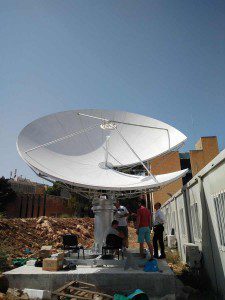
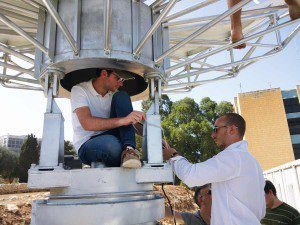 When pointed to a radio-loud celestial object (an object which emits large amounts of radio waves, such as the sun), the telescope will receive radio waves from these sources and convert them to voltage readings in the feed. The converted signal is then transmitted to a digitiser that converts these signals into bits and bytes.
The digitised signals are then processed and broken down into the different frequency counterparts (similar to what a car radio does with the radio waves it receives from its antenna), which allows for continuum observation of the skies above. The telescope provides a test-bed for several research initiatives being undertaken at ISSA.
Some of its specialisations include improving the hardware and software processing back-ends for radio telescopes. The on-site telescope can speed up this sort of research immensely. ISSA is part of the largest radio telescope project in the world: the SKA (Square Kilometre Array).

Independent living is important to everyone. However, it is a known fact that there are many cases where physical problems prevent people from living without care. To help people regain some independence in their lives there are systems such as Human to Machine Interfaces (HMI). Systems such as these work by using biosignals like Electromyographic (EMG) signals that can be used to control assistive devices. However, some have their drawbacks: prosthetic arms, for instance, are one commonly used device that are at times abandoned due to a lack of dexterity and precision.
The problem is that most of these devices make use of sequential control, where only one function can be articulated at a time— meaning fluid, life-like motions are impossible. Now, most daily activities need simultaneous movement with multiple degrees of freedom. And it is this need that is pushing the creators of these devices to create simultaneous control to mimic real life movements.
Christian Grech (supervised by Dr Tracey Camilleri and co-supervised by Dr Ing. Marvin Bugeja) has developed a system which allows the control of the position of a robotic arm by using the muscle activity of a person. This consists of an HMI which continuously provides the shoulder and elbow joint positions using surface muscle movements. Grech tested the model to develop more freedom, which would lead to fluid movements. He investigated three types of system identification methods (state space models, linear regression models, and neural networks) to develop this relationship between muscle activity and corresponding joint angles. Additionally, seven different movements were tested in real-time using a robotic arm. Grech managed to develop a model that allows prosthetic arms to be used more naturally.
Of course, more research is needed to perfect this device. Ideally it would operate without delay and with minimal user discomfort. The Department of Systems & Control Engineering is carrying out more research to continue to improve the accuracy and robustness of such myoelectric (EMG) controlled devices.

L-għ is a thoughtful, innovative, and interactive exhibition. The reaction it provokes is from the very base of the senses and is the first final year project exhibition from BFA in Digital Arts degree students organised by the Department of Digital Arts, Faculty of Media and Knowledge Sciences.
The exhibitors chose an intriguing moniker: the most enigmatic and iconic rune in the Maltese alphabet (L-għ). Together they used it as a starting point and explored the thematic elements it connotes. The students tapped into six themes and developed twelve projects.
Despite majoring in animation or graphic design, each artist worked with a subject they discovered and developed over several months. Creativity and variety are abundant, with projects ranging from audio-visual experiments and curatorial work to interactive documentaries and highly thematic visual material. The body of research and thought behind each project sheds recognition on conceptual and creative transformations currently occurring in the practice of art and design. They shift the boundaries of art, design, and media and how they can be used together.

Around 13% of all internet searches can be linked to keywords related to erotic material, while by 2017 it is estimated that about a quarter of a billion people will be accessing pornography on mobile devices. While by far not a recent phenomenon, the widespread use and growth of the internet has made pornography common and easy to access. So why pornography? What more do we really need to know? And what is the point of such research anyway? From a psychological point of view, the visible increase of use needs to be studied, particularly in Malta, since very little research has been conducted.
Nicola Falzon (supervised by Dr Nicholas Briffa) focused her undergraduate research on the attitudes towards pornography; she looked into the literature regarding the effects of addiction, among other psychological implications. Despite the grave implications the field may imply, this study showed that not all effects are necessarily detrimental. University of Malta (UoM) students were found to have a fairly relaxed and liberal attitude towards it.
Raw data was collected through online surveys, of which 261 UoM students participated. The data was analysed using SPSS and data sets were compared between males and females, older and younger adults, and then compared to previous local and international research. Similar to information obtained through literature reviews, the results showed significant differences in the attitude towards pornography between men and women. Males were shown to watch pornography more frequently and had a more positive attitude, while females considered pornography to be harmful. However, both males and females answered similarly on the majority of survey statements.
Attitudes towards porn might be more similar than previously assumed. There were no significant age differences in the frequency of use or views of porn as harmful. Younger adults displayed a more positive attitude to porn than their older counterparts. Finally, while most female respondents agreed that access to pornography should be restricted, a strong majority did not agree it should be illegal.
So, what is the point of such research in the first place? Primarily, further studies into pornography can contribute towards the field of psychology, first by deepening the understanding of the phenomena, and secondly because it directly effects how treatment can be improved when porn causes a negative effect. Also, new methods of therapy and counselling could be developed to help with addiction that can cause relationship issues. Other problems include excessive masturbation that can lead to isolation from real life relationships and sexual practice. Research can also help influence changes in social policy, for example by including ‘Porn Literacy’ in sex education—currently absent. In Malta, 41% of 16- to 18-year-olds are sexually active; many learnt about sexual practices and pleasure from the internet, films, and video. It is no longer convenient to remain naïve at the expense of public health.

The effects of a European Capital of Culture are felt through both the cultural activities that take place and through the interactions people have with each other as well as the space around them in their everyday lives.
The Valletta 2018 Foundation has been working tirelessly on several projects preparing Valletta for its title as European Capital of Culture in Malta in 2018. More so, it is researching how these projects are changing the lives of people.
These interactions between communities and their surrounding space are key issues being investigated by the Valletta 2018 Evaluation & Monitoring research process. This is a five-year research study examining the impacts of the European Capital of Culture on Malta’s society and economy.
Dr Antoine Zammit, with the Valletta 2018 Foundation, has been studying the relationship between community inclusion and space in cultural infrastructural projects. His research focuses on four specific infrastructural projects taking place in Valletta as part of the European Capital of Culture: The Valletta Design Cluster (il-Biċċerija) and its surrounding neighbourhood; Strait Street; the relocation of MUŻA – Mużew Nazzjonali tal-Arti (Malta’s National Museum of Fine Arts) – to Auberge d’Italie and Pjazza de Valette; and the area surrounding the Valletta Covered Market (is-Suq tal-Belt).
The four projects are in different stages of their implementation, and have been dispersed throughout Valletta in a way that allows them to collide with many of the different districts of the capital. While none lack cultural significance, each project has displayed different strengths in implementation. The Valletta Market and Strait Street Projects have a particularly strong commercial value, while the Valletta Design Cluster is aimed at creative design and encouraging entreprenuership. MUŻA, more overtly than any of the other three projects, is an attempt at traditional forms of cultural engagement and regeneration through the development of a national, community-driven musuem of art. Zammit, together with two M.Arch. (Architecture and Urban Design) students—Daniel Attard and Christopher Azzopardi—carried out extensive studies to gain a deeper understanding of the sites.
“Quality urban design has increasingly become about creating these habitable places. It is ultimately all about the quality of life of residents.”
Attard developed a matrix in order to score the different types of interactions within each site. Split into categories such as ‘aural’, ‘user categories’ and ‘actual use of space,’ the sections help identify emerging patterns and traits from the implementations of the projects. The Biċċerija and Strait Street all score high in the ‘aural’ category, meaning various elements that contributed to noise, or the lack of it, were observed. MUŻA and the Covered Market both qualified for the ‘user categories’ section, meaning that a relatively diverse demographic was observed making use of the place. The Valletta Design Cluster was noted for having a higher level of human interaction take place daily (balcony conversations, loud conversations in general, and so on). Finally, all four sites qualified for the category of ‘actual use of space,’ meaning that people actively show awareness of the space by taking photos, complaining due to lack of public conveniences, construction work, and shops setting up or closing down, among other things.
On the other hand, Azzopardi focused on the spatial quality of the sites by looking at their accessibility and permeability, perception and comfort, and the vitality of the four sites. Of the four, Strait Street, more specifically the intersection with Old Theatre Street, scored highest, followed by MUŻA and the Valletta Market. The Valletta Design Cluster obtained the lowest score, suggesting that the site in its current state is poorly perceived and somewhat inaccessible. Matching Azzopardi’s findings with statistical data, obtained at a neighbourhood level through the NSO’s evaluation of the available 2011 Census Data, Zammit has determined some relationship (but not statistically significant), between the buildings’ current state of repair and the community’s achievements in literacy, education, and employment.
| Museum of the People |
|
Naqsam il-MUŻA is a branch project inspired by MUŻA. Currently in progress, participants in the Naqsam il-MUŻA project were selected from different communities around Malta and taken to see the art collection of the National Museum of Fine Arts. They will then exhibit their choice of artwork from the museum in their localities. It brings the museum to the people, rather than the other way round. |
The diversity of the four sites were key to Zammit’s studies. He studied the effect their differing cultural infrastructure had on the cultural regeneration of Valletta. ‘Cultural infrastructure entails those interventions, which generally have some kind of physical implication, in an urban space which tends to enhance and broaden people’s cultural appreciation,’ explains Dr Zammit, ‘but I see it as requiring an added value. In my opinion, art for art’s sake in these cases doesn’t mean anything. Which is why the question which I try to answer in my research is, “what will that infrastructure give back to the community at the end of it all?”’ Other research, similar to Zammit’s, holds that more than just creating spaces, cultural regenerative projects should aim to create places which result from quality urban design. ‘Over the past two years, I started to realise that the real difference is ‘between places that are alive, versus habitable places,’ comments Zammit, who thinks that, ‘quality urban design has increasingly become about creating these habitable places. It is ultimately all about the quality of life of residents.’ This issue of liveability is key to being a European Capital of Culture. Its goals are to create high-quality cultural and artistic activities while improving the quality of life of communities through culture. Zammit’s study highlights many potential issues such as an increase in noise pollution, gentrification resulting from a rise in property values and rental prices, and other potential impacts on Valletta residents. The Valletta 2018 Foundation is discussing these issues in its upcoming conference Cities as Community Spaces in November 2016, which will bring together a number of international speakers to explore how different communities make use of public spaces for creativity, contestation, and interaction.
For more: valletta2018.org

By the year 2030, due to the rise in age-expectancy and accompanying increase in frequency in bone-weakening conditions, total hip replacement surgeries will increase by 174%. One of the most important facets of implant surgery is biocompatibility. Durable implants that are biocompatible with human tissue are needed to prevent rejection and failure. And with this logarithmic expected rise, the need for longer lasting implants will be needed more than ever before.
Currently, metallic biomedical implants are the most common type. These, however, have a limited durability, often requiring surgery to be replaced after a decade. The combined action of wear and corrosion (termed tribocorrosion), brought about by friction during joint movements and the body’s aggressive environment, causes implant failure. A material called biomedical grade 316 LVM stainless steel is commonly used in hip-joint implants. It naturally forms a thin oxide film on its surface that protects the material from the body’s hostile environment. The problem with stainless steels is that despite this natural coat, tribocorrosion processes at the joints still form debris leading to problems for the patient and implant failure. Such failure can cause severe pain and expense when the hip implant needs to be replaced.
Antonino Mazzonello (supervised by Dr Ing. Bertram Mallia and Dr Ing. Joseph Buhagiar), is investigating a new type of coating on hip implants. He is analysing the corrosion-wear performance of a dual-layer coating made up of a Chrome-Nitride (Cr-N) layer followed by a Cobalt-Chrome-Molybdenum-Carbide (Co-Cr-Mo-C) layer deposited on top of low-temperature carburised stainless steel (the coatings are made by Prof. Peter Dearnely [Boride Services Ltd.]. This treatment is owned and carried out by Bodycote Plc. The top layer reduces friction while the bottom layer toughens the coating, reducing its removal. When the dual-layered stainless steel is compared to the untreated steel, the treated material is more resistant to wear and corrosion.
This new dual-coated material promises to be an ideal candidate for hip joint implants. Apart from being harder and more resistant, its low friction means that less effort would be required to move the joint. The encouraging results mean that in the near future this technology could be implemented in clinics. Mallia points out that ‘such multi-layered coatings may offer a giant step in increased durability for a relatively small additional expense.’

Wilfred Kenely, the Research Trust (RIDT) CEO, speaks to THINK about new initiatives coming to fruition thanks a new scheme.

Prof. Pierre Mallia talks about an end-of-life project that seeks to overcome misconceptions about unnecessary treatments and pain while dying.
Continue reading