Thin Coatings For Better Hips

By the year 2030, due to the rise in age-expectancy and accompanying increase in frequency in bone-weakening conditions, total hip replacement surgeries will increase by 174%. One of the most important facets of implant surgery is biocompatibility. Durable implants that are biocompatible with human tissue are needed to prevent rejection and failure. And with this logarithmic expected rise, the need for longer lasting implants will be needed more than ever before.

Currently, metallic biomedical implants are the most common type. These, however, have a limited durability, often requiring surgery to be replaced after a decade. The combined action of wear and corrosion (termed tribocorrosion), brought about by friction during joint movements and the body’s aggressive environment, causes implant failure. A material called biomedical grade 316 LVM stainless steel is commonly used in hip-joint implants. It naturally forms a thin oxide film on its surface that protects the material from the body’s hostile environment. The problem with stainless steels is that despite this natural coat, tribocorrosion processes at the joints still form debris leading to problems for the patient and implant failure. Such failure can cause severe pain and expense when the hip implant needs to be replaced.

Antonino Mazzonello (supervised by Dr Ing. Bertram Mallia and Dr Ing. Joseph Buhagiar), is investigating a new type of coating on hip implants. He is analysing the corrosion-wear performance of a dual-layer coating made up of a Chrome-Nitride (Cr-N) layer followed by a Cobalt-Chrome-Molybdenum-Carbide (Co-Cr-Mo-C) layer deposited on top of low-temperature carburised stainless steel (the coatings are made by Prof. Peter Dearnely [Boride Services Ltd.]. This treatment is owned and carried out by Bodycote Plc. The top layer reduces friction while the bottom layer toughens the coating, reducing its removal. When the dual-layered stainless steel is compared to the untreated steel, the treated material is more resistant to wear and corrosion.

This new dual-coated material promises to be an ideal candidate for hip joint implants. Apart from being harder and more resistant, its low friction means that less effort would be required to move the joint. The encouraging results mean that in the near future this technology could be implemented in clinics. Mallia points out that ‘such multi-layered coatings may offer a giant step in increased durability for a relatively small additional expense.’


 This research is being performed as part of a Master’s degree in Mechanical Engineering, which Antonino Mazzonello is reading at the Faculty of Engineering, University of Malta. The research is supported by an Endeavour Scholarship. This scholarship is part-financed by the European Union; European Social Fund under Operational Programme II (ESF) 2014-2020, “Investigating in human capital to create more opportunities and promote the wellbeing of society”.
by Antonino Mazzonello

Giving back to the research community

Wilfred Kenely, the Research Trust (RIDT) CEO, speaks to THINK about new initiatives coming to fruition thanks a new scheme.

Continue reading

How To Teach Quantum Physics To Your Dog

Book review by Andrea Marie Cini

The term quantum physics has struck fear into many hearts. Such a complex subject has, for many years, dumbfounded students, and, it seems, their dogs alike. Chad Orzel (a professor at Union College,New York) in his book, How To Teach Quantum Physics To Your Dog, tries to accomplish just that; how do you explain sub-atomic physics in a fun and easy way? Using his dog Emmy as a fellow narrator, Orzel explains quantum physics from a different, more canine-oriented perspective, and actually manages to make it work!

Making use of situations that dogs encounter on a nearly daily basis, such as rabbit chasings, evil squirrels and squeaky toys, the author explains some of the most complex theories and experiments in science. Sound bites as particle-wave duality, Heisenberg’s uncertainty principle, and quantum tunnelling are just a few of the many topics covered and are colourfully explained within this book. Making use of simple diagrams and modern references, these previously baffling topics are simplified in a way even a dog could understand (if dogs were capable of learning science—debatable). Orzel’s ideology is pretty simple: if a dog could understand his explanations then a human surely would.

Apart from being a sturdy foundation for the topic of quantum physics, the fun-loving and comical conversations between Orzel and Emmy the dog are a captivating read. Emmy’s curious questions and Orzel’s exceptionally patient answers make it almost impossible for readers to forget. Within this novel it feels as if the reader is really strolling in a park with the duo. Apart from this professor’s incredible explanations and handy diagrams, another distinguishable feature of his book is the fascinating footnotes—a source of unforgettable fun facts. For example, did you know that the great scientist, Schrödinger, was a notorious womaniser?

While I would not recommend How To Teach Quantum Physics To Your Dog to pass the next quantum mechanics exam, it is great foundation material. Studying quantum physics has never been more fun and the book is a great read—highly recommended.

From Immigrants to Theology

Over 1.82 million migrants entered the EU in 2015 and this has triggered much dialogue across member states. In May 2015, the Archbishop of Malta, H.G. Mons Charles J. Scicluna, after the Vatican announcement of the Year of Mercy, reached out to the academic community to reflect on the immigrant phenomenon. This call set in motion The Mercy Project, which aims to create a set of reflections and recommendations around immigration.

The project has four stages. It first reflected on the issues of mercy and immigration within the Maltese context. During this stage, staff members from various University of Malta (UoM) faculties explored the local situation, reflecting on the terminology used, prevailing concepts and current practices. This was followed by a second stage. Academics held meetings to discuss various viewpoints and realities around migration. Those involved included members from the Faculties of Theology, Arts, Social Wellbeing, Laws, Education, and Health. At the third stage, a symposium on ‘Mercy and the Immigrant’ was held on 6 June 2016. The symposium brought together interested parties and agency representatives to reflect on the issue. This provided a platform for a dialogue between theologians and society. Rev. Dr René Micallef S.J. (Gregorian University in Rome) spoke about the mercy, justice, and policies needed to be considered by Malta and the rest of the EU.

The final forth step is underway. A publication of the project’s position papers is being prepared. This will make available to various sectors of the public some of the philosophical, social, legal, educational, and theological ideas which surfaced during the project’s dialogues and consultations. It will provide concrete recommendations for the University of Malta, State, and the Church. 


Dr Pauline Dimech and Rev. Dr Stefan Attard are the project co-ordinators.

Traders of Osaka

BoardGame-Review

I’m an absolute sucker for elegance. I love games with few components and rules, yet still manage to create a deep and thoughtful gameplay system. The card game Traders of Osaka has all of these traits.

Based on Traders of Carthage, where the goal is for players to move ships, and deliver goods from Alexandria to Carthage, Traders of Osaka is essentially the same but this time the gameplay is set in a new continent and era, with the cargo needing to be shipped from Osaka to Edo in Japan.

The game has both cards and a board. Each card has a number and colour. The colour denotes the type of goods you can ship, and the number indicates their value. But, the game gives you the choice to keep your card in hand or place it in front of you. This turns them into purchased goods or cash to use later to purchase the goods.

Apart from this choice, as a trader you need to move your goods. Each time you buy an item, the ship of its colour moves one step closer to its destination. When it reaches Edo the player can sell the goods of a specific colour. However, if the seas are perilous just before docking, it sinks, and everyone’s goods of that colour go to waste.

The setup leads to a very simple, binary choice, which is affectd by the actions of all the players around you. The competition is absolutely bittersweet. Don’t be fooled by its spareness, these are some of the most tactical choices you will have to make in your life.

The game is about trading rice in Osaka over 100 years ago—a hard sell. But it has beautiful artworks, and a modern design that runs smoothly and is easy to learn. Trust me, give this one a shot.

Curiosity saved the cat

Since childhood Ian Zammit has always been curious about why things are the way they are. His curiosity has led him to work on a water recycling project from which Malta could potentially stand to gain. He speaks to Veronica Stivala.

Continue reading

Pather Panchali (Song of the Road)

Film-Review_charlo

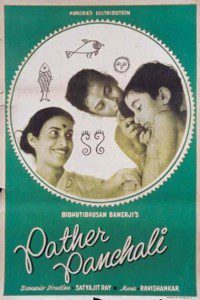
filmreview02Satyajit Ray’s monumental Pather Panchali deals with an impoverished family in rural Bengal. Maybe monumental isn’t the right word for this humble movie and yet, it is apt because of the film’s intense depiction of human emotions and its towering position in Indian cinema.

This is Satyajit Ray’s first film and the first in a trilogy depicting Apu’s coming of age and a family’s fateful descent into misfortune while the father works in the city. Adapted from Bibhutibhushan Banerji’s novel of the same name, it reproduces many of the episodes from the book. However, it commands pacing, cinematography, and performance which make it a distinguishable work in its own right and a prime example of India’s transcendental take on Italian Neorealist cinema (c. 1944–1952), which was based on serious concerns and social realism.

The director has a keen eye for establishing natural pacing devices—from gathering storms to flitting mosquitoes—accompanied by Ravi Shankar’s sitar music. In a celebrated scene, the mother is unable to communicate to the father that their daughter Durga died from a cold; the mother’s cries are replaced by wailing sitar notes. The shot remains helplessly ‘immobilised’ as the anguished father rises out of the camera’s view, then returns helplessly to it.

The film’s pacing alternates between quiet, domestic chores and vibrant, exterior episodes in which Apu and Durga behave as children do. Much like the source novel and the Mangal-Kāvya poems in Bengali literature (made up of episodic poems called panchali), it is the periodic nature of rural life which drives the film forward. Although it differs from commercial western narratives, with their linear cause-effect plots and clear resolution, the film made its way to western audiences winning the Best Human Document award at the 1956 Cannes Film Festival (among many others).

Of note is the film’s excellent black and white cinematography, which brings out the bright blaze of India’s heat and the silvery tones of the monsoon habitat to crystalline, elemental palpability. The recent Blu-ray release eliminates the ‘ghosting’ effect and muddy transfers of previous VHS or DVD releases.

Finally, one cannot imagine Pather Panchali without the actress Chunibala Devi, who plays the aged widowed aunt. The moment she comes to realise that she is no longer wanted in the household, convinces me that the medium close-up was invented for this moment in film history.

When I met Satyajit Ray’s son in Calcutta, he gifted me with an original poster of the film. A Bollywood producer present in the same room leapt up for it. That poster made it through the monsoon (unlike Durga) and Pather Panchali continues to win hearts across the world. It is in this spirit that this review was written—with the hope that a work from a different time and so close to the human spirit, could become something personal for the readers of THINK.

Charting space and time

From Google Maps to Pokémon GO, without maps the world would not function. But how did we start developing them? Ritienne Gauci and Dr William Zammit take a look at historical maps to discover fascinating quirks about the Maltese Islands. So how were map errors inherited? And what is the connection between religion and maps?

Continue reading