Talking Toys

While speech development starts early in life, the course of acquiring and processing language in a bilingual country like Malta is challenging. Engineers and language experts at the University of Malta have teamed up to build a toy that will help children overcome that hurdle. Words by Emanuel Balzan.

Toys and play are critical in children’s lives. It is through play that children learn how to interact with their environment and other people while developing their cognitive, speech, language, and physical skills. 

The way children play reveals many things including whether or not they are hitting particular development milestones. Play is also used by professionals who intervene when those skills are not acquired. Speech and language pathologists (SLP) use toys to tailor tasks based on their objectives for the child, determined following their assessment. For this reason, toys are vital tools. 

With technology moving at the rate it is, electronic components are easier and cheaper to access. As a result, a lot of smart, educational toys are now available on the market. However, Dr Ing. Philip Farrugia (Department of Industrial and Manufacturing Engineering, Faculty of Engineering, UM) honed in on a gap in the market—a smart toy that supports English and Maltese. 

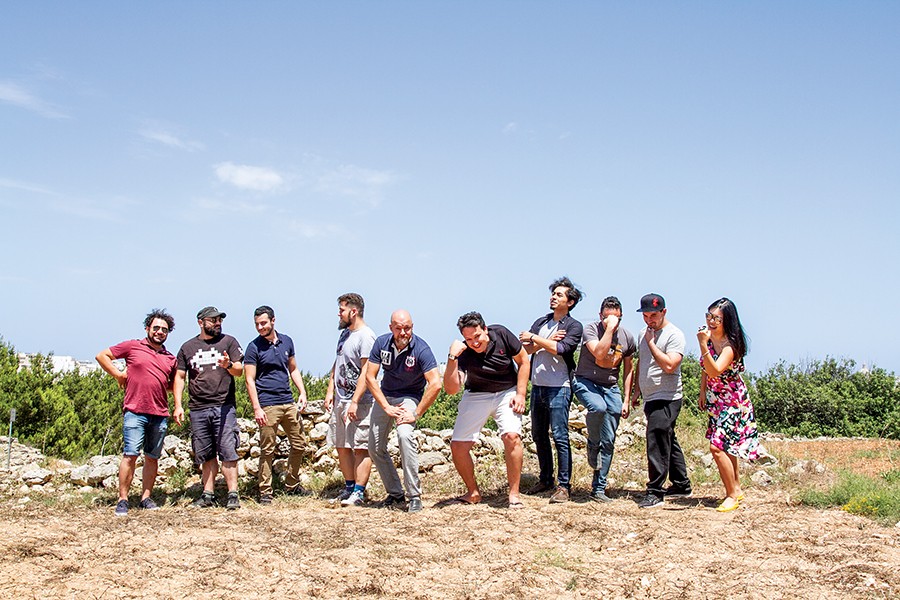
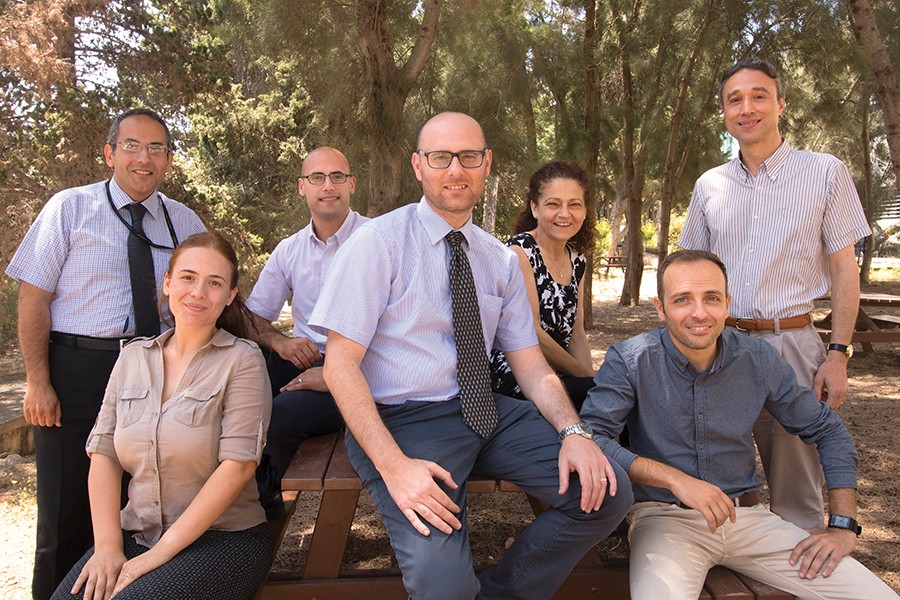
Front left to right: Dr Ing. Owen Casha, Loridana Buttigieg, Emanuel Balzan, Dr Ing. Philip Farrugia, Prof. Helen Grech, Anthony Demanuele, Prof. Simon Fabri. Missing from the photo: Dr Daniela Gatt and James Attard.

To make this happen, Farrugia recruited a team of researchers from the university. Engineers Prof. Simon Fabri and Dr Owen Casha joined the effort. Researchers Prof. Helen Grech and Dr Daniela Gatt brought their expertise in speech and language acquisition and disorders. The team was finally complete when game development company Flying Squirrel Games stepped into the picture.

Getting down to business

The SPEECHIE project is divided into three stages. During the first phase, we sought to understand the process of speech and language acquisition, assessment, and therapy. We involved users through workshops that allowed us to observe children’s play and their toy preferences. We also conducted focus groups with parents to identify what they most wanted from toys. During these sessions, one parent noted how ‘there are not any [educational] toys in Maltese our little ones can play and interact with.’ Others agreed with this observation. Parents also raised concerns about children’s attraction to tablets and smartphones, noting how they interfered with social interaction. On the tail end of this discussion, one parent quickly added that ‘the toy must have something to make it feel like a toy and not a gadget.’

With further questioning, we also came to realise that different parents have different criteria when deciding to buy a toy. One parent told us that before buying a toy for her daughter, she would ‘try to see for how long she will play with it and what the toy will give her in return.’ Another parent, concerned about toys’ safety, checks for the CE mark (Conformité Européene) prior to purchasing the toy, saying that he associates the mark with better quality. However, he also confessed that ‘in the hands of children, nothing remains of quality. Give them something which is unbreakable and they will manage to break it in one way or another.’
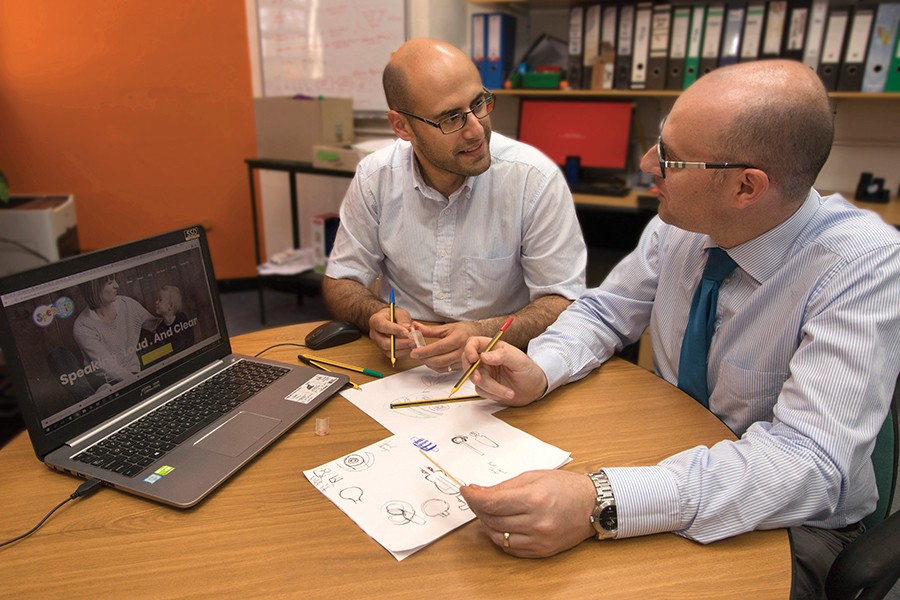
Since our toy is intended for use in speech therapy, we went ahead and organised more focus groups with SLPs. Outlining the role of toys in their clinics, SLPs said ‘[they] are normally used as a reward. If you know that this child likes blocks, then you use them to motivate the child.’ Toys are also used as part of the language tasks SLPs give. ‘We use objects to put a grammatical structure in a sentence. Many times you find something that represents a noun, a verb, an object and then put them together’ to model the appropriate sentence construction. This prolific use of toys, however, brings with it a very practical problem. One SLP explained how challenging things can get on a day-to-day basis due to the lack of multipurpose toys. ‘We are always carrying toys… we are always carrying things around with us. Even our cars… it is like I have ten kids,’ she said.  

To address this issue, SLPs emphasised how useful it would be to have a flexible toy with multiple functions. One that does not bore children and which they can use to target different speech and language therapy goals. They also drew our attention to a prevalent but damaging mentality that they are trying to address. ‘Unfortunately, the majority of Maltese parents have a mentality that the more money they spend and the more therapy sessions for their children, the sooner the problem is alleviated, but in reality this is not true. The work needs to continue at home on a daily basis. It is not solely our responsibility,’ the SLP said. Much like when we practice daily to learn to play an instrument, speech and language therapy works the same way.

Sharon Borg, an experienced occupational therapist from the government’s Access to Communication and Technology Unit, said that the toy we had in mind could provide a simple way for parents to engage with their children and work at home on related exercises. Borg’s colleague, Ms May Agius, also noted the need for the toy to offer ‘surprises’, saying that ‘anticipation and elements of surprise draw kids and keep them engaged.’

Here we have only touched the surface of all the ideas brought forth. However, by considering the children’s, therapists’, and parents’ needs early in the engineering design process, we should be able to reduce the number of design iterations we have in future.

Reaching out

Design is key. Based on the feedback from the focus groups, we have now started working on the hardware and the software. But the journey is not straightforward. One issue we needed to deal with was the lack of compatibility between the 3D modelling software Flying Squirrel Games used and the technology used by the UM. From an academic point of view, because of the innovative nature of the toy we are making, we needed flexibility, so we modified Flying Squirrel’s virtual model to add different mechanisms which involve moving parts. These alterations now allow us to create support to fix electronic components within the device and ensure that no moving part is impeded by another part. As a result, assembly is much easier. 

Emanual Balzan and Dr Ing. Philip Farrugia

We have also made the decision to build SPEECHIE software using modular blocks. This will enable us to switch parts and functions around so we can widen the idea of who might enjoy our product. The toy will not only be of use to children with speech and language impairments, but also to others. This approach was inspired by a meeting with behavioural economist Dr Marie Briguglio who warned us that labelling the toy could be stigmatising. She explained that it should not become ‘an isolated toy which kind of becomes a label: because I have this toy, that means I have speech impairment.’  

Despite the aversion some parents felt towards technological devices, as said during focus groups, Borg also encouraged us not to shy away from using them. She said children with autism responded very well to technology, and therapists will make the best choice for the child to improve their skills. To hit a sweet spot in between these views, we are incorporating functions that will allow for a kinesthetic learning experience that involves physical activities rather than passive consumption of instructions. We want to mix different modes of play to encourage effective learning. We do not want kids to sit and watch their toy, but to move around, dance, and sing with other children. 

With all of these choices under our belt, we now have a working prototype. But the SPEECHIE toy is not yet complete. In fact, the coming months will see us working on the mechanisms and the interfacing of electronics. 

Towards the end of the year, we will start putting the toy into preschoolers’ hands to determine its effectiveness and efficiency in regard to speech and language therapy. To do this, we will compare the progress of children who use SPEECHIE with those who only use traditional SLP methods.

What we hope is that this toy will encourage parent-and-child interaction through play. We want to enable more frequent use of both Maltese and English and allow children to be safely exposed to technology and to a fantastic learning experience—all while having a ball.  

Note: We are excited to share these insights about SPEECHIE with the public, and if you would be interested in joining on this journey by participating in the evaluations, get in touch here: speechie-web@um.edu.mt

This research is financed by the Malta Council for Science and Technology (MCST) through the FUSION Technology Development Programme 2016 (R&I-2015-042-T).

Author: Emanuel Balzan

Spotting marine litter

Serena Lagorio

Marine litter is a problem found across the world. As well as being directly deposited in seas and oceans, plastic, wood, rope, and other items are accumulating on land and making their way into bodies of water. On the Maltese Islands, such littering happens frequently. Last summer the Physical Oceanography Research Group (Faculty of Science, University of Malta [UM]) took a step towards tackling the issue.

Under the supervision of Prof. Alan Deidun and Adam Gauci, I sought to harness innovative techniques and create a monitoring programme that would begin to identify what kind of litter is on Malta and Gozo’s beaches.

The national Marine Strategy Framework Directive was followed to ensure good data collection and meeting of the ‘Good Environmental Status’ by 2020. The study used images captured by a drone in three coastline areas: the north east Marine Protected Area of Malta, Qawra Point, and the eastern and western points of Baħar Iċ-Ċagħaq. Flying at an altitude of 30 meters, the drone was programmed to spot specific categories of marine and coastal litter. These included plastic, wood, rope, rubber, and other miscellaneous items such as washing machines and mattresses.

Apart from characterising marine litter, the project aimed to observe whether hydrodynamical phenomena, such as wind and currents, are also influencing the accumulation of litter. However, results showed that the difference between the areas of study was not due to dynamics of coastal currents and coastal topography, but to human activities. In Baħar iċ-Ċagħaq, for example, categories such as wood and plastic were found on land at considerable distances from the shoreline, close to points easily accessible by cars.

We also used statistical analyses to confirm that parameters such as tourism, lack of public knowledge, and lack of environmental consciousness are affecting the accumulation of marine litter, laying the blame firmly on human activities.

The remedy to the situation is in Maltese citizens’ hands. Only we have the power to turn things around. It’s time to clean up our act.

This research was carried out as part of a Masters in Physical Oceanography, Faculty of Science, UM.

Author: Serena Lagorio

Instant Photography

Instant cameras, commonly referred to as ‘Polaroids’ thanks to the pioneering company, offer limited manual-automatic controls. These self-developing photographs present numerous analog imperfections, but additional aspects make them distinctive.

Polaroids do not document the world faithfully. They create a new version of it through their own lighting schemes, colours, and softness; a quality associated with past technologies. All these aspects enhance the transient nature of subjects, such as boy counting in during a game of hide-and-seek (see picture).

The process of capturing an image can also draw from ‘missed opportunities’. These are subjects one comes across but does not photograph due to not having a camera at hand, or for fear of intrusion. A line of people coming down a hill, or visitors waiting like purgatorial souls outside a derelict hospital—such images are captured in the mind and their essence might be transferred into other shots.


Having the image in hand within minutes does not necessarily make the medium of instant photography unique, for even the photos themselves can change hues and mood with time. What does make it unique is its unpredictability and the challenge it poses when it comes to materialising intentions within the limitations of the medium. This makes the effort worth pursuing.

An image illustrates the relationship between a subject and its viewer. It is a perspective on the world, be it a printed photograph, a digital file, or a memory.  


Find out more about Instants, published by Ede Books, here: http://bit.ly/2yCQLyV
Article and photographs by Charlo Pisani

A generation game

Sharing memories, ideas, and feelings is something we usually do with friends. What if you were asked to do it with a stranger? And what if that stranger was ‘from a different time’? Active Age – Intergenerational Dialogue project creator Charlotte Stafrace has the answers.

Continue reading

Confrontation caricaturised

My work centres on the co-existence of dualities. It treads blurred borders and investigates uncertain divides between opposing poles. It synthesises extremities and acts as a seam that binds together disparate realities. 
Uncertain of its own actuality, it questions its own being.
Artist statement

Prof. Vince Briffa peels back the layers of his latest works to reveal his thoughts on duality, confrontation and caricaturisation and how he translates them into art.

Continue reading

Mapping in 3D

Drones have rapidly gained popularity in recent years. They are now commonly used by photographers and videographers, law enforcement, the military, and criminologists. At the University of Malta (UM), they are being used as a part of CloudIsle.

Msida monument

CloudIsle, a project headed by Prof. Saviour Formosa (Faculty for Social Wellbeing, UM), is using drones kitted out with laser scanning tools, ground-penetrating radar, and surveying equipment to create 3D maps of Malta. Using billions of data points, the fine details of above and below-ground features can be recorded. This includes precise detail on buildings, as well as the intricacies of the island’s labyrinth of underground caves. The technology will even be used to uncover underwater artefacts at up to 500m depth. The legendary Um El-Faroud and the Xlendi-Karwela-Cominoland trio of wrecks, now transformed into artificial reefs and popular diving sites, are currently under review.

This data’s real-world applications are vast. It can be used to aid Malta’s Planning Authority and ensure building stability, as well as analyse extreme weather and monitor climate change. The Department of Criminology (Faculty for Social Wellbeing, UM) is also employing these tools in environmental enforcement, as well as for spatial forensics and crime reconstruction in scenes related to bombings and homicides.

Fort St. Elmo

CloudIsle is already reaping rewards. The team has discovered and named the Għariebel doline land feature off the Selmunett Islands. They have also created a baseline map of Malta and its seas that can be used to integrate new 3D spatial data.  

Author: Professor Savoiur Formosa

Are we ready for self driving cars?

Clint Galea

In 2016 a 40-year-old technology company owner called Joshua Brown was killed when his autopiloting Tesla Model S malfunctioned. Since then a number of other incidents have raised the problem of safety in and around autonomous cars. One potential solution is to connect cars together so that they can keep in constant touch, letting each other know exactly where they are and when to get out of the way. Another alternative is to have a human pilot the vehicle for part, or all, of the journey, reducing some of the fear associated with self-driving cars’ safety and giving rise to so-called remotely-piloted ground vehicles (RPGVs).

Because this idea needs a stable and constant Internet connection, I wanted to test if the current 4G network is fast enough for these cars to drive and function safely. Relying on a hefty amount of external data about pedestrians, other traffic, road layouts, and more makes things difficult.

At the Department of Communications and Computer Engineering, (Faculty of ICT, University of Malta [UM]), on a project led by Prof. Ing. Saviour Żammit, we created an RPGV by modifying a radio-controlled vehicle and used it to test the suitability and safety of 3G, 4G, and Wi-Fi networks.

Fast communication between driver and car is crucial for the safety of RPGVs. If information from the car takes too long to reach the driver, they won’t be able to react quickly enough to avoid obstacles and accidents.

On Wi-Fi networks, we found that when the connection moved from one base-station (the receiver-transmitter that serves as the hub of a local wireless network) to another, the handover took too long. This problem meant that whilst the connection was transferring, the video was lost, leaving the car blind. This is obviously dangerous and means that these networks are not safe enough for automated cars. 3G was not fast enough to transmit video in real-time.

The next step was to set up an outdoor racetrack to test the RPGV over the 4G network on UM grounds. We varied the networks’ signal delay and the camera’s range of view, then measured the lap times, distance travelled and road cones hit to calculate driving accuracy. Finally, we compared them to how accurate the drivers thought they were driving.

We concluded that 4G mobile networks allow adequate remote control of an RPGV, although the amount of delay left little room for error. A faster 5G network would be able to act quickly enough to avoid accidents, so self-driving cars will need to wait a bit longer before becoming a reality.

This research was carried out as part of the Masters of Science (Telecommunications) program, Faculty of ICT, UM, supported by GO plc and the Research Fund Committee of the UM.

Author: Clint Galea

Drawing with our eyes

Matthew Attard

Drawing can be defined as the active exploration of an individual’s mental imagery. John Berger described it as ‘an autobiographical record of one’s discovery of an event—seen, remembered, or imagined.’

The initial hunch for my research revolved around the idea of drawing with one’s eyes instead of hands by using an eye-tracker.

The approach intrigued me for three reasons. It allowed me to explore the notion that an artist’s skills are in his tools—his hands. The eye-tracker-based technique ‘levelled the playing field’ between artist and non-practitioner by removing hands from the equation. Secondly, through eye-drawing practice, I could also notice a shift in the drawing methods used. Normal drawing involves hand-eye coordination and a degree of intuitive eye movements. In ‘eye-drawing’, these movements have to be suppressed into following contours along the observed worldview, while also restraining the impulse to refer to the accustomed curvilinear hand motions. All this feeds into the fact that eye-drawing cannot be regarded through the same approach as ‘normal’ drawing. Eye-drawn objects have a direct representation tied to their place and time of execution and acquire a technological aesthetic.

I explored these concepts in several experiments. I ran communal ‘life’ eye-drawing classes with first year students reading for an MFA (Faculty of Media and Knowledge Sciences, University of Malta [UM]). Their resulting visuals were surprisingly individualistic, highlighting their characters, a quality I observed to be constant throughout all eye-drawings.

Using an eye-tracker to draw led to some exciting possibilities. I tested a preliminary algorithm, developed by my colleague Neil Mizzi, (Faculty of ICT, UM) that ‘corrected’ an eye-drawing by comparing it to a real-world picture. The technique could be applied in future eye-drawing devices designed to help physically impaired individuals to draw from real-world images using just their eyes.

It can be argued that art is a subjective experience, both in its creation and perception. Eye-drawing can exploit this subjectivity revealing ‘signature’ gestures through a new way of looking.

This research was carried out as part of a Masters by research at the Department of Digital Arts, Faculty of Media and Knowledge Sciences, University of Malta (UM).

Author: Matthew Attard