

The University of Malta is a second home to thousands of students, academics, researchers, and staff. The question is: Is the Msida campus being used to its fullest potential to welcome and serve all these people? Following the M.Arch program at the Faculty for the Built Environment, a group of students turned their critical gaze towards the spaces in and around the Msida campus to answer this question.
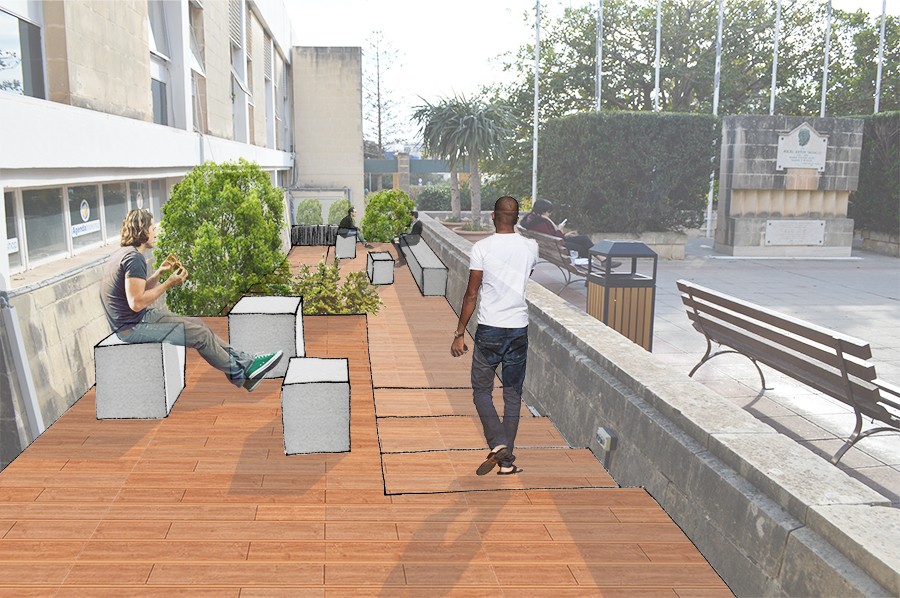
There is no special formula for producing a design strategy. It is equal parts critical thinking and creativity. However, there is a key truth that helps frame things for designers: create the space as though you are using it yourself. In this case, the students were already users. As a result, they designed solutions for campus spaces wearing not only a ‘student hat’ but a ‘design, user and evaluator’ hat. They thought of planning tools, SMART objectives, space, and evaluation standards. They also considered the ‘eight dimensions of product quality management: performance, features, reliability, conformance, durability, serviceability, aesthetics, and perceived quality.
The designs show how spaces should reflect the way people really want to use them.
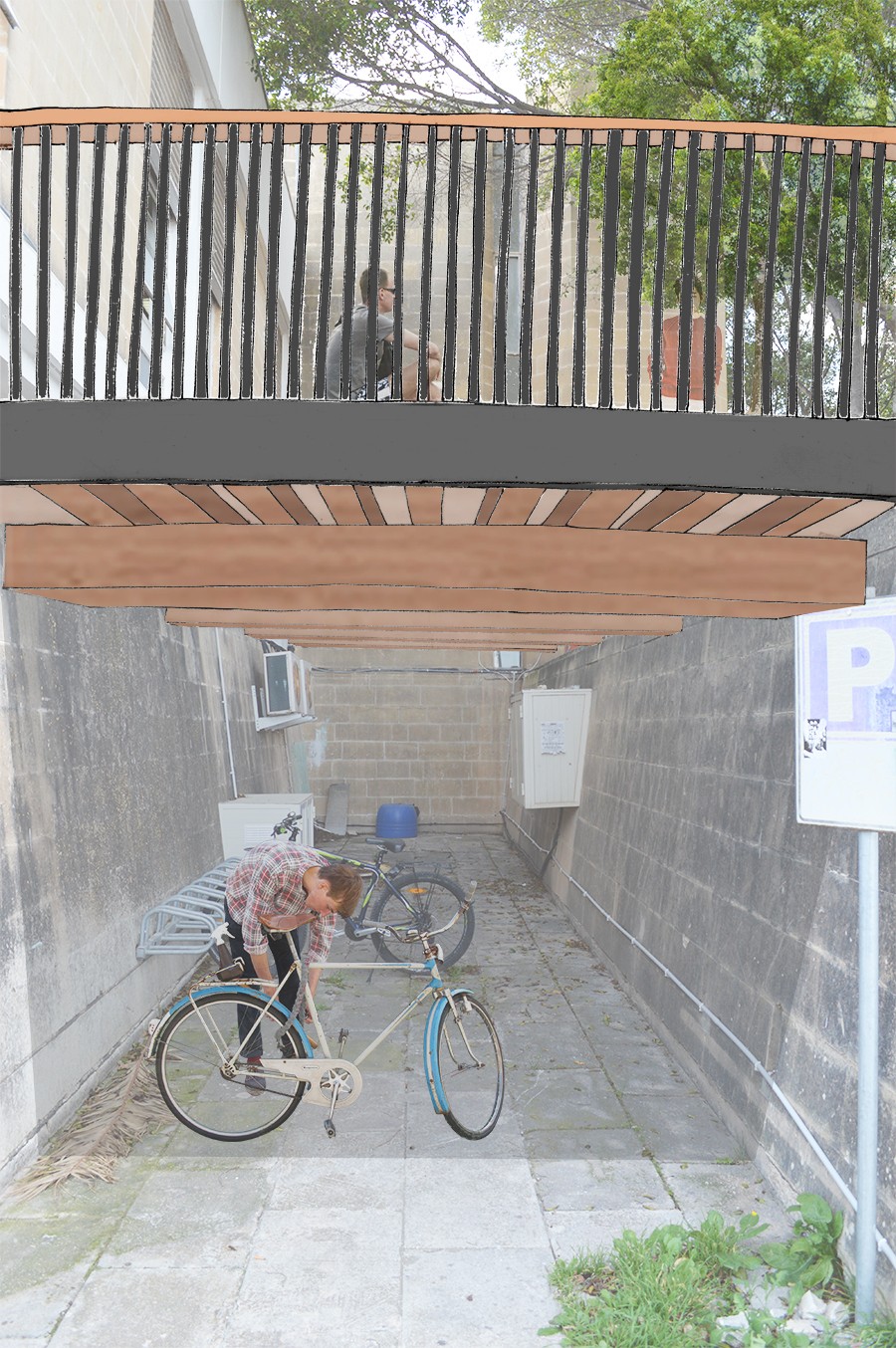
In the end, student Alison Galea brought life back into the light well inside the Faculty for the Built Environment, turning it into a student hangout area with a lounge and relaxation room. Jessica Galea re-visited the outdoor space at the science lecture theatre to make way for some creative outdoor furniture and futuristic shapes intended for breaks between lectures. Brandon Saliba re-thought the Quad ditch, introducing new seating with versatile materials and better-managed spaces, perhaps encouraging others to soak in the summer sun during the end of semester time, preempting the much-needed summer break.
The designs show how spaces should reflect the way people really want to use them. Once designers place themselves as users in the centre of the project and build solutions around those needs, the gap between design for its own sake and design used to make change begins to close.
Author: Dr Rebecca Dalli Gonzi



Comments are closed for this article!