Usability – the frustrated user

Dr Conrad Attard

Today we can say ‘there is an app for everything.’ Android and iOS boast over 3.5 million and 2.2 million apps on their platforms respectively, each of them fulfilling a role, be it social, utilities, entertainment, gaming, productivity, commerce, and much more.

As users continuously feed personal and work-related information into their smartphones, from calendar entries to sign-ins at favourite restaurants, apps are becoming more personalised, learning more about their behaviour.

So what role does usability play in the digital world? The term usability is part of a broader term referred to as ‘user experience’. Usability assesses how easy it is for people to use interfaces. Developers are expected to create apps that people need, but they need to keep in mind that if that app is difficult to manoeuvre, their target audience will stop using it. From users’ perspective, too many apps these days are failing to add enough value, seeing adoption drop off quickly.

At the workplace, employees are expected to learn and use software applications. A lot of these are now available through mobile devices that need to be connected. However, studies conducted in different scenarios such as airport environments and healthcare show that people are struggling to adopt technology.

However, studies conducted in different scenarios such as airport environments and healthcare show that people are struggling to adopt technology.

Most people access apps related to public services on their smartphones and tablets so that they can submit e-forms and conduct work of that sort. Unlike with leisure apps and games, the choice in this field is limited to the apps provided by the public entities themselves. As a result, users or employees of companies become frustrated when apps are not designed effectively.

More usability experts are needed to improve the way apps are designed. Well-designed apps empower people, seeing them become more confident with technology they are unfamiliar with. Better apps contribute to addressing challenges people face when they can’t keep up with the swift advances of the digital world. The use of digital tools that are easy to learn and easy to remember allow users to create, understand, and communicate while continually developing their digital skills. Usability not only boosts digital literacy, it also bridges the gap between tech-savvy users and those we risk leaving behind.

Further reading:
C. Attard, G. Mountain, and D. Maria Romano; ‘Problem solving, confidence and frustration when carrying out familiar tasks on non-familiar mobile devices‘ 

Author: Dr Conrad Attard

Growing up in the digital age

With the rise of digital technology and its impact on early childhood development, young children and parents alike are stepping into unchartered territory. Hans-Joachim Sonntag talks to Prof. Charles L. Mifsud and Rositsa Petrova about their latest study in collaboration with the European Commission’s Joint Research Centre.

Continue reading

Sylo

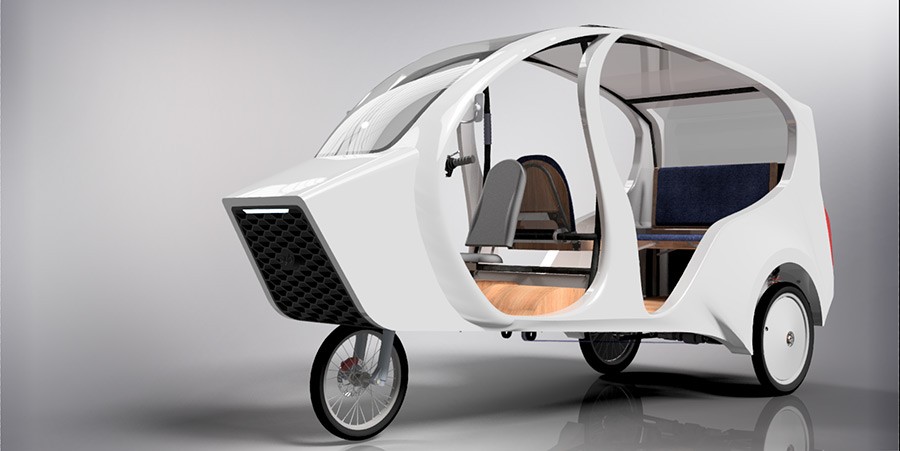
Function, form, safety, and environment. SYLO is a family of hybrid cycle rickshaws that fulfils all four design pillars to deliver good performance and a smooth ride.
SYLO is designed for short distances, catering to commuters and delivery services. What sets it apart from its counterparts is its mixed-propulsion technology, using both photovoltaic panels and pedal power. Adding to its ‘green’ points is the fact that recyclable plastics have been used for the body. This helped from an engineering perspective because it kept the vehicle light, allowing it to serve its function despite the difficult terrain it must operate in.


What sets it apart from its counterparts is its mixed-propulsion technology, using both photovoltaic panels and pedal power.

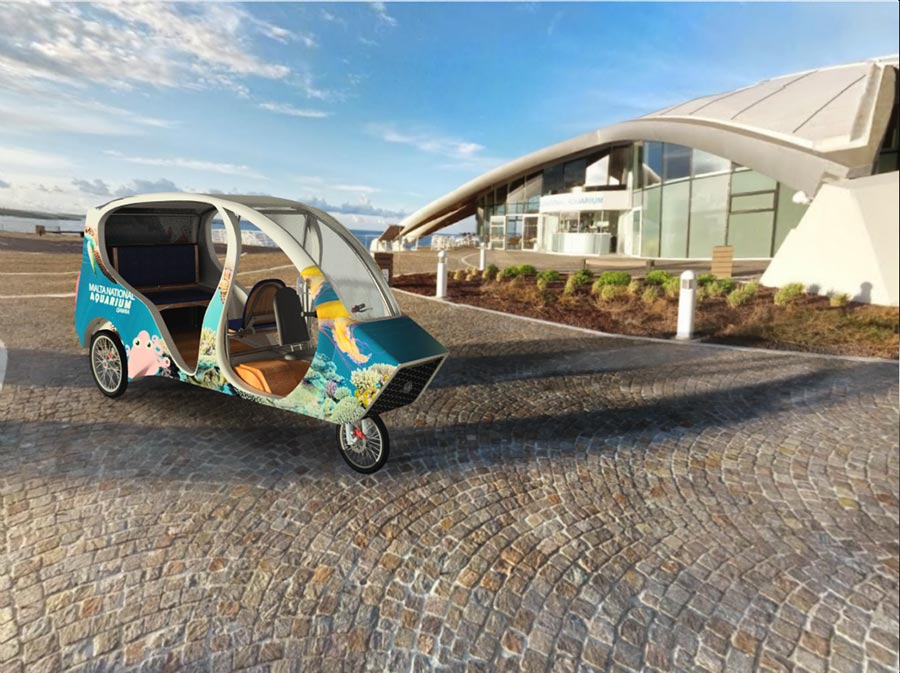
Form was an especially important factor in the design process. As the aim was to use this vehicle both within the historical context of the capital city, Valleta, and in cosmopolitan spaces such as Paceville and Bugibba, it was essential for the vehicle to complement its built environment, be it classical or contemporary. Towards this end, bold lines were used, making the vehicle look distinct without looking alien.


SYLO was the product of 10 mechanical engineering students supervised by academics from the Department of Industrial and Manufacturing Engineering,Faculty of Engineering, University of Malta as partof a third-year engineering design project.

Radio Telescope

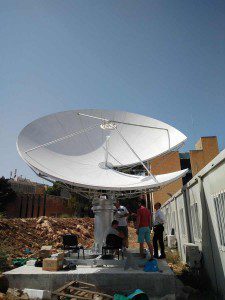
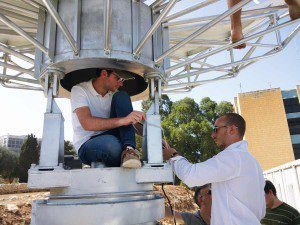
Malta now has a radio telescope. This is a great step forward for the University of Malta as it helps speed up research.

The Department of Physics, Faculty of Science and the Institute of Space Sciences & Astronomy (ISSA; both at the University of Malta) have just acquired a 5.3m dual-reflector parabolic dish, as part of a European Regional Development Fund (ERDF) project to extend postgraduate research lab facilities. The radio telescope will now allow students and researchers to study celestial objects such as the sun or the centre of the galaxy through the radio waves they emit.

Quick Specs
Dish diameter: 5.3m

Feed horns: L-Band and K-band

Gain: 44 dBi @ 4GHz

Observing modes: Continuum and line observation

Total weight (including pedestal): 1900 kg

Surface accuracy: 0.5mm

PC-based automated control unit

toolkit03

toolkit02When pointed to a radio-loud celestial object (an object which emits large amounts of radio waves, such as the sun), the telescope will receive radio waves from these sources and convert them to voltage readings in the feed. The converted signal is then transmitted to a digitiser that converts these signals into bits and bytes.

The digitised signals are then processed and broken down into the different frequency counterparts (similar to what a car radio does with the radio waves it receives from its antenna), which allows for continuum observation of the skies above. The telescope provides a test-bed for several research initiatives being undertaken at ISSA.

Some of its specialisations include improving the hardware and software processing back-ends for radio telescopes. The on-site telescope can speed up this sort of research immensely. ISSA is part of the largest radio telescope project in the world: the SKA (Square Kilometre Array).

Using Muscle Activity To Control Machines

Independent living is important to everyone. However, it is a known fact that there are many cases where physical problems prevent people from living without care. To help people regain some independence in their lives there are systems such as Human to Machine Interfaces (HMI). Systems such as these work by using biosignals like Electromyographic (EMG) signals that can be used to control assistive devices. However, some have their drawbacks: prosthetic arms, for instance, are one commonly used device that are at times abandoned due to a lack of dexterity and precision.

The problem is that most of these devices make use of sequential control, where only one function can be articulated at a time— meaning fluid, life-like motions are impossible. Now, most daily activities need simultaneous movement with multiple degrees of freedom. And it is this need that is pushing the creators of these devices to create simultaneous control to mimic real life movements.

Christian Grech (supervised by Dr Tracey Camilleri and co-supervised by Dr Ing. Marvin Bugeja) has developed a system which allows the control of the position of a robotic arm by using the muscle activity of a person. This consists of an HMI which continuously provides the shoulder and elbow joint positions using surface muscle movements. Grech tested the model to develop more freedom, which would lead to fluid movements. He investigated three types of system identification methods (state space models, linear regression models, and neural networks) to develop this relationship between muscle activity and corresponding joint angles. Additionally, seven different movements were tested in real-time using a robotic arm. Grech managed to develop a model that allows prosthetic arms to be used more naturally.

Of course, more research is needed to perfect this device. Ideally it would operate without delay and with minimal user discomfort. The Department of Systems & Control Engineering is carrying out more research to continue to improve the accuracy and robustness of such myoelectric (EMG) controlled devices.


This research was carried out as part of a Bachelor of Engineering degree at the Faculty of Engineering, University of Malta.