Architecture: A dying art?

Making smart choices for our current urban fabric through architecture requires a massive understanding of all the moving parts of the industry. But is it time to go back to basics? Cassi Camilleri speaks to Prof. Antonio Mollicone and the talented people at AP Valletta to come up with an answer.

The changes in the Maltese landscape over recent years has been drastic. All over social media, petitions keep being shared to prevent one original building or another from being torn down and replaced with contemporary apartments. This has ‘resulted in discomfort for many,’ says Prof. Antonio Mollicone, an architect lecturing within the Faculty of Built Environment (University of Malta). 

Prof. Antonio Mollicone

The discomfort is multifaceted. On one level, it has to do with the physical climate within buildings. Over the last few decades, Malta has seen a shift in the property types people buy, and these properties seem to be leaving people hot or cold in their own homes.

Through his research, which used an old Maltese farmhouse as his case study, Mollicone found that ‘a property’s orientation, double skin (having two layers of brick walls), ceiling height and window measurements all have a role to play.’ Mollicone points out that ‘orientation is most important.’ In an ideal world, based on Malta’s position on the globe, ‘houses should be north-south facing and rotated clockwise to east by eight degrees to get the best of the sun in winter and the least of it in summer.’ Higher ceilings can create a four-degree difference in the temperature inside a room. As for the floor to ceiling windows you see in all the glossy magazines, Mollicone finds them problematic, noting the costs involved in terms of energy efficiency when replacing stone with glass. ‘Certain basic techniques in design are being lost in the fast-paced world of today,’ Mollicone asserts. 

Konrad Buhagiar (AP Valletta)

On this note, founding partner of AP Valletta, Konrad Buhagiar, says that with the ‘era of radical pragmatism’ we are currently living in, ‘the commercial aspect of a project is paramount,’ adding, ‘It will always be so. It is the nature of the industry.’ But with this being said, effort needs to be put into giving buildings and new projects a depth that ‘connects [them] to [their] context.’  

Even with the best of intentions, challenges still arise. Mollicone laments the flashy features he sees added to a building’s façade before a thought is given to function. ‘It’s make-up for buildings. Nothing more. I call it lipstick architecture.’

Luca Caruso, an environmental architect at AP, also speaks frankly, noting that the ‘construction sector is the least innovative worldwide.’ However, by putting an emphasis on quality and criticism, this can change. ‘Criticism is important in order to raise awareness about the possible consequences of Malta’s ‘uncontrolled’ growth. […] Debate can lead to new, innovative ways to inspire decision-makers while respecting local characteristics.’ 

The reality, as Caruso states, is that ‘Malta has undergone massive changes over the last 30 years, and this is a process that requires some more years to mature.’ Buhagiar announces himself a cynic, saying that ‘to produce something excellent, you need an enormous amount of thought and discipline, rigour, and dare I say, sacrifice, all words that do not describe the current culture in any way.’ But Mollicone has hope that common sense will prevail. ‘All we need is to take more time to think about things. Create mindfully. That’s all.’  

Safe haven?

Dr Trevor Borg

Some refer to the Venice Biennale as the pinnacle of the international art world. Last year, feathers were flurried by the Maltese delegation and their representation of Maltese identity. This year, the works question a specific part of the Maltese narrative. 

‘We are working around the theme of MALETH,’ says Dr Trevor Borg, artist, curator, and University of Malta lecturer. Maleth refers to the ancient word for Malta. ‘It is also called HAVEN and SAFE PORT.’ These were all terms used in reference to Malta over the centuries. But is our island really that? This is the question being tackled by Borg and his colleagues. 

Immigration has been a critical issue in recent years, creating an inflammatory divide in Malta. Borg is using the first immigrants, the animals that travelled to Malta during the ice age, to make his point. ‘They travelled here because of the heat our island provided and the food that came with it. But as the ice in the North started to melt, sea level rose and they were unable to return.’

What is the relation between an (apparent) safe haven and a heterotopia? Here, heterotopia refers to Michel Foucault‘s notion of the ‘other place’. Heterotopias are described as ‘worlds within worlds’, connecting different places. They are places that constitute multiple layers of meaning, that accumulate time, that can be both real and unreal.

To represent this visually, Borg is going to create an archaeological find with hundreds of objects from history. Animal remains will feature, as will unusual artefacts and other strange finds. Borg was inspired by Ghar Dalam and used it as a starting point, but this work is not about history. ‘My work begins at the cave. But I will then leave the cave behind and delve into a distant world that never was! The work responds to fabricated histories, museological conventions, historical interpretations, and hypothetical authenticity. It is based on pseudo-archaeological objects and imaginary narratives,’ he explains. 

Collaborating on this work, bringing the artefacts to life is Dr Ing. Emmanuel Francalanza (Faculty of Engineering). The process began at the National History museum in Mdina. ‘Together we selected and scanned a number of animal bones from their archives,’ Francalanza says. This included femurs, teeth, and skulls among others. ‘I then supported Trevor in reconstructing the 3D model and preparing it for printing.’ 

For Francalanza, this was a chance to apply engineering technologies in new ways, to allow artists to express themselves. But not just. ‘At the same time, this opportunity provides us engineers and scientists with an avenue to explore concepts and even utilise thinking patterns which are not traditionally associated with our disciplines. It helps us be more creative and open to innovative practices.’ 

Working together, Borg and Francalanza are blurring the lines between what is real and what is fake. By recreating the original artefacts in such a way that a viewer cannot determine whether what is being seen is authentic, the project is poignant commentary for the post-truth era we are living in. 

Poverty in a prospering country

Author: Samuel Casha

Samuel Casha

In 2018, anti-poverty organization Oxfam reported how in 2017, the world’s 2,043 billionaires increased their combined wealth by $762 billion–enough money to eradicate global poverty seven times over. While in past centuries, poverty was a consequence of a lack of resources, abundance is a far greater issue in today’s world. The problem is resource distribution. 

The gap between the rich and poor is ever-widening, and this is a reality that is true in Malta.

Our streets might not be blighted by homeless people as in most big European cities, yet hidden poverty is increasing. In 2016, the National Statistics Office reported that 16.5% of the Maltese population live at risk of poverty. Skyrocketing property prices have their part to play, grinding society’s most vulnerable members down. Currently, over 900 families live in garages, as stated in a parliamentary meeting in May 2018. 

The situation is not the fault of any one political party or another. Poverty is a structural problem. Capitalism generates poverty, just as it generates wealth. Yet, too often, those in the middle-class point their fingers not at the rich and powerful fuelling the machine, but at the poor themselves. Many assume that the poor could climb the social ladder if only they worked harder, but many are employed and still fail to achieve a decent standard of living since the minimum wage is inadequate. 

Throughout history, countless artists have depicted poverty, among them Vincent Van Gogh, whose Potato Eaters (1885) remains one of the most powerful paintings about poverty in history. Criticised for its lack of a ‘conventional sweetness,’ in a letter to his brother, Vincent insisted that ‘a painting of peasant life should not be perfumed.’ Van Gogh’s Potato Eaters brings the viewer face-to-face with a type of poverty that exists behind closed doors. Malta’s poverty problem is exactly that: behind closed doors. If we cannot do much to help them, at the very least, the poor deserve our empathy, not our judgement. 

This article is based on research carried out as part of the B. A. (Hons.) History of Art with Fine Arts course within the Department of Art and Art History, University of Malta, under the supervision of Prof. Giuseppe Schembri Bonaci.

Home

Author: Dr Pat Bonello 

Dr Pat Bonello

The theme of this edition of THINK magazine is meant to evoke feelings of belongingness, identity, warmth, and solidarity. Our home is usually a place associated with these positive feelings: a place where I can be myself and, in a safe environment, develop into the me I want to be. This is something valuable, something which we should safeguard passionately. At the same time, as a social worker, I know many people for whom ‘home’ does not have such positive connotations. 

The people that come to mind are abuse victims, children and adults living with domestic violence. For them, ‘home’ means suffering, often accompanied by a feeling of helplessness. Others find ‘home’ a difficult concept. Think of people who cannot make ends meet, who have difficulty paying their rent, who cannot afford to buy their own house because of high property prices. Then there are those who can no longer live in their own house because they are unable to look after themselves, be it because of old age or health issues. There are members of broken families who have difficulty identifying their home, asylum seekers who left home behind, and people who have lost a family member and now associate ‘home’ with sadness.

Everybody needs a place where he or she feels ‘held’ and safe enough to develop his or her potential. But if ‘home’ does not fit this bill, where will this environment be?

This is where a network of social solidarity, both formal and informal, comes into play. Alternatives for people with issues related to the concept of ‘home’ include foster placements, shelters, or other residential facilities. But these services are tasked with much more than providing mere accommodation. They need to create an environment which meets the needs of the persons who live there. They need to provide a safe space for people to come in, be themselves, and develop their potential.

For those who don’t need to move out of their current home, options include support and professional interventions, such as family therapy, to deal with the sadness associated around the home, or to improve the dynamics within it. Social service providers in Malta and Gozo carry a lot of responsibility. Unfortunately, the supply does not always meet demand, and some people have to wait considerably before being able to move into more comfortable and nurturing placements—sometimes while living in abusive environments. In other situations, the necessary support is not readily available, as in the cases of asylum seekers and homeless people who need a roof over their head.

While formal support is important and necessary, all Maltese citizens need to share the responsibility and offer a helping hand without judgement. That way, Malta will be able to  nurture communities that work together to create ‘homes’ which cherish everyone, respecting their dignity and worth and encouraging them to flourish. 

What’s lurking on your lunch?

In our modern, fast-paced lives, more of us are turning to convenient ready-to-eat meals. But with short shelf lives and high demand, food safety tests just aren’t quick enough anymore. Dr Sholeem Griffin tells Becky Catrin Jones how an innovative collaboration between microbiology and computing is tackling this challenge.

Continue reading

Analysing the building blocks

Gene sequencing for disease treatment

A staggering amount of diseases can be traced back to a genetic cause. Dr Rosienne Farrugia talks to  THINK about her team’s efforts to use genome sequencing to eventually secure timely treatment for some very serious conditions.
Continue reading

Protecting prisoners from radicalisation

Curbing extremism and violence is high on the global agenda. With prisons known to be a breeding ground for recruiters, are we doing enough to protect our inmates? Michela Scalpello writes.

Continue reading

Bursting the RRI bubble

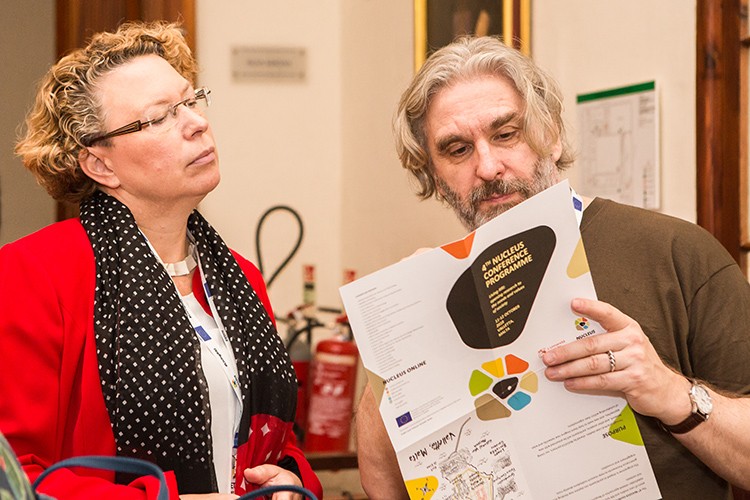
Relationships are based on trust, communication, and mutual respect. The same can be said of Responsible Research and Innovation (RRI). Behind all the new ideas, it all boils down to a group of people, hailing from different walks of life, coming together to try and create a better future for everyone.  At the fourth annual NUCLEUS conference, researchers, academics, science communicators, creatives, and business people flocked to the tiny isle of Malta to share their stories and attempts to embed RRI into their institutions and communities. As everyone settled in, dialogue flowed among delegates and the room was abuzz. University of Malta pro-rector Prof. Godfrey Baldacchino opened the conference with a question: How similar are universities and Valletta, the fortified capital that was hosting the conference? Having been constructed following Malta’s infamous Great Siege, the Knights encased Valletta in massive bastions, allowing only four small entry points. ‘Valletta is an island on an island,’ Baldacchino said. ‘Are universities the same? Are we trying to protect our own?’ The question had many heads nodding in response. 

Most people in the room expressed a feeling of obligation to render knowledge more accessible, more relevant, and more digestible to a wider audience. But they encounter a myriad of challenges. Engaging with publics or policy makers isn’t easy. It means addressing different needs in different ways, sometimes even pandering to whims and flights of fancy. Most people noted issues with time, funding, and resources, calling for processes to be formalised. Others pointed to a lack of creative skills and, sometimes, general interest across the board. What also quickly emerged was frustration with the term RRI itself, creating confusion where there needn’t be any. 

With all of these difficulties, however, came solutions. Dr Penny Haworth from the South African Institute for Aquatic Biodiversity, said that in her experience ‘we need to look at what universities are already doing and work smart. Win hearts and minds.’ University of Malta’s Nika Levikov also pointed out that ‘there are a lot of people practicing RRI who are not conscious of it.’ And for those who do not believe it to be a priority, for those who do not want to engage? ‘You have to set them aside and show them it is possible in a way they understand,’ says Zoran Marković from MISANU, Serbia. 

Picking up Baldacchino’s thread on bringing down the walls of universities and research institutions, Dr Annette Klinkert from Rhine-Waal University of Applied Sciences in Germany summed up her main takeaway from all the discussions. ‘What we can learn here is that it’s time to burst the bubble in which we work. Especially this field of RRI. It is time to leave our cosy little community with our results.’ The results are the various projects that NUCLEUS has been championing over the past years, bringing research to its audiences. ‘All the projects are useless if they can’t merge and get out [into society and communities],’ she emphasises. ‘If they don’t merge, they’re pointless. It is time to burst the bubble.’  

Author: Cassi Camilleri