Borderline


At the European Organization for Nuclear Research (CERN), an army of researchers from around the world are studying the very structure of our universe, starting from the very basic constituents of matter: the fundamental particles.

CERN has some of the largest laboratories in the world, boasting cutting-edge purpose-built instruments like particle accelerators and detectors. It therefore comes as no surprise that, when lecturers from the G. F. Abela Junior College’s Physics Department announced they were organising a visit, all the positions available were quickly snapped up.

There was a recurring theme present throughout our CERN experience: ‘borders’. During our stay, we crossed the Franco-Swiss border several times from our lodgings in France to CERN in Switzerland. Coming from a small islandstate, where any inter-country travel requires a plane or boat ticket, it was a little surreal being able to put our passports away and walk to Switzerland.

The visit helped us reflect on the boundaries we create when trying to study how nature works. We compartmentalise topics into physics, chemistry, or biology, when really these topics are all one large subject seen from different viewpoints. This was most evident in the permanent exhibitions at CERN that touched on topics including atomic structure, PET scans, and the development of computer technology at CERN. There were no borders between the different subjects we studied in different departments back at Junior College.

During this amazing week, we experienced tours of the facility using CERN’s own transport. Many of the researchers use bicycles, taking advantage of all the green areas. We saw dedicated individuals working together for the good of the world, no matter their colour or creed. They overcame yet another border: a cultural one. Their mission is simply to produce outstanding work that will help us understand the universe around us.

The trip opened our eyes in many ways. As a group, we learnt together and supported one another when needed. We shared ideas. Discussed. We were our own mini-unit. With an understanding of this dynamic and all the fields involved, some of us have even been inspired to add a new goal to our list: join the team at CERN.


Authors: Maria Victoria Vella, Josephine Vella and Karen Muscat
This visit was made possible thanks to our sponsors: Liquigas Malta Ltd, Mizzi Motors, and Buzzer Stationers & Publishers. We wish to thank our lecturers for organising the experience, namely Ms. M. Soler, Ms. A. Vella, Mr. C. Busuttil, Ms. L. Bonello, and Ms. E. Bugeja.


Creative playground

Sculpture house. Photo by Mark Casha

The Diploma in Design Foundations Exhibition highlights the yearlong visual and creative process of 80 students. It is a study in representation, composition, and perception of space. Pencil drawings, typographic prints, cast sculpture houses, and panoramic landscape photography fill the studio space.Continue reading

Float

FLOAT was an interactive exhibition that explored light. The exhibition was launched as a one-off event of lit installations spread over the floors of the Faculty for the Built Environment (University of Malta) on the evening of 3 July 2015. The exhibition had aerial walkways, floating rooms, colour bursts, and cityscapes captured in panes of glass.

Continue reading

Is there really an app for that?

Veronica-stivalaGone are the days when learning a new language meant sitting in a classroom, reading books and practising with classmates. There are language learning apps, programs and games now. But can we really learn a new language just by using this technology? Veronica Stivala finds out. Illustrations by NO MAD.

Continue reading

Mecon

Mecon is an ongoing research project for the 2015 edition of the IASS EXPO, themed Future Visions which is to be held in Amsterdam between June and August 2015. The project is to design and build a structurally innovative, deployable pavilion in a bid to celebrate Future Visions in the field of engineering design and innovation. Mecon is the solution created by a team of five recently graduated architects.

Continue reading

Chemistry for Medicine

Written by Kristina Farrugia

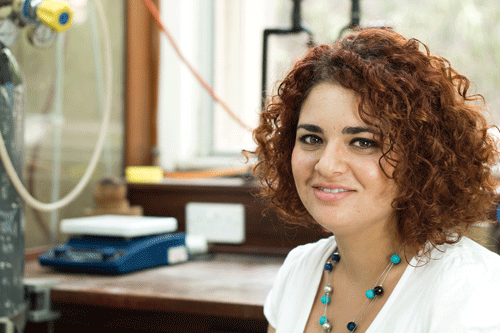
Kristina Farrugia, part of the research team. Photo by Jean Claude Vancell

In medicine a timely and accurate diagnosis can decide the chances of survival of a patient. Supramolecular Chemistry is a field that explores the design of intelligent molecules that can assist doctors when taking lifesaving decisions. These intelligent molecules can identify the type and amount of proteins in a patient’s blood or tissue that would indicate disease—in a similar method to blood glucose test strips.

Continue reading

Students: On Research and Funds

KSU gives its opinion about research

Why do we need research? Why should the University of Malta invest in research? The answer is simple: knowledge. Education has no meaning without a thirst for new information through research.

Universities should be obliged to generate new knowledge by creating thinkers and investing in them. This includes creating an environment where both students and corporations are eager to invest time and money into knowledge worth pursuing. How can this be achieved if students, once they graduate, lose their enthusiasm to find new knowledge? Postgraduate students are faced with insufficient funds and extremely short time frames. Our University has already started moving in the right direction. However, we lack a stable workforce capable of sustaining continued research. This is not easy. Only through dedication, planning, and investment can we break the surface and become a self-sustaining organisation worthy of an academic university.Continue reading