
Skip to content

Racing Dreams

Facebook
Twitter
LinkedIn

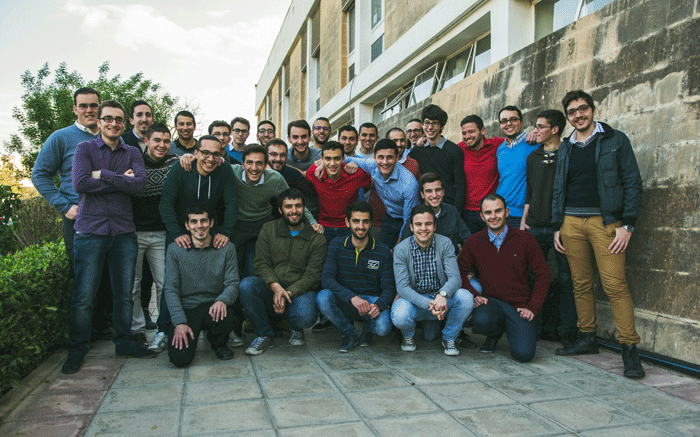
The University of Malta Racing (UoMR) team designs, builds, and races a Formula Style racing car in a Formula Student competition every year. Last September (2014) they competed in Parma (Italy)with their first car. Building this car brought together students from five different faculties with engineering knowledge, costing, marketing, and business proposals for the judges. UoMR is run like a small vehicle manufacturing company.The team is currently working on its second car for Parma 2015. Improvements are being made on weight, speed, and design, bringing a faster and better car.


Screen Shot 2015-07-21 at 13.17.44

Sponsored by the University of Malta and its Research Trust (RIDT), as well as the Ministry for Education and Employment, Transport Malta, PwC Malta, SKF, Tek Moulds, Trelleborg Sealing Solutions, Playmobil Mould Shop Malta, Continental Cars, Adpro-Instruments, the Farsons Foundation and Alarm Tech.

Racing_IMG_5260-(1)Screen Shot 2015-07-21 at 13.17.09

Author

More to Explore

These Insoles Are Made for Monitoring: A Step Towards Preventive Healthcare 

What if healthcare could learn more about our health between appointments? Wearable technology is opening up new possibilities for continuous monitoring, and researchers at UM’s Centre for Biomedical Cybernetics and Department of Podiatry, in collaboration with Tarsos, are making significant contributions in this area. THINK went to learn more about a research project investigating how smart insoles could improve foot health monitoring for people with diabetes.

The Chosen One? Adoption Beyond the ‘Happy Ending’

You look at your reflection in the mirror. Your face tells a story of the generations that came before you. A familiar smile, or a shared eye colour, a resemblance that has probably been pointed out more than once. For most, such observations are brushed off with a smile and quickly forgotten. But what if your reflection raised more questions than answers?

Molecular Mail: Tiny Parcels for Tracking Tumours

Tumours are not discreet. As cancer cells grow and change, they release microscopic particles into their environment. Some of these particles enter the bloodstream. They are small, abundant, and, as researchers are beginning to realise, potentially informative. A Maltese research project is testing whether extracellular vesicles can provide a less invasive source of cancer information.

Comments are closed for this article!