
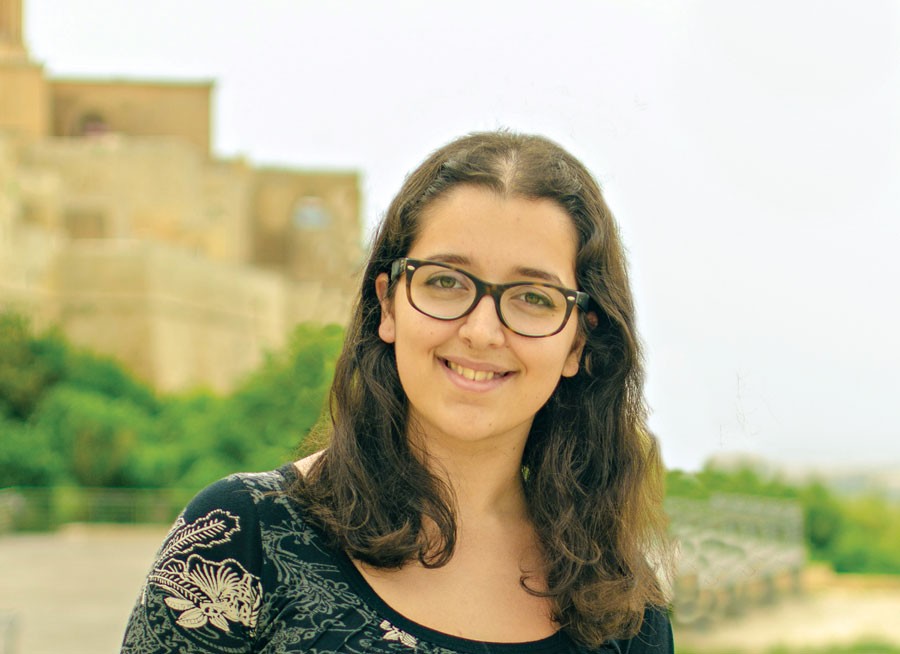
Lucia Farrugia, vice-president of S-Cubed, gives us her opinion on the development of the Faculty of Science.
I am proud to be part of the Faculty of Science during its centenary year. Despite past struggles, the faculty has managed to grow at a steady rate. Its centenary is a cause for celebration but also an opportunity to shine a critical light from an undergraduate’s perspective.
This faculty offers joint courses between departments that allows students to excel in two scientific streams—double the employment opportunities upon graduation. Despite this benefit, communication between departments is lacking for these degrees. Taking a joint course equates to taking two separate degrees. While useful for those undecided students, it is somewhat counterproductive. Undergraduate students who are strong in both streams should be given unique opportunities that need knowledge of both disciplines. Such benefits are only possible with more effective communication between departments. An idea would be to hold meetings across departments for overlapping areas of study. Students should not be held back.
Even though there exist joint courses for students from both faculties, these are treated as though they belong to one faculty, or the other. Also, students are not encouraged to follow a final year project that encapsulates both disciplines. Most final year projects are completed with one faculty, which essentially does not maximise the students’ potential. Final year projects across subjects are already possible yet rare since the student would need to push the idea and it is simpler to work on a given title.
In addition to internal, cross-faculty communication, communication is also lacking between the University of Malta and foreign universities. University needs more research collaborations to overcome a lack of resources. The true wealth of the Faculty of Science is intellectual. The lecturing staff is excellent and students excel when they pursue postgraduate degrees abroad. It would benefit everyone to support students visiting other universities to perform research earlier in their careers.
And finally, we must not forget that the sciences transcend all barriers. The Faculty of Science should represent this by further uniting departments. After 100 years, pursuing such unity would be a great achievement.
Lucia Farrugia is the vice-president of S-Cubed, the science student society (University of Malta).


Comments are closed for this article!