
Robot see, robot maps

by Rachael N. Darmanin

The term ‘robot’ tends to conjure up images of  well-known metal characters like C-3P0, R2-D2, and WALL-E. The robotics research boom has in the end enabled the introduction of real robots into our homes, workspaces, and recreational places. The pop culture icons we loved have now been replaced with the likes of robot vacuums such as the Roomba and home-automated systems for smoke detectors, or WIFI-enabled thermostats, such as the Nest. Nonetheless, building a fully autonomous mobile robot is still a momentous task. In order to purposefully travel around its environment, a mobile robot has to answer the questions ‘where am I?’, ‘where should I go next?’ and ‘how am I going to get there?’

Like humans, mobile robots must have some awareness of their surroundings in order to carry out tasks autonomously. A map comes in handy for humans. A robot could build the map itself while exploring an unknown environment—this is a process called Simultaneous Localisation and Mapping (SLAM). For the robot to decide which location to explore next, however, an exploration strategy would need to be devised, and the path planner would guide the robot to navigate to the next location, which increases the map’s size.
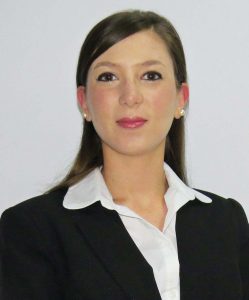
Rachael N. Darmanin
Rachael N. Darmanin

Rachael Darmanin (supervised by Dr Ing. Marvin Bugeja), used a software framework called Robot Operating System (ROS) to develop a robot system that can explore and map an unknown environment on its own. Darmanin used a differential-drive-wheeled mobile robot, dubbed PowerBot, equipped with a laser scanner (LIDAR) and wheel encoders. The algorithms responsible for localising the robot analyse the sensors’ data and construct the map. In her experiments, Darmanin implemented two different exploration strategies, the Nearest Frontier and the Next Best View, on the same system to map the Control Systems Engineering Laboratory. Each experiment ran for approximately two minutes until the robot finished its exploration and produced a map of its surroundings. This was then compared to a map of the environment to evaluate the robot’s mapping accuracy. The Next Best View approach generated the most accurate maps.

Mobile robots with autonomous exploration and mapping capabilities have massive relevance to society. They can aid hazardous exploration, like nuclear disasters, or access uncharted archaeological sites. They could also help in search and rescue operations where they would be used to navigate in disaster-stricken environments. For her doctorate, Darmanin is now looking into how multiple robots can work together to survey a large area—with a few other solutions in between.


This research was carried out as part of a Master of Science in Engineering, Faculty of Engineering, University of Malta. It was funded by the Master it! Scholarship Scheme (Malta). This scholarship is part-financed by the European Union European Social Fund (ESF) under Operational Programme II Cohesion Policy 2007–2013, Empowering People for More Jobs and a Better Quality Of Life.

Robots in the Classroom

Reuben Ferrante, a University of Malta Engineering graduate and founder of eeRoot, has developed a small robot called eeMod. eeMods are built from only two modules stacked on top of each other. The bottom module is a ‘sensor hub’ that can sense the environment around it. It does so through connections (wifi, bluetooth, USB, microSD card slot), several sensors (gyroscope, accelerometer, light sensors), and a bit more wizardry. The second module is the controller, or brain. Its programmable controller is entirely compatible with the Arduino platform—a standard used worldwide. A set of wheels let’s the eeMod zip around.

Because the robot’s brain is empty by default, it can be hooked up to a computer to upload data. eeMods understand complex instructions and can utilise their senses to act accordingly. Users can start programming by using a very simple Arduino compatible drag and drop interface, and later make the transition to writing their own code. Having all that technology in one sleek package is one of the their unique selling points. Although eeMods were originally designed to streamline the scientific workflow in robotics, it is receiving a lot of attention from educational institutions. The robot’s simplicity allows it to be uses in schools giving children early insight into robotics. Ferrante has received multiple requests to provide a syllabus paired to the eeMods and tailored to Malta’s educational system.

Sphero is another miniature classroom robot, but looks very different from an eeMod. The company SPRK provides a near indestructible ball that can move around via various motors at its core. Recently the developers made it possible to programme Sphero through a smartphone app. For some quick fun the ball can also be remote controlled using the same app. It can move across all kinds of surfaces, and even through water—the perfect classroom bot.

The robots approach education from different angles and target different age groups. eeMods are the perfect device to delve into the technology behind robotics and learn programming algorithms early, while Sphero is a nice toy to play around with, enabling even technophobe people to experience the miracle that robots are.

With an increasing presence in everyday life robots are here to stay, in one form or the other. Allowing children to get familiar with the technology early helps teach lifelong skills and inspire them for the rest of their life.

For more information visit the official eeRoots website.

This article first appeared in ‘Sounds of Science’ in the Times of Malta, May 22 2016.

The future of transport

By Brandon Spiteri

The world has globalised. People and cargo need to get about in cheaper, faster ways that use better transport technologies. Magnetic levitation is one way to achieve higher speeds at a cheaper fuel cost whilst offering a smoother ride. There is less friction since the vehicle floats on electromagnetic waves that make this transport method very efficient.Continue reading

New designs for better streets

By Dr Antoine Zammit

Urban development in Malta has undergone an exponential growth in the past decades. This is a growth that has often been imposed indiscriminately within long-established and tightly knit streets, and worsened by a lack of urban design approaches by investors and politicians alike. The Maltese planning system has only reacted to economic and market conditions instead of trying to foresee them, and consecutive governments have simply sought to stimulate the construction industry further. In addition, none of the policies produced by the Malta Environment and Planning Authority (MEPA) have to date been urban design-oriented. The planning system has been overloaded with a plethora of policies that however fail to consider the street—arguably the most important spatial scale within the Maltese urban environment.Continue reading

Irrid immur id-dar — I want to go home

The government recently published an evidence-based national strategy for dementia which recommends that all buildings should be designed in a dementia-friendly way. Dr Claude Bajada speaks to Perit Alexia Mercieca and Dr Charles Scerri to find out more.

Continue reading

Crash Testing: the Largest Experiment on Earth

MarijacauchiUnder Europe lies a 27 km tunnel that is both the coldest and hottest place on Earth. The Large Hadron Collider (LHC) has already found out what gives mass to all the matter in the Universe. It is now trying to go even deeper into what makes up everything we see around us. Dr Marija Cauchi writes about her research that helped protect this atom smasher from itself. Photography by Jean Claude Vancell.

Continue reading

Float

FLOAT was an interactive exhibition that explored light. The exhibition was launched as a one-off event of lit installations spread over the floors of the Faculty for the Built Environment (University of Malta) on the evening of 3 July 2015. The exhibition had aerial walkways, floating rooms, colour bursts, and cityscapes captured in panes of glass.

Continue reading

Mecon

Mecon is an ongoing research project for the 2015 edition of the IASS EXPO, themed Future Visions which is to be held in Amsterdam between June and August 2015. The project is to design and build a structurally innovative, deployable pavilion in a bid to celebrate Future Visions in the field of engineering design and innovation. Mecon is the solution created by a team of five recently graduated architects.

Continue reading

Green Roof Malta

In Malta, buildings cover one third of the Island, leaving greenery in the dirt track. Green roofs are one way to bring plants back to urban areas with loads of benefits. Antoine Gatt, who manages the LifeMedGreenRoof project at the University of Malta, tells us more.

Continue reading