Usability – the frustrated user

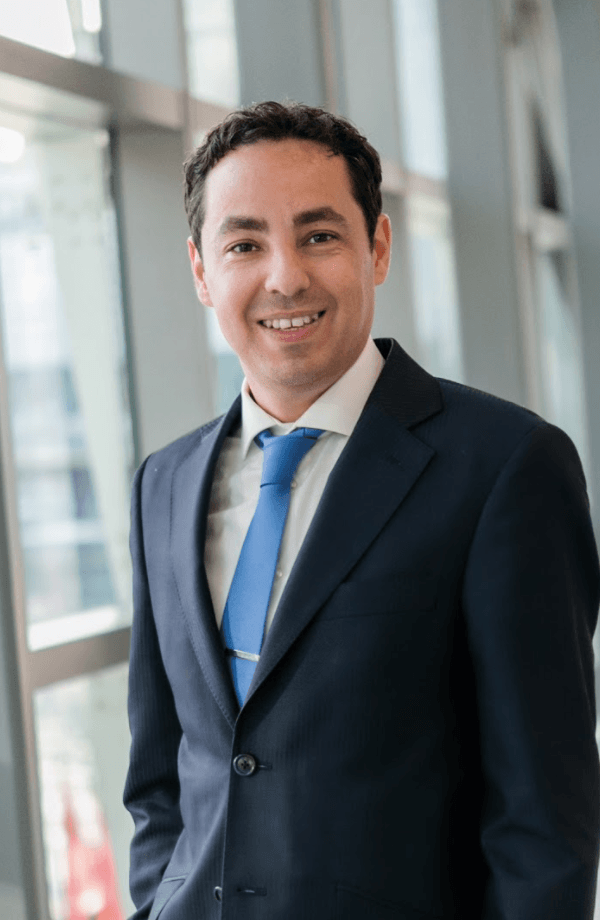
Dr Conrad Attard

Today we can say ‘there is an app for everything.’ Android and iOS boast over 3.5 million and 2.2 million apps on their platforms respectively, each of them fulfilling a role, be it social, utilities, entertainment, gaming, productivity, commerce, and much more.

As users continuously feed personal and work-related information into their smartphones, from calendar entries to sign-ins at favourite restaurants, apps are becoming more personalised, learning more about their behaviour.

So what role does usability play in the digital world? The term usability is part of a broader term referred to as ‘user experience’. Usability assesses how easy it is for people to use interfaces. Developers are expected to create apps that people need, but they need to keep in mind that if that app is difficult to manoeuvre, their target audience will stop using it. From users’ perspective, too many apps these days are failing to add enough value, seeing adoption drop off quickly.

At the workplace, employees are expected to learn and use software applications. A lot of these are now available through mobile devices that need to be connected. However, studies conducted in different scenarios such as airport environments and healthcare show that people are struggling to adopt technology.

However, studies conducted in different scenarios such as airport environments and healthcare show that people are struggling to adopt technology.

Most people access apps related to public services on their smartphones and tablets so that they can submit e-forms and conduct work of that sort. Unlike with leisure apps and games, the choice in this field is limited to the apps provided by the public entities themselves. As a result, users or employees of companies become frustrated when apps are not designed effectively.

More usability experts are needed to improve the way apps are designed. Well-designed apps empower people, seeing them become more confident with technology they are unfamiliar with. Better apps contribute to addressing challenges people face when they can’t keep up with the swift advances of the digital world. The use of digital tools that are easy to learn and easy to remember allow users to create, understand, and communicate while continually developing their digital skills. Usability not only boosts digital literacy, it also bridges the gap between tech-savvy users and those we risk leaving behind.

Further reading:
C. Attard, G. Mountain, and D. Maria Romano; ‘Problem solving, confidence and frustration when carrying out familiar tasks on non-familiar mobile devices‘ 

Author: Dr Conrad Attard

The floating lantern

In Japan, candle-lit lanterns are released into rivers in Toro nagashi to guide the spirits of ancestors back to the other world. The lanterns exude beautiful, orange light as they float downstream. At times they group together, creating what look like small, glowing platforms. This very image was what inspired the floating platform Dr Rebecca Dalli Gonzi is building, together with her colleagues Dr Joseph Falzon, Prof. Tonio Sant, and NAS Limited. The project is being consulted with Prof. Claire DeMarco and ALTERN Limited.

By bringing together the sea, the arts, architecture, and engineering, they are giving rise to a lightweight platform that sits on the water’s surface, providing a unique space for artistic performances, installations, and exhibitions. The lanterns’ rectangular shapes are being replaced with hexagons—a more efficient fit. Holding everything together are mounts or magnetic currents, depending on research results. The modular approach allows adjustability in shape and size, potentially seeing the platform expand beyond its current three meters, while making it easy to disassemble, respecting the environment it inhabits.

The team hopes that the platform, or lantern as it is affectionately referred to, will provide artists and practitioners with a new approach to their art that will bring joy, while also inspiring creative thinking in the construction industry.


Author: Dr Rebecca Dalli Gonzi

Designing the factory of the future

With consumer demand reaching new highs, automation in industry is essential. Dr Ing. Emmanuel Francalanza writes about his contribution to streamlining the complex factory design process for contemporary engineers.

From smartphones, to smartwatches, smart cars to smart houses, intelligent technology is inescapable. Busier people have made efficiency a valuable currency and thus the ‘Internet of Things’ (IoT), and its plethora of connected devices, has become a necessary part of everyday life. The application of this model goes way beyond the regular consumer, however. Continue reading

Capital letters

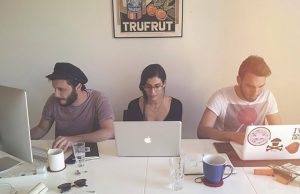
Design group MaltaType, made up of Dingli, Matt Demarco, and Katerina Karamallaki, have set up the exhibition to engender awareness of good design through historical study

Valletta is being transformed into Malta’s vibrant cultural hub. With this welcome upheaval, however, the need to preserve the unique urban façades of the capital city’s old establishments has become critical.

Malta-based design group MaltaType is organising an exhibition on their study of shop sign production, as well as the typology and aesthetic of Valletta’s Strait Street signs, using them to create stylised prints of various shops.

The eponymously named exhibition will preserve the artefacts of Valletta’s modern history through a series of prints showing signs, shop fronts, and typography. The installation will lead from one room to the next, expanding on different aspects that constitute the process of designing and producing some of Valletta’s most iconic signs.Design_M

This project does not aim to emphasise reverting to past styles or practice, but to engender awareness of good design through historical study.

The exhibition is not intended to be a static event. Talks will focus on the history of design and the analysis of the aesthetic of the capital’s commercial establishments. Workshops will also take place, centring on the printing techniques used in the project. A main feature will be the launch of a newly-designed font created by MaltaType specifically for this event.Design_Type-Sketches

Preserving and studying past knowledge is key to generating innovative techniques. This project does not aim to emphasise reverting to past styles or practice, but to engender awareness of good design through historical study. Design is a rather young research topic in Malta, and a comprehensive study of local design is sorely needed as a baseline to build upon. The MaltaType exhibition is one such keystone. 


Design_CarmenbarMaltaType will run from 25 May until the following Sunday at Splendid in Strait Street, Valletta. The project is part of the annual artistic programme of the Strada Stretta Concept, a Valletta 2018 Foundation project. The artistic director is lecturer Dr Giuseppe Schembri Bonaci (University of Malta), and the exhibition is curated by Nikki Petroni, while the MaltaType designers are Ed Dingli, Matt Demarco, and Katerina Karamallaki. For more information: www.maltatype.com

Design

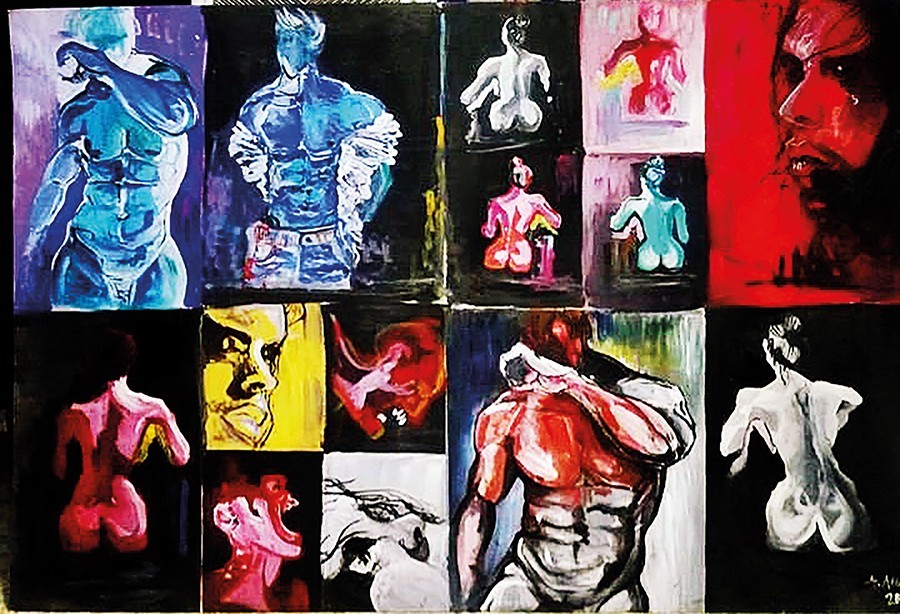
Prostitution no.2 by Abigail Attard Prostitution is known as the oldest profession. It is also the one with the highest human cost. This artwork reflects the pain female prostitutes feel contrasted by the coldness of the men who fuel the business. Attard was inspired by news items on these issues, and her belief that more measures are needed to bring an end to the business that fuels the objectification of women.
Prostitution no.2
by Abigail Attard
Prostitution is known as the oldest profession. It is also the one with the highest human cost. This artwork reflects the pain female prostitutes feel contrasted by the coldness of the men who fuel the business. Attard was inspired by news items on these issues, and her belief that more measures are needed to bring an end to the business that fuels the objectification of women.


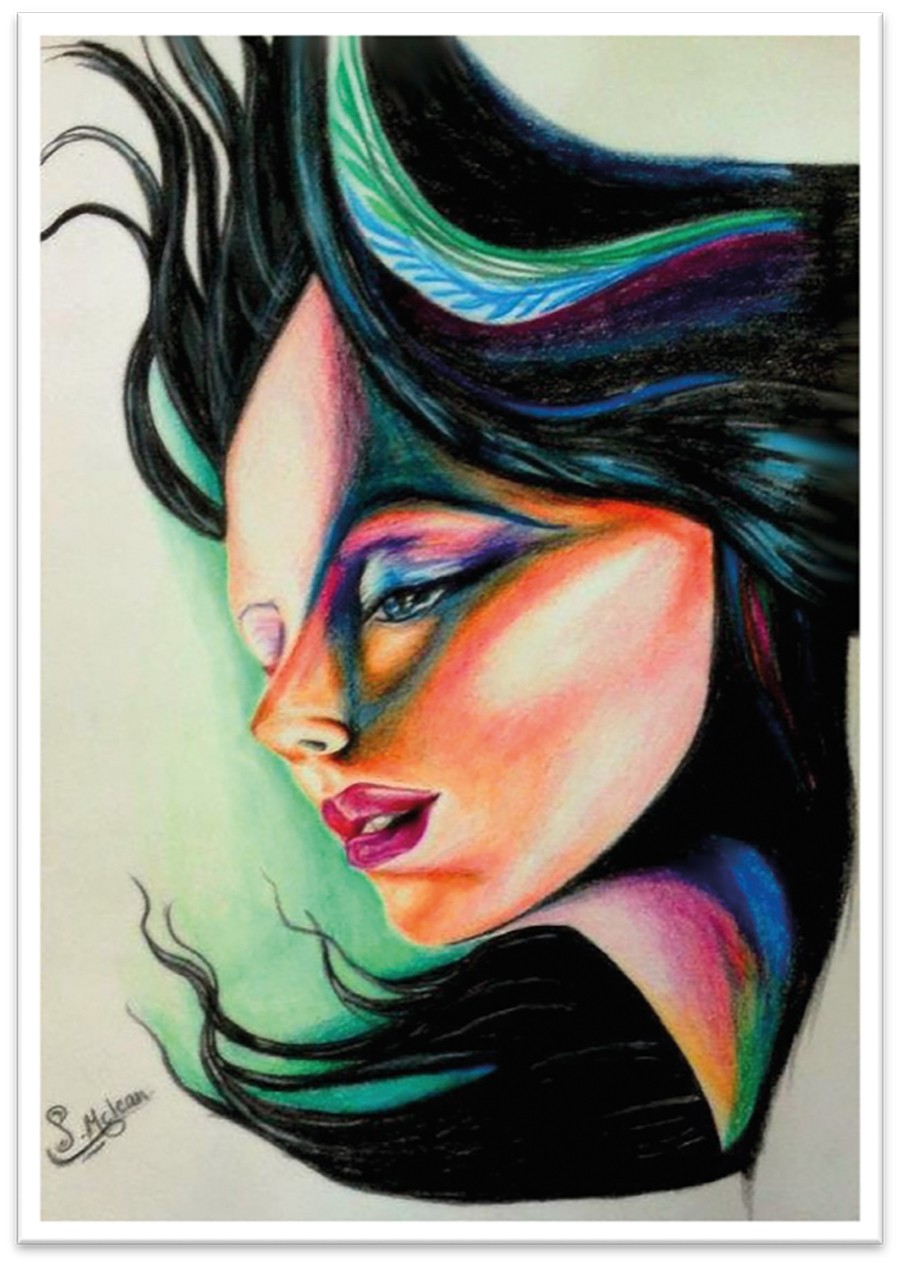
CuriouSedative by Sharon McLean Many idioms reflect how curiosity is not always a good thing. This artwork personifies the mental struggle suffered when a curious mind tries to seek tranquility. It also represents a person’s cautiousness sheltering the self from exposing their state of mind.
CuriouSedative
by Sharon McLean
Many idioms reflect how curiosity is not always a good thing. This artwork personifies the mental struggle suffered when a curious mind tries to seek tranquility. It also represents a person’s cautiousness sheltering the self from exposing their state of mind.


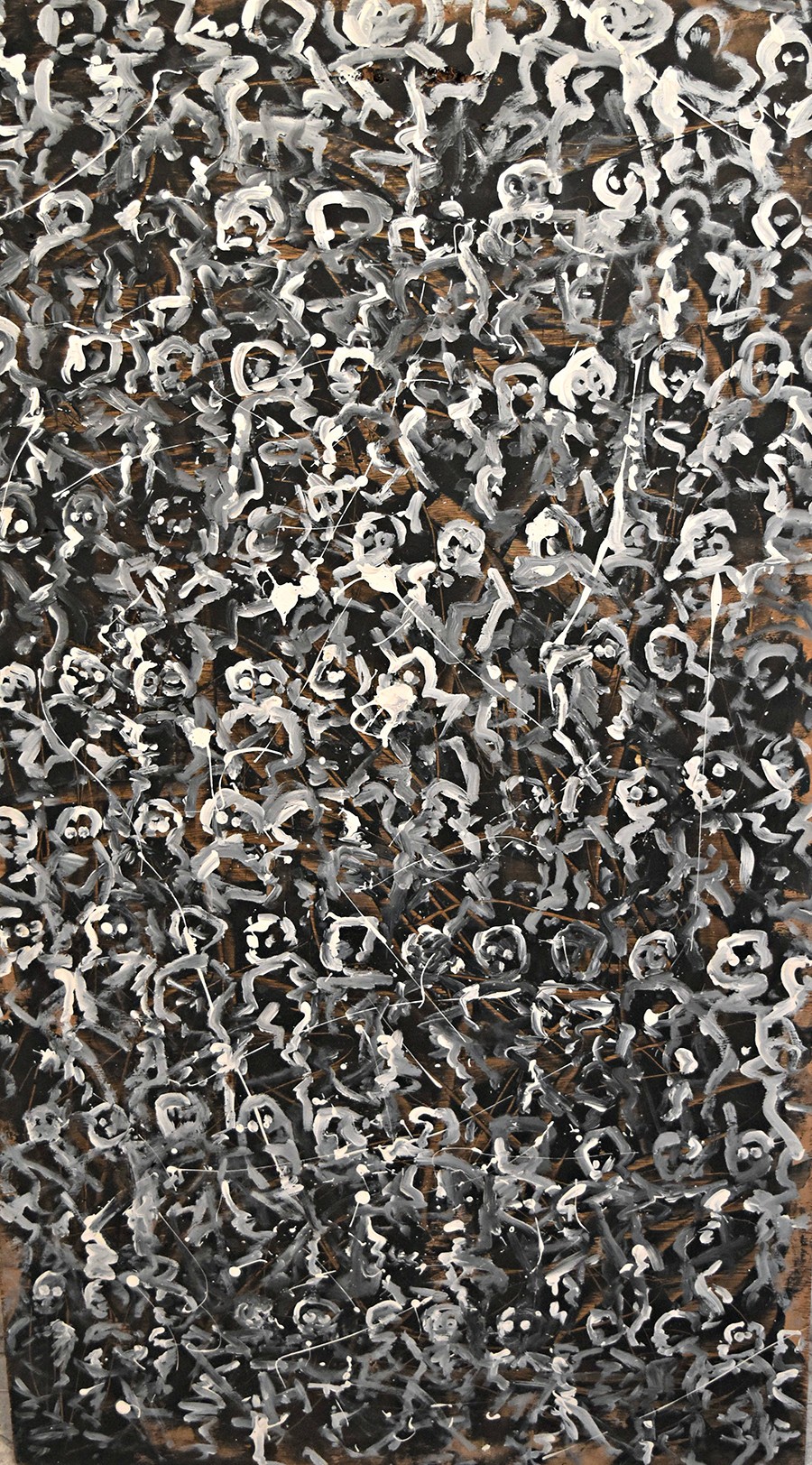
Untitled 1 by Lara Gove This artwork is part of a series interpreting a text known as Cities and the Dead 4 which is found in Italo Calvino’s book Invisible Cities. The painting reflects a state of decay, an entire city turned into a burial ground with confined spaces with restricted movement.
Untitled 1
by Lara Gove
This artwork is part of a series interpreting a text known as Cities and the Dead 4 which is found in Italo Calvino’s book Invisible Cities. The painting reflects a state of decay, an entire city turned into a burial ground with confined spaces with restricted movement.


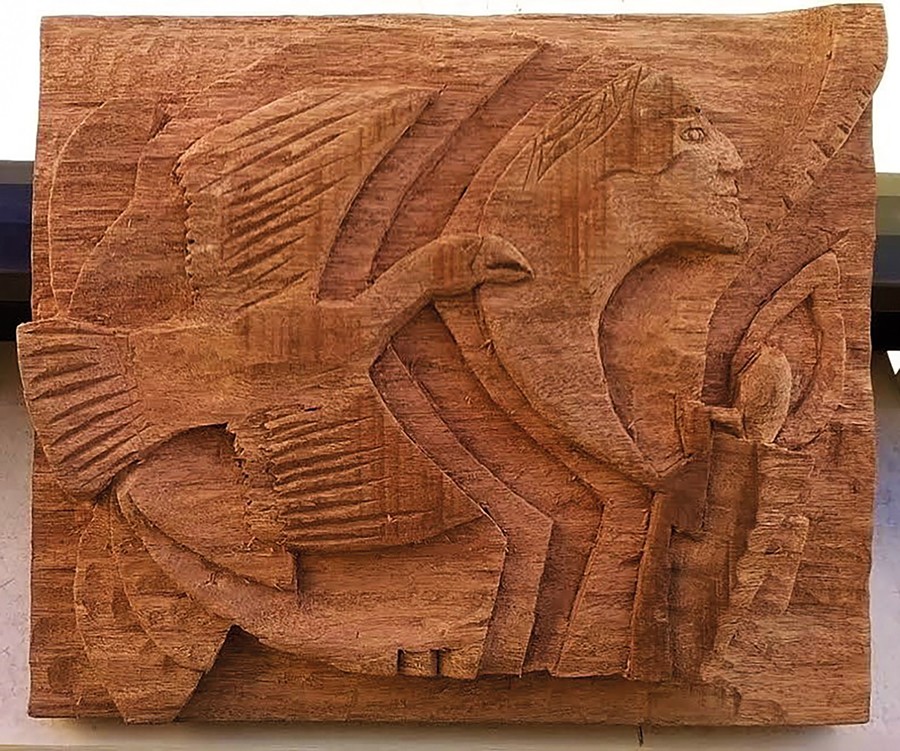
Wooden Sculpture no.1 by John Paul Muscat This artwork’s imagery reflects multiculturalism. It is the artist’s first wood carving.
Wooden Sculpture no.1 by John Paul Muscat
This artwork’s imagery reflects multiculturalism. It is the artist’s first wood carving.


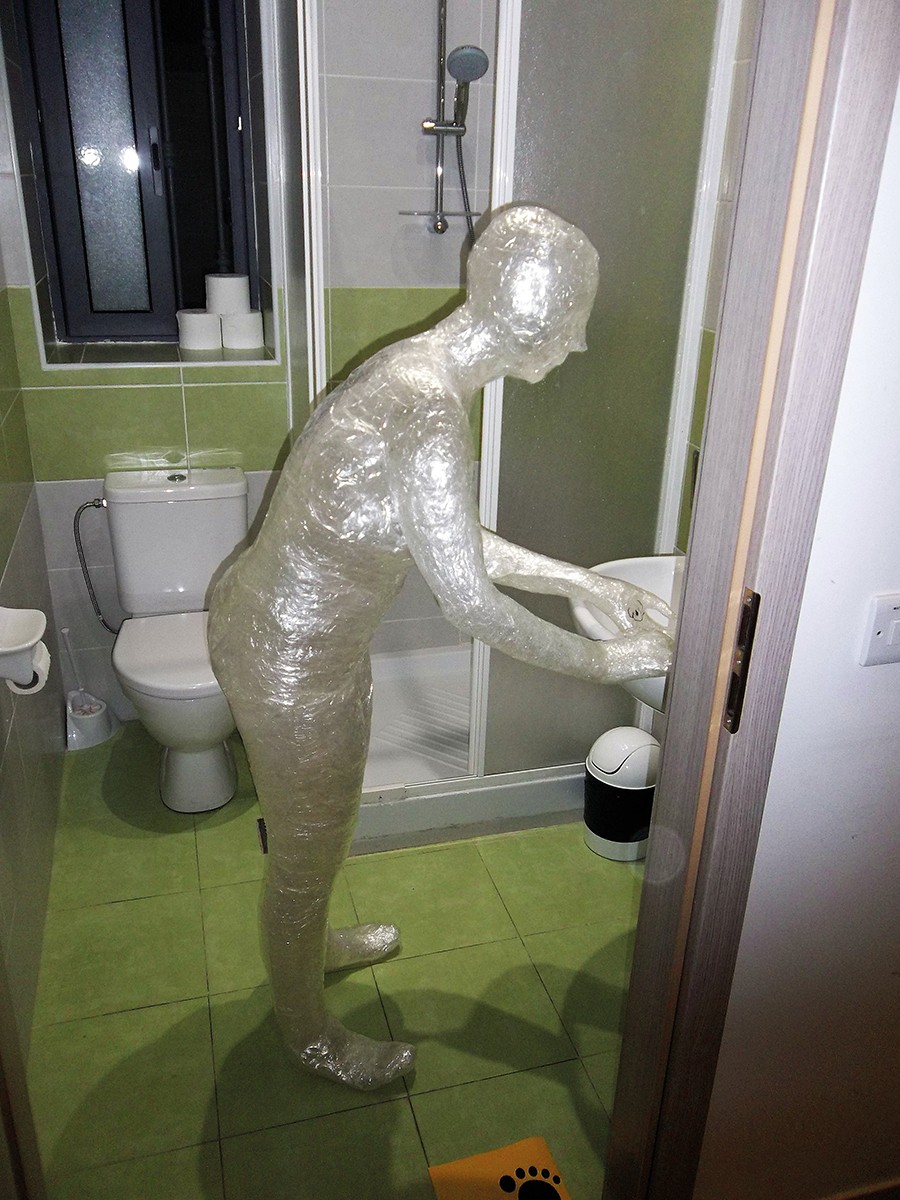
Hollow by Nicolai Schembri Cyberbullying can have dreadful repercussions. This art installation with figures made of transparent tape reflects the emptiness a person can feel when they are the victims of online harassment. The figures merged with their surroundings and became part of the space, with an almost ghost-like effect.
Hollow
by Cristina Formosa
Cyberbullying can have dreadful repercussions. This art installation with figures made of transparent tape reflects the emptiness a person can feel when they are the victims of online harassment. The figures merged with their surroundings and became part of the space, with an almost ghost-like effect.

l-għ

L-għ is a thoughtful, innovative, and interactive exhibition. The reaction it provokes is from the very base of the senses and is the first final year project exhibition from BFA in Digital Arts degree students organised by the Department of Digital Arts, Faculty of Media and Knowledge Sciences.

The exhibitors chose an intriguing moniker: the most enigmatic and iconic rune in the Maltese alphabet (L-għ). Together they used it as a starting point and explored the thematic elements it connotes. The students tapped into six themes and developed twelve projects.

Despite majoring in animation or graphic design, each artist worked with a subject they discovered and developed over several months. Creativity and variety are abundant, with projects ranging from audio-visual experiments and curatorial work to interactive documentaries and highly thematic visual material. The body of research and thought behind each project sheds recognition on conceptual and creative transformations currently occurring in the practice of art and design. They shift the boundaries of art, design, and media and how they can be used together.


L-għ, the Degree Exhibition of the BFA in Digital Arts (Department of Digital Arts, Faculty of Media and Knowledge Sciences, University of Malta). Artists: Ramon Azzopardi, Matthew Calleja, Caroline Curmi, Darryl Farrugia, Danika Muscat, Angele Pollacco, Lucrezia Rapa, Pascale Spiteri, Michelle Trapani, Siobhan Vassallo, Matthew Vella and Ryan Zammit Pawley.

Creative playground

Sculpture house. Photo by Mark Casha

The Diploma in Design Foundations Exhibition highlights the yearlong visual and creative process of 80 students. It is a study in representation, composition, and perception of space. Pencil drawings, typographic prints, cast sculpture houses, and panoramic landscape photography fill the studio space.Continue reading

Il-Boċċa

Come relax in Il-Boċċa, a playful wooden sphere created with cutting-edge design tools. Its shape helps reduce the structure’s scale. Valletta has grand buildings with narrow streets that cannot handle large structures.

Continue reading