
Skip to content

Creative playground

Facebook
Twitter
LinkedIn
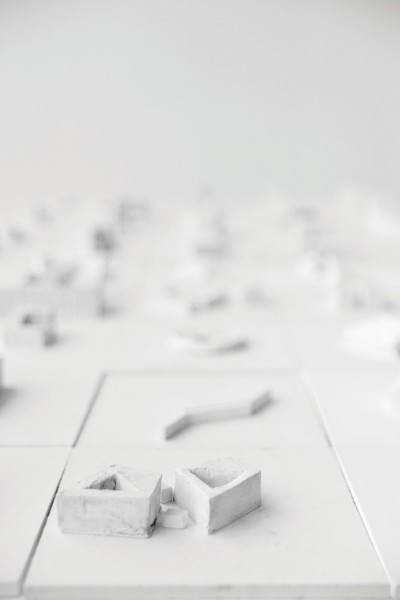
Sculpture house. Photo by Mark Casha

The Diploma in Design Foundations Exhibition highlights the yearlong visual and creative process of 80 students. It is a study in representation, composition, and perception of space. Pencil drawings, typographic prints, cast sculpture houses, and panoramic landscape photography fill the studio space.

Creative awakening is the undertone of the exhibition. Students are encouraged to harness their skills and to experiment freely with visual thinking within a structured environment.

The exhibition consists of projects completed throughout the year. Pencil sketches of chair designs and glass houses illustrate the design process followed by rich computer-generated 3D renders. The results are absorbing images of townscapes, landscapes, and alternative interpretations of mundane sights like pavements and road markings that are given new aesthetic meaning. Cast sculpture houses of clay and plaster are the students’ first experimentation with form in three-dimensional space and with mold making.

The Diploma Exhibition gathers together a range of diverse and original ideas using skills acquired through practice-based research.



For dates about the upcoming exhibition see www.um.edu.mt/ben/visualarts. The exhibition was curated by Anton Grech in collaboration with Mark Casha from the Department of Visual Arts (Faculty for the Built Environment).

Author

More to Explore

The Legacy of Press Freedom

At this year’s Mabel Strickland Memorial Lecture, international negotiator and mediator Nomi Bar-Yaacov argued that democracies are entering a period in which the crisis extends beyond censorship or attacks on journalists alone. As wars multiply, trust in institutions weakens, and information becomes increasingly mediated through algorithmic systems, the deeper problem may be that societies are losing their ability to agree on what is true in the first place.

Squeezing Out Waste: Transforming Malta’s Olive Waste into Green Goods

While olive oil production generates vast amounts of nutrient-rich waste, approximately 98% of the antioxidant-rich phenolics in olives are lost during oil extraction. To combat rapid degradation, the OliveGREEN team is exploring a novel strategy using sulphur dioxide and enzymes to stabilise olive pomace. THINK speaks with Dr Frederick Lia to learn why saving this discarded byproduct makes a difference.

More Than Four Walls: The Influence of the Library Space on Student Wellbeing

Academic libraries are often framed as quiet repositories of knowledge, but their influence runs deeper. As student mental health concerns intensify, these spaces are emerging as critical environments for connection, comfort, and care. Beyond books and databases, the design, atmosphere, and activities of a library can shape how students feel, cope, and belong within the wider university experience.

Comments are closed for this article!