
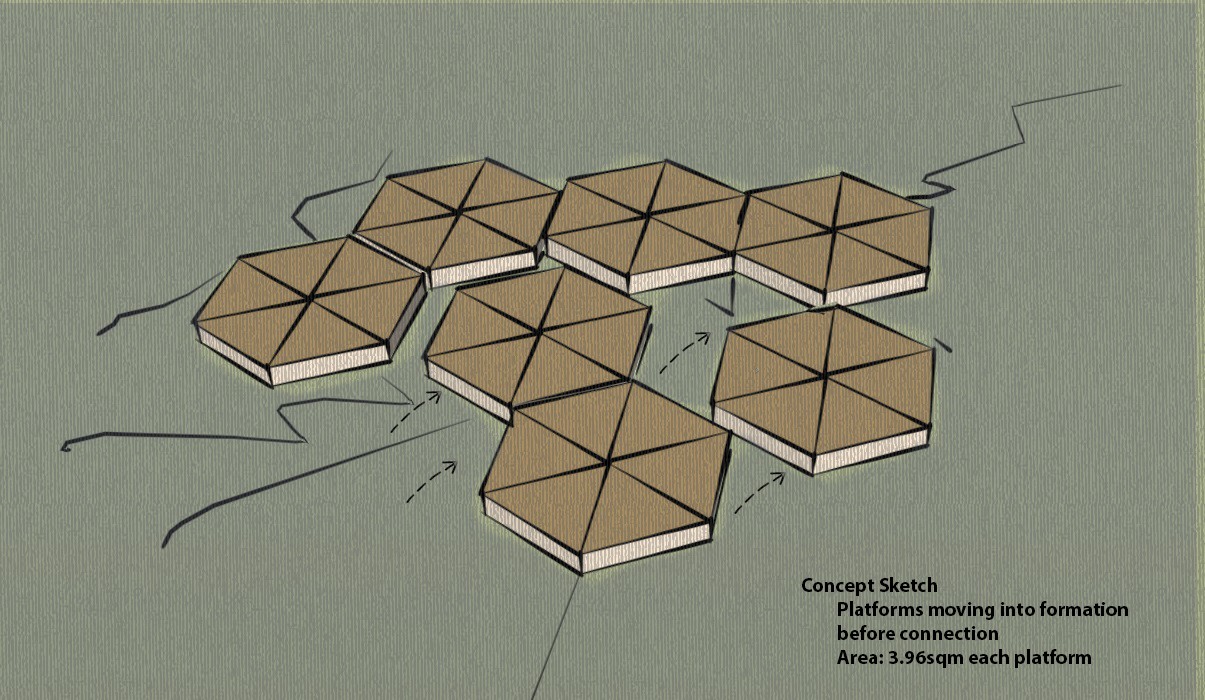
In Japan, candle-lit lanterns are released into rivers in Toro nagashi to guide the spirits of ancestors back to the other world. The lanterns exude beautiful, orange light as they float downstream. At times they group together, creating what look like small, glowing platforms. This very image was what inspired the floating platform Dr Rebecca Dalli Gonzi is building, together with her colleagues Dr Joseph Falzon, Prof. Tonio Sant, and NAS Limited. The project is being consulted with Prof. Claire DeMarco and ALTERN Limited.
By bringing together the sea, the arts, architecture, and engineering, they are giving rise to a lightweight platform that sits on the water’s surface, providing a unique space for artistic performances, installations, and exhibitions. The lanterns’ rectangular shapes are being replaced with hexagons—a more efficient fit. Holding everything together are mounts or magnetic currents, depending on research results. The modular approach allows adjustability in shape and size, potentially seeing the platform expand beyond its current three meters, while making it easy to disassemble, respecting the environment it inhabits.
The team hopes that the platform, or lantern as it is affectionately referred to, will provide artists and practitioners with a new approach to their art that will bring joy, while also inspiring creative thinking in the construction industry.




Comments are closed for this article!