
Lights, Camera and Ken


Valletta is living proof that major cultural and artistic events can breathe new life into the city. When Malta’s capital was granted the title of European Capital of Culture for 2018, all hands were on deck to prune and preen, reversing decades of decay to make it ‘worthy’ of such a prestigious title. Now, after years of intense effort, the hard work has paid off. City Gate now provides an appropriately magnificent entryway into Valletta. Dingy, long-shuttered venues have been restored and reinvigorated. The once sleepy city has roared back to life with the wealth of events being organised. Valletta is no longer a stop on the hop-on hop-off bus; it is a bustling melting pot of old and new with an inescapable siren song.
This shift has created positive momentum in the arts scene. But not all outcomes have been positive. Valletta’s overhaul can look very different for the ones who call the city home. The burst of activities may have disrupted some people’s day-to-day business, while also contributing to the congestion and noise. The solution is in identifying ways to effectively balance the discomfort brought about by social change and the valued benefits that same change brings.
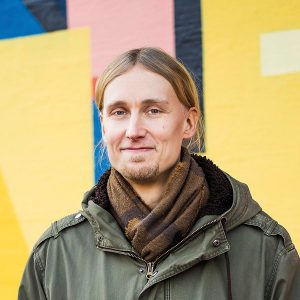
Finnish social activist, Jaakko Blomberg knows the struggle. He founded the NGO Yhteismaa (Common Ground) in Helsinki in 2012. Yhteismaa specializes in new participatory city culture, co-creation, and social movements. ‘In the beginning, many municipal officers in Helsinki were against our events and projects; they just didn’t have any procedure for handling them, so we kind of had to find a new way to do things.’ Leaving room for people to share their ideas and expressing themselves is also essential, he says. ‘There should be different kinds of roles and tasks for people to take on; all changes are scary, so it’s important to inform people and make them feel like they’re part of the process. For example, many people are prejudiced against street art, but when you explain more about it and give people the chance to take part in the process, their attitude becomes much more positive. Organisers have to provide enough information and make participation easy. It’s important that it’s not just about a small circle of activists, but about the whole community.’
Residents often felt ‘helpless and disowned of their spaces.
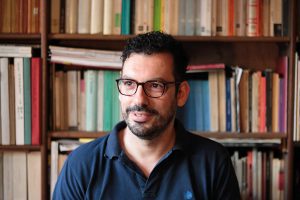
Closer to home, project leader of the Ġewwa Barra initiative, Victor Jacono, tells us how Valletta residents often felt ‘helpless and disowned of their spaces.’ Ġewwa Barra was created to address precisely that issue: to empower residents and give them ownership of their community, using artistic tools to get a glimpse at the cultures affecting their lives and help them express the needs and dreams that shape their experience in the capital city.
‘We seek to encourage creativity, but also responsibility. We hold creative workshops conducted by different facilitators and artists to give people the chance to look at themselves through the aesthetic lens of the artworks. Currently we are engaging the residents of Duwi Balli in a process of creative place regeneration, through a collaboration between architects Maria Cerreta and Franco Lancio, the Valletta Local Council, and the Valletta Services Directorate. It is not simply a matter of approaching the residents and asking them what nice things they would like us to do for them. It is a matter of asking them what they wish to express with our support, of providing them with tools and opportunities to respond creatively to the changes affecting their lived spaces,’ Victor says. In 2017 and 2018 Ġewwa Barra is going to extend its reach even further in order to involve residents from across the capital city, with different artists conducting a series of creative workshops that will culminate in an exceptional performing arts event.
Ġewwa Barra was created to […] empower residents and give them ownership of their community, using artistic tools to get a glimpse at the cultures affecting their lives and help them express the needs and dreams that shape their experience in the capital city.
While Victor is realistic about the forward march of change, he believes it is unjust and unacceptable that changes are engineered by a handful of stakeholders, whose decisions everyone else simply has to accept— especially when such changes are going to affect Valletta’s residents’ lives dramatically. Much like Jaakko with Yhteismaa, he believes that the fear of change can be lessened if people are informed and included in the process. ‘The voices of those stakeholders with lesser means need to be amplified and given the importance they deserve. The arts can contribute greatly towards this. Ġewwa Barra is not so much about single events, but the mainly bottom-up processes engaging the residents creatively. I believe it is the experiences brought about by such processes that will leave an important and long-lasting legacy with the inhabitants of Valletta.’


While Lisa Gwen Baldacchino never specifically aspired to any of her roles at Malta’s Creative Europe Desk and beyond, she has always known her heart belongs in the creative sector. She speaks to Veronica Stivala about how it all started with panto, Seurat, and Cats: The Musical.
Continue reading
In the early days, storytelling played a big part in philosophy. In the Allegory of the Cave, Plato exhibited the difference between the perception of reality and its true form with the use of fire and shadows. Experiments followed. Wittgenstein’s thought experiment—about a beetle in a box which no one can see but you—is meant to demonstrate that our use of language and its functionality is not affected by the fact that, ultimately, we do not know what is in one another’s box. Now, however, there is a new game in town.
Continue reading
As part of his Ph.D. at the Faculty of Media and Knowledge Sciences, Department of Digital Arts (University of Malta), Matthew Galea has developed an interactive sound art piece entitled (Re)diffusion.

La Biennale di Venezia is the world’s biggest art event. Every two years, Venice erupts in a glorious art extravaganza as artists from all over the world descend on the city in celebration. This year marks the 57th edition of the International Art Exhibition. It also marks Malta’s return to the event. Emma Pettit tells us more.

Not many Ph.D.s lead to a new programme of studies, but cardiac paediatrician Prof. Victor Grech’s did. His study on Infertility in Science Fiction inspired him and his supervisors, Prof. Ivan Callus and Prof. Clare Vassallo, (University of Malta) to start the HUMS programme: a space for researchers in the humanities, medicine, and sciences to meet and discuss the bridges between these areas.Continue reading

Ask any practitioner of the performing arts in Malta what their biggest cross to bear is, and a veritable list comes pouring out like burning lava. However, once you plough through the expected maladies that plague every small art scene—limited audiences, limited sources of funding available, unctuous reviews—in Malta, you’ll always arrive at this: a lack of viable spaces for productions and rehearsals.Continue reading