Living between two worlds


Cesar A. Cruz famously said that ‘art should comfort the disturbed and disturb the comfortable.’ People have placed plenty of emphasis on the second half of that sentence—art is often used to provoke and make the viewer rethink their perception of the world. But what about the first half of that famous maxim? Can art serve as a comfort to those enduring difficult times? Pamela Baldacchino, the artist who founded the Deep Shelter project, certainly believes so.

Baldacchino has experience with serious illness. Not only is she a qualified nurse, but she also suffered from fibromyalgia for 14 years, a chronic condition characterised by constant pain, fatigue, and trouble sleeping.

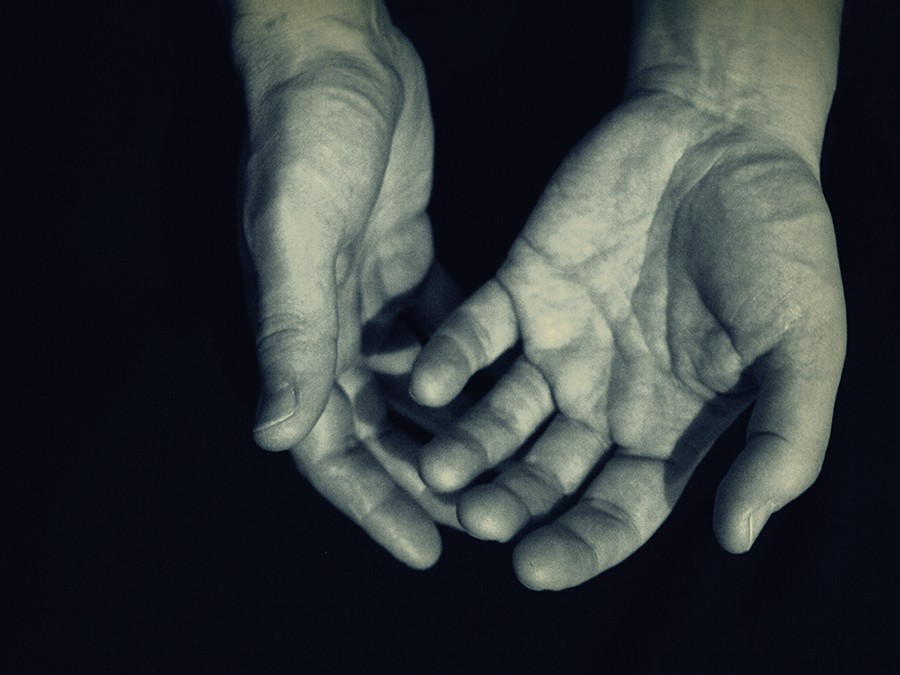
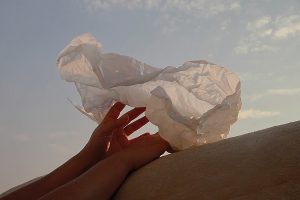
While reading for her Master’s degree in Fine Arts, Baldacchino created an audiovisual work purposely designed for a hospital environment. The work expressed empathy with patients by erasing the distinction between the sufferer and the audience, visually and symbolically showing states that merge into one another; the flesh of the artist’s hand becomes one with the ‘flesh of the sea’, for example. In another piece, the boundaries between sky, earth, and tree blur. She wanted to explore the concept further, to take her ideas beyond her degree and see them implemented in a practical manner within a clinical environment. With this goal in mind, she successfully acquired funding from the TAKEOFF Business Incubation Centre (University of Malta) as well as Arts Council Malta. Deep Shelter also forms part of the Valletta 2018 Cultural Programme and was presented during the Living Cities, Liveable Spaces conference held in November.

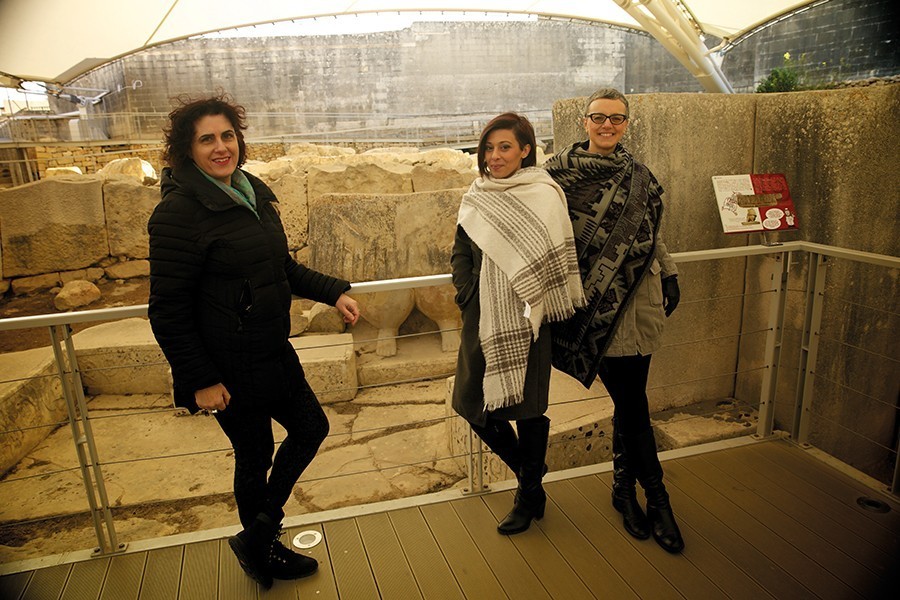
Others embraced Baldacchino’s approach to use art in helping those suffering from illness. A mutual friend introduced her to Dr Benna Chase, a psychologist within the Oncology Department (Mater Dei Hospital), who started using Baldacchino’s work during therapy with her patients. They then met clinical aromatherapist Marika Fleri, and the trio was complete. ‘We realised how much in sync we were. Through completely different mediums, we came together with instant understanding,’ Chase says.


As the Deep Shelter project, they have organised two series of sensory workshops, consisting of six sessions each, as well as artist workshops for the creation and donation of artworks to clinical hospital spaces. Some of these workshops were aimed at people in palliative care, many of whom are aware that they are nearing the end of their lives. The workshops aimed to help them recognise, create, and make use of the ‘language’ that art provides when words are not enough.

“It is difficult for patients whose lives are punctuated by clinical sights, sounds, and smells to feel in tune with nature.”

‘In one of the workshops, author Leanne Ellul started reading from Tereża, a book she translated about  a girl during the Second World War. Several of the patients had lived that experience and it took them back to their own childhoods. Then, we asked composer and percussionist musician Luke Baldacchino to pick up on the feelings conveyed in the writing, compose a piece of music, and play. We realised that something was happening within them,’ Baldacchino says. The most marvelous transformation was in an elderly woman who usually sat perfectly still and was almost totally unresponsive to the outside world. ‘While we were using spoken language, we couldn’t manage to get through, but then a piece of music brought a rare smile to her face. Through this alternate sensory experience, we were allowing processing to happen; it’s a form of therapy as well.’

Nature has always been central to the context of the Deep Shelter project; it becomes ‘a metaphor of the self, where both fluidity and tension are captured.’ But it is

difficult for patients whose lives are punctuated by clinical sights, sounds, and smells to feel in tune with nature. With the help of her aromatherapy oils, Fleri brings in an element of nature and tactility to the patients. ‘The kind of experiences we are trying to create are aimed at making the patient feel contained and held,’ Baldacchino explains. ‘We want to provide something that supports their gritty journey towards acceptance. Even if it does not fit into what we traditionally think of as contemporary art, it fulfils the scope.’ She expresses her frustration with the art in spaces where people are undergoing medical treatment that is merely ‘decorative’ or ‘clever’, and does not provide any sustenance to the patient’s emotional well being. There has to be a story woven behind the artwork that leads one to feel understood when they are going through a time of change, upheaval, or trauma.’

Baldacchino, Chase, and Fleri have received both support and contempt about the project’s goal to derive value from art for the process of healing. However, the patients that the Deep Shelter project has treated are unequivocal about its benefits.

One patient says she believes the workshops serve to ‘release’ emotions, while supporting them throughout their different journeys. When she felt that she had nothing to lose, the artistic outlet Deep Shelter provided gave her a way to release the emotions of anger, fear, and regret she had been holding within for so long. ‘The health system needs to be more open to other therapies to be able to provide a truly holistic healing modality, incorporating mind and body and not seeing the person as ‘parts’.’

Humans are the only species on the planet with the ability to tell stories about their life through art and sensual expression. But during the cancer journey, it is harder to find yourself and your experiences reflected in a meaningful way. The Deep Shelter project seizes art’s potential as a means to process illness, pain, and trauma and puts that power into the hands of the people who need it most.   


Author: Valletta 2018 Foundation

Photos: Eliza Von Brockdorff, Anna Runefelt, Sara Pace, Pamela Baldacchino, Tim Lewis

Urban Utopia

Valletta is living proof that major cultural and artistic events can breathe new life into the city. When Malta’s capital was granted the title of European Capital of Culture for 2018, all hands were on deck to prune and preen, reversing decades of decay to make it ‘worthy’ of such a prestigious title. Now, after years of intense effort, the hard work has paid off. City Gate now provides an appropriately magnificent entryway into Valletta. Dingy, long-shuttered venues have been restored and reinvigorated. The once sleepy city has roared back to life with the wealth of events being organised. Valletta is no longer a stop on the hop-on hop-off bus; it is a bustling melting pot of old and new with an inescapable siren song.

This shift has created positive momentum in the arts scene. But not all outcomes have been positive. Valletta’s overhaul can look very different for the ones who call the city home. The burst of activities may have disrupted some people’s day-to-day business, while also contributing to the congestion and noise. The solution is in identifying ways to effectively balance the discomfort brought about by social change and the valued benefits that same change brings.

Jaakko Blomberg

Finnish social activist, Jaakko Blomberg knows the struggle. He founded the NGO Yhteismaa (Common Ground) in Helsinki in 2012. Yhteismaa specializes in new participatory city culture, co-creation, and social movements. ‘In the beginning, many municipal officers in Helsinki were against our events and projects; they just didn’t have any procedure for handling them, so we kind of had to find a new way to do things.’ Leaving room for people to share their ideas and expressing themselves is also essential, he says. ‘There should be different kinds of roles and tasks for people to take on; all changes are scary, so it’s important to inform people and make them feel like they’re part of the process. For example, many people are prejudiced against street art, but when you explain more about it and give people the chance to take part in the process, their attitude becomes much more positive. Organisers have to provide enough information and make participation easy. It’s important that it’s not just about a small circle of activists, but about the whole community.’

Residents often felt ‘helpless and disowned of their spaces.

Victor Jacono

Closer to home, project leader of the Ġewwa Barra initiative, Victor Jacono, tells us how Valletta residents often felt ‘helpless and disowned of their spaces.’ Ġewwa Barra was created to address precisely that issue: to empower residents and give them ownership of their community, using artistic tools to get a glimpse at the cultures affecting their lives and help them express the needs and dreams that shape their experience in the capital city.

‘We seek to encourage creativity, but also responsibility. We hold creative workshops conducted by different facilitators and artists to give people the chance to look at themselves through the aesthetic lens of the artworks. Currently we are engaging the residents of Duwi Balli in a process of creative place regeneration, through a collaboration between architects Maria Cerreta and Franco Lancio, the Valletta Local Council, and the Valletta Services Directorate. It is not simply a matter of approaching the residents and asking them what nice things they would like us to do for them. It is a matter of asking them what they wish to express with our support, of providing them with tools and opportunities to respond creatively to the changes affecting their lived spaces,’ Victor says. In 2017 and 2018 Ġewwa Barra is going to extend its reach even further in order to involve residents from across the capital city, with different artists conducting a series of creative workshops that will culminate in an exceptional performing arts event.

Ġewwa Barra was created to […] empower residents and give them ownership of their community, using artistic tools to get a glimpse at the cultures affecting their lives and help them express the needs and dreams that shape their experience in the capital city.

While Victor is realistic about the forward march of change, he believes it is unjust and unacceptable that changes are engineered by a handful of stakeholders, whose decisions everyone else simply has to accept— especially when such changes are going to affect Valletta’s residents’ lives dramatically. Much like Jaakko with Yhteismaa, he believes that the fear of change can be lessened if people are informed and included in the process. ‘The voices of those stakeholders with lesser means need to be amplified and given the importance they deserve. The arts can contribute greatly towards this. Ġewwa Barra is not so much about single events, but the mainly bottom-up processes engaging the residents creatively. I believe it is the experiences brought about by such processes that will leave an important and long-lasting legacy with the inhabitants of Valletta.’


Jaakko Blomberg and Victor Jacono are keynote speakers at the Valletta 2018 conference titled Living Cities, Liveable Spaces: Placemaking & Identity. More information on this conference can be accessed at conference.valletta2018.org. Registration ends on 12th November. Discounted rates are available for students. 


MAKS: MFA Digital Arts

From the MFA in Digital Arts students at the Faculty of Media and Knowledge Sciences, this selection of works showcases how art can turn into research in varied areas, from the concept of re-appropriating gaze to the creation of false memories through photography and much more.


Continue reading

You don’t know what soup is: digital game as philosophical artefact

In the early days, storytelling played a big part in philosophy. In the Allegory of the Cave, Plato exhibited the difference between the perception of reality and its true form with the use of fire and shadows. Experiments followed. Wittgenstein’s thought experimentabout a beetle in a box which no one can see but youis meant to demonstrate that our use of language and its functionality is not affected by the fact that, ultimately, we do not know what is in one another’s box. Now, however, there is a new game in town.

Continue reading

Placing Maltese artists under the world’s spotlight

La Biennale di Venezia is the world’s biggest art event. Every two years, Venice erupts in a glorious art extravaganza as artists from all over the world descend on the city in celebration. This year marks the 57th edition of the International Art Exhibition. It also marks Malta’s return to the event. Emma Pettit tells us more.

Continue reading

Where Humanities, Medicine, and Sciences meet

Not many Ph.D.s lead to a new programme of studies, but cardiac paediatrician Prof. Victor Grech’s did. His study on Infertility in Science Fiction inspired him and his supervisors, Prof. Ivan Callus and Prof. Clare Vassallo, (University of Malta) to start the HUMS programme: a space for researchers in the humanities, medicine, and sciences to meet and discuss the bridges between these areas.Continue reading