Skip to content

Bridging (through) the performing arts

Facebook
Twitter
LinkedIn

Theatre, dance, and music are changing at the University of Malta. Recently, three new research groups were launched by the School of Performing Arts (SPA) with the aim of bridging different disciplines through  the development of shared work processes and research areas. Through interdisciplinary research, these groups want to look outwards towards new concepts.

The groups cover three themes. First, ‘Twenty-first-Century Studies in Performance’, which is committed to the locating, reimagining, and development of performance practices in the 21st century. Second, ‘Culture and Performance’, which is guided by the premise that culture and performance refer to complexities that emerge from the multitude of phenomena these terms describe. Third, ‘Performing Arts Histories and Historiographies’, which investigates and archives material related to historical events across the performing arts. These themes are possible thanks to a web of local and international collaborations, ranging from the Digital Arts and Humanities to Cognitive Science and Intelligent Computer Systems.

These new research platforms seek to facilitate dialogue between scholars and practitioners, academics and citizens.
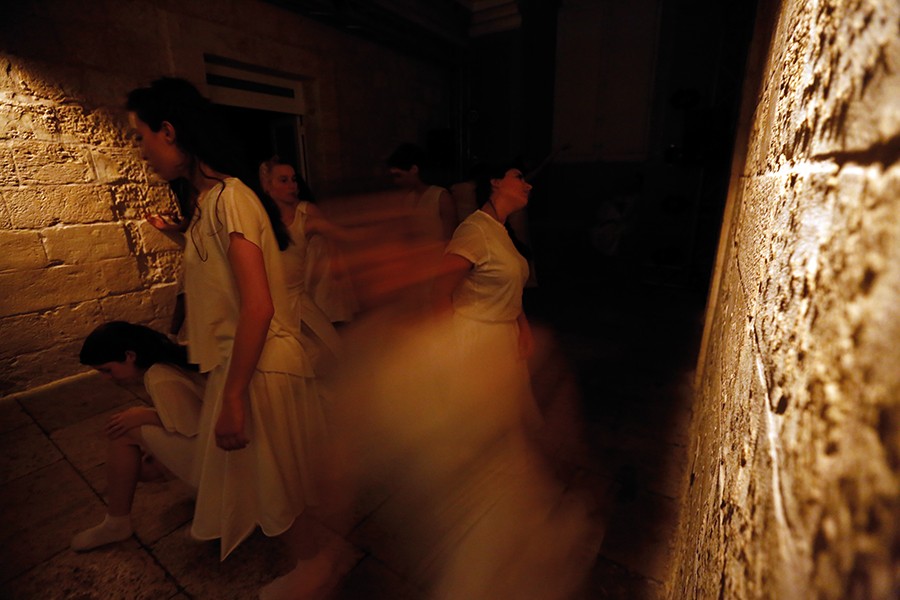
Annual Collective Performance of the School of Performing Arts. White White is a performance about space, or the absence of it. Once upon a time, characters were in search of an author. Today they are in search of a space. The characters, played by the students of the School of Performing Arts at the University of Malta, are lost in a corridor in-between places. Around them all is empty. A void. Like a vault, all they have isÖWhite! Photo: Darrin Zammit Lupi
Annual Collective Performance of the School of Performing Arts.
White
White is a performance about space, or the absence of it.
Once upon a time, characters were in search of an author. Today they are in search of a space. The characters, played by the students of the School of Performing Arts at the University of Malta, are lost in a corridor in-between places. Around them all is empty. A void. Like a vault, all they have is White!
Photo: Darrin Zammit Lupi
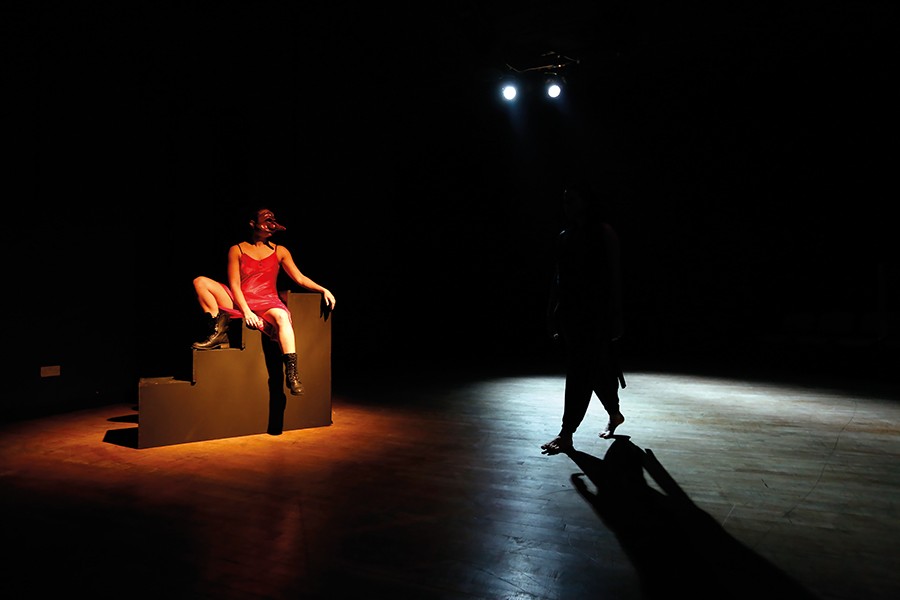
inFragments A devised performance created by the students of the School of Performing Arts, University of Malta MITP Photo by Darrin Zammit Lupi
inFragments
A devised performance created by the students of the School of Performing Arts, University of Malta
MITP
Photo by Darrin Zammit Lupi

SPA has an upcoming conference featuring some of the above topics called Interweaving Cultures: Theory and Practice in March 2017. For more information contact Dr Stefan Aquilina (stefan.aquilina@um.edu.mt) or, on the conference, Prof. Vicki Ann Cremona (vicki.cremona@um.edu.mt).

Author

More to Explore

The Legacy of Press Freedom

At this year’s Mabel Strickland Memorial Lecture, international negotiator and mediator Nomi Bar-Yaacov argued that democracies are entering a period in which the crisis extends beyond censorship or attacks on journalists alone. As wars multiply, trust in institutions weakens, and information becomes increasingly mediated through algorithmic systems, the deeper problem may be that societies are losing their ability to agree on what is true in the first place.

Squeezing Out Waste: Transforming Malta’s Olive Waste into Green Goods

While olive oil production generates vast amounts of nutrient-rich waste, approximately 98% of the antioxidant-rich phenolics in olives are lost during oil extraction. To combat rapid degradation, the OliveGREEN team is exploring a novel strategy using sulphur dioxide and enzymes to stabilise olive pomace. THINK speaks with Dr Frederick Lia to learn why saving this discarded byproduct makes a difference.

More Than Four Walls: The Influence of the Library Space on Student Wellbeing

Academic libraries are often framed as quiet repositories of knowledge, but their influence runs deeper. As student mental health concerns intensify, these spaces are emerging as critical environments for connection, comfort, and care. Beyond books and databases, the design, atmosphere, and activities of a library can shape how students feel, cope, and belong within the wider university experience.

Comments are closed for this article!