


Fact: pain severely impairs quality of life.
There are different kinds of pain. Broadly categorised, we can divide them into acute and chronic. Continue reading

Fact: pain severely impairs quality of life.
There are different kinds of pain. Broadly categorised, we can divide them into acute and chronic. Continue reading


Iceland (population: 320,000) is proud of writer Halldor Laxness; the even smaller Faroe Islands (pop: 50,000) celebrates its physician and scientist Niels Ryberg Finsen. The combined population of these countries is smaller than Malta’s, yet they have each managed to secure Nobel Laureates: Laxness in Literature in 1955; Finsen in Medicine in 1903. Small size may be a handicap, but—as the Iceland and Faroe examples attest—it is not an insurmountable obstacle. Small size should not prove to be a cheap excuse. So the question is: can Malta produce a Nobel Laureate?
Thinking big can be a powerful motivator. Grand ideas can push publics, enterprises, and governments to achieve the unthinkable. Believe in the impossible, advised the historian Max Weber, and then the possible might just become true. Landing a man on the moon before the end of the decade inspired the US Space Programme in the 1960s. The Live Aid Concerts in 1985 delivered £150 million in famine relief. And the One Laptop Per Child (OLPC) Initiative has equipped 2.5 million children, and counting, across the world.
Malta needs ‘think big’ projects to galvanise the nation. Securing a Nobel Laureate could be one. Developing an underground subway system (and linking Malta to Gozo in the process) could be another. Such projects need not be mutually exclusive. Their trademark would be their ability to engage public opinion, foster national pride, and raise the game to the next level. Naturally, people will continue to talk about politics, the weather, the traffic, the guy or gal next door… but also about these grand accomplishments. Of course, these projects will be controversial; they will have as many sympathisers as dissenters and critics. So? What’s new? That is how it should be.
Securing our political independence was one such dream for the 1960s. Bringing an end to our fortress economy was another aspiration for the 1970s. Joining the European Union was a third. Valletta Capital of Culture for 2018 may be a fourth and is an active project. What’s cooking in the Kitchen of Big and Bold Ideas for Malta for the next few years?
We need to think ahead. Apathy is dangerous, and we need big ideas to keep it at bay.
By the way, St Lucia (population: 150,000) has not one, but two Nobel Laureates: Arthur Lewis for Economics in 1979 and Derek Walcott (born in 1930, still alive at the time of writing) for Literature in 1992.


The Baroque period was a time of great upheaval. Monarchs believed in the divine right to rule, a notion continuously threatened by the relentless spread of the Ottoman Empire. Civilisations clashed like never before, opposing religious ideals stoking that vicious fire. Curiously, this was also the age when science, technology, and art were making their own grand strides. The cannon and the musket altered military landscapes. The studies of Descartes, Kepler, and Newton revolutionised thought. Borromini, Bernini, Guarini, and Caravaggio altered the artistic world.

Our understanding of gravity has changed over the years and will likely continue to as researchers arm themselves with new ideas tested by increasingly sophisticated technology. Dr Jackson Levi Said, Mark Pace, and Filippos Nachmias (University of Malta [UoM]) tell THINK more about their mission to unlock gravity’s secrets from neutron stars.

Hardships do not befall us all in equal measure. Cassi Camilleri talks to Prof. Carmel Cefai about his work at the Centre for Resilience and Socio-Emotional Health and the dedicated curriculum that seeks to impart the skill of resilience to those who need it most.
Continue reading
The term ‘robot’ tends to conjure up images of well-known metal characters like C-3P0, R2-D2, and WALL-E. The robotics research boom has in the end enabled the introduction of real robots into our homes, workspaces, and recreational places. The pop culture icons we loved have now been replaced with the likes of robot vacuums such as the Roomba and home-automated systems for smoke detectors, or WIFI-enabled thermostats, such as the Nest. Nonetheless, building a fully autonomous mobile robot is still a momentous task. In order to purposefully travel around its environment, a mobile robot has to answer the questions ‘where am I?’, ‘where should I go next?’ and ‘how am I going to get there?’
Like humans, mobile robots must have some awareness of their surroundings in order to carry out tasks autonomously. A map comes in handy for humans. A robot could build the map itself while exploring an unknown environment—this is a process called Simultaneous Localisation and Mapping (SLAM). For the robot to decide which location to explore next, however, an exploration strategy would need to be devised, and the path planner would guide the robot to navigate to the next location, which increases the map’s size.
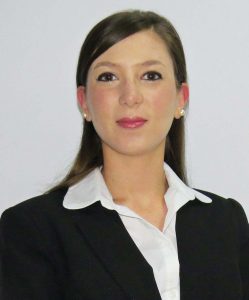
Rachael Darmanin (supervised by Dr Ing. Marvin Bugeja), used a software framework called Robot Operating System (ROS) to develop a robot system that can explore and map an unknown environment on its own. Darmanin used a differential-drive-wheeled mobile robot, dubbed PowerBot, equipped with a laser scanner (LIDAR) and wheel encoders. The algorithms responsible for localising the robot analyse the sensors’ data and construct the map. In her experiments, Darmanin implemented two different exploration strategies, the Nearest Frontier and the Next Best View, on the same system to map the Control Systems Engineering Laboratory. Each experiment ran for approximately two minutes until the robot finished its exploration and produced a map of its surroundings. This was then compared to a map of the environment to evaluate the robot’s mapping accuracy. The Next Best View approach generated the most accurate maps.
Mobile robots with autonomous exploration and mapping capabilities have massive relevance to society. They can aid hazardous exploration, like nuclear disasters, or access uncharted archaeological sites. They could also help in search and rescue operations where they would be used to navigate in disaster-stricken environments. For her doctorate, Darmanin is now looking into how multiple robots can work together to survey a large area—with a few other solutions in between.

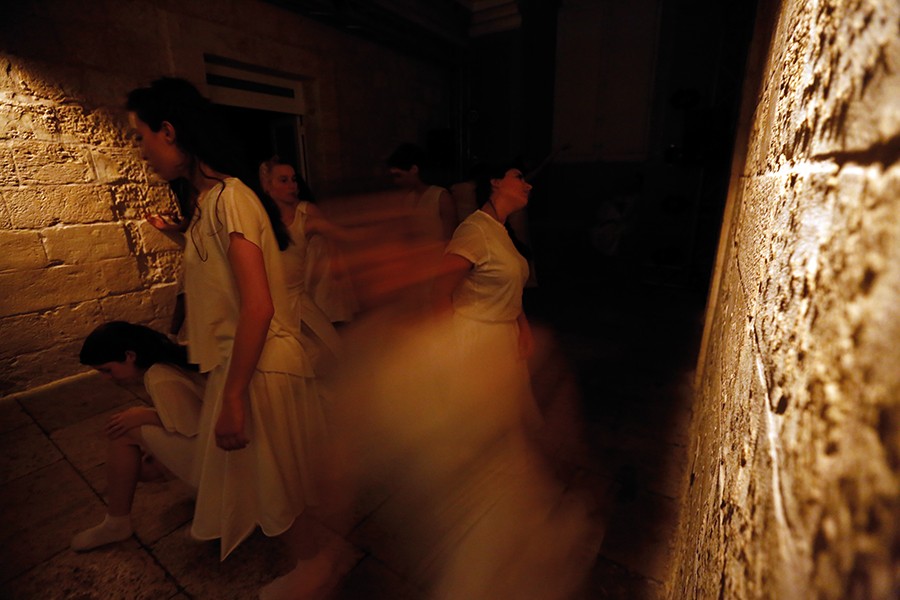
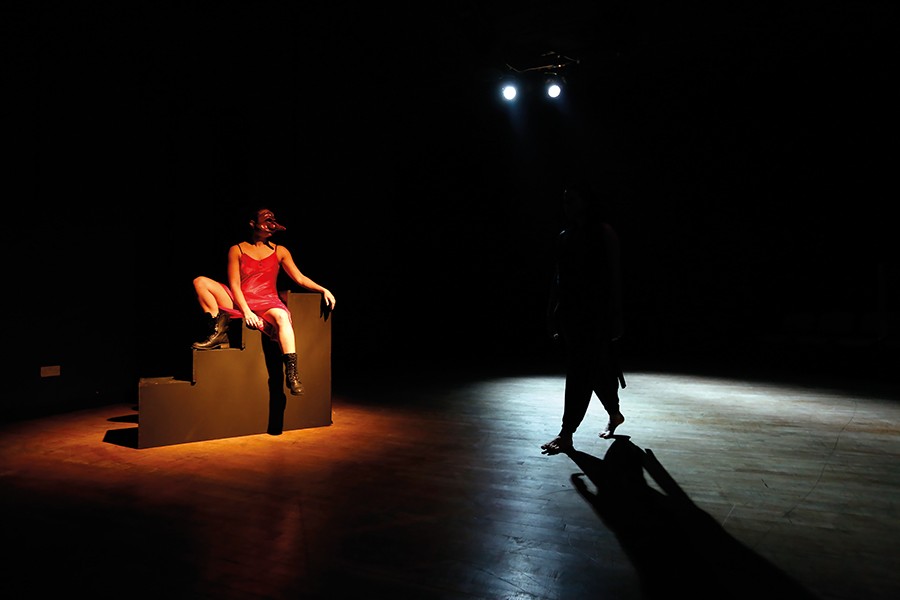
Theatre, dance, and music are changing at the University of Malta. Recently, three new research groups were launched by the School of Performing Arts (SPA) with the aim of bridging different disciplines through the development of shared work processes and research areas. Through interdisciplinary research, these groups want to look outwards towards new concepts.
The groups cover three themes. First, ‘Twenty-first-Century Studies in Performance’, which is committed to the locating, reimagining, and development of performance practices in the 21st century. Second, ‘Culture and Performance’, which is guided by the premise that culture and performance refer to complexities that emerge from the multitude of phenomena these terms describe. Third, ‘Performing Arts Histories and Historiographies’, which investigates and archives material related to historical events across the performing arts. These themes are possible thanks to a web of local and international collaborations, ranging from the Digital Arts and Humanities to Cognitive Science and Intelligent Computer Systems.
These new research platforms seek to facilitate dialogue between scholars and practitioners, academics and citizens.

A legacy gift is a planned future donation to a charity or trust which is given through a will or other designation. It allows individuals to express personal values by integrating charitable, family, and financial goals. Planned gifts drawn up in wills can be made in cash, or by donating assets such as stocks, real estate, and art pieces. The possibilities are endless.Continue reading

Malta is thought to harbour around 6,000 to 8,000 species of insects. In the last two years almost 200 new records of these fascinating creatures were found around the Maltese Islands, and a new endemic species, unique to Malta, was also described as new to science. Jessica Edwards meets up with Dr David Mifsud to find out more about these amazing findings and why insects really do run the world. Photography by Dr Edward Duca.
Continue reading
Malta’s long Mediterranean summers mean that ACs are everyone’s best friend. In a country endowed by sun and wind, renewable energies cannot be an afterthought, yet they are. The UoM’s OWTEP project is creating a cutting-edge solution by combining an offshore wind turbine with a district cooling system. Prof. Ing. Tonio Sant and Dr Ing. Robert N. Farrugia speak to Tuovi Mäkipere.
Continue reading