Would you dare?

Would you dare going on a ghost hunt? Victoria Cutajar did, and talks to DARE magazine about her intense trip into the unknown. The third year communication students of the ‘Magazine and Digital Publishing’ study unit (Faculty of Media and Knowledge Sciences), collected people’s personal stories and crafted them into a well rounded, highly visual publication.

Continue reading

Special Feature – The Maltese Genome

DNA is what life is made of. Found in every cell of the human body, it has sent criminals to jail and been the focus of controversial court cases. Dr Jean Buttigieg discusses these legal and ethical issues. DNA has also transformed the meaning of being human, with traits from disease to intelligence all linked to it. DNA is changing the world.

Continue reading

Science, art, academia: Star Trek

The Star Trek academic symposium will be held at the Faculty of ICT, University of Malta, on 15 and 16 July 2016. This event will be a platform for both academics from various disciplines as well as Star Trek fans to meet and explore the intersection between the humanities and the sciences. There will be inspirational presentations from national and international speakers, with the programme tailored to attract a wide audience. Contributors will be encouraged to explore contemporary issues in medicine, science, and technology as well as philosophical, psychological, and sociological issues connected with the science fiction entertainment franchise Star Trek.

A similar symposium was held in 2014 and which proved to be a worldwide first that successfully drew participation from many international scholars including American philosopher Jason Eberl, UK-based neonatologist and ethicist Neena Modi.

As a result of its success, this second event that marks the 50th anniversary from the launch of Star Trek: The Original Series is being organised. The event will be held under the auspices of the Humanities, Medicine and Sciences Programme (HUMS), a University of Malta programme set up to explore and encourage the interfaces between the humanities, medicine, and sciences. The Science Fiction Symposium will appeal to scientists and fans of science fiction alike..

For more information, visit the website.

Mobile Air Quality Laboratory (MAQL)

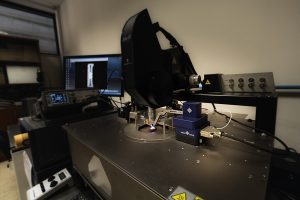
The Mobile Air Quality Laboratory (MAQL) is the first of its kind on the Maltese Islands. Run by a team of geoscientists at the University of Malta, the MAQL can assess the quality of the air by continuously monitoring particulate and gaseous air toxics.

​The particulates it can detect vary in size. The finer particles (PM1 and PM2.5) are usually the most dangerous respirable fraction but the instrumentation can also measure coarser sized particles (PM4 and PM10). The suite of gaseous pollutants that can be checked are sulfur dioxide, oxides of nitrogen, carbon monoxide, ozone, Volatile Organic Compounds (VOCs), organic and elemental carbon, and radon.

Mobile Air Quality Laboratory (MAQL)

Quick Specs:

  • Power consumption (including cooling system):
    2.5 kW
  • Particulate limit of detection: 1 ug/m3
  • VOCs measurement frequency:
  • 1 sample/30 minutes
  • Gaseous pollutants measurement frequency:
    1 minute
  • Gaseous pollutants limit of detection: < 0.5 ppb
  • Cost: €0.60 million

The MAQL is able to compare the air in indoor and outdoor spaces while recording meteorological conditions onsite. The comparison helps scientists understand from where the pollution originates. Is there so much pollution in our environs because of all the cars outside our window? Or is it because of the new sofa the family next door just bought? Or perhaps it is a result of the redecoration the building down the road recently underwent. Such data is vital for scientists to be able to figure out the root of a problem, to create a model of personal exposure to the pollutants, and to develop safer measures for the general public.

The MAQL facility will help scientists develop a clearer picture of the indoor air quality across the Maltese Islands. It will help other scientists interpret older data, and enable them to design new studies. Medics can match such data with population studies and assess disease rates around Malta. The MAQL can determine the sources of pollution inside buildings with the help of lifestyle and meteorological data, providing enough information for the construction of dwellings which have cleaner and safer air for everyone.

Modern European sculpture

French sculptor Auguste Rodin (1840–1917) is the progenitor of modern sculpture. He rebelled against idealised forms in order to express the inner truths of humanity in his artworks. His successors went on to challenge his work, continuing to explore the aesthetic revolution he had started. Key examples include Henry Moore (1898–1986), Alberto Giacometti and the largely undiscovered Swiss sculptor Hans Josephsohn (1920–2012).

Josef Kalleya, L'Abbandono della Casa Materna. Photograph of lost work (image courtesy of the Kalleya Family Archives)
Josef Kalleya, L’Abbandono della Casa Materna. Photograph of lost work (image courtesy of the Kalleya Family Archives)

These artists were studied alongside Maltese sculptor Josef Kalleya (1898–1998) at the conference entitled ‘Peripheral Alternatives to Rodin in Modern European Sculpture’ (December, 2015). The international speakers created significant links between works by renowned sculptors and Kalleya, who has been poorly understood by his contemporaries and is unknown outside Malta. Kalleya developed unique methods of creating photomontages alongside the innovative use of a knife to create powerful visceral incisions as a means of moulding his sculptures. He managed to create a new aesthetic.

The conference brought scholars from all over Europe to discuss these and other European sculptors. The scholars debated topics from the mutation of the human form to an artist’s sense of heritage. The event focused on pioneering sculptors who went beyond their current socio-political context. It also helped place Malta’s own Kalleya deservedly on the international map.

The conference and exhibition were organised by the Department of History of Art, Faculty of Arts, University of Malta. The events were convened by Dr Giuseppe Schembri Bonaci and curated by Nikki Petroni. Other participants included Dr Sophie Biass-Fabiani (Musée Rodin, Paris), Dr Jon Wood (Henry Moore Foundation, Leeds), Barbara Vujanović (Atelijer Meštrović, Zagreb), Dr Julia Kelly (Loughborough University), and Ulrich Meinherz (Kesselhaus Josephsohn, St Gallen).

Why practise Taijiquan?

In the 12th century, the Shaolin Monk Chang San Feng witnessed a battle between a snake and a crane, during which the snake managed to conquer its opponent with its grace. The monk went on to formulate a set of movements, which have become the basis of Tai Chi, a martial art based on the pillars of Taoism, Confucianism and Buddhism. Taoism upholds the importance of being one with nature and the universe.

Taijiquan shares concepts with Confucianism, a system of philosophical teachings that stresses that all under the sky is one family. Everyone can be part of this great family regardless of their social status, political or religious creed. By practising Tai Chi together and sharing knowledge, participants learn and develop respect and obedience; qualities stressed by Chinese teacher and founder of Confucianism, Confucius.

During my Tai Chi classes, I like to first develop the technical aspects of a student’s movements in order for them to have a solid foundation. This is then followed by an emphasis on self-expression through movement and concentration on these movements. In the film Enter the Dragon, Bruce Lee tells his apprentice ‘like a finger pointing away to the moon. Do not concentrate on the finger or you will miss all that heavenly glory.’ At first a movement is just a movement. However, after constant practice and analysis, the practitioner realises that the movement has a rhythm behind it and this charges them with feeling, a process that resembles the way a musician feels the beat/the rhythm when performing.

The benefits of Taijiquan 

Taijiquan is a good method to alleviate stress and achieve good health. Rather than going to a gym, where a lot of energy and effort are required, with Tai Chi, a lot can be achieved without any force, and like Taoism, Tai Chi is based on the principle, known as Wu Wei (effortless effort). This means that those who practise Tai Chi should be soft and flexible in the same way that water flows smoothly. Water can take the form of any container yet on its own it is formless and shapeless.

Some scientific studies have shown Tai Chi’s benefits. One study concluded that moderate Tai Chi practice helps older people maintain fitness, while other studies showed that Tai Chi was good for a healthy and well-functioning heart, as well as to regulate blood pressure levels.

Taijiquan is based on the principle of Yin and Yang, an element of Chinese philosophy that describes how two contrary forces can be complementary. Building on this belief, those who practise the discipline try to achieve harmony which in turn brings with it good health.

The Hidden History of the Maltese Genome

By reading someone’s DNA one can tell how likely they are to develop a disease or whether they are related to the person sitting next to them. By reading a nation’s DNA one can understand why a population is more likely to develop a disease or how a population came to exist. Scott Wilcockson talks to Prof. Alex Felice, Dr Joseph Borg, and Clint Mizzi (University of Malta) about their latest project that aims to sequence the Maltese genome and what it might reveal about the origins and health of the Maltese people.

Continue reading

Rockets that Fail Safely

Spacecraft failures are spectacular. These unfortunate events are seared into the public memory. One reason why rockets can fail are software bugs. If a rocket’s computer system fails, that infamous blue screen leads to lost work hours, billions of Euro, and lives. Researchers from the Faculty of ICT and Faculty of Engineering (University of Malta) tell THINK about their collaboration with the European Space Agency (ESA) to test novel satellite software architecture to prevent rocket failure.

Continue reading