Malta’s brightest exports: Travelling to the EU’s JRC



| Tech Specs |
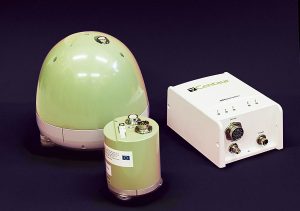
Sensors: Trillium 120PA/Trillium Compact Technology : 3 symmetric triaxial sensors with force feedback Bandwidth: 8mHz to 150Hz Weight: 7.2kg/1.2kg Height: 20cm/10cm Power consumption: 600mW/160mW Data Loggers: Centaur 24-bit ADC, Internet-enabled |
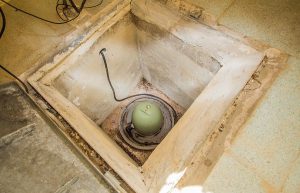
The earth’s surface is never still. And that is why over the past three years the Seismic Monitoring and Research Group (Faculty of Science, Department of Geosciences), has been placing its ears more firmly to the ground, listening to the smallest vibrations of our Earth.
Since 1995 the Malta Seismic Network has grown from a single seismic station at Wied Dalam to a network of six broadband instruments all over the Maltese Islands.
Stations are installed in several locations. The sensitivity of the instruments means that they need to be homed in places where human interference is minimal. Church crypts and underground tunnels are perfect. Being broadband instruments, they can detect very slow vibrations from frequencies less than a millihertz (the whole Earth’s normal mode frequencies), to tens of hertz (ground motion from anthropogenic noise and near earthquakes).
The network can record close ‘microearthquakes’ with equal clarity to large earthquakes from all over the globe. These massive quakes send seismic waves travelling through the planet’s interior at several kilometres per second. All of this data is transmitted to a University of Malta server, which distributes the information to data centres worldwide.
But what is the advantage of having so many stations in such a small area? Firstly, researchers can gather valuable information and share it with the seismological community to build more detailed models of the Earth’s interior. Secondly, an immediate advantage is the enhanced detection and analysis of smaller and smaller earthquakes from all sides of the island, leading to a deeper insight of active faults. Thirdly, the network gives precious information on the proper es and structure of the rocks of Malta. More accurate information about our islands’ composition and behaviour will help make Malta earthquake-ready.

Language is at the core of what makes us human. From birth, we interact through language, making our way through gurgling and babbling to words, and, eventually, telling (tall) stories. It is important to nurture this linguistic development as early as possible, and in Malta, this involves exposure and sensitivity to the forms and dialects of at least two languages: Maltese and English.
Such growth can be nurtured by setting a good example so that children have a solid language basis to build upon. Here, it all boils down to one key point: interaction. Language is a two-way process, so for a child to truly benefit, they need to interact with others from birth—TV cartoons just do not cut it.
At the earliest stages, language is all about sounds and bonds, not about learning letters or reciting a poem. However, even then a child sensitive to differences and variation in language. Children know that home language is different from what they hear outside in the wider community. For Maltese children, it is useless to place early focus on lamenting the distinction between ‘Trid ice cream?’ instead of ‘Trid ġelat?’ as both are equally well understood in Malta. What is more important is that a child has enough exposure to become sensitive to which version or dialect to use in which context. In English, we have no problem singing the nursery rhyme ‘Horsey, horsey don’t you stop…’ despite knowing that the established word is of course ‘horse’ because experience shows us that children happily grow out of their ‘baby’ language. The same is true of the different forms of languages and dialects typical in a multilingual society. As we grow older, we can become sensitive to which forms of a dialect or language are best understood in the home, amongst friends, or at work.
Apart from parents, children spend most of their me in school. If schooling is meant to be about encouraging children to reach their full potential, then this should also hold true linguistically. Just as a sporty or musical child is identified and encouraged to work on their natural talent, a child whose linguistic skill is recognisable should get the same treatment. That talent should be nurtured—they might be the country’s best lawyer in a few years’ time.
Equally, it is important to leave no child behind. A truly holistic education recognises that physical activity is vital, perhaps even more so, for the less sporty child. The same applies in languages. We must ensure that every child has the opportunity to express themselves both in speech and writing, even if they seem to struggle. After all, we don’t teach an unsteady runner how to run by making them sit and watch while we run a race for them. Similarly, children learn how to speak and write by practising the languages, not listening to (lengthy) explanations about how to use a language.
This is what nurturing skills is all about. If we want to raise con dent, knowledgeable youngsters, we must allow them to constantly practise ways to get their message across. In Malta’s rich linguistic environment, this means nurturing all our dialects and forms of language in whatever shape or form available to us. It is only through this process that we can then shape rich, meaningful forms of communication amongst ourselves, and the wider world.

Picture an item of furniture. Was it a table, a chair, or a wardrobe? Our ideas of furniture are not oriented around what it does, or even its essential nature, but rather around all the common examples we see around us and the cognitive web of interrelations that builds in our head.
This fictional furniture is just an analogy. Supervised by Prof. Gordon Calleja, I investigated how language affects our preconceptions of what games are and what they should do. Our ideas about games are not related to their potential or their openness but to constructions in our mind.
My research was mostly within the philosophy of language. I explored how our ideas of what a thing is are not grounded in what it does or is, but around a cognitive image, created by what we often see and label it as.
My research was mostly theoretical. It showed how other game researchers might have been misguided or had counter-intuitive results. Their research tried to define what games are and did not realise that this went against how we used the word ‘games’, i.e. as a container for all the things we collectively consider game-like.
That said, I also had the opportunity to test-drive this work in a game I am currently developing with Dr Stefano Gualeni, which analyses what the word soup means.
Apart from answering the long-standing question of what a game actually is, this research also shows how games would benefit from being more inclusive and experimental. By creating these types of games, we can attract people whose cognitive model of a game is different from the norm. Similarly, by designing games that are more open, we can stretch the web of interconnections in people’s minds, potentially showing how games are more akin to life than we realise.
Are you ready to play?