
| Tech Specs |
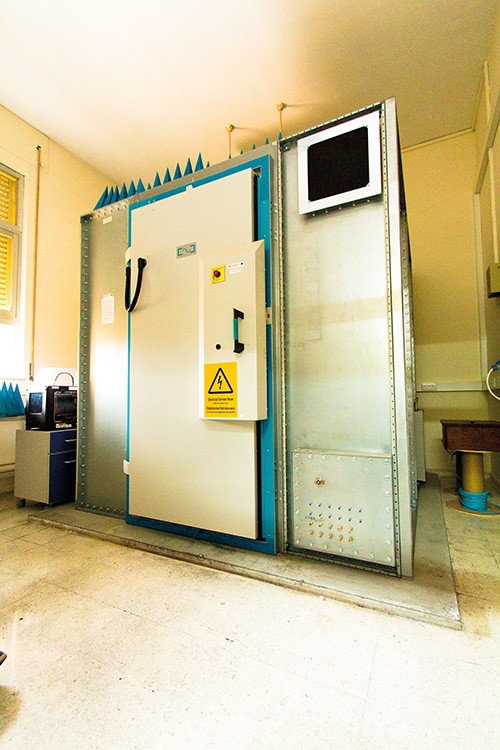
Dimensions: 2.5m x 2.5m x 2.5m Weight: 2 tonnes Frequency: 800MHz – 18GHz Price: €140,000 |
Everything in the world can emanate sound waves. These are invisible, consisting of vibrating particles in the air which can strike our eardrums, which lets humans hear. But what if you want to measure waves coming from a particular object?
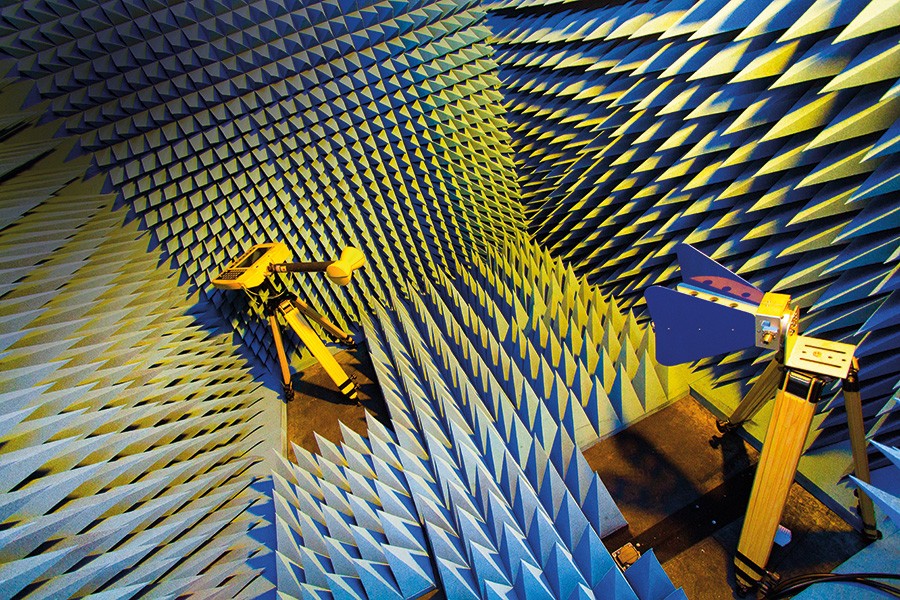
An anechoic (echo-free) chamber is a heavy, metal enclosure with inner walls covered in foam wedges made from a radiation absorbent material. Any emitted sound or electromagnetic waves become trapped between these wedges until all their energy is completely absorbed. The chamber also eliminates all noise from exterior sources. Simply put, speak in an anechoic chamber, and you will hear the pure sound of your voice echo-free. The volume of these chambers is dictated by the size of the objects as well as the frequency of the device under investigation. They can be anywhere from the size of an old television monitor to the size of an aircraft hanger.
So what are they used for?
Testing electronic devices that radiate acoustic or electromagnetic waves and mapping out radiation patterns of antennas. It’s useful for systems such as satellites, radars, computers, missiles, and vehicles. Measurements aim to determine characteristics such as susceptibility, system sensitivity, effective radiated power, tracking ability, and comparability. The chambers can also be used to evaluate the effect of electromagnetic fields on human tissues, a type of experiment that has already been carried out in the University of Malta (UoM) anechoic chamber. Manufacturers of electronic equipment are required to conduct electromagnetic compatibility and immunity testing prior to placing a device on the market. This ensures that they won’t generate too much electromagnetic disturbance and will also be sufficiently immune from fields generated by other sources. Due to this new equipment, the UoM will be able to provide pre-compliance testing services to companies, which will prepare their devices for expensive compliance testing in certified laboratories, saving them a good sum of money.




Comments are closed for this article!