A scientist and a linguist board a helicopter, and the scientist says to the linguist, ‘What is the cornerstone of civilisation, science or language?’ It might sound like the opening line of a joke, but it’s actually from the opening sequence of the film Arrival (2016). In the film, aliens have landed on our doorstep, and our scientist and linguist have been chosen as suitable emissaries to establish contact. The scientist, perhaps wishing to size up his new colleague, then poses the question. Whose field has been more important to the advancement of the human race? Science or language?
In reality, they are both wrong (or both half-right). It is true that language was necessary for us to organise as a species, forming complex networks of cooperation over vast distances and time. Without specialising our efforts and collaborating, we could not have built our great structures, supported large communities, or migrated over all continents. Yet, without science, without improving our understanding of the natural world, we would still be at its mercy.
Science is the tool we use to change circumstance. When populations are dying from an infectious disease, we create a vaccine. When we’re unable to grow enough food to support ourselves, we develop a better strain of crop. When we struggle to transport materials over great distances, we create machines that will do it for us. Science is our secret weapon, transforming problems into possibilities. However, science alone means little. If innovation dies with its creator, who does it help? Science must be communicated to others before it can make a difference in any meaningful way.
It would be incomplete to bestow language or science with the title of ‘the cornerstone of civilisation.’ It was science communication that really drove our development. And I don’t just mean this in the external sense. After all, is the transfer of genetic information from one generation to the next not science communication? What are we but a biological game of Chinese Whispers, the message mutating through each host but somehow continuing to make sense over millions of years?
The human race not only benefits greatly from science communication; we are the product of it. It is embedded into our biological and cultural history. Proof that it is not just knowledge but the sharing of knowledge that is the real root of power.
Valletta should be a unique experience, open to all. This is Valletta 2018’s key vision for the bustling capital. A group of people focused on making this a reality is theValletta Design Clusterteam. Located at the Old Abattoir site in Valletta, the initiative is going to create a community space for cultural and creative practice. Words by Caldon Mercieca.
According to Anna Wicher from the PDR International Centre for Design and Research, design is ‘an approach to problem-solving that can be applied across the private and public sectors to drive innovation in products, services, society and even policy-making by putting people first.’ This people-centred approach to design is not just a theoretical framework, but a concrete method that engages people in a co-creative process.
By bringing together people active in the cultural and social spheres, we want to have a concrete and meaningful impact on Malta’s diverse communities. We aim to provide support for students, start-ups, and creative enterprises and give social groups the necessary tools to empower those with different interests who nonetheless share the common purpose of using creativity for the social good. We also want to provide a new networking space for everyone. From students, to cultural and creative professionals, to residents, budding businesses and civil society groups, everyone will be welcomed at the Valletta Design Cluster.
This philosophy of openness and diversity is one that has permeated every aspect of the project from the very beginning. Over the past three years, we have consulted with residents, students, schools, higher education institutions, artists, makers, and creatives to build the vision for the space. A range of public and independent organisations are also contributing to the project, providing both expertise and generous support.
Work in progress at the Valetta Design Cluster
Thanks to the support from the European Regional Development Fund, the physical space for the Cluster as well as the urban public spaces around it are currently undergoing serious regeneration. Once finished, the Cluster will have a range of facilities, which were decided on following consultation with potential users. It will include a makerspace, coworking spaces, studios, a food-space, several meeting rooms and conference facilities, an exhibition space, and a public roof garden. All of these facilities have benefitted from input contributed by various potential users, by residents, and by organisations that have been interacting regularly with the team working on the Valletta Design Cluster.
We believe that a community can only truly reach its potential when it opens itself up to collaborations which share a common goal. This does not mean turning a blind eye to the challenges faced by the community on a daily basis, or to the ever-evolving scenario that surrounds it, but rather cultivating a readiness to learn, an aptitude to develop networks built on trust, and a capacity to address problems with a practical, positive, can-do attitude.
One valuable experience we are developing with our community stakeholders is Design4DCity. This annual initiative, which the Valletta Design Cluster team started back in 2016, sees creatives, residents, and local authorities joining forces to rework and improve a public space. We worked with the Valletta community in 2016, and continued with the Birżebbuġa community in 2017. In 2018 we plan to work again in Birżebbuġa as well as in Siġġiewi, and will involve children and young people in our public space projects. Such initiatives are providing very important insights into the application of collaborative, co-creative approaches involving multiple stakeholders.
But the work of the Valletta Design Cluster is not restricted to the restoration or transformation of space. For the past three years, we have collaborated with the Malta Robotics Olympiad, teaming up with artistic curators and student organisations from the University of Malta (UM) to design and construct the pavilion for Valletta 2018. By the end of the project, participants had constructed a fully-recyclable 300 square meter pavilion and presented it to the public. This year we also supported SACES, the architecture students’ association at the UM, through a number of design and construction workshops. Branching out, we have done work with a number of creatives from various backgrounds in projects involving video-capture, artifact-curation, narrative development linked to cultural identities, and flexible use of available space through appropriately constructed spatial modules.
Several workshops have also been held where project stakeholders were fully involved in training sessions, with the aim of building skills in user-centred design, applied to specific contexts. This meant interacting with students, researchers, creatives, residents, and organisations in developing what the Cluster can offer. One tool used in this process is the construction of a user persona, where the characteristics, interests and concerns of the user are gathered through interaction with potential users of a service. Students from a number of faculties have also provided their input in this process through dedicated workshops at the UM.
They also stressed that the Cluster needed to serve as a catalyst for networking and for strengthening entrepreneurial skills for people working in the creative sector.
All of this has become possible thanks to continuous collaboration and international networks which have contributed their resources to our projects. To assist us in this, the Valletta 2018 Foundation has joined Design4Innovation, an Interreg Europe project bringing together eight European countries all working towards using design to benefit society.
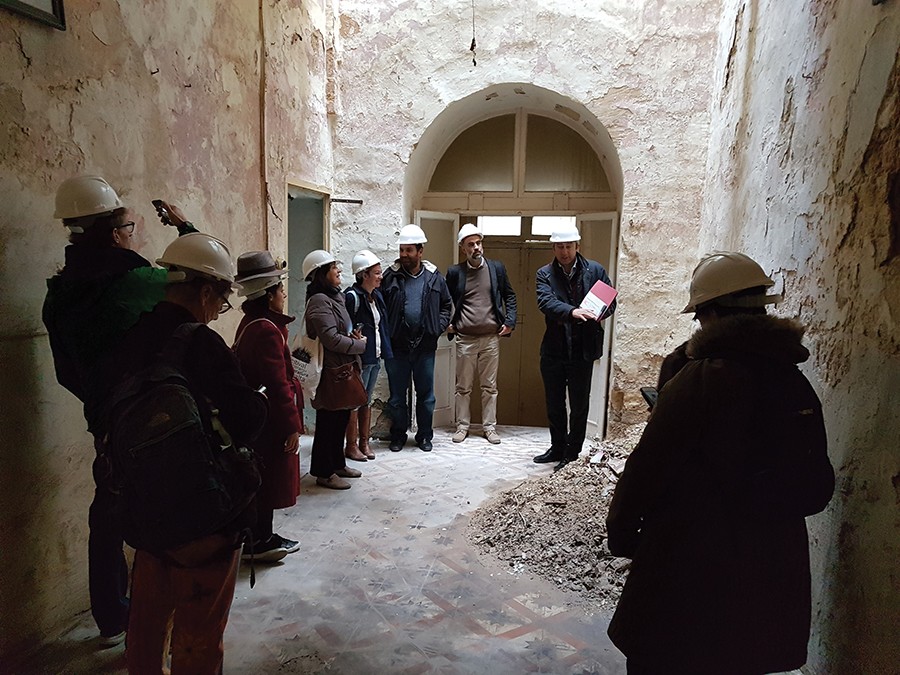
While we have been on the receiving end of a lot of support, translating our philosophy of openness into practice involved an element of risk. During a series of tours that we organised on site for potential users of the Cluster, we had to be open to various views and perspectives about what the Cluster could be. Participants highlighted issues related to accessibility and affordability as key concerns. They also stressed that the Cluster needed to serve as a catalyst for networking and for strengthening entrepreneurial skills for people working in the creative sector. In some cases, we had to revisit some of our plans and open new discussions with the architects to made adjustments. On other occasions, we called people in again to discuss their ideas further and see how we could integrate their suggestions into our vision.
Although we speak of cultural and creative industries, we should realise that the average number of people working in any single company is two. Indeed, 40% of designers in Malta are actually freelancers. The challenge for the Valletta Design Cluster here is to ensure flexibility and adaptability both in the physical infrastructure as well as the management of the Cluster. In this way, we can make the facility relevant for our users’ current needs, as well as cater to future ones.
The next stage in understanding our community of potential users better is to work together on the creation of a Design Action Plan. The Design Action Plan will highlight concrete actions to be undertaken by the Cluster during the first three years of its operation. It will serve as the main reference tool to structure the Valletta Design Cluster’s interaction with its community of users, practitioners, enterprises, and beneficiaries. Based on this open process, the Valletta Design Cluster aims at establishing itself as a new community-driven platform for cultural and creative practice in Malta.
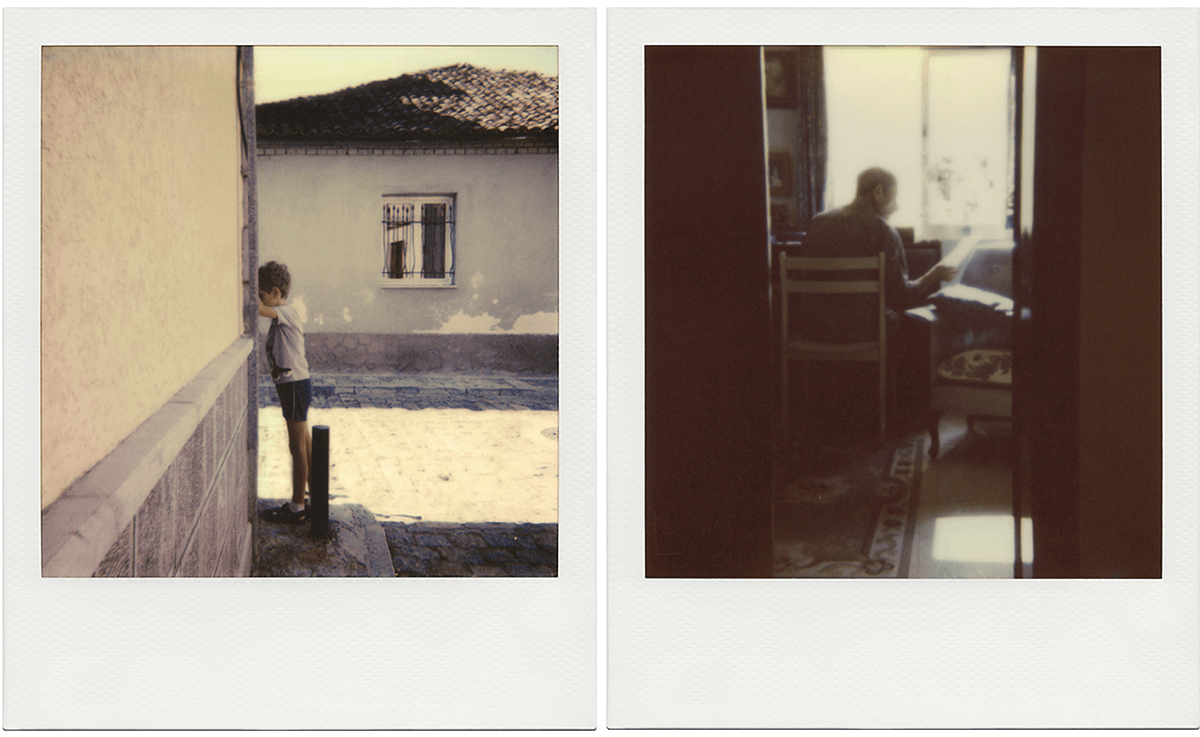
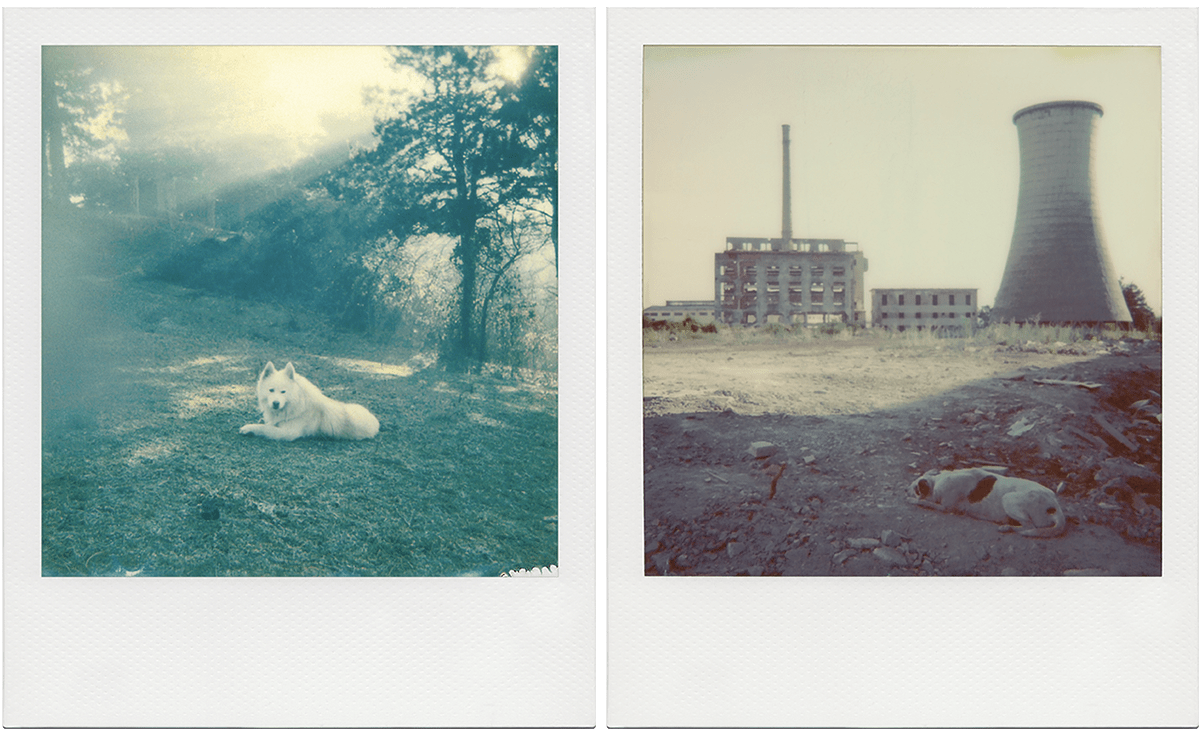
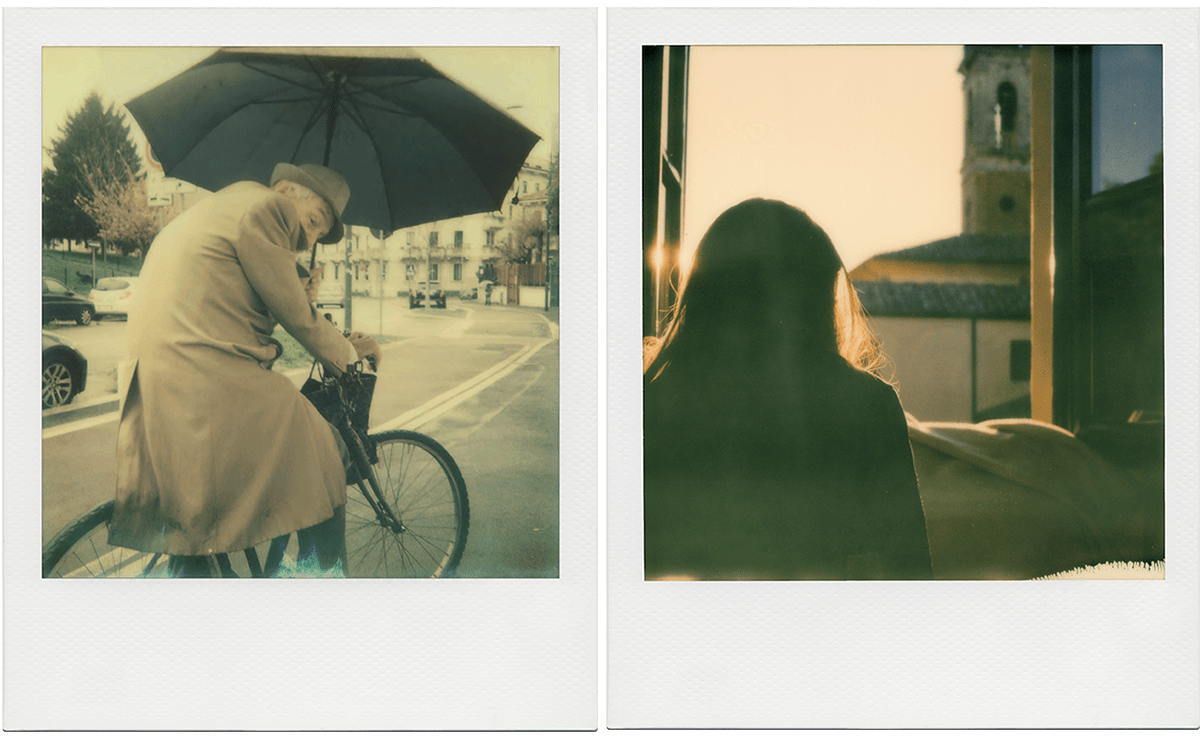
Instant cameras, commonly referred to as ‘Polaroids’ thanks to the pioneering company, offer limited manual-automatic controls. These self-developing photographs present numerous analog imperfections, but additional aspects make them distinctive.
Polaroids do not document the world faithfully. They create a new version of it through their own lighting schemes, colours, and softness; a quality associated with past technologies. All these aspects enhance the transient nature of subjects, such as boy counting in during a game of hide-and-seek (see picture).
The process of capturing an image can also draw from ‘missed opportunities’. These are subjects one comes across but does not photograph due to not having a camera at hand, or for fear of intrusion. A line of people coming down a hill, or visitors waiting like purgatorial souls outside a derelict hospital—such images are captured in the mind and their essence might be transferred into other shots.
Having the image in hand within minutes does not necessarily make the medium of instant photography unique, for even the photos themselves can change hues and mood with time. What does make it unique is its unpredictability and the challenge it poses when it comes to materialising intentions within the limitations of the medium. This makes the effort worth pursuing.
An image illustrates the relationship between a subject and its viewer. It is a perspective on the world, be it a printed photograph, a digital file, or a memory.
My work centres on the co-existence of dualities. It treads blurred borders and investigates uncertain divides between opposing poles. It synthesises extremities and acts as a seam that binds together disparate realities.
Uncertain of its own actuality, it questions its own being.
Artist statement
Prof. Vince Briffa peels back the layers of his latest works to reveal his thoughts on duality, confrontation and caricaturisation and how he translates them into art.
While the Maltese art scene continues to expand and mature, questions of relevance are coming to the fore: How does Maltese art travel? Is it as insular as we think? Nikki Petroni looks at current research to find answers.
Art and culture are often deemed to be the realm of the intangible, subject to their audience’s subjectivity. Now, however, a team of researchers have stepped up to challenge this notion.
Valletta is living proof that major cultural and artistic events can breathe new life into the city. When Malta’s capital was granted the title of European Capital of Culture for 2018, all hands were on deck to prune and preen, reversing decades of decay to make it ‘worthy’ of such a prestigious title. Now, after years of intense effort, the hard work has paid off. City Gate now provides an appropriately magnificent entryway into Valletta. Dingy, long-shuttered venues have been restored and reinvigorated. The once sleepy city has roared back to life with the wealth of events being organised. Valletta is no longer a stop on the hop-on hop-off bus; it is a bustling melting pot of old and new with an inescapable siren song.
This shift has created positive momentum in the arts scene. But not all outcomes have been positive. Valletta’s overhaul can look very different for the ones who call the city home. The burst of activities may have disrupted some people’s day-to-day business, while also contributing to the congestion and noise. The solution is in identifying ways to effectively balance the discomfort brought about by social change and the valued benefits that same change brings.
Jaakko Blomberg
Finnish social activist, Jaakko Blomberg knows the struggle. He founded the NGO Yhteismaa (Common Ground) in Helsinki in 2012. Yhteismaa specializes in new participatory city culture, co-creation, and social movements. ‘In the beginning, many municipal officers in Helsinki were against our events and projects; they just didn’t have any procedure for handling them, so we kind of had to find a new way to do things.’ Leaving room for people to share their ideas and expressing themselves is also essential, he says. ‘There should be different kinds of roles and tasks for people to take on; all changes are scary, so it’s important to inform people and make them feel like they’re part of the process. For example, many people are prejudiced against street art, but when you explain more about it and give people the chance to take part in the process, their attitude becomes much more positive. Organisers have to provide enough information and make participation easy. It’s important that it’s not just about a small circle of activists, but about the whole community.’
Residents often felt ‘helpless and disowned of their spaces.
Victor Jacono
Closer to home, project leader of the Ġewwa Barra initiative, Victor Jacono, tells us how Valletta residents often felt ‘helpless and disowned of their spaces.’ Ġewwa Barra was created to address precisely that issue: to empower residents and give them ownership of their community, using artistic tools to get a glimpse at the cultures affecting their lives and help them express the needs and dreams that shape their experience in the capital city.
‘We seek to encourage creativity, but also responsibility. We hold creative workshops conducted by different facilitators and artists to give people the chance to look at themselves through the aesthetic lens of the artworks. Currently we are engaging the residents of Duwi Balli in a process of creative place regeneration, through a collaboration between architects Maria Cerreta and Franco Lancio, the Valletta Local Council, and the Valletta Services Directorate. It is not simply a matter of approaching the residents and asking them what nice things they would like us to do for them. It is a matter of asking them what they wish to express with our support, of providing them with tools and opportunities to respond creatively to the changes affecting their lived spaces,’ Victor says. In 2017 and 2018 Ġewwa Barra is going to extend its reach even further in order to involve residents from across the capital city, with different artists conducting a series of creative workshops that will culminate in an exceptional performing arts event.
Ġewwa Barra was created to […] empower residents and give them ownership of their community, using artistic tools to get a glimpse at the cultures affecting their lives and help them express the needs and dreams that shape their experience in the capital city.
While Victor is realistic about the forward march of change, he believes it is unjust and unacceptable that changes are engineered by a handful of stakeholders, whose decisions everyone else simply has to accept— especially when such changes are going to affect Valletta’s residents’ lives dramatically. Much like Jaakko with Yhteismaa, he believes that the fear of change can be lessened if people are informed and included in the process. ‘The voices of those stakeholders with lesser means need to be amplified and given the importance they deserve. The arts can contribute greatly towards this. Ġewwa Barra is not so much about single events, but the mainly bottom-up processes engaging the residents creatively. I believe it is the experiences brought about by such processes that will leave an important and long-lasting legacy with the inhabitants of Valletta.’
Jaakko Blomberg and Victor Jacono are keynote speakers at the Valletta 2018 conference titled Living Cities, Liveable Spaces: Placemaking & Identity. More information on this conference can be accessed at conference.valletta2018.org. Registration ends on 12th November. Discounted rates are available for students.
Back in the old days it was assumed by most that if you had male sexual characteristics you were a MAN and as such your nature was to be macho, brave, and aggressive and bring in the money for the family; and of course, if you had female sexual characteristics, you were a WOMAN, and as such your nature was to be sensitive, emotional, nurturing, and an ‘angel’ in the home.
Dr Marceline Naudi
Then we discovered ‘gender’, i.e. not the physical/biological characteristics, but the social and cultural meanings attached to being a woman or a man, our learnt behaviour. At this stage, it became clear that having male sexual characteristics in itself did not necessarily make one incapable of holding a baby or wiping up vomit. At the same time, it was now agreed that possessing female sexual characteristics did not necessarily make one unfit for public life, employment outside the home, or leadership (political or otherwise).
And we embraced these changes with gusto! Now, we thought, women (and men, or other) could be whatever they wished to be! We were no longer held back by our sexual characteristics, by being seen as ‘woman’ (or ‘man’). This was a big step forward for ‘gender’ equality.
Somewhere along the line however, ‘woman’ disappeared…
In the past, we spoke about women’s liberation, women’s rights, feminism, equality for women, women’s studies, violence against women. When we talked about domestic violence, what we meant was intimate partner violence perpetrated far more by men against women.
Nowadays we speak about human rights, gender equality, gender studies, gender-based violence, family violence, and when we speak about domestic violence we get told; ‘What about the men? What about the children? What about older adults?’ When we speak about feminism, we are labelled passé or extremists.
Effectively, ‘woman’ has become invisible. The still-dominant patriarchal discourse has succeeded, with the help of all of us, in neutralising ‘woman’ and camouflaging this as ‘progress’.
If we had indeed achieved ‘gender equality’, if women’s rights as human rights were really being upheld, if we had eliminated violence against women, then this would be right and proper… But have we?
My answer to that is, of course, as you would expect, a resounding NO, we have not! And making ‘woman’ invisible once more will not help us achieve this!
Photo by Steven Levi Vella from Artemisia: 100 Remarkable Women, a project by Network of Young Women Leaders
La Biennale di Venezia is the world’s biggest art event. Every two years, Venice erupts in a glorious art extravaganza as artists from all over the world descend on the city in celebration. This year marks the 57th edition of the International Art Exhibition. It also marks Malta’s return to the event. Emma Pettit tells us more.
Theatre, dance, and music are changing at the University of Malta. Recently, three new research groups were launched by the School of Performing Arts (SPA) with the aim of bridging different disciplines throughthe development of shared work processes and research areas. Through interdisciplinary research, these groups want to look outwards towards new concepts.
The groups cover three themes. First, ‘Twenty-first-Century Studies in Performance’, which is committed to the locating, reimagining, and development of performance practices in the 21st century. Second, ‘Culture and Performance’, which is guided by the premise that culture and performance refer to complexities that emerge from the multitude of phenomena these terms describe. Third, ‘Performing Arts Histories and Historiographies’, which investigates and archives material related to historical events across the performing arts. These themes are possible thanks to a web of local and international collaborations, ranging from the Digital Arts and Humanities to Cognitive Science and Intelligent Computer Systems.
These new research platforms seek to facilitate dialogue between scholars and practitioners, academics and citizens.
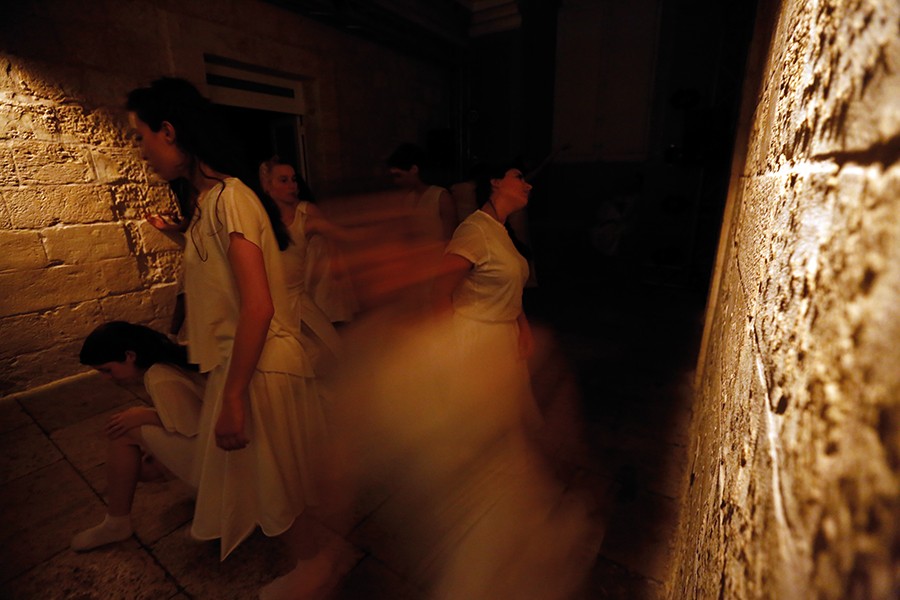
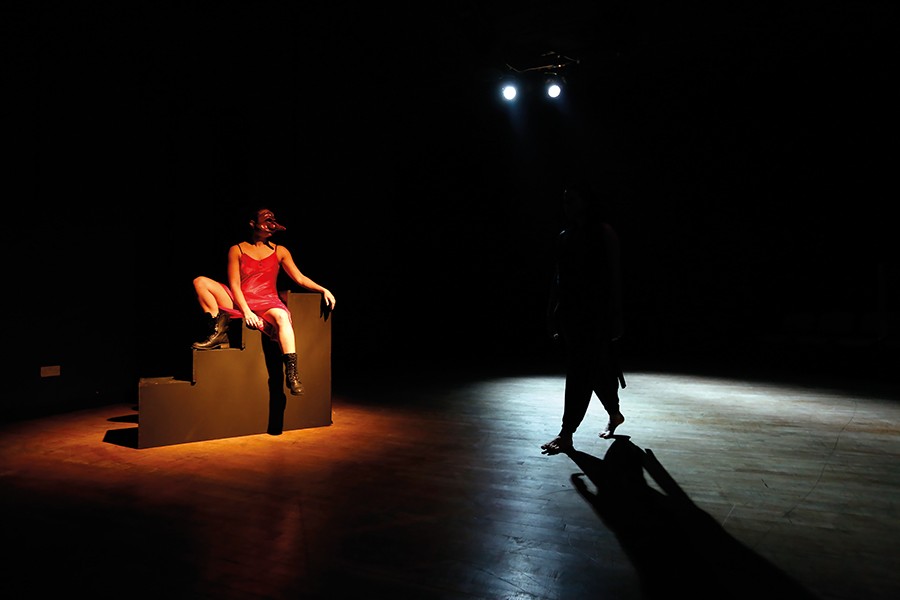
Annual Collective Performance of the School of Performing Arts. White White is a performance about space, or the absence of it. Once upon a time, characters were in search of an author. Today they are in search of a space. The characters, played by the students of the School of Performing Arts at the University of Malta, are lost in a corridor in-between places. Around them all is empty. A void. Like a vault, all they have is White! Photo: Darrin Zammit LupiinFragments A devised performance created by the students of the School of Performing Arts, University of Malta MITP Photo by Darrin Zammit Lupi
SPA has an upcoming conference featuring some of the above topics called Interweaving Cultures: Theory and Practice in March 2017. For more information contact Dr Stefan Aquilina (stefan.aquilina@um.edu.mt) or, on the conference, Prof. Vicki Ann Cremona (vicki.cremona@um.edu.mt).