
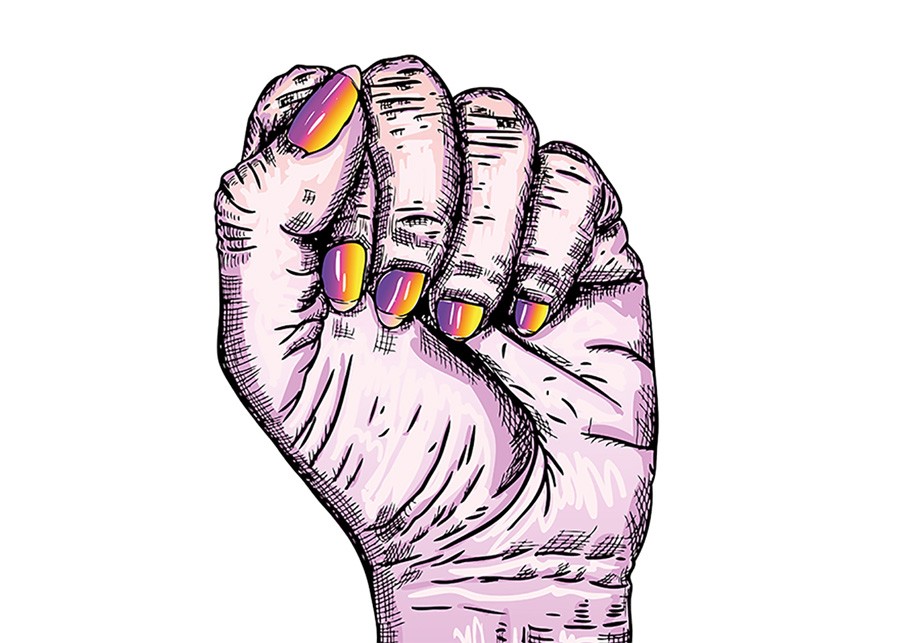
Back in the old days it was assumed by most that if you had male sexual characteristics you were a MAN and as such your nature was to be macho, brave, and aggressive and bring in the money for the family; and of course, if you had female sexual characteristics, you were a WOMAN, and as such your nature was to be sensitive, emotional, nurturing, and an ‘angel’ in the home.

Then we discovered ‘gender’, i.e. not the physical/biological characteristics, but the social and cultural meanings attached to being a woman or a man, our learnt behaviour. At this stage, it became clear that having male sexual characteristics in itself did not necessarily make one incapable of holding a baby or wiping up vomit. At the same time, it was now agreed that possessing female sexual characteristics did not necessarily make one unfit for public life, employment outside the home, or leadership (political or otherwise).
And we embraced these changes with gusto! Now, we thought, women (and men, or other) could be whatever they wished to be! We were no longer held back by our sexual characteristics, by being seen as ‘woman’ (or ‘man’). This was a big step forward for ‘gender’ equality.
Somewhere along the line however, ‘woman’ disappeared…
In the past, we spoke about women’s liberation, women’s rights, feminism, equality for women, women’s studies, violence against women. When we talked about domestic violence, what we meant was intimate partner violence perpetrated far more by men against women.
Nowadays we speak about human rights, gender equality, gender studies, gender-based violence, family violence, and when we speak about domestic violence we get told; ‘What about the men? What about the children? What about older adults?’ When we speak about feminism, we are labelled passé or extremists.
Effectively, ‘woman’ has become invisible. The still-dominant patriarchal discourse has succeeded, with the help of all of us, in neutralising ‘woman’ and camouflaging this as ‘progress’.
If we had indeed achieved ‘gender equality’, if women’s rights as human rights were really being upheld, if we had eliminated violence against women, then this would be right and proper… But have we?
My answer to that is, of course, as you would expect, a resounding NO, we have not! And making ‘woman’ invisible once more will not help us achieve this!
Photo by Steven Levi Vella from Artemisia: 100 Remarkable Women, a project by Network of Young Women Leaders

Comments are closed for this article!