
Green Planes Safe Planes


Earth is just one planet in a solar system that wanders around a galaxy. Each galaxy is unique in its own right, each composed of its special ration of dust, gas, and endless stars. What unites them all is the mysterious dark sky that they float in: the Universe.
A constantly growing expanse of space and time, the Universe’s attractive gravitational force is currently decreasing while its repulsive force is increasing. This repulsive force is referred to as dark energy. It is pushing galaxies apart at an increasing rate, bringing up a flurry of questions. Why is this happening? How does dark energy work? What is the role of magnetism?
To answer these questions and more requires the right tools. Improvements in instrumentation up until now have enabled astronomers to unveil many mysteries, not only in the visible region of our Universe where human eyes are sensitive to electromagnetic waves, but also beyond. This is done through various means. Optical telescopes, such as the famous Hubble Space Telescope, detect the intensity of incoming radiation in the optical band of the spectrum. Fundamentally, all celestial objects emit electromagnetic radiation, among them radio waves.
The observation of cosmic objects in these radio frequencies is defined as radio astronomy. Because radio waves penetrate dust, scientists utilise radio astronomy techniques to explore undetectable areas of space which cannot be seen using visible light by optical telescopes.
The project is an international effort to build the world’s largest multi radio telescope that will have a total collecting area of approximately one million square metres.
The Square Kilometre Array (SKA) project is the largest project planned for the 21st century. It will see thousands of radio telescopes built in South Africa and Australia. It will enable unparalleled insights into the Universe. The project is an international effort to build the world’s largest multi radio telescope that will have a total collecting area of approximately one million square metres. SKA’s developers are building a system that would operate over a wide range of frequencies, and its size would make it 50 times more sensitive than any other radio instrument. It is set to be able to take images of the sky at up to 10,000 times the speed of current survey radio telescopes.
The University of Malta’s (UoM) contribution to the SKA project is being spearheaded by the Institute of Space Sciences and Astronomy (ISSA). ISSA Founder Prof. Kristian Zarb Adami, Faculty of Science Dean Prof. Charles Sammut, and Iman Farhat are developing an antenna which can be printed like a newspaper and can be rolled out like a carpet.
Unlike conventional antennas which are designed to work optimally at one frequency, the engineering prototype developed at the UoM can sense a large range of frequencies and is capable of running applications such as TV, wireless, Bluetooth, and near-field communications. This was also important because ISSA researchers are trying to detect the first atoms and molecules that were formed at the earliest stages of the Universe. This antenna is also intended to serve as a cost-effective element to cover remote locations for SKA.
The SKA project is scheduled to be built in phases, starting in 2018 and finishing in 2024. Even before the SKA is online, several thousand combined radio telescopes will be collecting and processing data equivalent to 100 times today’s global internet traffic per [unit of time].
The first small scale prototype antenna ISSA built had 256 elements and met SKA’s application and requirements. This was immensely motivating, especially when considering the high standards of this world-wide consortium. The initial success drove home the possibility of further in-depth studies.
ISSA has now embarked on building a large-scale version of the array (funded by the Technology Development Programme of the Malta Council for Science and Technology and Malta Communications Authority). The Malta array demonstrator is an implementation of two antenna arrays. Each array consists of 5,000 elements covering an area of 100 m2. The main aim of this is to test the array in an environment close to its real world conditions. The characterisation of the antenna array radiation pattern is being investigated using a far-field flying source. The system makes use of drones equipped with a transmitter and a dipole antenna that communicates with the array on test. The team is now working on this antenna to ensure a seamless performance.
SKA is a behemoth of a project, involving about 100 organisations across 20 countries. With it, scientists and researchers all over the world will be able to conduct transformational science in astronomical observation, breaking new ground with every step and redefining our understanding of space as we know it.
Key goals include challenging Albert Einstein’s theory of relativity to have a closer look at how the very first stars and galaxies formed moments after the Big Bang. It could also potentially provide an answer to one of the greatest mysteries known to humankind—are we alone in the Universe? 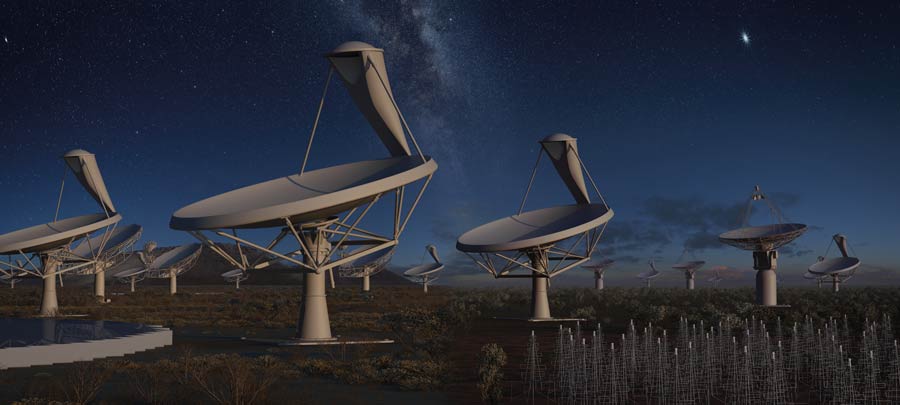



Fact: pain severely impairs quality of life.
There are different kinds of pain. Broadly categorised, we can divide them into acute and chronic. Continue reading


Iceland (population: 320,000) is proud of writer Halldor Laxness; the even smaller Faroe Islands (pop: 50,000) celebrates its physician and scientist Niels Ryberg Finsen. The combined population of these countries is smaller than Malta’s, yet they have each managed to secure Nobel Laureates: Laxness in Literature in 1955; Finsen in Medicine in 1903. Small size may be a handicap, but—as the Iceland and Faroe examples attest—it is not an insurmountable obstacle. Small size should not prove to be a cheap excuse. So the question is: can Malta produce a Nobel Laureate?
Thinking big can be a powerful motivator. Grand ideas can push publics, enterprises, and governments to achieve the unthinkable. Believe in the impossible, advised the historian Max Weber, and then the possible might just become true. Landing a man on the moon before the end of the decade inspired the US Space Programme in the 1960s. The Live Aid Concerts in 1985 delivered £150 million in famine relief. And the One Laptop Per Child (OLPC) Initiative has equipped 2.5 million children, and counting, across the world.
Malta needs ‘think big’ projects to galvanise the nation. Securing a Nobel Laureate could be one. Developing an underground subway system (and linking Malta to Gozo in the process) could be another. Such projects need not be mutually exclusive. Their trademark would be their ability to engage public opinion, foster national pride, and raise the game to the next level. Naturally, people will continue to talk about politics, the weather, the traffic, the guy or gal next door… but also about these grand accomplishments. Of course, these projects will be controversial; they will have as many sympathisers as dissenters and critics. So? What’s new? That is how it should be.
Securing our political independence was one such dream for the 1960s. Bringing an end to our fortress economy was another aspiration for the 1970s. Joining the European Union was a third. Valletta Capital of Culture for 2018 may be a fourth and is an active project. What’s cooking in the Kitchen of Big and Bold Ideas for Malta for the next few years?
We need to think ahead. Apathy is dangerous, and we need big ideas to keep it at bay.
By the way, St Lucia (population: 150,000) has not one, but two Nobel Laureates: Arthur Lewis for Economics in 1979 and Derek Walcott (born in 1930, still alive at the time of writing) for Literature in 1992.

Our understanding of gravity has changed over the years and will likely continue to as researchers arm themselves with new ideas tested by increasingly sophisticated technology. Dr Jackson Levi Said, Mark Pace, and Filippos Nachmias (University of Malta [UoM]) tell THINK more about their mission to unlock gravity’s secrets from neutron stars.

All academics are constantly encouraged to share their research with the world through journals. Furthering knowledge is the aim, providing colleagues far and wide with a building block on which to potentially further their own work. But are these noble motivations what really drive researchers to publish? According to a study by Bryan Coles (1993), the short answer is no.
It has been shown that authors in the sciences publish primarily to disseminate their own work (54%). Other reasons are the furthering of career prospects (20%), improving funding opportunities (13%), ego (9%), and patent protection (4%).
Clearly, there are huge personal motivations to publish, and with good reason. Globalisation has seen job competition rocket. Today, finding a job opening is hard enough, let alone climbing the career ladder. The term ‘publish or perish’ takes on a more threatening and terrifying overtone as this is now literal and no longer a metaphor.
Careers depend on publishing.I research is conducted without being written up as a paper and accepted in a reputable journal, then it is almost as if it has simply not been done at all. It has not been given official public recognition. Not only this, but even if one has a worthwhile research project to investigate and write up, there are many intervening steps that must be negotiated before a paper can be completed; from drafting a proposal for ethics and data protection, to opting co-authors, all the way to dealing with rejections, editors, and resubmissions, the road to publication is a rocky one.
Understandably, the process can be daunting for many. Thankfully, there are people and courses specifically tailored to help researchers with this. How to Write a Scientific Paper (WASP) is one of them: this is a three-day intensive course being held in London at the Royal College of Paediatrics and Child Health, with formal lectures and interactive sessions that will help researchers not only start their journey to publishing, but also see it through.
The organisers are also tentatively planning to hold another of these courses in Malta in 2017.
For more information, visit the Maltime website and the event on Facebook.


This is a murky area to discuss. Cognitive-Enhancing drugs are usually used to treat conditions such as sleeping disorders and ADHD. However, if taken by a person (and we do not recommend these pills) without these conditions, they can enhance the brain for a short time. But no gain comes without pain.
Side effects are a problem. Take coffee, a weak stimulant that increases focus for a short period. A person slowly builds up tolerance and an addiction to the effect of caffeine. The ability to maintain a normal state of focus now requires that cup of coffee. Mind enhancement drugs taken without a prescription could lead to sharper wits in the short term, however they could lead to addiction in the long term. Ritalin and Adderall, prescribed for ADHD, can also lead to heart problems.
The benefits many of these drugs give are usually minor—nothing like the movie Limitless. But while our minds do have limits, they are probably fewer than one might expect, especially if we push ourselves that extra mile.
Send in your science questions to think@um.edu.mt

The term ‘robot’ tends to conjure up images of well-known metal characters like C-3P0, R2-D2, and WALL-E. The robotics research boom has in the end enabled the introduction of real robots into our homes, workspaces, and recreational places. The pop culture icons we loved have now been replaced with the likes of robot vacuums such as the Roomba and home-automated systems for smoke detectors, or WIFI-enabled thermostats, such as the Nest. Nonetheless, building a fully autonomous mobile robot is still a momentous task. In order to purposefully travel around its environment, a mobile robot has to answer the questions ‘where am I?’, ‘where should I go next?’ and ‘how am I going to get there?’
Like humans, mobile robots must have some awareness of their surroundings in order to carry out tasks autonomously. A map comes in handy for humans. A robot could build the map itself while exploring an unknown environment—this is a process called Simultaneous Localisation and Mapping (SLAM). For the robot to decide which location to explore next, however, an exploration strategy would need to be devised, and the path planner would guide the robot to navigate to the next location, which increases the map’s size.
Rachael Darmanin (supervised by Dr Ing. Marvin Bugeja), used a software framework called Robot Operating System (ROS) to develop a robot system that can explore and map an unknown environment on its own. Darmanin used a differential-drive-wheeled mobile robot, dubbed PowerBot, equipped with a laser scanner (LIDAR) and wheel encoders. The algorithms responsible for localising the robot analyse the sensors’ data and construct the map. In her experiments, Darmanin implemented two different exploration strategies, the Nearest Frontier and the Next Best View, on the same system to map the Control Systems Engineering Laboratory. Each experiment ran for approximately two minutes until the robot finished its exploration and produced a map of its surroundings. This was then compared to a map of the environment to evaluate the robot’s mapping accuracy. The Next Best View approach generated the most accurate maps.
Mobile robots with autonomous exploration and mapping capabilities have massive relevance to society. They can aid hazardous exploration, like nuclear disasters, or access uncharted archaeological sites. They could also help in search and rescue operations where they would be used to navigate in disaster-stricken environments. For her doctorate, Darmanin is now looking into how multiple robots can work together to survey a large area—with a few other solutions in between.

A love for botany, the birth of her children, and a strong interest in public health problems—this is what led Assistant Professor Shirley Micallef to her current position in the Department of Plant Science and Landscape Architecture (University of Maryland). She speaks to Veronica Stivala about beer brewing, native plant gardening, and the safety of our salads.
Continue reading
A legacy gift is a planned future donation to a charity or trust which is given through a will or other designation. It allows individuals to express personal values by integrating charitable, family, and financial goals. Planned gifts drawn up in wills can be made in cash, or by donating assets such as stocks, real estate, and art pieces. The possibilities are endless.Continue reading