

 Pride. That’s what Enrico felt when his name was announced at the Science Expo as the winner of the NSTF Contest for young scientists. The contest is a first step helping to build what Enrico Zammit Lonardelli calls his ‘scientific character’. It is a journey that led him to compete on an international level in Milan to represent Malta, meet and talk to incredible people, and learn about the way in which science is carried out all over the world. Feelings of honour, fulfilment, and success quickly followed. ‘Being surrounded by the best people in Europe in all possible aspects and fields of science was simply amazing.’
Taking on such challenges in the scientific world at only 17, Zammit is the younger mirror image of another 17 year old that, around 20 years earlier, started the same journey. Today lecturer Conrad Attard (Faculty of ICT, University of Malta; Vice Chair, IEEE Malta Section) is handling several activities, one of which is an exhibit with his team for the same Science Expo which started Enrico off on his scientific voyage.
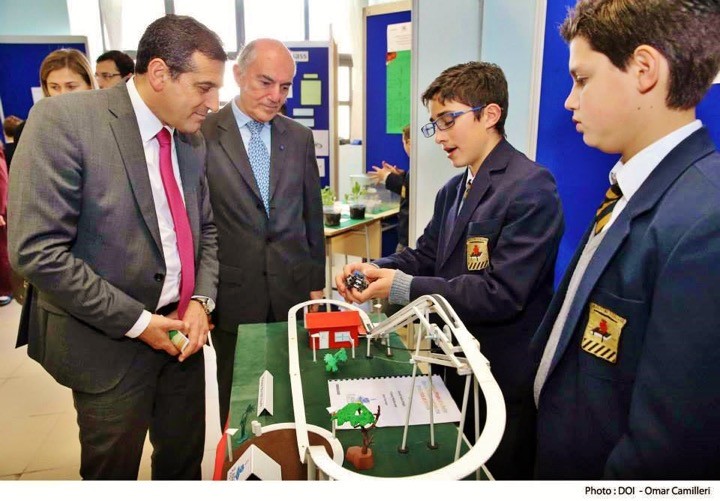 Attard sees the Expo as a great way to distribute resources, and meet kids and visitors. ‘I want students to get excited about science and for more students to engage with these subjects’. That’s why Attard always teaches them in a fun way, by creating games were students need to solve logic problems that involve science and computing to learn and achieve their goals, and that is exactly what his exhibit at the NSTF Expo does.
So why is the growth of science communication important in Malta? For Attard, it is all about helping people find out what they do well in and pushing students to reach out beyond their comfort zone and that mistakes are part of the learning experience.
Zammit understands this principle. Some of his family members suffer from asthma motivating him to research it for the NSTF Expo. ‘Slowly I managed to understand the mechanism and a few questions popped into my mind. The following process was turning those questions into a project by research, planning, and finally experimentation.’
By favouring the multidisciplinary approach students are not limited to only becoming developers, but can also tackle related problems requiring knowledge or skills from other disciplines. This is what attracted Attard to the NSTF Science Expo as it uses crafts, different skills, and logic to solve problems.
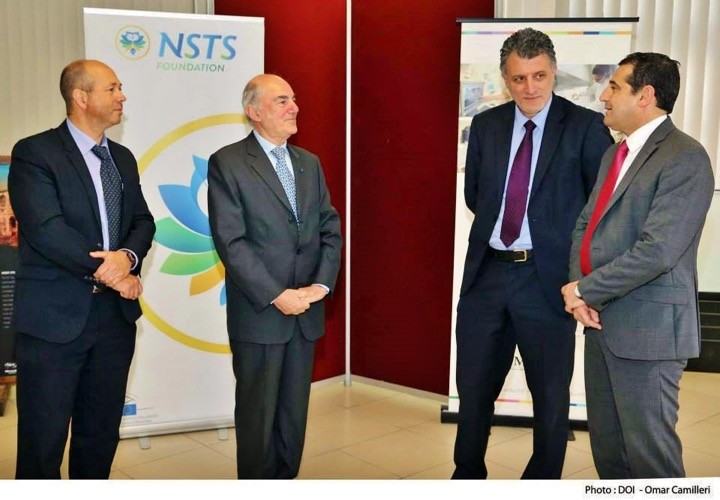 According to Zammit, the NSTF Expo and Programmes focus on analytical skills, public speaking, problem solving techniques, planning, critical thinking, creativity, and descriptive writing. ‘They all focus on character development rather than just the activity and provide an ensemble of quality development which is simply impossible to match by reading books and studying’. And, of course, there are amazing prizes.
The Expo gave Zammit a platform for his work to be recognised by experts. ‘It has since motivated me to work harder because now I know what it feels like to win and create something useful. I want to repeat this success, hopefully at larger scales with ever bigger projects and aims.’
Maybe one day, it will be Zammit who will find himself teaching young students about science at the NSTF Expo.
The next NSTF Science Expo will be from 9–16 March for school visits, while the open weekend for everybody else will be on the 12–13 March.
For more information visit the NSTF Malta website or Facebook page.

 So how do we save the bees ?
 Citizen engagement is needed to encourage participation to collect data and evidence. By working with researchers and policymakers real change can be achieved to save bees. Considering Malta’s situation, lecturer


