
Film review by Dr Philip M. Magri
Continue reading
Film review by Dr Philip M. Magri
Continue reading

Card Game Review by David Chircop
Continue reading

The answer is coffee. Coffee is drunk by around 80% of Americans. The large numbers call for extensive studies on the effect of this drug on the brain.
Caffeine is a stimulant. It has a similar molecular structure to adenosine, a chemical linked to us feeling tired. Caffeine binds to adenosine and stops it from working. Coffee does not wake you up but makes your body forget it is tired.
Taking that espresso in the morning makes your body increase the number of receptors to caffeine in the brain. This increase makes us dependent on that cup of coffee in the morning to reach normal functional levels. On the other hand, cannabis has minimal risk of long-term addiction.
Send in your science questions to think@um.edu.mt


‘What does it really mean to sense something?’ That was the fundamental question Dr Libby Heaney (quantum physicist and artist) asked herself when she started working on Sensory Apparatus, currently on display at Blitz in Valletta. For almost a year she worked together with Bonamy Devas (artist and photographer) and Anna Ridler (designer working with information and data). For Libby sensing means the collection of data. Science tries to measure everything and is now through so-called ‘big data’ attempting to quantify subjective things, like happiness levels or the perfect online dating match.
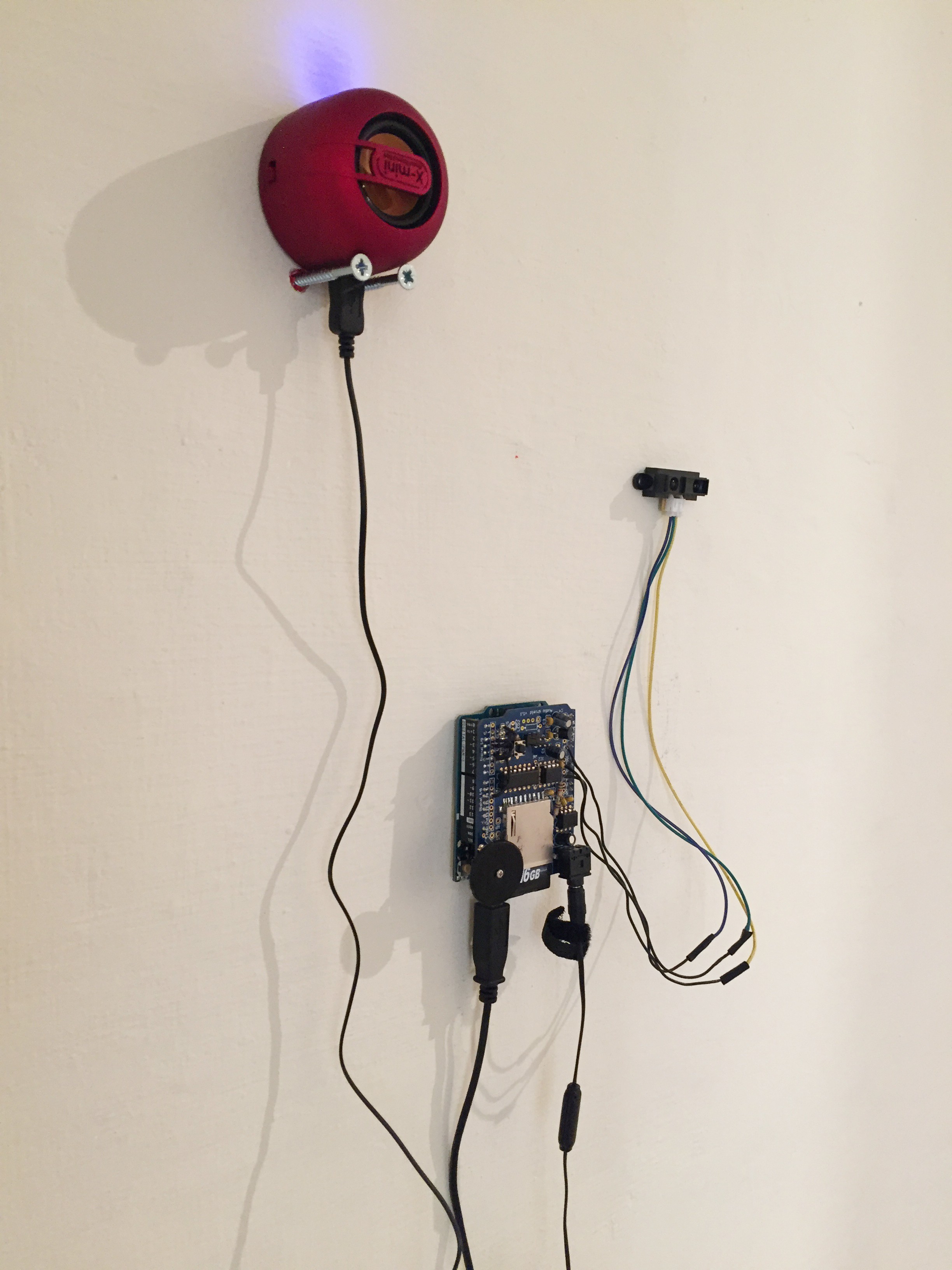 Sensory Apparatus visualises the constant surveillance our data is under. In the first room a web of elastic black and white fibres represents a network of light and data. The experience of traversing the space and interacting with the structure is like simultaneously being sensed and sensing the internet. ‘Like the internet, you are missing out if you cannot make it past the first room’, Libby suggests.
The second room has circuit boards and speakers mounted to the walls. People curious enough will trigger a proximity sensor and a computerised voice starts talking. ‘Name. Country. Age. Address.’ What sounds like nonsense at first, quickly develops into the auditive representation of an algorithm. Passing consecutive speakers continuously reveals its different layers. These algorithms are complex programmes, designed to collect the footprints people leave while online. The information is used by marketers to direct and personalise adverts. ‘We wanted to reveal the technology. The actual objects represent the discussion we are trying to make.’
The last room is pitch black. Only when approaching the middle of the room a projector lights up, projecting advertisements directly onto people’s bodies. The commercial pieces, gathered from across Malta, follow every movement, change constantly and are reflected from the room’s glossy walls. At the exhibition opening, once people noticed they were being used as a billboard, they quickly moved away. ‘People change and behave differently in there’, Libby says, making it obvious how advertisements influence us online.
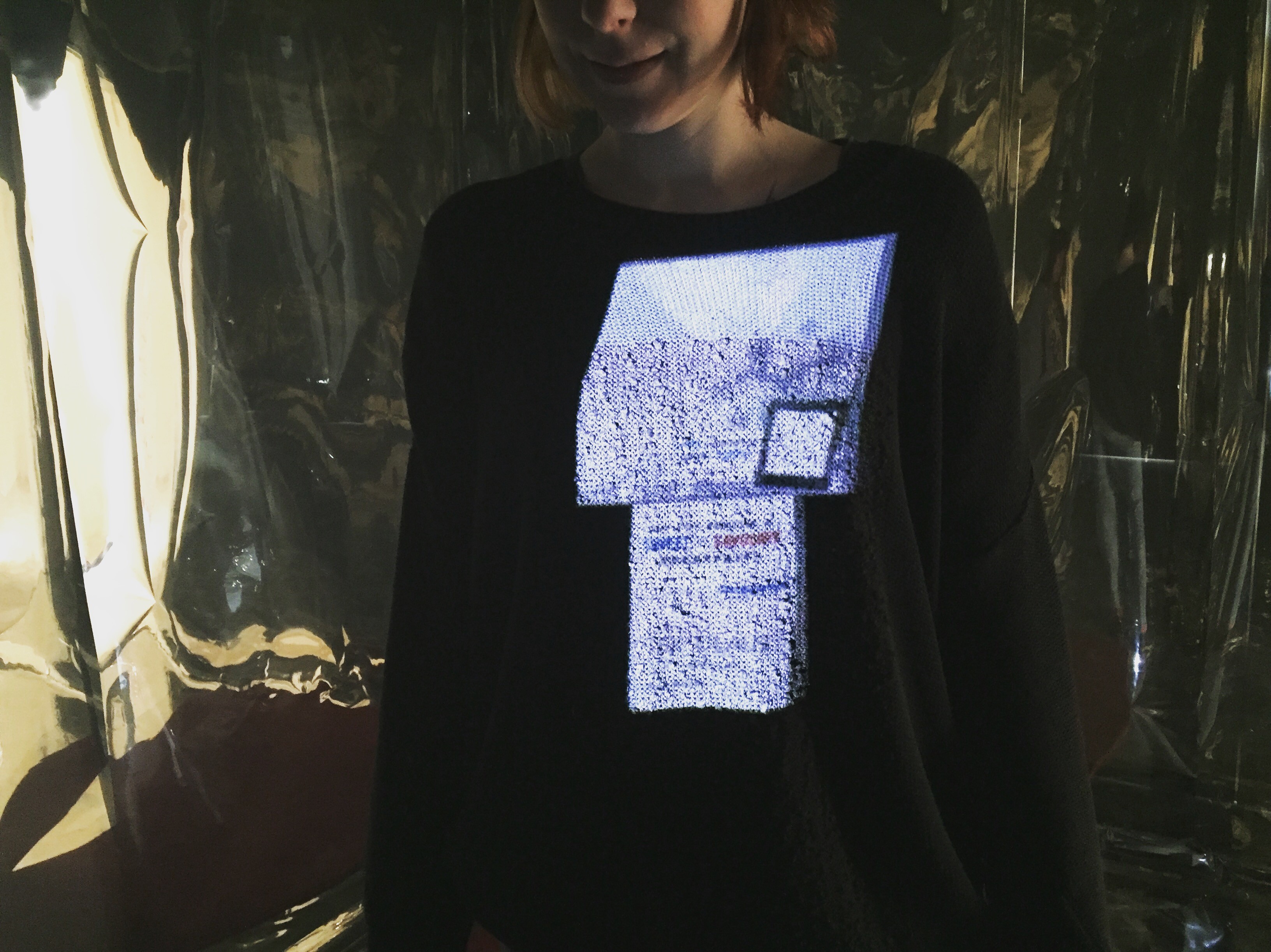 As a quantum physicist this change in behaviour reminded Libby of the Quantum Zeno effect, a phenomenon where an unstable particle will not decay while it is being observed. For Libby the concept of surveillance and the philosophy behind it led her to Sensory Apparatus. French philosopher Michel Foucault came up with the idea of panopticism, that inspired the exhibition. Panopticism is a social theory extending the panopticon, a prison designed to allow one person to observe all prisoners. Inmates would know they are possibly being observed, but could never be sure. This ultimately changes their behaviour. Sensory Apparatus’ first steps can be relived in the educational room near the artworks. The artists’ personal notes, inspiring articles, and other materials are laid out for everyone to explore.
The free exhibition opens every Tuesday–Thursday from 10am–3pm and Friday–Saturday from 3–7pm at Blitz, 68 St Lucia Street, Valletta, until April 6. For more information see thisisblitz.com
Sensory Apparatus is supported by Arts Council Malta / Malta Arts Fund.

Over the last few decades researchers have been unravelling the truth behind marijuana. Prof. Giuseppe Di Giovanni tells us more about its use in medical research.
Continue reading
 Pride. That’s what Enrico felt when his name was announced at the Science Expo as the winner of the NSTF Contest for young scientists. The contest is a first step helping to build what Enrico Zammit Lonardelli calls his ‘scientific character’. It is a journey that led him to compete on an international level in Milan to represent Malta, meet and talk to incredible people, and learn about the way in which science is carried out all over the world. Feelings of honour, fulfilment, and success quickly followed. ‘Being surrounded by the best people in Europe in all possible aspects and fields of science was simply amazing.’
Taking on such challenges in the scientific world at only 17, Zammit is the younger mirror image of another 17 year old that, around 20 years earlier, started the same journey. Today lecturer Conrad Attard (Faculty of ICT, University of Malta; Vice Chair, IEEE Malta Section) is handling several activities, one of which is an exhibit with his team for the same Science Expo which started Enrico off on his scientific voyage.
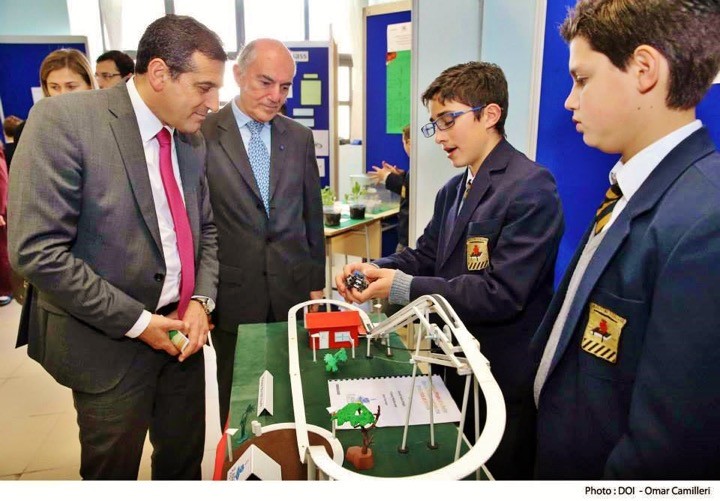 Attard sees the Expo as a great way to distribute resources, and meet kids and visitors. ‘I want students to get excited about science and for more students to engage with these subjects’. That’s why Attard always teaches them in a fun way, by creating games were students need to solve logic problems that involve science and computing to learn and achieve their goals, and that is exactly what his exhibit at the NSTF Expo does.
So why is the growth of science communication important in Malta? For Attard, it is all about helping people find out what they do well in and pushing students to reach out beyond their comfort zone and that mistakes are part of the learning experience.
Zammit understands this principle. Some of his family members suffer from asthma motivating him to research it for the NSTF Expo. ‘Slowly I managed to understand the mechanism and a few questions popped into my mind. The following process was turning those questions into a project by research, planning, and finally experimentation.’
By favouring the multidisciplinary approach students are not limited to only becoming developers, but can also tackle related problems requiring knowledge or skills from other disciplines. This is what attracted Attard to the NSTF Science Expo as it uses crafts, different skills, and logic to solve problems.
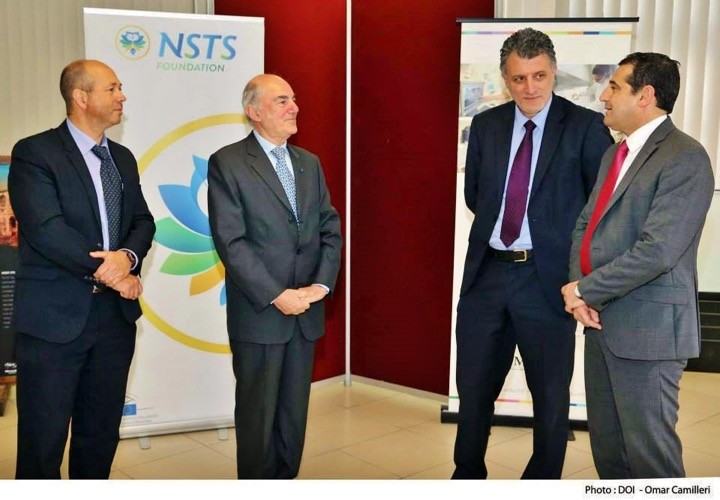 According to Zammit, the NSTF Expo and Programmes focus on analytical skills, public speaking, problem solving techniques, planning, critical thinking, creativity, and descriptive writing. ‘They all focus on character development rather than just the activity and provide an ensemble of quality development which is simply impossible to match by reading books and studying’. And, of course, there are amazing prizes.
The Expo gave Zammit a platform for his work to be recognised by experts. ‘It has since motivated me to work harder because now I know what it feels like to win and create something useful. I want to repeat this success, hopefully at larger scales with ever bigger projects and aims.’
Maybe one day, it will be Zammit who will find himself teaching young students about science at the NSTF Expo.
The next NSTF Science Expo will be from 9–16 March for school visits, while the open weekend for everybody else will be on the 12–13 March.
For more information visit the NSTF Malta website or Facebook page.