STEM ambassadors thrashing stereotypes

Over the last four decades, STEM industries have risen to great heights. Scientific, technological, engineering, and mathematical minds have been called to rally. And the demand continues. How can you contribute?

Few would dispute that technological and scientific advancements dominate the 21st century. Adverts provide ample proof. From tablets to smartphones, to robot home appliances and driverless cars, our world is changing fast. As a result, we are now living in a global knowledge-based economy where information can be considered as the highest form of currency. This reality comes with both benefits and challenges. 

Statistics from 2013’s European Company Survey show that 39% of European Union-based firms had difficulty recruiting staff with STEM skills. Malta is no exception. Another report in 2018 showed that people with STEM careers are still in short supply locally, especially in the fields of healthcare, ICT, engineering, and research. So, while the jobs are available, there aren’t enough people taking up STEM careers, and this is holding Malta back. 

There are many reasons for this trend. For one, Malta has a low number of tertiary level graduates; the third lowest in the EU. An array of harmful stereotypes can also shoulder some blame. The ‘fact’ that people in math, science, and technology ‘don’t have a social life’ is unhelpful. The ‘nerd’ image is still prevalent, especially among the younger generations that are still in primary and secondary school. Then there is the ‘maleness’ associated with STEM jobs and industries. According to Eurostat statistics, in 2017, from 18 million scientists and engineers in the EU, 59% were men and 41% women. 

Still, this is far from the whole picture. 

Employers have reported instances where, despite having enough graduates to fill roles, applicants did not possess the right non-technical skills for the job. This was especially true for abilities such as communication, creative thinking, and conflict resolution. 

Many were unprepared to work in a team, to learn on the job, and to problem solve creatively. This is a real concern, especially for the country’s future. At the rate with which markets are evolving, a decade from now young people will be applying for jobs that do not exist today, and the country needs to prepare students for these roles. And it has to start now. 

The Malta Council for Science and Technology (MCST) is trying to do this through an Erasmus+ project called RAISE. They are launching an Ambassador Programme to empower young students to take up the STEM mantle. STEM Career Cafés are going to be popping up in schools all over Malta, alongside a Career Day at Esplora aimed to inform and inspire. This is where you come in.

They want undergraduates from the University of Malta and MCAST to work with Esplora by sharing your experiences in STEM and telling your stories to encourage those who may be considering a STEM career. STEM Ambassadors will gain important public engagement skills while making research and science careers more accessible.

STEM is crucial in our contemporary world; our economies depend on it. It has completely changed the way we live and opened up new prospects for a future we never imagined. For those who have already made up their mind to be a part of it, there is now the opportunity to empower others and guide them in finding their own path. 

Note: To become a STEM Ambassador, email programmes@esplora.org.mt or call 2360 2218.

The MCST, the University of Malta, and the Malta College of Arts, Science and Technology have embarked on a national campaign to promote STEM Engagement. Its first activity was a National STEM Engagement Conference.

Enter the swarm

Author: Jean Luc Farrugia 

Jean Luc Farrugia

Once upon a time, the term ‘robot’ conjured up images of futuristic machines from the realm of science fiction. However, we can find the roots of automation much closer to home.

Nature is the great teacher. In the early days, when Artificial Intelligence was driven by symbolic AI (whereby entities in an environment are represented by symbols which are processed by mathematical and logical rules to make decisions on what actions to take), Australian entrepreneur and roboticist Rodney Brooks looked to animals for inspiration. There, he observed highly intelligent behaviours; take lionesses’ ability to coordinate and hunt down prey, or elephants’ skill in navigating vast lands using their senses. These creatures needed no maps, no mathematical models, and yet left even the best robots in the dust. 

This gave rise to a slew of biologically-inspired approaches. Successful applications include domestic robot vacuums and space exploration rovers. 

Swarm Robotics is an approach that extends this concept by taking a cue from collaborative behaviours used by animals like ants or bees, all while harnessing the emerging IoT (Internet of Things) trend that allows technology to communicate.

Supervised by Prof. Ing. Simon G. Fabri, I designed a system that enabled a group of robots to intelligently arrange themselves into different patterns while in motion, just like a herd of elephants, a flock of birds, or even a group of dancers! 

Farrugia’s robots in action.

I built and tested my system using real robots, which had to transport a box to target destinations chosen by the user. Unlike previous work, the algorithms I developed are not restricted by formation shape. My robots can change shape on the fly, allowing them to adapt to the task at hand. The system is quite simple and easy to use.

The group consisted of three robots designed using inexpensive off-the-shelf components. Simulations confirmed that it could be used for larger groups. The robots could push, grasp, and cage objects to move them from point A to B. To cage an object the robots move around it to bind it, then move together to push it around. Caging proved to be the strongest method, delivering the object even when a robot became immobilised, though grasping delivered more accurate results.

Collective transportation can have a great impact on the world’s economy. From the construction and manufacturing industries, to container terminal operations, robots can replace humans to protect them from the dangerous scenarios many workers face on a daily basis. 

This research project was carried out as part of the M.Sc. in Engineering (Electrical) programme at the Faculty of Engineering. A paper entitled “Swarm Robotics for Object Transportation” was published at the UKACCControl 2018 conference, available on IEEE Xplore digital library.

https://www.facebook.com/ThinkUM/videos/493872941442263/

Redesigned hip joints need a simulator

People are living longer than ever. But a long life has its price. With age come more diseases and health issues, such as hip problems that can limit a person’s mobility. 

Hip replacement procedures have become common, although implants have a lifespan too. It might happen that a hip replacement you get at 60 needs to be replaced at 75. This is not the ideal scenario.

To minimise these cases, researchers are testing new materials and designs to prolong prostheses’ lifespans. These potential solutions need to be tested, but each test costs tens of thousands of euro. Enter, the University of Malta’s hip joint simulator.

Hip joint simulator in all its glory.

The hip joint simulator is a machine that replicates the joint movements and loads imposed on the human hip. To do so, the simulator uses three stainless steel frames, each of which can be controlled independently using motors. These motors act as the ‘muscles’ of the hip, programmed to replicate the walking cycle during testing.

When it comes to simulating load and forces, a mechanism can load the implants with weights of up to 300kg in a fraction of a second. This emulates what happens while walking, when the weight of the body rests on one leg due to the body’s shift in the centre of gravity. While running, inertial forces can cause the hip to sometimes take five times a person’s body weight.

Finally, to simulate the environment inside the human body, researchers use a specialised solution that mimics the bodily fluids surrounding the hip joint. They even warm the fluid to imitate body temperature. 

The hip joint simulator forms part of the MaltaHip project that intends to radically redesign hip implants to give them the longer lifespan patients want and need. Watch this space for more.  

The MALTAHIP project is funded by the Malta Council for Science and Technology through FUSION: The R&I Technology Development Programme 2016 (R&I-2015-023T).

Research to business plan: A metamorphosis

Author: Michelle Cortis

Michelle Cortis

In recent years, there has been a shift in the relationship between research and commercial industries. Commercial viability almost always comes into question for ongoing research. Commercialisation can be a boon. When a research project has demonstrated its potential to become a viable business, funding opportunities increase, meaning the research can be turned into a product or service that people can use.

In 2018, as part of a Masters in Knowledge-Based Entrepreneurship, I analysed the commercial potential of an ongoing University of Malta project. I conducted an in-depth market feasibility study on Prof. Ing Joseph Cilia’s Smart Micro Combined Heat and Power System, a device that can be fitted into homes and offices to deliver heat as a by-product of electricity, reducing energy costs. Many EU countries are setting up incentives to make these systems more feasible and attractive to consumers. 

For my dissertation, I developed a business plan for the research team. An engineer myself, and having earned a Masters by Research back in 2014, this was different to anything I had done before. My supervisors, Prof. Russell Smith and Dr Ing. Nicholas Sammut, helped me find the right balance between utilising my technical knowledge whilst also analysing the product’s commercial potential. Even my language changed through the process; I began to speak of ‘euros per day’ rather than ‘kilowatt hours’. I learnt to differentiate between technological features and what real benefits future users would gain.

Being presented with a physical product, initially one may assume that it is to be sold to customers, or protected through a patent and licensed to the private sector. However, my market analysis revealed new target audiences that had not been thought of before. Selling the device was not the only way to exploit the project’s commercial potential. What if we leased the product instead of selling it? Should we continue developing the product or is it already innovative enough? What if we developed a spin-out—would it be too expensive or is it worth the investment?  

By analysing a project through a commercial lens, all these questions arise, pointing out potential ways to make a good project great. But what makes a good business plan great is when all these questions are answered. 

The Project ‘A Smart Micro Combined Heat and Power System’ is financed by the Malta Council for Science & Technology, for and on behalf of the Foundation for Science and Technology through the FUSION: R&I Technology and Development Programme. 

Are you carrying out research at the University of Malta which you think may have commercial potential? If so, contact the Knowledge Transfer Office on knowledgetransfer@um.edu.mt

Of robots and rights

Author: Dr Jackie Mallia

Dr Jackie Mallia

In 2019, Malta will create a National Strategy for Artificial Intelligence or ‘AI’, in order to establish the Country as a hub for investment in AI. Speaking about AI at the Delta Summit late last year, Prime Minister Dr Joseph Muscat stated that ‘not only can we not stop change, but we have to embrace it with anticipation since it provides society with huge opportunities.’ He followed up with similar declarations at the Malta Innovation Summit, also observing that in the future ‘we may reach a stage where robots may be given rights under the law.’ 

This latter statement seemed to generate unease. Reading some of the negative comments posted online, I realised that for many, the mention of ‘AI’ still conjures up images of the Terminator movies. 

Although a machine possessing self-awareness, sentience, and consciousness may take decades to materialise, AI is already pervasive in our lives. Many of us make use of intelligent assistants, be it Amazon’s Alexa or Apple’s Siri. Others use Google Nest to adjust their home’s temperature. Then there are the millions with Netflix accounts whose content is ranked in order of assumed preference. All of it is convenient and all of it is due to AI. But some of the skepticism towards the technology may be warranted. High-profile failures include Google Home Minis allegedly sending their owners’ secretly recorded audio to Google. Facebook’s chatbots, Alice and Bob, developed their own language to conduct private conversations, leading to their shutdown. In addition, there were two well-documented fatal autonomous car accidents in 2018.

AI is still evolving, but at the same time, it is becoming ubiquitous, which leads us to some very important questions. What is happening to the data that such systems are collecting about us? What decisions are the devices taking, and to what extent are we even aware of them? Do we have a right to know the basis upon which such decisions are taken? If a machine’s ‘intelligence’ is based on big data being fed to it in an automated manner, how do we ensure it remains free from bias? Can decisions taken by a machine be explained in a court of law? Who is liable? 

A focus on the regulation of AI is not misplaced. The issues are real and present. But the answer is not to turn away from innovation. Progress will happen whether we want it to or not. Yes, we need ‘to embrace it,’ as Muscat stated, but we must do so in the most responsible way possible through appropriate strategy and optimal legislation.   

Dr Jackie Mallia is a lawyer specialising in Artificial Intelligence and a member of the Government of Malta’s AI Taskforce

What’s lurking on your lunch?

In our modern, fast-paced lives, more of us are turning to convenient ready-to-eat meals. But with short shelf lives and high demand, food safety tests just aren’t quick enough anymore. Dr Sholeem Griffin tells Becky Catrin Jones how an innovative collaboration between microbiology and computing is tackling this challenge.

Continue reading

Finding the soul in the machine

Swiss artist, documentary filmmaker, and researcher Dr Adnan Hadzi has recently made Malta his home and can currently be found lecturing in interactive art at the University of Malta. He speaks to Teodor Reljic about how the information technology zeitgeist is spewing up some alarming developments, arguing that art may be our most appropriate bulwark against the onslaught of privacy invasion and the unsavoury aspects of artificial intelligence.

Continue reading

Blood in the brain

Artificial intelligence (AI) has now made its way into the medical world. But it’s not as scary as it sounds. Most forms of AI are simply programs which have been developed to carry out very specific tasks–and they do them very well.

As part of my final-year project, I used AI to develop a program that can diagnose different types of brain haemorrhages. Brain haemorrhages are life-or-death situations where blood vessels in the brain burst and bleed into surrounding tissues, killing brain cells. Speed is key in preventing long-term brain damage, but treatment options depend on the size and location of the haemorrhage. This is when computerised tomography, or CT scans, come in.

Using X-rays, CT scans can image the brain in seconds. Last year, John Napier (another final-year project student) created an AI system to detect brain haemorrhages from CT scans. Building on this, I (under the supervision of Prof. Ing. Carl James Debono, Dr Paul Bezzina, and Dr Francis Zarb) developed a system to take the output from Napier’s system and further analyse the intensity, shape, and texture of haemorrhages to identify them as one of three types.

Kirsty Sant

The AI was trained on 24 pre-classified CT scans. By presenting the scan image to the artificial neural network along with the answer, the system can take on the information and learn. This process trains it to become familiar with the types of haemorrhage. Two different structures of artificial neural network were used with 220 variants each–resulting in 440 variants being used to train and test the model.

Then it was time to test this system. Six scans were given as unknowns and the network successfully classified over 88% of the haemorrhages using only three of the 440 variants.

The purpose of this system is to verify radiologists’ diagnoses. However, we hope to develop it to diagnose haemorrhages, which would help treat patients faster. The system can be adapted to other illnesses–CT scans are commonly used to image the abdomen and chest. The applications, and life-saving potential, are endless.

This research was carried out as part of a Bachelor’s degree in Computer Engineering at the Faculty of ICT, University of Malta.

Author: Kirsty Sant 

Underwater Eyes

Water covers 70% of Earth’s surface, but our oceans and seas might as well be alien planets. According to estimates, we’ve only explored about 5% of them so far. Crazy depths and dangerous conditions prevent humans from venturing into the unknown simply because we would be unable to survive. However, these limitations are being overcome. Drone technology can safely explore what lurks beneath the waves, and the Physical Oceanography Research Group from the Department of Geosciences at the University of Malta (UM) are doing just that.

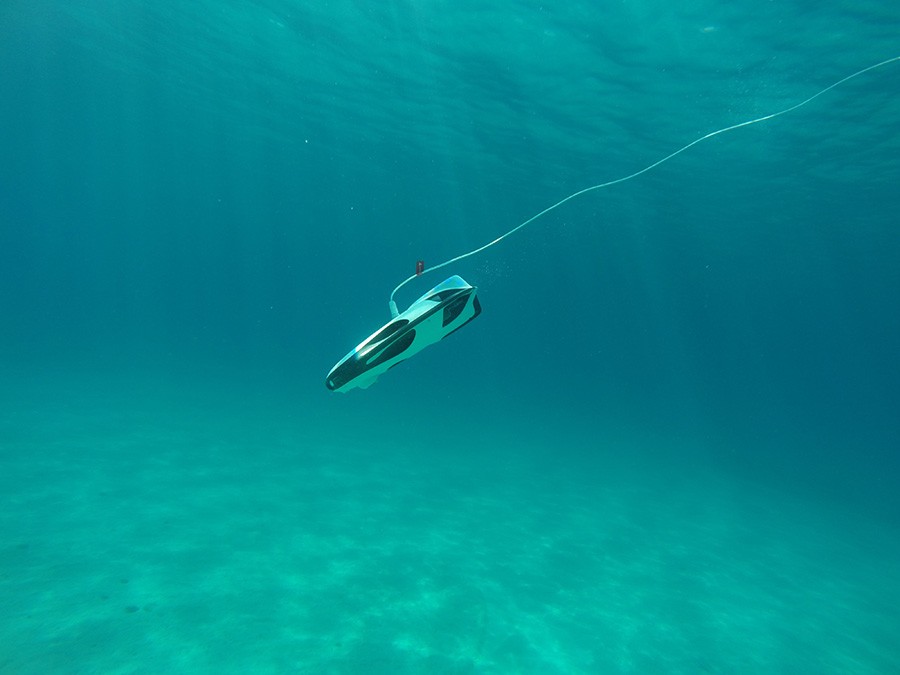
Enter Powervision’s PowerRay Underwater Drone, an intelligent robot. It can capture real-time, high-res images beneath the sea’s surface. It has a wide-angle lens and instrumentation capable of determining temperature, sea depth, and even the presence of fish. Coupled with image processing and machine learning techniques being developed by the group, the drone maps the sea floor, determining its make-up as well as identifying locations where different fish species originate.
The small, lightweight drone can travel up to 1.5m/s and is currently being tested off the coast of Malta near Buġibba. This area has already been mapped manually by divers, which means that, when ready, the drone and human maps can be compared to evaluate the drone’s performance. If the AI algorithm produces accurate results, it will be used to charter unmapped regions—a first from Malta.

PowerRay Underwater Drone exploring the depths

But its applications don’t end there. The drone can also be used to monitor the condition of other expensive marine instruments which spend a lot of time underwater. Without having to put on a diving suit, it allows the team to check on deployed water temperature sensors, tide gauges, and acoustic Doppler current profilers. This helps to optimise and plan maintenance, which in turn prolongs the hardware’s lifetime.

The UM team also want to use the technology to detect marine litter. They plan to identify litter ‘hotspots’ in order to raise awareness and organise clean-up campaigns—a valuable initiative to support vital efforts to clean up our oceans.

  Author: Kirsty Callan