The key to networking

I first heard about COST (European Cooperation in Science and Technology, a networking platform for scientists www.cost.eu) way back in 1996 during a pharmacokinetics meeting in Athens. Some participants mentioned that their attendance had been funded by COST. So on my return I contacted the Malta Council of Science and Technology to try and obtain more information. When I learnt that COST funds EU networking I quickly applied to become a member of a COST action (this is what COST calls a network). After bureaucratic leaps and bounds I become Malta’s representative on a COST action. It certainly opened new horizons to me and the networks I formed with top researchers in Europe were unique.

By 2010 my enthusiasm resulted in MCST nominating me as Malta national contact point for COST. It has been of huge satisfaction that in these three brief years Malta’s participation has risen from 6 actions to over 100. Over 150 Maltese researchers take part in COST.

Why is COST so important for Malta?

The complaint I hear most often in Malta, not only in academic circles but also among SMEs (small to medium enterprises), is that research in science is only for the elite, that it is too high brow and that it is not relevant to Malta. COST proves otherwise. What else could link disaster bioethics, to colour and space in cultural heritage to the comparison of European prostitution policies, with submerged prehistoric archaeology? Other links include the quality of suburban building stocks, integrated fire engineering and response, and language impairment in a multilingual society. COST also funds networks across a whole spectrum of research from the humanities to the fundamental sciences including string theory to childbirth in various cultures.

Participating in a COST action involves very simple administrative and funding procedures. For once, our small size is an added advantage since every COST country is allowed to nominate two members to participate in each action, putting Malta COST researchers at par with researchers from much larger countries. Achieving these results has not been easy, since many researchers hesitate and require persistent prodding. There are frequent reminders and one to one meetings to persuade them to participate. It has been a real eye-opener meeting researchers in Malta from different disciplines and learning about their research.

Deciding to participate in COST may seem a small step to some, an added administrative burden to others, while some see it as another travel commitment. COST offers the response to the conundrum of how to overcome our physical (and perhaps in some instances also mental) insularity.  You should not let this opportunity pass…

COST in Malta is managed by the Malta Council for Science and Technology. For more information see www.mcst.gov.mt/networking/cost or contact Dr Janet Mifsud, COST CNC, (+356 23402582/2845, janet.mifsud@um.edu.mt) or cost.mcst@gov.mt


Hotline Miami

Game Review_Costantino

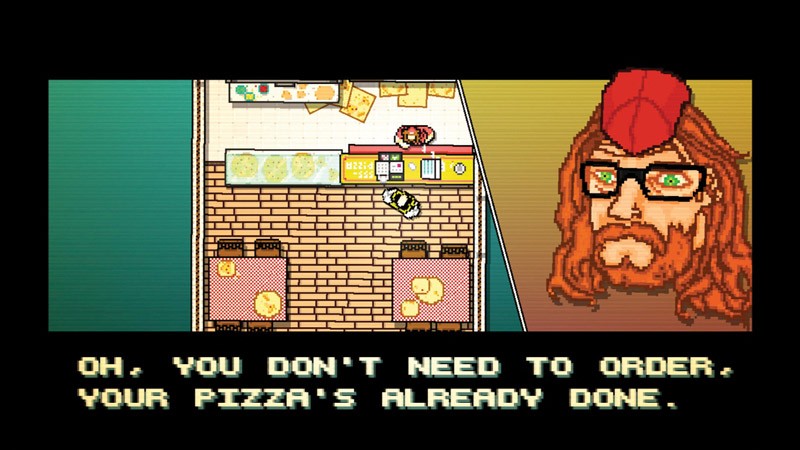
Push start. Grab a weapon. Get shot. Repeat… ad infinitum. ‘Punishing’ hardly describes a session of Hotline Miami. Typically, within 10 seconds you could die three or four times. It is just as frustrating as it is challenging. Addictively, you will not give up until you pass that sneaky little passage. 

Hotline Miami is an ultra-violent, psychotic game, where your only aim is to kill all the ‘bad guys’.

Yet, every little move counts, and deciding which weapons to use or which door to open first will reveal the deep strategic possibilities of the game’s intense experience. As you make your way through a pile of corpses, the suspense builds up to unbearable levels as you risk losing all in-game progress for just a little mistake. The massacre is only interrupted by brief moments that reveal details of our mysterious ‘hero’s’ back-story. Keeping true to expectation, even these interludes are awkward if not disturbing, and hardly shed light on our displaced, faceless avatar

The excellent game tops it all with an irresistible ‘80s aesthetics and a neurotic electronic soundtrack. You’ll quickly find out why this game has stolen the show winning so many awards, and has hooked fans of Grand Theft Auto and of good old shoot’em up games. Hotline Miami is a joy in repetition, providing that being stuck in a Clockwork Orangelike scenario is your idea of joy. 

Screenshot from Hotline Miami

www.hotlinemiami.com 

Moving objects with your mind

Decades-long research into the field of brain to computer interface (BCI) devices seems close to bearing fruit. These devices could provide communication tools to Malta’s growing number of older people and the disabled, while local gaming companies could exploit a new niche entertainment market. Words by Dr Edward Duca.

Continue reading

LOOKING UP TO THE SKIES

Malta is involved in the creation of the largest telescope ever built, the Square Kilometre Array. The telescope will be composed of 10 million antennas, process petaflops of data per day, and cost 1.5 billion euros. When built the array will peer deep into space to see how the first stars were born and attempt to solve the riddle of our origin. Words by Dr Kris Zarb Adami and Dr John Abela.

Continue reading

The making of Offshore Wind Energy

Malta has a problem. It relies heavily on fossil fuels such as oil to meet its energy needs. Whenever oil prices increase, either the people or the government take the brunt of the cost. The country also faces a strict deadline: by 2020 it needs to supply 10% of its energy needs from renewable sources such as wind, solar, or wave. To help reach this goal, a new project at the University of Malta is custom-designing offshore wind turbines.

Malta’s territorial waters are quite extensive but deep. The Hurd Bank area is the most suitable site at a depth of 50 to 70 metres. These depths are beyond the reach of current commercially available technology and the latest  project in the windy, turbulent North Sea reaches 45 metres (The Beatrice
Project). Windmills_D1-D4_(Thornton_Bank)

To construct a wind turbine for the Maltese region, Thomas Gauci (as part of a team consisting of University academics and industrial partners) is designing a structure specific to Malta. Seventy-metre deep waters will increase costs. On the other hand, the Mediterranean is relatively calm compared to the North Sea, so the support structure keeping the wind turbine in place can be lighter, which shaves off tons of raw materials and reduces the final price.

An offshore wind turbine needs to resist waves, corrosion, and storms. The design process of an offshore support structure is essential to keep it in place and starts with determining exactly where the turbines will be embedded and how they will be supported. After these questions are answered, the turbines’ exact specifications need to be determined, such as material, height, width, and what forces it can resist over a number of years. Speed of blade rotation also needs to be checked to make sure it does not cause discomfort to nearby humans and animals. Mr Gauci’s concept design meets all of these needs in compliance with international and EU standards. At this stage, the design needs to
be costed, right down to the installation and maintainance of the turbines.

If Malta builds these offshore wind turbines it would easily meet the 10% baseline set by the EU. Undeniably, such a large project will face numerous challenges, but perhaps Mr Gauci said it best: “not a day goes by when I don’t learn something new.”

Read more HERE.

This research was performed as part of a Masters of Science from the Faculty of Engineering
and is supported by MCST (Malta Council for Science and Technology).