
Harnessing the power of the sun


Valletta is living proof that major cultural and artistic events can breathe new life into the city. When Malta’s capital was granted the title of European Capital of Culture for 2018, all hands were on deck to prune and preen, reversing decades of decay to make it ‘worthy’ of such a prestigious title. Now, after years of intense effort, the hard work has paid off. City Gate now provides an appropriately magnificent entryway into Valletta. Dingy, long-shuttered venues have been restored and reinvigorated. The once sleepy city has roared back to life with the wealth of events being organised. Valletta is no longer a stop on the hop-on hop-off bus; it is a bustling melting pot of old and new with an inescapable siren song.
This shift has created positive momentum in the arts scene. But not all outcomes have been positive. Valletta’s overhaul can look very different for the ones who call the city home. The burst of activities may have disrupted some people’s day-to-day business, while also contributing to the congestion and noise. The solution is in identifying ways to effectively balance the discomfort brought about by social change and the valued benefits that same change brings.
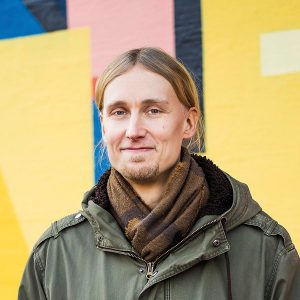
Finnish social activist, Jaakko Blomberg knows the struggle. He founded the NGO Yhteismaa (Common Ground) in Helsinki in 2012. Yhteismaa specializes in new participatory city culture, co-creation, and social movements. ‘In the beginning, many municipal officers in Helsinki were against our events and projects; they just didn’t have any procedure for handling them, so we kind of had to find a new way to do things.’ Leaving room for people to share their ideas and expressing themselves is also essential, he says. ‘There should be different kinds of roles and tasks for people to take on; all changes are scary, so it’s important to inform people and make them feel like they’re part of the process. For example, many people are prejudiced against street art, but when you explain more about it and give people the chance to take part in the process, their attitude becomes much more positive. Organisers have to provide enough information and make participation easy. It’s important that it’s not just about a small circle of activists, but about the whole community.’
Residents often felt ‘helpless and disowned of their spaces.
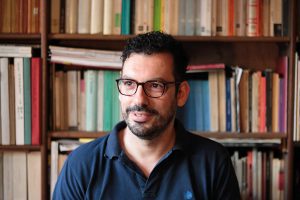
Closer to home, project leader of the Ġewwa Barra initiative, Victor Jacono, tells us how Valletta residents often felt ‘helpless and disowned of their spaces.’ Ġewwa Barra was created to address precisely that issue: to empower residents and give them ownership of their community, using artistic tools to get a glimpse at the cultures affecting their lives and help them express the needs and dreams that shape their experience in the capital city.
‘We seek to encourage creativity, but also responsibility. We hold creative workshops conducted by different facilitators and artists to give people the chance to look at themselves through the aesthetic lens of the artworks. Currently we are engaging the residents of Duwi Balli in a process of creative place regeneration, through a collaboration between architects Maria Cerreta and Franco Lancio, the Valletta Local Council, and the Valletta Services Directorate. It is not simply a matter of approaching the residents and asking them what nice things they would like us to do for them. It is a matter of asking them what they wish to express with our support, of providing them with tools and opportunities to respond creatively to the changes affecting their lived spaces,’ Victor says. In 2017 and 2018 Ġewwa Barra is going to extend its reach even further in order to involve residents from across the capital city, with different artists conducting a series of creative workshops that will culminate in an exceptional performing arts event.
Ġewwa Barra was created to […] empower residents and give them ownership of their community, using artistic tools to get a glimpse at the cultures affecting their lives and help them express the needs and dreams that shape their experience in the capital city.
While Victor is realistic about the forward march of change, he believes it is unjust and unacceptable that changes are engineered by a handful of stakeholders, whose decisions everyone else simply has to accept— especially when such changes are going to affect Valletta’s residents’ lives dramatically. Much like Jaakko with Yhteismaa, he believes that the fear of change can be lessened if people are informed and included in the process. ‘The voices of those stakeholders with lesser means need to be amplified and given the importance they deserve. The arts can contribute greatly towards this. Ġewwa Barra is not so much about single events, but the mainly bottom-up processes engaging the residents creatively. I believe it is the experiences brought about by such processes that will leave an important and long-lasting legacy with the inhabitants of Valletta.’


We still live in a world where being beautiful is vastly important.
Throughout history the concept of ‘beauty’ has been merged with our concept of what is morally ‘good’. Since the Ancient Greeks, who thought that beauty was inherently good and ugliness was inherently evil, we have struggled to move away from this way of thinking. A ‘normal’ individual is usually de ned as ‘beautiful’ in some sense, be it through good health, social class, or appearance. Problems arise when the binary emerges, seeing deviations from the norm rejected as ugly, dirty, immoral, and ‘sick’.
Working with various international research instuitions across Europe and the US, Professor John Chircop (Department of History, Faculty of Arts, University of Malta) is delving into how our understanding of what is beautiful is used within the social, political, and medical spheres of our society to mould perceptions and construct ways of control over how we see and treat ourselves and others. Our perceptions of what is beautiful or ugly shapes constructions of the ‘Other’, and makes easier the control of sectors of society that are considered to be a threat to public health and the social order—the destitute, prostitutes, and criminals—dirty, diseased, amoral, and ugly. There are striking examples in history of medical institutions isolating those that did not t the norm. To this day, the idea of ‘beauty’ still segregates society.
Historically, disease was thought to be contagious and transmitted through physical contact, or even inhalation. In Europe, even up un l the early 20th century people were encouraged to keep a safe distance between themselves and anyone who might be considered ‘dirty’ and even contagious. Racial discrimination against Arab Muslim pilgrims upon returning from their annual Hajj saw them detained in quarantine for fear they might be carriers of disease from these ‘dirty’ places. Before being granted re-entry to southern Europe, they had to endure physical examination and fumigation to cleanse them. While this selective segregation based on ethnicity may seem ridiculous now, are things really so different today?
Chircop suggests not. ‘These same concepts are shown today by the way we treat migrants from war-torn countries.’ In general, non-European and, especially, irregular migrants are segregated, kept away from society, and treated as second-class citizens. In place of quarantine ‘fumigation’, we now use biometrics, with routine physical tests, and vaccination. We can try and justify this by highlighting the developments in technology, justifying our actions by emphasising the scientific or ‘medical’ benefit of these examinations. But really the ideas behind this are the same; by treating a population as different, necessary for testing, we automatically create a distinct on between ‘us’ and ‘them’. This segregation is then reinforced in art, political cartoons, popular films, television, and wider social media.
Although much progress has been made in human rights and fair treatment of individuals, prejudice is insidious and subtle. It has melded itself into the fabric of society, and we need to be aware of it to change it. Chircop states, ‘to go about changing this, we must start from the present, and go back in history.’ By learning from our past, we can expand the concept of beautiful in today’s society.

Language is at the core of what makes us human. From birth, we interact through language, making our way through gurgling and babbling to words, and, eventually, telling (tall) stories. It is important to nurture this linguistic development as early as possible, and in Malta, this involves exposure and sensitivity to the forms and dialects of at least two languages: Maltese and English.
Such growth can be nurtured by setting a good example so that children have a solid language basis to build upon. Here, it all boils down to one key point: interaction. Language is a two-way process, so for a child to truly benefit, they need to interact with others from birth—TV cartoons just do not cut it.
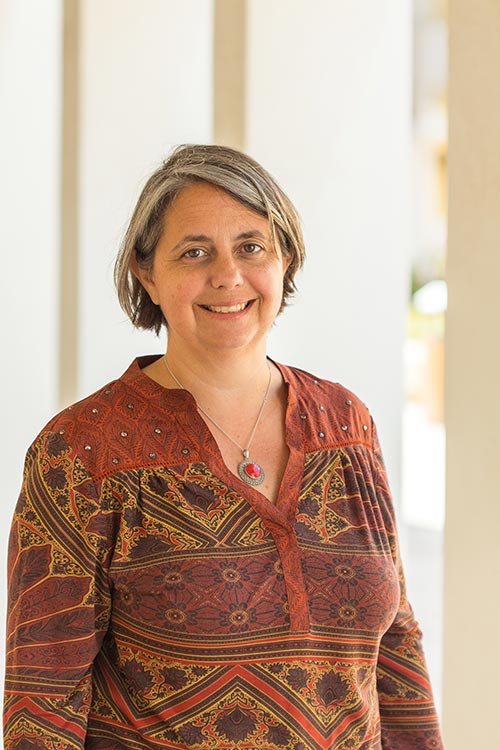
At the earliest stages, language is all about sounds and bonds, not about learning letters or reciting a poem. However, even then a child sensitive to differences and variation in language. Children know that home language is different from what they hear outside in the wider community. For Maltese children, it is useless to place early focus on lamenting the distinction between ‘Trid ice cream?’ instead of ‘Trid ġelat?’ as both are equally well understood in Malta. What is more important is that a child has enough exposure to become sensitive to which version or dialect to use in which context. In English, we have no problem singing the nursery rhyme ‘Horsey, horsey don’t you stop…’ despite knowing that the established word is of course ‘horse’ because experience shows us that children happily grow out of their ‘baby’ language. The same is true of the different forms of languages and dialects typical in a multilingual society. As we grow older, we can become sensitive to which forms of a dialect or language are best understood in the home, amongst friends, or at work.
Apart from parents, children spend most of their me in school. If schooling is meant to be about encouraging children to reach their full potential, then this should also hold true linguistically. Just as a sporty or musical child is identified and encouraged to work on their natural talent, a child whose linguistic skill is recognisable should get the same treatment. That talent should be nurtured—they might be the country’s best lawyer in a few years’ time.
Equally, it is important to leave no child behind. A truly holistic education recognises that physical activity is vital, perhaps even more so, for the less sporty child. The same applies in languages. We must ensure that every child has the opportunity to express themselves both in speech and writing, even if they seem to struggle. After all, we don’t teach an unsteady runner how to run by making them sit and watch while we run a race for them. Similarly, children learn how to speak and write by practising the languages, not listening to (lengthy) explanations about how to use a language.
This is what nurturing skills is all about. If we want to raise con dent, knowledgeable youngsters, we must allow them to constantly practise ways to get their message across. In Malta’s rich linguistic environment, this means nurturing all our dialects and forms of language in whatever shape or form available to us. It is only through this process that we can then shape rich, meaningful forms of communication amongst ourselves, and the wider world.

Back in the old days it was assumed by most that if you had male sexual characteristics you were a MAN and as such your nature was to be macho, brave, and aggressive and bring in the money for the family; and of course, if you had female sexual characteristics, you were a WOMAN, and as such your nature was to be sensitive, emotional, nurturing, and an ‘angel’ in the home.
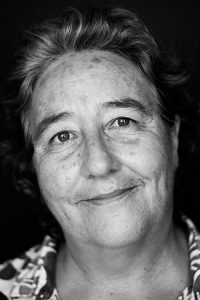
Then we discovered ‘gender’, i.e. not the physical/biological characteristics, but the social and cultural meanings attached to being a woman or a man, our learnt behaviour. At this stage, it became clear that having male sexual characteristics in itself did not necessarily make one incapable of holding a baby or wiping up vomit. At the same time, it was now agreed that possessing female sexual characteristics did not necessarily make one unfit for public life, employment outside the home, or leadership (political or otherwise).
And we embraced these changes with gusto! Now, we thought, women (and men, or other) could be whatever they wished to be! We were no longer held back by our sexual characteristics, by being seen as ‘woman’ (or ‘man’). This was a big step forward for ‘gender’ equality.
Somewhere along the line however, ‘woman’ disappeared…
In the past, we spoke about women’s liberation, women’s rights, feminism, equality for women, women’s studies, violence against women. When we talked about domestic violence, what we meant was intimate partner violence perpetrated far more by men against women.
Nowadays we speak about human rights, gender equality, gender studies, gender-based violence, family violence, and when we speak about domestic violence we get told; ‘What about the men? What about the children? What about older adults?’ When we speak about feminism, we are labelled passé or extremists.
Effectively, ‘woman’ has become invisible. The still-dominant patriarchal discourse has succeeded, with the help of all of us, in neutralising ‘woman’ and camouflaging this as ‘progress’.
If we had indeed achieved ‘gender equality’, if women’s rights as human rights were really being upheld, if we had eliminated violence against women, then this would be right and proper… But have we?
My answer to that is, of course, as you would expect, a resounding NO, we have not! And making ‘woman’ invisible once more will not help us achieve this!
Photo by Steven Levi Vella from Artemisia: 100 Remarkable Women, a project by Network of Young Women Leaders


They say variety is the spice of life. Cliche? Maybe. But also very true—especially when it comes to language.

Every year for the past four years, dozens of cyclists have committed themselves to training for 16 weeks, cycling over 1,000km in just one, and raising a minimum of €2,400 which is donated to cancer research. These cyclists are leaving behind a legacy.\