
Preventing Sudden Death



I was nervous. I still remembered fumbling for excuses for handing in my assignment a few days late. Prof. Patrick J. Schembri’s stern gaze does not take excuses. This time I entered his office to learn about the wealth of research under this man’s belt. With over 150 refereed papers to his name I knew I would not leave disappointed.
In 1982 Schembri returned to Malta after a doctorate at the University of Glasgow and a post-doctorate in New Zealand.
‘In Scotland, I was working on animals that came from a depth of 40m and in New Zealand with animals that came from the whole span of the continental shelf and upper continental slope at depths down to about 900m. For that you need a research vessel, crew, collecting equipment, and so on. I came to Malta and there was nothing’, said Schembri. This did not stop him, like the animals he studies, he just adapted.
‘Nobody has looked at the ecology of shores in Malta before, so I decided to do that.’ And as simple as that, Schembri went from studying deep water animals to the near shore. The techniques and equipment needed are completely different — a diverse research background that must have helped him in his long career. After many years, Schembri returned to studying life in deep waters, invasive species, and many other things, but more on that later.
Back in the 80s the Internet simply did not exist locally so Schembri’s biggest problem was not equipment but sourcing academic journals. Every scientist needs to constantly read journals to keep up to date with the latest findings. It is essential for research inspiration, to see knowledge gaps that can be studied, to learn new techniques and knowledge, and to avoid repeating others’ research. Schembri, ever determined, went to great lengths to get the information he needed in order to research and publish.
‘Thanks to my mentors I was brought up with a culture of publishing.’ The renown of every scientist depends on the importance of the journals they publish in and how much they publish. Neither was a problem for Schembri. ‘I produced my first paper before I did my A levels. In the early 1970s, I improvised some apparatus to do experiments on something that you would [normally] need sophisticated equipment for, so rather than using a nitrogen chamber, I used a plastic bag to which I attached kitchen gloves, and it worked.’ After some encouragement from his tutor the paper was written as a note that was published in School Science Review. He also published around six papers from his Master’s degree. No small feat, I have not achieved this even after a Master’s degree and a Doctorate.
The breath of his studies is stunning. With his students, Schembri has studied animals which have invaded Maltese waters. These include the nimble spray crab (Percnon gibbesi) and the non-indigenous Red Sea mussel (Brachidontes pharaonis), which, unlike all native mussels is forming mussel beds with thousands of individuals. He has studied the seabed’s ecosystems that happen to be vital to maintain fish stocks. He has even delved into Malta’s ecological past analysing samples from cores drilled in Malta’s coastal sediments studying sub-fossil molluscs to piece together the Island’s early history. These were only possible through collaboration with many scientists and a vast army of students.
His collaborations have been essential. Schembri was contacted by Italian researcher Dr Marco Taviani to survey Malta’s deep seas. Taviani has access to the multi-million research vessel Urania. The 61.3m ship has on-board laboratories for geological, chemical, radiological, geophysical, and biological research. To make it in Malta, ‘if you don’t have enough resources you have to improvise and collaborate, especially with overseas researchers who do have the resources. And it worked’.
Schembri has gone further than just making it work. He has flourished. His strategy involves participating in EU funded projects (to bring in the money) while keeping very ambitious long-term projects running in the background on a shoestring. The only problem is that for ‘all the EU projects, the agenda is set internationally. While [for local projects] the funds are minimal, I get a few hundreds a year. But I am free to study what is interesting and important for Malta.’
BENESPEFISH is one of his locally funded projects. ‘I want to find out what kind of habitats we (Malta) have and how fish interact with them.’ By studying what fish eat and where that food grows, by seeing the nursery grounds and spawning areas of the fish, by researching how the impact of fishing techniques affects the sea floor that ends up damaging the ecosystem. For example, in collaboration with the Government’s Fisheries Agency, students under Schembri’s supervision studied the effect of a type of fishing technique called otter trawling. They discovered that it can adversely change the benthic (seabed) ecosystem and that the trawling should be done in corridors, with spaces between them to allow the recuperation of the seabed, and therefore the dependent fish stocks. This will help fish stocks recuperate and fishermen to retain their livelihood.
“For some strange reason, beforehand fish were one thing and the rest of the sea was something else”
The above is called the ecosystem approach to fisheries management. Back in the early 2000s ‘Matthew Camilleri from the Fisheries and Aquacultures Department got involved in a FAO (Food and Agriculture Organisation) project called MEDSUDMED,’ that was pushing for this approach. ‘So he asked if I could help out with the ecological aspect. […] Ecologists entered the picture because in this approach fish started being looked at as part of the ecosystem. For some strange reason, previously fish were one thing and the rest of the sea was something else’ — a clear reason for fisheries scientists and marine biologists to work together to be able to give the right scientific advice to the Government.
The BENESPEFISH project hinges on a healthy relationship with the Government. The Government Fisheries Agency commissions the MEDITS trawl survey to monitor the health of fish stocks, which are mandatory for all EU member states that border the Mediterranean. These surveys need to ‘follow a strict protocol’, perfect for science. However, the survey ‘is limited to about 40 species. They still get everything else such as benthic organisms [that live on the sea bed] that they used to just throw overboard. So I said to them, okay why don’t you keep it, give it to me, I work on it, then I give you the results. […] If I had to hire a fishing trawler and go out myself for 14 days it would cost me around €190,000, crews and everything. Instead, by collaborating, we get this data at a low cost. All I need to pay for is for insurance, fixatives, sample containers, and a research assistant to collect the samples. So that’s what the University funds, it funds the research assistant and materials. […] So you [the Government] get information which you would not normally get because you are not a research institution.’ Clever and it worked.

These discards are valuable to find out about the ecology of the fish in our seas. ‘They were going to get rid of a few hundred sharks (the small-spotted catshark, Scyliorhinus canicula) […], so I got them and one of my students analysed their stomach contents which told us a great deal about what the fish feed on and also where they feed. […] They feed on fish but also on the benthos, the bottom material.’ From 532 stomachs sampled, over half were eating teleosts (a group of bony fishes) and nearly one fifth were eating crustaceans, with even some cannibalism. Male and female catsharks had different diets. To keep catshark populations healthy these food sources need to be maintained. The seabed is vital.
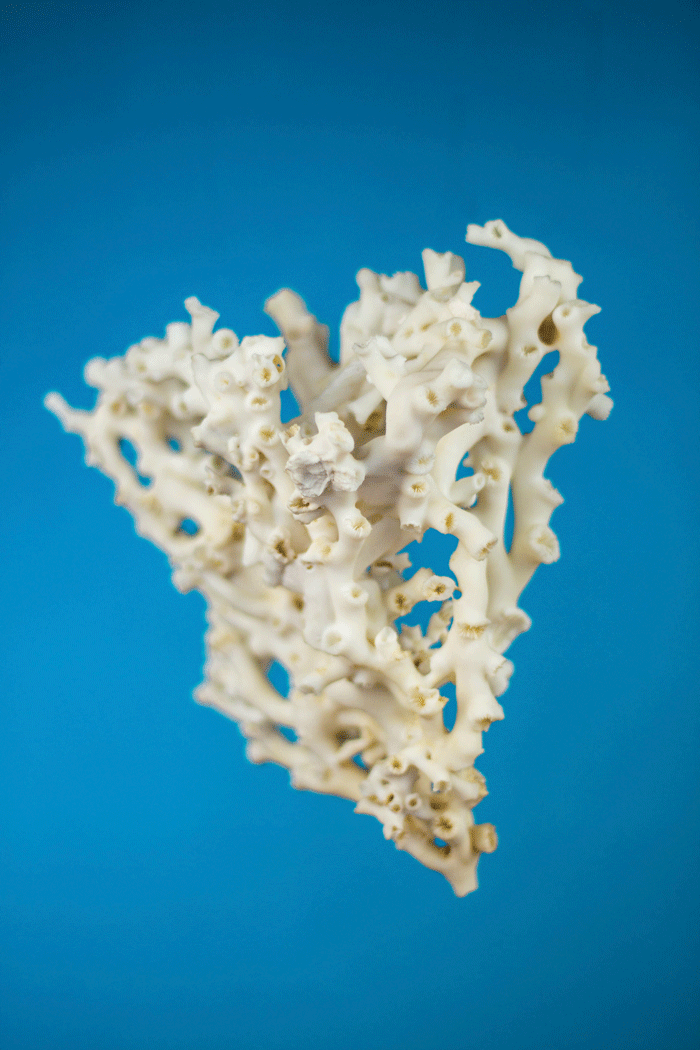
These MEDITS surveys have led to some surprising discoveries. During a survey one of Schembri’s students picked up a piece of white coral which she brought back to be identified in the lab. It turned out to be the deep water coral Lophelia pertusa that builds reefs. Schembri still had this piece and showed it to me. As I picked up this brilliant white coral he told me, ‘this is just a piece of a much larger structure. You can see the remains of some the individual animals [it is a colonial species made of many individuals], the cup-like structures with grooves.’ It is such a different species — out of this world. Schembri and his group reported finding this coral around Malta that attracted Marco Taviani (Institute of Marine Sciences, National Research Council of Italy), who was a colleague of Schembri, to organise a research cruise. Using the Italian research vessel the Urania they explored Maltese deep waters. This was the first of three such cruises that Schembri’s research group were invited to participate in. During one of these cruises they found other species of corals including the endangered red coral (Corallium rubrum), exploited since antiquity to make jewellery. They saw it at depths never seen before, around 600–800m, which is two to three times deeper than previously. When studied, this deep water population was found to be genetically isolated from others, probably because the different populations were not breeding amongst each other.
When Schembri first came back to Malta he started working on its shores. But our coasts are not just beaches and cliffs. ‘Inland the coastal area extends as far as sea spray carries, since this renders the soil saline and therefore only adapted plants can thrive. […] Offshore, the coastal area extends to depths of 150–200m as material from the land, like sediment, still finds its way to the seabed even at those depths.’ That is a huge area for a researcher to cover, but Schembri wants to record all its habitats, obviously with a lot of help.
Enter the project Faunistics and Ecology of the Maltese Islands (FEMI), ‘the aim is to have an inventory of what we’ve got. […] I want to understand what habitats we have and which species live there.’ To cope with such a massive project, Schembri splits it up into bite-size research questions that his students can tackle over a few months (or longer if it is a Master’s or a Doctorate project). ‘The results of each small project contribute to the whole. […] By now I would say that over the years the number of people who have contributed to the project must be at least a hundred, although it is usually around six at any one time.’ Many of these student projects lead to research publications coming out from the University of Malta’s Department of Biology.
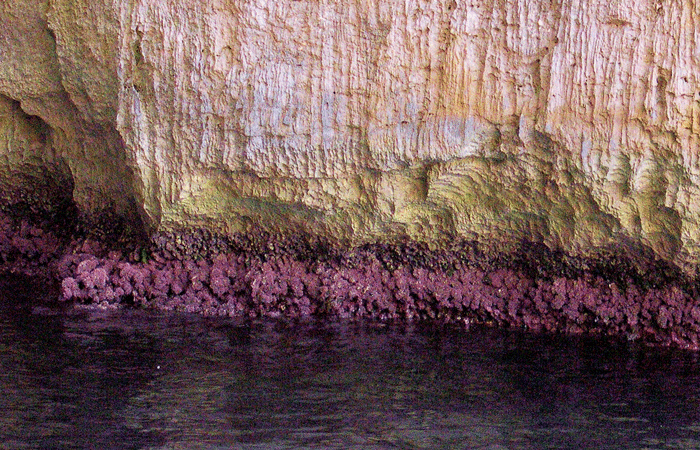
One of the most important things for the FEMI project is to figure out the state of our current environment. By knowing how things are we can tell how they are altered by future change. Back in 1998 Schembri, Dr Mark Dimech and Dr Joseph A. Borg studied how fish farms in St Paul’s Bay were affecting the ecosystem underneath. The nutrients and waste were reducing the biodiversity immediately under the cages to around a range of 30m. In between 50–170m, the fish farm unexpectedly increased the number and diversity of invertebrates. Without knowing the species normally growing in sea grass meadows this would be impossible.
By studying Malta’s coast and offshore waters for so long, Schembri can say which areas and habitats around Malta have the greatest diversity in species and which are at risk. These tend to overlap; on land the sand dunes and saline marshlands need to be preserved, while at sea it is the seagrass beds, maerl and other rhodolith bottoms, and any form of natural reef that need conservation. Such long term studies are essential to know how humans are impacting the environment and to better manage Malta’s living resources.
The world is changing. The actions of human beings are warming the planet much faster than just natural processes. ‘The Mediterranean Sea is warming up. The sea is also receiving less rainfall and less terrestrial runoff, which is making the sea more saline [salty]. All of these phenomena are leading to many changes occurring at the same time. The first thing that you are getting is that native species, which were limited to the warmer parts of the Mediterranean, can extend their range to the colder parts, so southern species are moving northwards. It means that the cold-loving species cannot move further north, because we are completely surrounded by land. So populations of cold water species are becoming rarer and less distributed and if things go on like that some might become extinct because they cannot escape. In the Atlantic they just move further north, but not here, they cannot do that.’
“A warming sea is one main reason why new alien and sometimes invasive species are being found in Malta all of the time”
Loss of species is not the only thing a warming sea causes. ‘The second thing observed is that species from the East Mediterranean, which is the warmest and most saline part of the Mediterranean [and includes many species that invaded from the Red Sea via the Suez Canal], are moving westwards. Species which are warm water Atlantic species enter the Mediterranean and are now moving eastwards.’ This means that these species are all passing by Malta as they disperse, making the island an ideal monitoring station to observe a changing Mediterranean.
A warming sea is one main reason why new alien and sometimes invasive species are being found in Malta all of the time. These species are making great leaps. Dr Julian Evans, Dr Joseph Borg, and Schembri have recently (2013) found for the first time the Red Sea sea squirt Herdmania momus in Malta. This record is 1,300km further west than ever before. This sea squirt came through the Suez canal, established itself in the Levantine Sea off Lebanon, and was last observed around Greece and Turkey. It is not the only foreigner that has established itself in our waters.
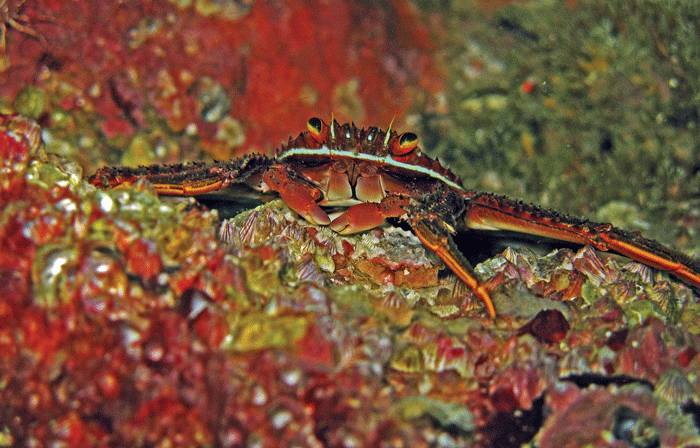
Schembri and one of his collaborators Dr Marija Sciberras saw the nimble spray crab (Percnon gibbesi) all along Maltese shores. This crab is an Atlantic species that entered the Mediterranean through the Strait of Gibraltar in the late 1990s. When they found it in Malta they did not just collect it — they studied it. They found that this shallow water species grows ‘up to a depth of 3m, in other parts of the Mediterranean they have found it down to depths of 10m. It needs a habitat of cobbles or stones, it does not live on bare rock. [In Malta this means] that you find it more towards the north rather than the south, because the coast slopes down to the north and you’ve got many more opportunities for this sort of habitat while the south is mainly cliffs.’ The local shore crab (Pachygrapsus marmoratus) also beats this invader. They saw that the local crabs are much more aggressive than the invader. The nimble spray crab has mostly occupied a niche different from that of local shore crabs.
When we hear the word invader we do not imagine a mostly plant-eating crab sneaking into a new niche while the local omnivorous crab remains reigning supreme; but an invasive species ‘simply means that it spreads very quickly. [To understand] what the effect on the ecosystem is requires many years of study. We have many invaders. Another one, which is even more invasive, is a seaweed — an algae (Caulerpa racemosa) — this is now found everywhere. What does it do? What effect does it have on the local ecosystem? I don’t know, nobody does.’ This is why we need to invest more into scientific research over many years. You cannot figure out how a species is acting
overnight.
Schembri has been studying Malta’s ecology for decades. This long-term knowledge is vital to see slow trends like a warming Mediterranean, climate change, or habitat loss. When I asked him about the changes affecting Malta and Gozo, he replied in a sombre voice ‘I’ve seen a lot of change. In terms of change of habitat, apart from places which have been developed, not much has changed on the open coast. What has changed are the characteristics of the community. For example, previously you used to find large limpets, now you’ll find small limpets. That sort of thing. You haven’t lost a limpet or had a complete change in the ecosystem, but there have been changes nonetheless.’
In some places, especially sheltered areas, things have changed drastically. For his Master’s degree, Schembri collected specimen from Marsaxlokk Bay. This was many years before the development of the Freeport and Delimara power station. When he had a look at it after these developments the species he studied had vanished. ‘The bay has changed and when they started dredging it was even worse because a lot of the sea grasses disappeared. That bay was full of sea grasses before.’ Schembri does not think they will return anytime soon. Loss of sea grasses are even eroding the shore. ‘The sea grass was acting as a buffer to the waves, although it could also be because people have been building breakwaters and things which would change the current patterns which would also cause erosion. These things are complicated and without studying them it is difficult to know and nobody has looked’ — another reason for more researchers and funds being needed.
Marsaxlokk is not the only place. Especially since the 1990s the Maltese coast has been heavily built up, with developments sprouting in many picturesque areas like Armier. Dealing with this development has become a political issue, rather than seeing the consequences from a scientific lens.
Schembri’s view on this change is a bit peculiar to me. When I referred to the changes in Marsaxlokk Bay as ecological devastation he replied saying, ‘I don’t talk about ecological devastation, because what life does is that if the environment changes certain things disappear and other things take their place. Saying it is devastation is a human emotion. Scientifically it’s not what happens.’ Schembri was speaking impersonally from an ecological perspective. I find it hard to see the complete loss of a species or beautiful area because of human progress in this way. If humans are doing the destruction, humans can stop it or reduce the problem.
Ecologists like Schembri are vital to know the changes taking place around our islands. Without monitoring our land and seas we cannot know how to preserve them so everyone can enjoy them. Nature should be for everyone to enjoy and experience.
Malta’s situation has definitely improved. ‘We have a huge marine protected area going all the way from Qala in Gozo to Portomaso in St Julians to protect all the seagrass meadows there. How are we managing it? We’re not. It’s a line on a map, but it is a first step’ since if anyone wants to develop the area the development’s impact on the ecology needs to be rigorously studied. Unfortunately, no one knows if the sea grasses are doing well or not. The problem is that the area is huge. ‘You don’t try to keep track of every single square metre of sea grass but at least you keep track of some of them. You establish a monitoring programme, the Government is obliged to do it having declared a marine protected area in terms of the Habitats Directive, and some monitoring is being done but there is no management plan.’ The problem is that Malta is an island with limited resources and 10 people abroad would perform one person’s job here. Government needs to give the environment and science more importance.
Schembri’s flexible approach to research is powerful. He makes it work despite the odds, but I do wonder how much more we would know about Malta’s natural wealth if there were many more researchers studying the Maltese environment and if they had better support. There are other researchers apart from Schembri, but they are few. For such a serious man, serious investment in research would surely make him, and future generations, smile.

Fillet is the best cut. Trust me. It’s worth the money.
Use molecular gastronomy to take advantage of decades of researching how meat changes with heat. Science indicates that the best cooking temperature is around 55˚C, and definitely not above 60˚C. At a high temperature, myofibrillar (hold 80% of water) and collagen (hold beef together) proteins shrink. Shrinking leads to water loss. In the water lies the flavour.
To cook the fillet use a technique called sous vide. It involves vacuum wrapping the beef and keeping it at 55˚C in a water bath for 24–72 hours. This breaks down the proteins without over heating. The beef becomes tender but retains flavour and juiciness.
Take the beef out. It will look unpalatable. Quickly fry it on high heat on both sides to brown it. The high heat triggers the reduction of proteins or the Maillard reaction. Enjoy with a glass of your favourite red.

Education is a word we are constantly bombarded with. After sitting for hundreds of exams, having read thousands of notes, spent endless nights fighting with coffee machines and sticky notes, you probably know the hardships of our education system. However, education is much more than books and lectures.
Education is a way of life. It changes us and can bring out our potential. Our University is the place we all come to learn, work, and ultimately spend most our time. Be it students, staff members, academics, or researchers, it is of utmost importance for us all to be in line with why we are all here, to nurture education and develop our society’s future.
The University has been growing rapidly in the past decade. Construction is ongoing, labs are being renovated, and the number of postgraduate courses and doctorates has grown exponentially. Naturally, research has spiked up too, and the UoM is also spearheading a few world-class projects.
Why am I putting so much importance on research? The answer is simple. Without research Malta can never make a leap forward to improve our quality of life. The main aim of research is always that of identifying and exploring new knowledge that will ultimately make our world a better place.
Locally, researchers are not just donning white lab coats. Maltese researchers are diving deep into Mediterranean waters to explore native aquatic species, some are crawling face down in garigue environments to investigate local flora and fauna, while others are breaking new grounds to find the Maltese genetic components responsible for cancer and other deadly diseases.
Students perform research for their dissertations (see the student section of Think). This is when a student will first experience hands-on research. A university supported to conduct top research is necessary to give students more real-world research opportunities. Encouraging a research mentality within the early stages of the University experience is essential to foster a lifetime commitment towards our alma mater.
Unfortunately, the biggest obstacle in research is funding. This problem is worldwide. But whilst other countries have already made substantial efforts to fight this problem, locally we have just started to get the ball rolling to instill the much needed awareness and culture around research funding.
Investing in research is essential and we are seeing an initial good response from society. People are slowly starting to realise that through research we are not only creating a hope for future generations, but we are also aiding the education of our children and helping our country’s socio-economic well-being. In the past year we have managed to raise important funds for cancer and kidney research, and other important causes.
The University Research Trust’s latest initiative, in collaboration with the KSU, is a project whereby students can directly donate funds towards research within their faculties. Dubbed as the UoM Caution Money Scheme, this initiative lets final year students from the Faculties of Engineering, ICT and Sciences donate their laboratory caution money towards research projects and equipment in their faculties. Ten students, who decided to set an example for their peers to follow, launched this scheme during an annual KSU event, showing that everyone can contribute towards research at University.
We are now encouraging all final year students from these faculties to follow suit and also contribute towards research. Malcolm Zammit, one of the students who already donated the money appealed to his peers saying, ‘This small deposit we had left in our first year is negligible when compared to the amount that the University has invested in all of us. Today, I feel it my natural duty to give something small back to this place which has given me so much.’
The initiative has also encouraged other student organisations to donate. ELSA has just given the Research Trust some funds for University research. These initiatives are all helping towards fostering more awareness and funding so that together we can continue leaving a tangible impact on our campus and society.


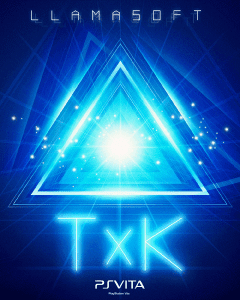 TxK marks the return of seminal designer Jeff Minter whose career spans over 30 years. The recurring themes in Minter’s works are frenetic action and psychedelic experiences. All these abound in TxK — a new arcade shooter for PS Vita.
The game starts off with the player in a wireframe setting being attacked by what looks like an army of angry ribbons. Soon you will discover that you are actually an oddly shaped spider(ish) creature that is crawling at extremely high velocity. Once your attacking abilities have been mastered, the environment will constantly reshape around you. Before you know it, you will find yourself up-side down fighting enemies from every direction.
It is an exercise in minimalism; so much is achieved with few details. It is up to the player to make sense of the bizarre juxtapositions of graphics and sounds. Thanks to its unique style, TxK shines.
This article forms part of The Gaming Issue

Planning is constant action; it never stops. If you are moving to a new house or country, you probably know what this means. Planning is pervasive, but can it get out of hand? What does planning a gap year mean? Do you plan every single minor detail or do you let loose to enjoy some spontaneity? If, for example, a couple is turning a shell apartment into a home it would involve a lot of tasks, planning leave in advance, and chasing the architect. They just might give up when a book shelf cannot get through the door. If we can plan to live, how would it help us get out of a rut when things really go wrong?
Managing your life is not that different to managing a project. When you manage a project you need a flexible plan that can meet the unplanned changing demands that life hurls at you. We live in a time when the efficiency of a service or project is based upon its ability to meet change or increasing demands. Would a project plan ensure that your plans run smoothly even when your life path starts changing its course?

Project managers cannot always foresee every eventuality when planning and managing a project. Once a project is underway many unexpected events can affect project target dates and resources. Planning at its simplest would mean better management and more knowledge, while at its most complex, it could mean more peace of mind. Trying to plan a complex project without a plan is like trying to cross the Pacific Ocean without a navigation system.
Positioning your project within vulnerable situations during the initial planning stages means your team can generate ideas develop creative solutions, and have a solid idea about the resources they have, time schedules they need to stick to, and budgets. This is exactly what helped Rita Sant manage change during an unexpected turn of events as soon as her project was launched.
Sant designed a healthcare concept for homebound patients called ‘SMART At HOME’. It offered a combination of home health and community based services. She carried out in-depth research to come up with the right strategy, marketing analysis, project milestones, and deployment plan. Things seemed perfect on paper. Yet she ran into a game changer. Shortly after the project was launched, a competing company called HomesforYou was set up. It threatened to put her project on hold. HomesforYou offered similar concepts that which her project sponsors had in mind. However, Rita and her team had engineered some alternate options before the actual launch to keep the company ahead of the competition. Putting the project in a vulnerable position through an in-depth SWOT analysis (analysis of the strengths, weakness, opportunities, and threats of a project) helped show the project sponsors where their focus should be. Her focus was primarily on selecting target markets and helping attract new customers. Sant was able to direct her team towards the right networks. She identified gaps in the south of Malta, and worked directly with doctors and insurance providers to bring in new customers.

Sometimes, we are so taken up by our projects that we fail to see the obvious, to question the challenges whilst assuming we have already envisaged the end result. Project planning helps identify areas of weakness through tools like PESTEL analysis (analysis of political, economic, social, technological, environmental and legal factors that impact business), SWOT analysis, performance testing to verify strategies (plan workability), design of project think tanks, project recovery planning, contingency planning, and risk analysis (amongst other research areas). There is a lot of research behind project management.
Areas in the project that could have been overlooked suddenly become crucial. Sometimes being realistic is crucial to success. Another student, Joseph Borda, immediately received a notice that should his project exceed the proposed budgets the project sponsors would incur heavy fines. Borda was clear with his ideas from the start. Developing the power engineering workforce for the future is what he had in mind. His design of a solar panel array on the Malta International Airport car park would mean the generation of just enough energy to supply the airport. Proper time scheduling ensured that the project would be delivered within the specified time-frames. This could only work together with a proper team organisational structure and pre-designed hierarchical task network, which is the approach to automated planning where dependency among actions is given in the form of a network. A well-researched proposal helped Borda envisage proper scheduling to ensure the project was delivered within the specified time objectives, together with the team organisation structure and task hierarchies required to complete the task in time. Could a project schedule really have helped Borda stick to his time-frames? A project’s life or death hinges on its delivery date. Incurring fines meant that the project was narrowed down to a critical selection of what areas of the project had to be done in time.
“A solar panel array on the Malta International Airport car park would mean the generation of just enough energy to supply the airport”
The schedule alone would not have been a guarantee to a successful outcome. The initial stages of project research helped him and his team realise that the costings report for mounting and installation of the array was heavily over-priced. The project schedule helped mitigate the over-budget fines through the planning of phased installations and so areas that were going to be over-budget were shifted into a secondary phase. Typical project management requires attention to time, cost and quality. Once restrictions appear in one area, other areas begin to shift to accommodate new demands.
Having project management principles in place means there is a greater chance of fulfilling your objectives within the overall strategy and facilitating diagnosis of different situations as they occur. Just like captains need chart plotters or radars for distance and bearing to be able to manoeuvre ships in the worst conditions, so project managers use Gantt charts (a type of bar chart used to illustrate a project’s schedule) to help manoeuvre projects through time. Detailed planning helps translate business objectives into deliverables, provide a list of resource requirements, and a realistic assessment of project time-scales. Control measures can also be used to ensure there are no delays in target dates or to help identify team members who are not being productive.
Measures of project progress can also be used to indicate when things are not moving as planned. Marc Spiteri decided to incorporate this approach into his project plan to meet a specific target: managing the Malta national rugby union team to qualify for the Rugby World Cup. Spiteri chose sports engineering as his field of study.
Spiteri’s primary objectives were to promote sports locally and to increase Malta’s appeal as a destination for sports tourism. The management plan was designed to operate on a three-point plan: first, having funding mechanisms in place for potential stakeholders and sponsors to bring in further investments; second, training and game planning aimed to work with the national team chosen to aid the organisational requirements for training camps and competitive games; third, a marketing strategy to tap into the local resources.
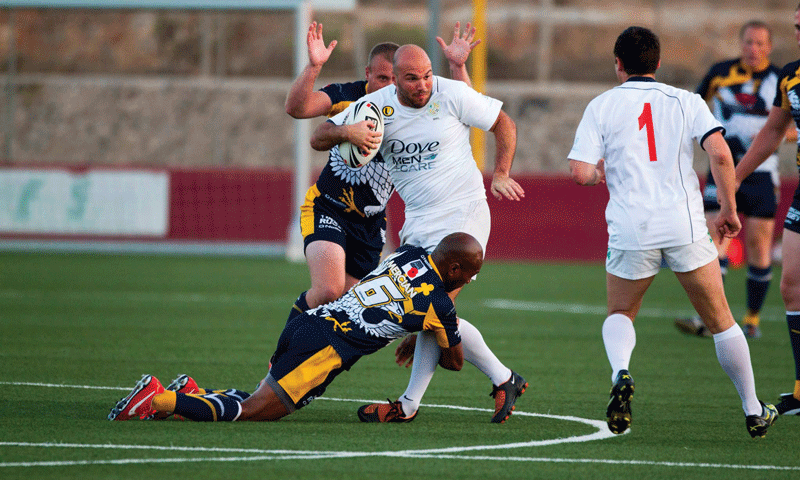
However, Spiteri was faced with a difficult challenge. Sponsorship for his project plan was threatened to be reduced if specific targets were not reached. Spiteri had knowledge and insight at the planning stage to moderate the negative effects of this cut. During planning he was able to set key performance indicators in areas of finance, training, competition and markets as part of the project design. The performance indicators allowed him to set targets to reach his ambitious goal. Rather than add a measure of control as an after-thought, he was able to integrate this as a whole concept. This meant that significant changes or shortcomings would be assessed against a measurement system, allowing a prompt response to take place with the significant action.
Project control helps to ‘diagnose’ issues, plan for tackling weaker areas and adjust quickly to changes. It is normal for the team to assume that everything will work out well in the end but unpredictable behaviours, unfortunately, do happen. A lack of ownership can cause as many problems as unscheduled timing of events or project delays. A project plan gives the team the ability to envisage areas in which people conduct their activities and carry out their responsibilities. The more prepared the team is (in terms of knowledge and know-how of project plan), the quicker the recovery period. Planning is also useful as a tool when it is used to focus and highlight project needs to those involved. This is of particular importance when a project manager has to suggest different solutions to his or her client. Johann Farrugia was particularly good at providing a number of solutions for his concept of a digital cemetery when he had a major on-site problem with humidity.
“Information in cemeteries is handwritten meaning that some of the oldest records are today hardly legible. This is why cemeteries need an IT system to meet today’s needs”
Cemeteries are sacred, emotional spaces but also witnesses of human history. Information in cemeteries is handwritten meaning that some of the oldest records are today hardly legible. This is why cemeteries need an IT system to meet today’s needs. Farrugia identified the needs of all the different groups of people who make use of or work at a cemetery and figured out a system that allowed the public to request information easily. Through the website, staff and undertakers could access all the information they needed about gravesite location and burial details.
Farrugia faced problems with the testing system. Extreme humidity was interfering with the IT infrastructure limiting system usage. However, he integrated alternatives as part of his project planning phase thus being able to suggest solutions to his stakeholders and project investors. He was able to locate a secondary location system for supporting the project, thus eliminating completely the location of IT structures on-site. He also factored costings for any added insulation works required to counteract the problem and sought alternative zones that suffered from less humidity within the cemetery.
In this case, since the unexpected problem arose at an early stage, the project manager could be flexible in his planning, allow for change, and bring in alternate ideas to deal with these issues. Having considered the options beforehand meant that he could reduce the impact of a sudden major change.
In some cases, external events can trigger unexpected time delays. At times it can appear impossible to finish a project punctually, especially when there are delays in materials or suppliers. Sometimes a schedule should be consistent with your experience from previous projects. Your main focus should be on getting your critical requirements completed while avoiding distractions. The project management plan is critically dependent on the people who run it, design it, create it, and implement it. Moreover, increases in dependences increase time-frames.
Time-frames can quickly overrun when introducing sustainable measures into a residential development. Another student, Joslyn Magro, was keen to integrate into her project grey water reservoirs used to hold second class water for domestic use including lavatory use and landscaping photovoltaic panels, double glazing, and landscaping works. Sustainability has been an evolving theme to encourage environmental responsibility and promote intelligent decision- making with respect to energy use. Bad weather delayed the required materials that were being imported and this set the project back by a month.
By using a Gantt chart, Magro saw the negative effects of this delay. It would impact other installations and works. To reduce the burden, she scheduled architectural detailing and structural elements to run in parallel. This would reduce the dependency on strict delivery dates.

In her project plan she had also considered sourcing from different suppliers so she was able to negotiate costs affected by the delays. Once the materials were delivered on site, she could also introduce secondary teams of labourers to make up for the one-month back log. Costings saved during the delay, were used on a double-managed team unit. In her case, this may have proved to be the winning strategy as managing the on-site team as best as possible would help to counteract any further setbacks.
Taking advantage of constraints is the best way in project planning when possible. Projects revolve around expectations so it is better to envisage opportunity rather than to try control an event. Turning a shell apartment into a home might sound like a simple project in comparison to the ones discussed earlier but the problems would, theoretically, be very similar. Delays, supplier changes and exceeded budgets would surely impact your strategy along the way. Having strict milestones might be useful. It is not always necessary to consider worst-case scenarios but do consider carefully how much risk is actually acceptable. Most importantly, do not try to solve the problem, solve the cause.
This article covers some work of the first cohort of students enrolled in the M.Sc. in Project Management launched by the Department of Construction and Property Management, Faculty for the Built Environment, University of Malta. The diversity of projects reflects the range of situations in which project management skills are being applied.



Picture a Maltese crowdfunding website dedicated specifically to locally based creatives. It would be supported and promoted by government entities to the Maltese public, based locally and abroad. For this to work the public sector plays a crucial role in promoting the site and educating the public on how crowdfunding works.
The site creates a platform for followers of local creatives to contribute towards performances and products made by artists they love. Unlike sites like Kickstarter, products that can be digitally distributed or ordered will remain on the site doubling as a digital distribution platform for locally made works.
This article forms part of The Gaming Issue.

Aluminium alloys have a low density and are easy to make. These qualities make them popular in the transport industry which can range from cars to planes. A low density makes them perfect to reduce weight in large metal structures. Unfortunately due to poor wear resistance, aluminium alloys can deteriorate quickly which severely limits their applications.
Dr Clayton D’Amato (supervised by Dr John C. Betts and Dr Joseph Buhagiar) modified the surface of an aluminium alloy (called A356) to overcome such limitations by improving wear resistance. D’Amato used a high power industrial CO2 laser to rapidly melt specific regions of the alloy’s surface. He simultaneously introduced additional alloying elements in the melt pool, which mix with the base metal to form new compounds that reinforce the soft aluminium surface. In this way, he formed a strong composite modified surface. Additional experimentation allowed D’Amato to reduce the loss of material due to wear by about 20 times. He optimised the conditions needed to laser process the surface of the aluminium in a uniform and repeatable manner. Adding nickel increased surface hardness 7-fold due to formation of aluminium-nickel compounds. Additional strength was achieved by adding hard ceramics to this aluminium-nickel structure. D’Amato created fine titanium carbide (TiC) particles in a matrix structure (pictured) by alloying a mixture of nickel, titanium and carbon (Ni-Ti-C). Aluminium treated in this way was much stronger.
The exact hardness was related to the mix of alloying elements in the modified surfaces. Hardness improved wear resistance, with large improvements in both surfaces alloyed with nickel and Ni-Ti-C. They lost 20 times less material than normal aluminium preventing severe damage.
Using a high powered laser allows improved wear resistance just where needed. This saves costs and increases versatility. The above technique could be used to manufacture aircraft pump parts, fittings and control parts, and in automotive water-cooled cylinder blocks.
This research was performed as part of a Ph.D. in Engineering within the Faculty of Engineering at the University of Malta. It was partially funded by the Strategic Educational Pathways Scholarship (Malta). This Scholarship is part-financed by the European Union — European Social Fund (ESF) under Operational Programme II — Cohesion Policy 2007–2013, “Empowering People for More Jobs and a Better Quality Of Life”. The laser processing equipment used in this project was financed by the 4th Italian protocol whilst the characterisation equipment was financed by the European Regional Fund (ERDF) through the project “Developing an Interdisciplinary Material Testing and Rapid Prototyping R&D Facility (Ref. no. 012)”.