
Reliable renewables need storage



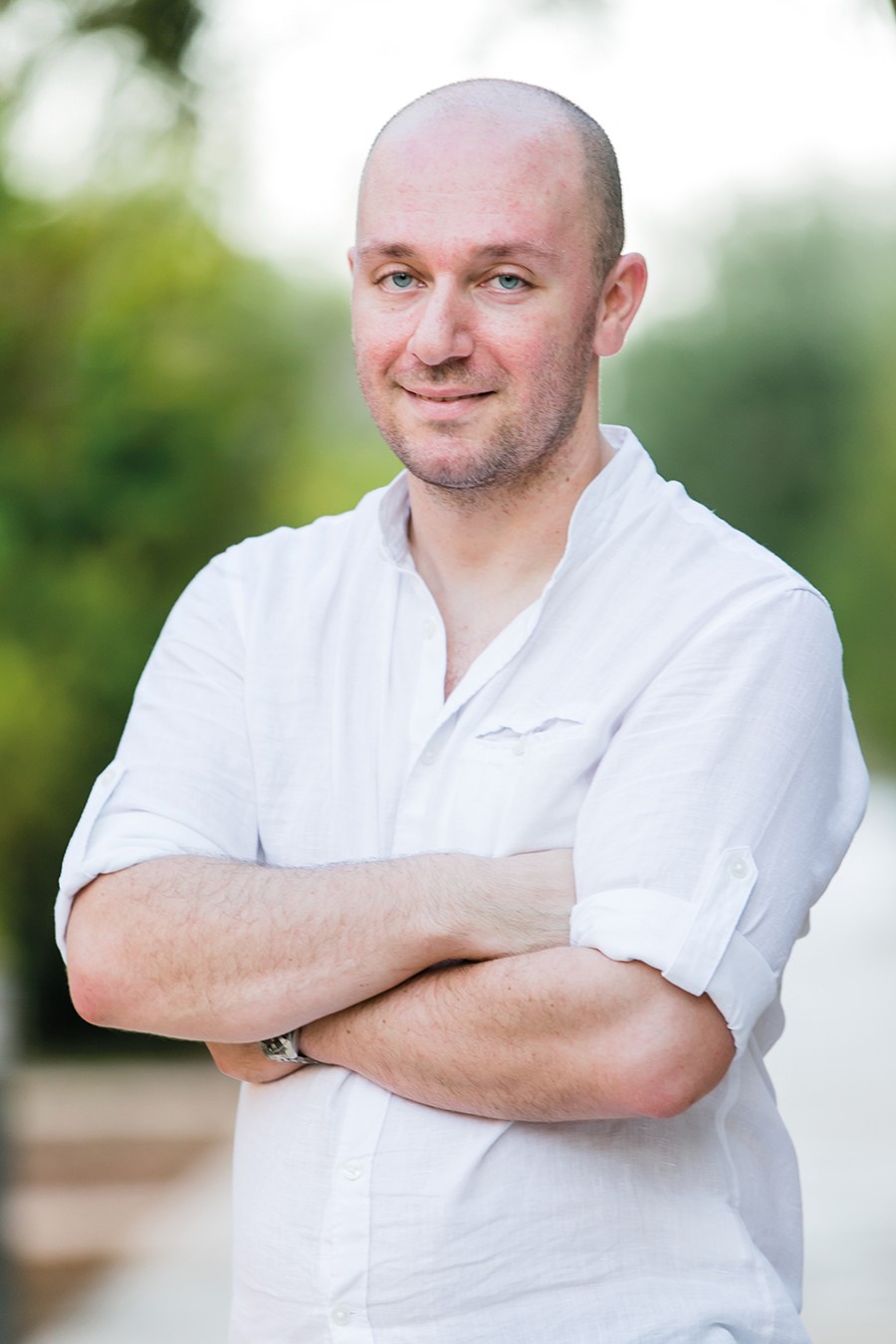
Think of a chubby guy you know. It’s been awhile since I read J.K. Rowling’s books but the image of Harry Potter’s Uncle, Vernon Dursley, just popped into my mind. OK. Now how would you describe him in Maltese? Would you use imbaċċaċ or qawwi? Would you choose kbir, tqil, goff or matnazz? Or maybe you’re given to more flowery language and would instead go for qisu l-vara l-kbira, donnu katuba or qisu ħanżir imsemmen? If these nine expressions all happen to have a place in your vocabulary, then you’re on the right track. Before I started my research, I didn’t know there were at least 37 alternatives you could consider before reverting to the default oħxon!
The main aim of my work over the last three years—Il-Kompilazzjoni ta’ teżawru tematiku Malti dwar in-natura tal-bniedem u r-relazzjonijiet soċjali tiegħu, supervised by Prof. Manwel Mifsud—has been to compile a Maltese-to-Maltese thematic thesaurus. This would not only help users find alternatives to the words and phrases they already know, but also to act as a ‘word prompter’ that would enable people to better express themselves when a specific word eludes them.
To help people speak or write better in Maltese, this thesaurus is not structured alphabetically, but rather has a thematic macrostructure. The six themes it covers are: 1. Il-familja u l-ħbieb (family and friends); 2. Il-ġisem u l-kura tiegħu (the body and its care); 3. Id-deskrizzjoni fiżika (physical description); 4. Id-deskrizzjoni tal-karattru (character description); 5. Is-sentimenti u l-emozzjonijiet (sentiments and emotions); and 6. Il-fażijiet tal-ħajja (life’s phases). Each theme is further organised into sub-themes, allowing users to drill down to the headword they need, a sentence that illustrates its use, and a group of synonyms, tagged whenever necessary to indicate archaic words or idioms among other examples.
Even if the advantages of using a thematic thesaurus outweigh those of using an alphabetically organised one, I kept renowned lexicographer Sidney I. Landau’s position in mind: ‘Alphabet is the only sure way of arranging words.’ Consequently, I gave the user a back entry to this thematic thesaurus through an exhaustive alphabetic index that includes around 12,000 entries.
The thesaurus will be published by Merlin Publishers, and we also want to make it available online to encourage widespread use.



At the European Organization for Nuclear Research (CERN), an army of researchers from around the world are studying the very structure of our universe, starting from the very basic constituents of matter: the fundamental particles.
CERN has some of the largest laboratories in the world, boasting cutting-edge purpose-built instruments like particle accelerators and detectors. It therefore comes as no surprise that, when lecturers from the G. F. Abela Junior College’s Physics Department announced they were organising a visit, all the positions available were quickly snapped up.
There was a recurring theme present throughout our CERN experience: ‘borders’. During our stay, we crossed the Franco-Swiss border several times from our lodgings in France to CERN in Switzerland. Coming from a small islandstate, where any inter-country travel requires a plane or boat ticket, it was a little surreal being able to put our passports away and walk to Switzerland.
The visit helped us reflect on the boundaries we create when trying to study how nature works. We compartmentalise topics into physics, chemistry, or biology, when really these topics are all one large subject seen from different viewpoints. This was most evident in the permanent exhibitions at CERN that touched on topics including atomic structure, PET scans, and the development of computer technology at CERN. There were no borders between the different subjects we studied in different departments back at Junior College.
During this amazing week, we experienced tours of the facility using CERN’s own transport. Many of the researchers use bicycles, taking advantage of all the green areas. We saw dedicated individuals working together for the good of the world, no matter their colour or creed. They overcame yet another border: a cultural one. Their mission is simply to produce outstanding work that will help us understand the universe around us.
The trip opened our eyes in many ways. As a group, we learnt together and supported one another when needed. We shared ideas. Discussed. We were our own mini-unit. With an understanding of this dynamic and all the fields involved, some of us have even been inspired to add a new goal to our list: join the team at CERN.

In Japan, candle-lit lanterns are released into rivers in Toro nagashi to guide the spirits of ancestors back to the other world. The lanterns exude beautiful, orange light as they float downstream. At times they group together, creating what look like small, glowing platforms. This very image was what inspired the floating platform Dr Rebecca Dalli Gonzi is building, together with her colleagues Dr Joseph Falzon, Prof. Tonio Sant, and NAS Limited. The project is being consulted with Prof. Claire DeMarco and ALTERN Limited.
By bringing together the sea, the arts, architecture, and engineering, they are giving rise to a lightweight platform that sits on the water’s surface, providing a unique space for artistic performances, installations, and exhibitions. The lanterns’ rectangular shapes are being replaced with hexagons—a more efficient fit. Holding everything together are mounts or magnetic currents, depending on research results. The modular approach allows adjustability in shape and size, potentially seeing the platform expand beyond its current three meters, while making it easy to disassemble, respecting the environment it inhabits.
The team hopes that the platform, or lantern as it is affectionately referred to, will provide artists and practitioners with a new approach to their art that will bring joy, while also inspiring creative thinking in the construction industry.

 Cesar A. Cruz famously said that ‘art should comfort the disturbed and disturb the comfortable.’ People have placed plenty of emphasis on the second half of that sentence—art is often used to provoke and make the viewer rethink their perception of the world. But what about the first half of that famous maxim? Can art serve as a comfort to those enduring difficult times? Pamela Baldacchino, the artist who founded the Deep Shelter project, certainly believes so.
Baldacchino has experience with serious illness. Not only is she a qualified nurse, but she also suffered from fibromyalgia for 14 years, a chronic condition characterised by constant pain, fatigue, and trouble sleeping.
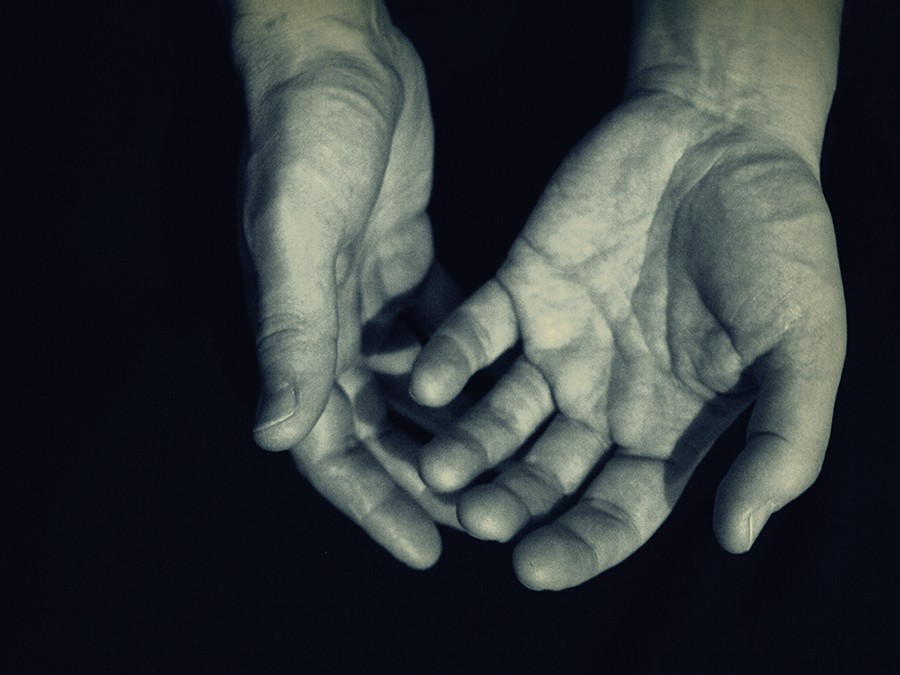
While reading for her Master’s degree in Fine Arts, Baldacchino created an audiovisual work purposely designed for a hospital environment. The work expressed empathy with patients by erasing the distinction between the sufferer and the audience, visually and symbolically showing states that merge into one another; the flesh of the artist’s hand becomes one with the ‘flesh of the sea’, for example. In another piece, the boundaries between sky, earth, and tree blur. She wanted to explore the concept further, to take her ideas beyond her degree and see them implemented in a practical manner within a clinical environment. With this goal in mind, she successfully acquired funding from the TAKEOFF Business Incubation Centre (University of Malta) as well as Arts Council Malta. Deep Shelter also forms part of the Valletta 2018 Cultural Programme and was presented during the Living Cities, Liveable Spaces conference held in November.
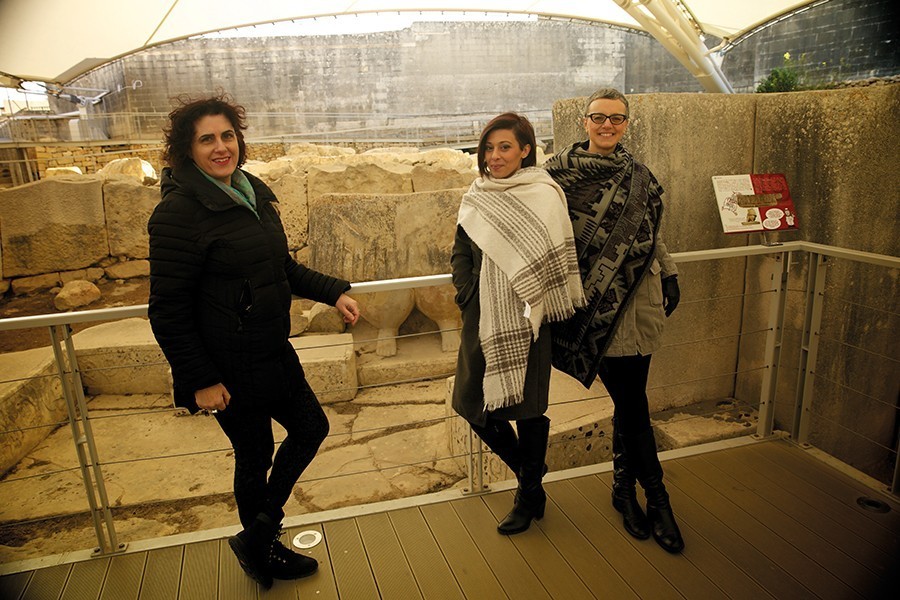
Others embraced Baldacchino’s approach to use art in helping those suffering from illness. A mutual friend introduced her to Dr Benna Chase, a psychologist within the Oncology Department (Mater Dei Hospital), who started using Baldacchino’s work during therapy with her patients. They then met clinical aromatherapist Marika Fleri, and the trio was complete. ‘We realised how much in sync we were. Through completely different mediums, we came together with instant understanding,’ Chase says.
As the Deep Shelter project, they have organised two series of sensory workshops, consisting of six sessions each, as well as artist workshops for the creation and donation of artworks to clinical hospital spaces. Some of these workshops were aimed at people in palliative care, many of whom are aware that they are nearing the end of their lives. The workshops aimed to help them recognise, create, and make use of the ‘language’ that art provides when words are not enough.
“It is difficult for patients whose lives are punctuated by clinical sights, sounds, and smells to feel in tune with nature.”
‘In one of the workshops, author Leanne Ellul started reading from Tereża, a book she translated about a girl during the Second World War. Several of the patients had lived that experience and it took them back to their own childhoods. Then, we asked composer and percussionist musician Luke Baldacchino to pick up on the feelings conveyed in the writing, compose a piece of music, and play. We realised that something was happening within them,’ Baldacchino says. The most marvelous transformation was in an elderly woman who usually sat perfectly still and was almost totally unresponsive to the outside world. ‘While we were using spoken language, we couldn’t manage to get through, but then a piece of music brought a rare smile to her face. Through this alternate sensory experience, we were allowing processing to happen; it’s a form of therapy as well.’
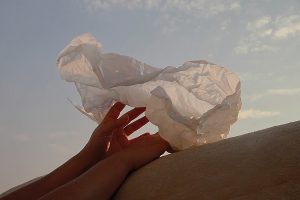
Nature has always been central to the context of the Deep Shelter project; it becomes ‘a metaphor of the self, where both fluidity and tension are captured.’ But it is
difficult for patients whose lives are punctuated by clinical sights, sounds, and smells to feel in tune with nature. With the help of her aromatherapy oils, Fleri brings in an element of nature and tactility to the patients. ‘The kind of experiences we are trying to create are aimed at making the patient feel contained and held,’ Baldacchino explains. ‘We want to provide something that supports their gritty journey towards acceptance. Even if it does not fit into what we traditionally think of as contemporary art, it fulfils the scope.’ She expresses her frustration with the art in spaces where people are undergoing medical treatment that is merely ‘decorative’ or ‘clever’, and does not provide any sustenance to the patient’s emotional well being. There has to be a story woven behind the artwork that leads one to feel understood when they are going through a time of change, upheaval, or trauma.’
Baldacchino, Chase, and Fleri have received both support and contempt about the project’s goal to derive value from art for the process of healing. However, the patients that the Deep Shelter project has treated are unequivocal about its benefits.
One patient says she believes the workshops serve to ‘release’ emotions, while supporting them throughout their different journeys. When she felt that she had nothing to lose, the artistic outlet Deep Shelter provided gave her a way to release the emotions of anger, fear, and regret she had been holding within for so long. ‘The health system needs to be more open to other therapies to be able to provide a truly holistic healing modality, incorporating mind and body and not seeing the person as ‘parts’.’
Humans are the only species on the planet with the ability to tell stories about their life through art and sensual expression. But during the cancer journey, it is harder to find yourself and your experiences reflected in a meaningful way. The Deep Shelter project seizes art’s potential as a means to process illness, pain, and trauma and puts that power into the hands of the people who need it most.