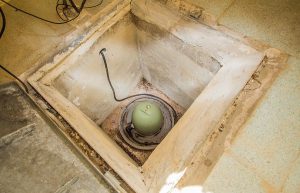
Running with ideas



| Tech Specs |
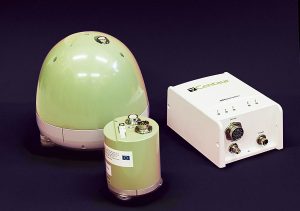
Sensors: Trillium 120PA/Trillium Compact Technology : 3 symmetric triaxial sensors with force feedback Bandwidth: 8mHz to 150Hz Weight: 7.2kg/1.2kg Height: 20cm/10cm Power consumption: 600mW/160mW Data Loggers: Centaur 24-bit ADC, Internet-enabled |
The earth’s surface is never still. And that is why over the past three years the Seismic Monitoring and Research Group (Faculty of Science, Department of Geosciences), has been placing its ears more firmly to the ground, listening to the smallest vibrations of our Earth.
Since 1995 the Malta Seismic Network has grown from a single seismic station at Wied Dalam to a network of six broadband instruments all over the Maltese Islands.
Stations are installed in several locations. The sensitivity of the instruments means that they need to be homed in places where human interference is minimal. Church crypts and underground tunnels are perfect. Being broadband instruments, they can detect very slow vibrations from frequencies less than a millihertz (the whole Earth’s normal mode frequencies), to tens of hertz (ground motion from anthropogenic noise and near earthquakes).
The network can record close ‘microearthquakes’ with equal clarity to large earthquakes from all over the globe. These massive quakes send seismic waves travelling through the planet’s interior at several kilometres per second. All of this data is transmitted to a University of Malta server, which distributes the information to data centres worldwide.
But what is the advantage of having so many stations in such a small area? Firstly, researchers can gather valuable information and share it with the seismological community to build more detailed models of the Earth’s interior. Secondly, an immediate advantage is the enhanced detection and analysis of smaller and smaller earthquakes from all sides of the island, leading to a deeper insight of active faults. Thirdly, the network gives precious information on the proper es and structure of the rocks of Malta. More accurate information about our islands’ composition and behaviour will help make Malta earthquake-ready.

Research is a complex endeavour. From funding, to project management, quality assurance, and so much more, any active project, whether for applied or fundamental research, needs to tick a whole list of boxes for it to achieve its full potential. This is where we, the Research Support Services Directorate (RSSD), come in.
Our goal is to provide researchers with comprehensive support towards achieving scientific excellence, from identifying and advising on funding opportunities to getting specific accreditation of their scientific methods. And our newly established directorate reflects the growing ambition of the University of Malta (UM) to develop into a world-class research institution. We are a team of nine enthusiastic individuals with very diverse backgrounds.
Having worked and studied (apart from the UM) in institutes such as the University of Cambridge, Max Planck Institute, Imperial College London, University College London, University of Nottingham, the European Institutions, as well as the private companies like GlaxoSmithKline, Teva (Actavis), Novartis and Methode Electronics, our team is excited to bring international and private sector experience to the UM.
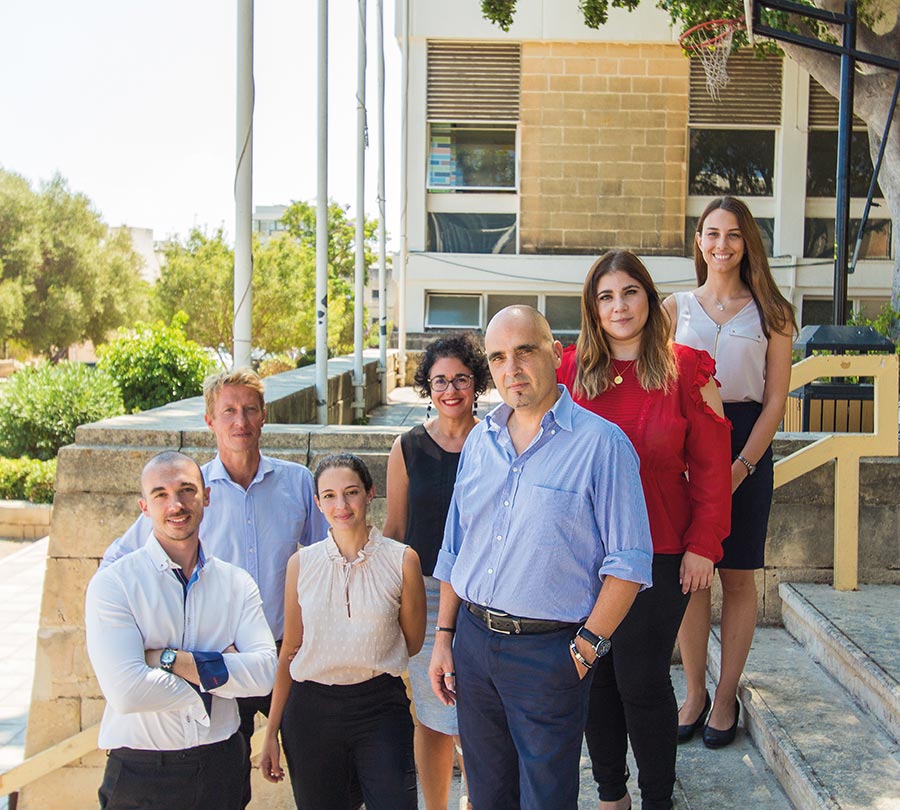
The most attractive funding opportunities for scientists at the UM nowadays are based on competitive European Union instruments. Preparation for them is intense, and only the most innovative and ground breaking ideas hit the mark. Our team can guide you not only to identify the most suitable funding opportunity, but also on building the right team, all the while ensuring that strict EU guidelines are being followed. We also help you identify and approach collaborators in Academia, private industry, and the state—a requisite of many EU funding programmes. To this end, RSSD aims to be the interface between the academics, researchers, and the general administration, as a one-stop shop for research funding. Once the project is successful and funded, we will then link it with the range of support services available. But that is not where our contribution ends.
On the laboratory and infrastructural side of RSSD, we help the scientific, technical, and laboratory staff at the UM to bring experimental laboratories to a world class level. The multifaceted nature of this work makes it difficult to summarise. Among other things, it involves building services, laboratory output, systems design and commissioning, followed by quality assurance, such as managing standard operating procedures (SOPs) and supporting and writing equipment tenders, creating and managing asset databases, and ensuring proper waste management. We can also contribute to managing your projects, all in the bid to improve the efficiency, productivity, and function of any laboratory.
The next step in this chain of quality assurance is obtaining accreditation for some of the techniques and methods used. To this end, accreditation and SOPs ensure reliable, repeatable, and reproducible measurements, a must for work in and with the private sector.
RSSD will give you the right support needed to achieve your vision.
We are based on the first floor in the Regional Building, Triq l-Imħallef Paolo Debono, or simply drop us an email on rssd@um.edu.mt or visit our website at um.edu.mt/rssd

Researchers from the University of Malta are descending on the House of Representatives for the Science in the City festival. Here is a selection of their work, ranging from Malta’s first space mission to achieving earlier breast cancer diagnoses.