
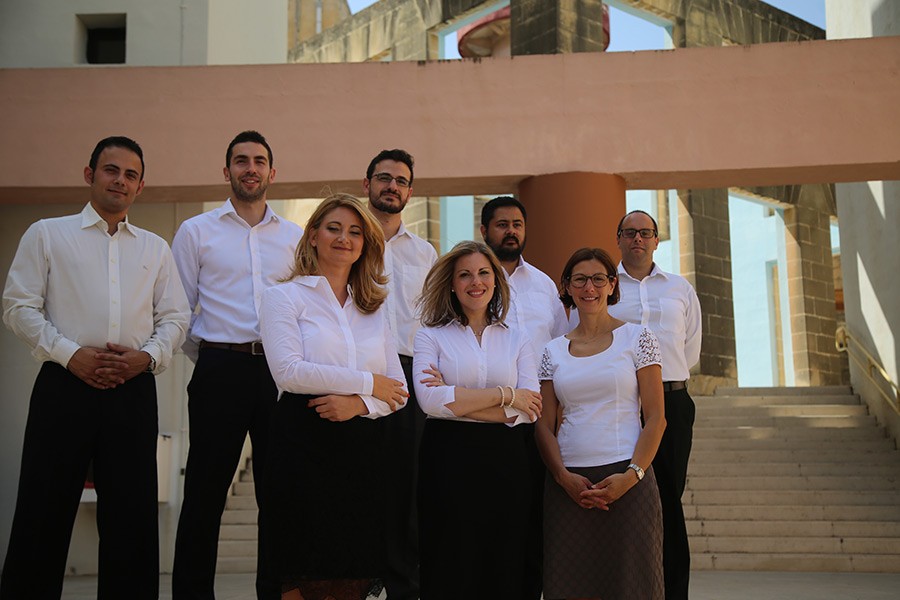
Researchers from the University of Malta are descending on the House of Representatives for the Science in the City festival. Here is a selection of their work, ranging from Malta’s first space mission to achieving earlier breast cancer diagnoses.
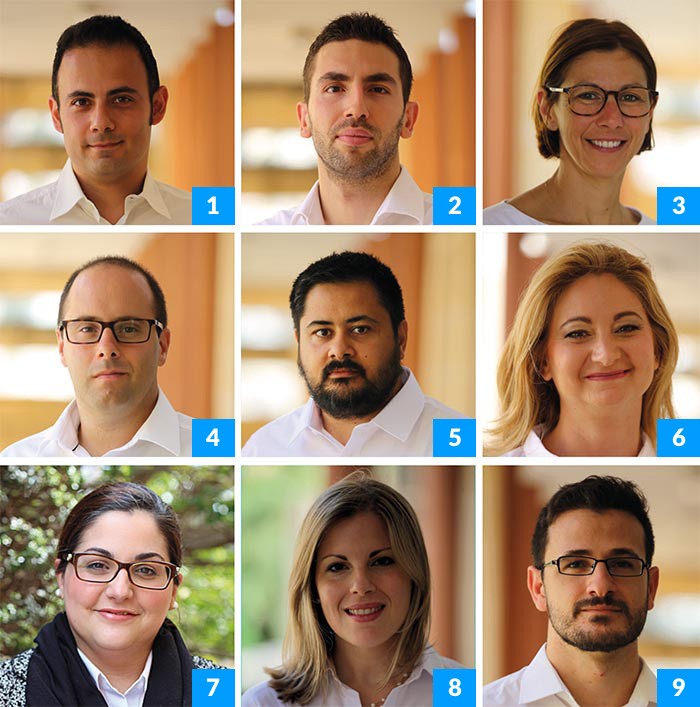
1. Dr Ing. Marc Anthony Azzopardi – Faculty of Engineering, UM
Dr Ing. Marc Anthony Azzopardi is seeking to create new advanced electronics design industries that benefit the Maltese economy. He leads two engineering student teams designing high performance vision systems and miniaturized spacecraft in preparation for Malta’s first space mission, and all with a view for commercial applications.
2. Dr Owen Falzon – Centre for Biomedical Cybernetics, UM
Biomedical engineer Dr Owen Falzon’s work focuses on developing signal processing, image processing, and machine learning techniques for biomedical applications. He is also working on improving the performance of brain-computer interfaces and the analysis of thermographic images to extract information relevant for a range of clinical applications including diabetes.
3. Dr Elisa Seria – Research Support Office, UM
Dr Elisa Seria’s latest work explores the potential use of stem cells to reconstitute damaged skin, tissue, or organs. Through her work, she believes cell therapy may substitute the transplantation of organs, revolutionising medicine.
4. Dr Ian P. Cassar – Faculty of Economics, Management & Accountancy, UM
Dr Ian P. Cassar is studying sectoral interconnectedness across the Maltese economy to aid in the formulation of industry-specific policies that will enhance Malta’s competitiveness and tackle key environmental issues, such as the reduction of greenhouse gas emissions, more effectively.
5. Dr Ruben Gatt – Faculty of Science, UM
Dr Ruben Gatt’s research interests include the investigation of counterintuitive materials such as auxetics that become fatter when stretched. Characteristics like these make them resistant to indentation, for example, meaning that they have wide-ranging applications in various industries including safety.
6. Dr Rebecca E. Dalli Gonzi – Faculty for the Built Environment, UM
Dr Rebecca E. Dalli Gonzi is an architect whose current research is focused on process improvement in construction technology. Her latest project is a floating structure with various applications including a performance space, dining on water, and architectural art.
7. Dr Lourdes Farrugia – Department of Physics, Faculty of Science, UM)
Medical physicist Dr Lourdes Farrugia studied the interaction of electromagnetic fields with the human body for her doctorate and is now focused on measuring the dielectric properties of biological tissues required to design innovative microwave medical devices for new clinical applications.
8. Dr Melissa Formosa – Department of Applied Biomedical Science, Faculty of Health Sciences, UM
Molecular biologist Dr Melissa Formosa leads the Malta Osteoporotic Fracture Study, part of an international consortium investigating the genetics of osteoporosis and fracture susceptibility. She is currently using the zebrafish model to study novel genetic factors implicated in bone physiology.
9. Dr Shawn Baldacchino – Faculty of Medicine & Surgery, UM
After discovering a new type of breast cancer in his doctorate, Dr Shawn Baldacchino is now reading for his post-doctorate. The project, ‘Accurate Cancer Screening Tests’ aims to determine breast cancer types more accurately, potentially leading to earlier diagnoses, with possible classification from body fluids.



Comments are closed for this article!