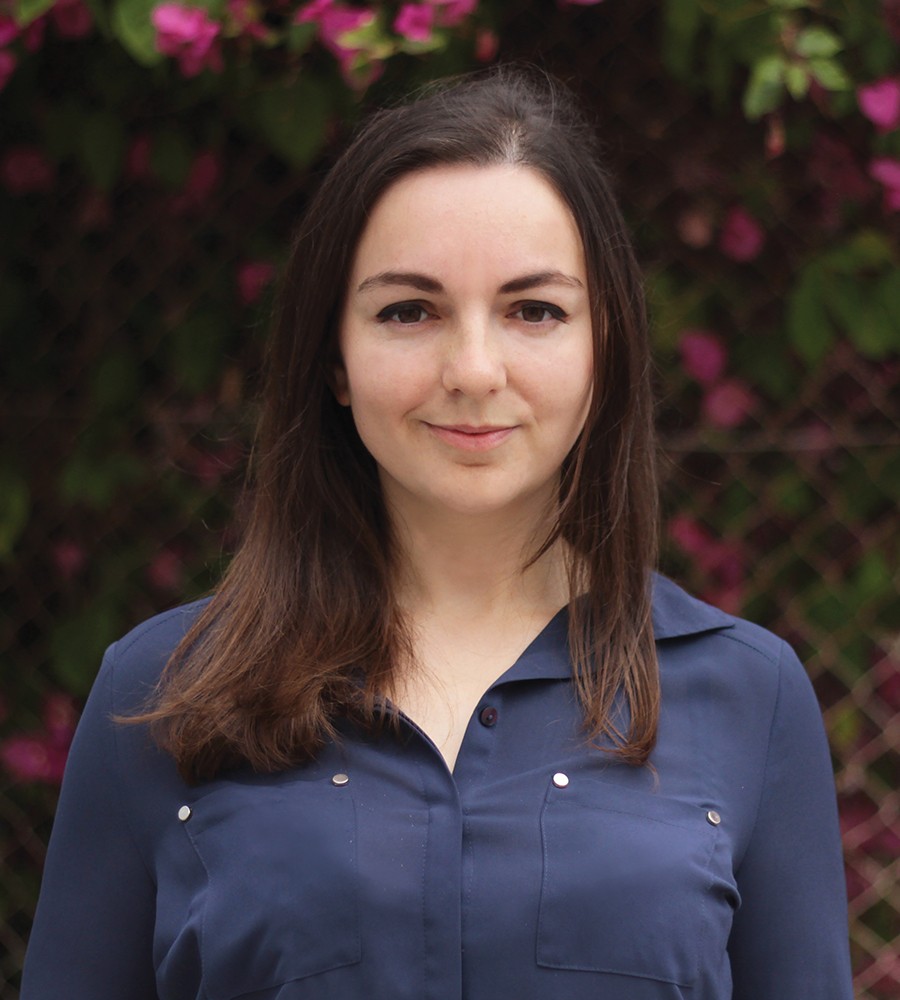
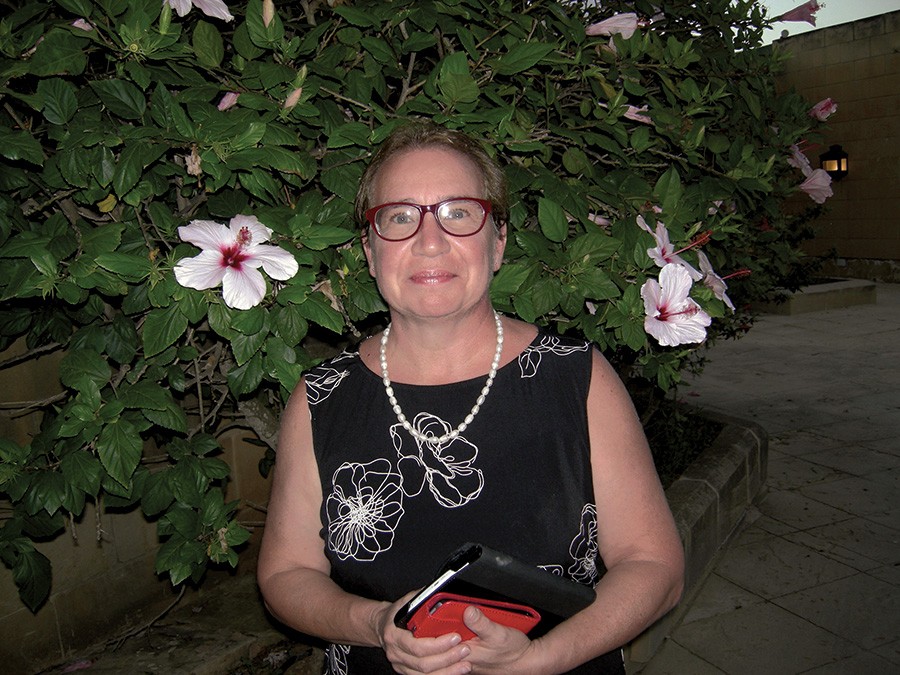
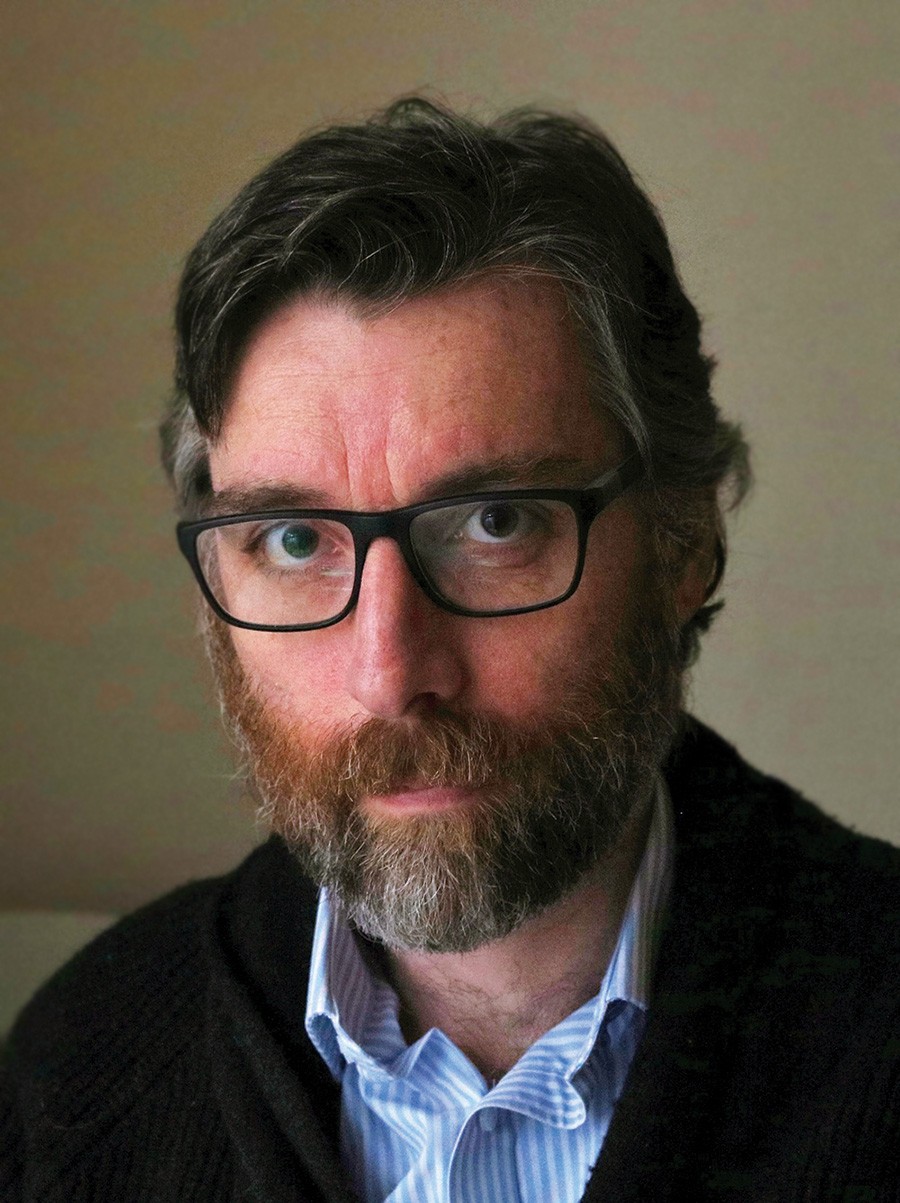
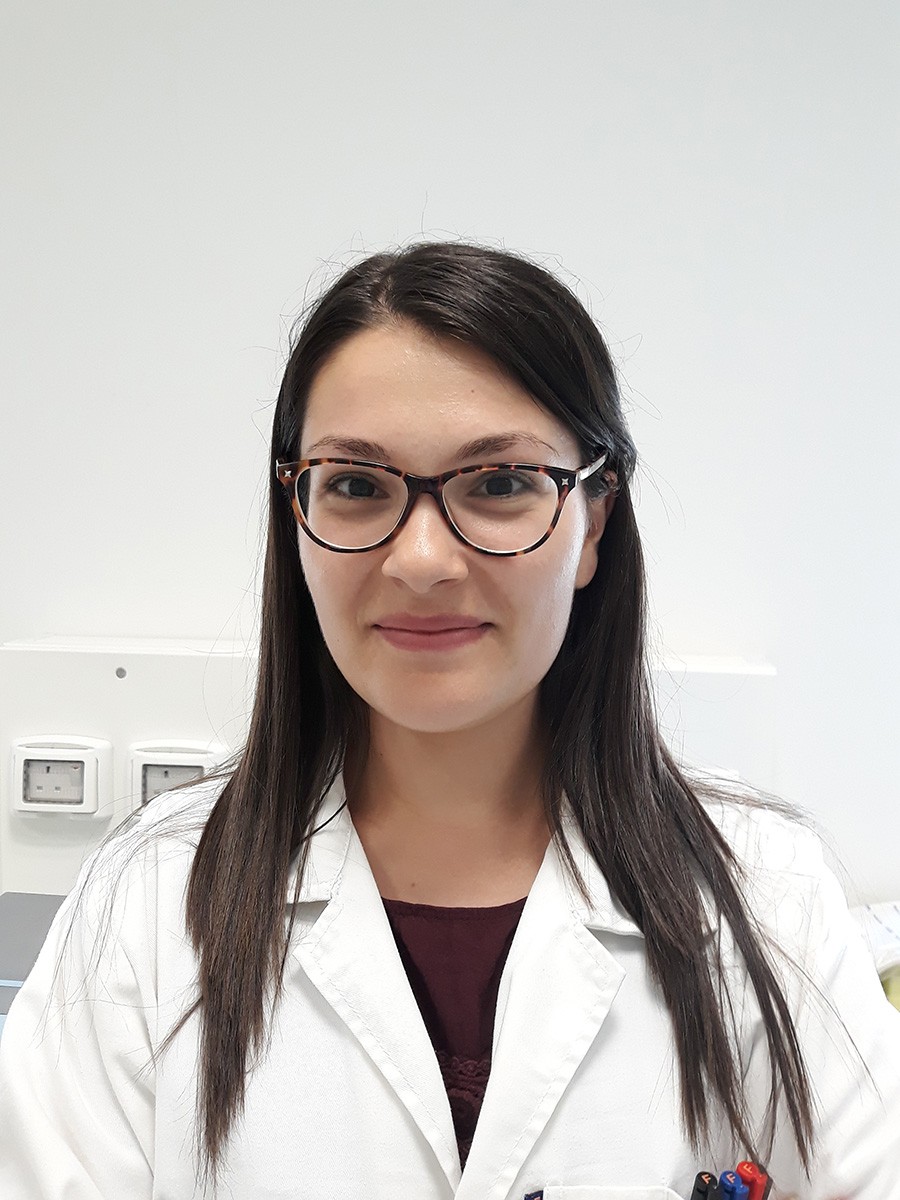
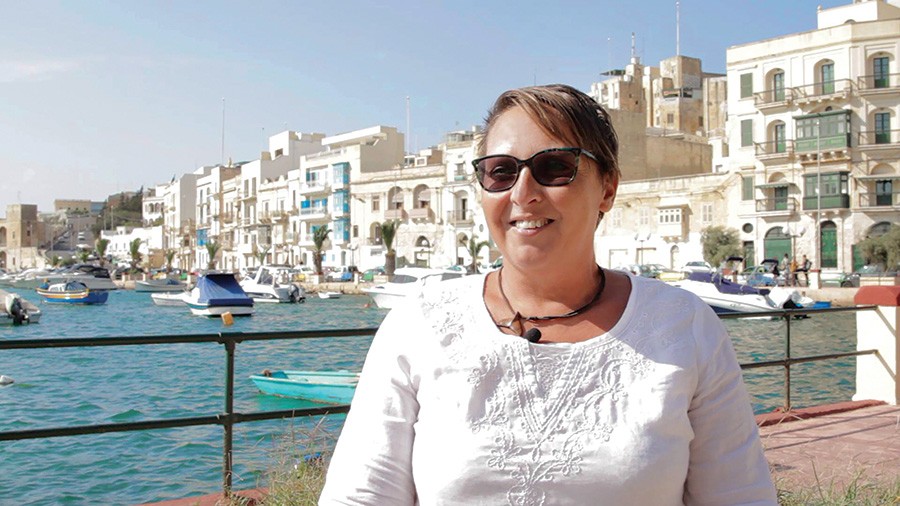
A small team of scientists at the University of Malta is trying to determine what causes children to be born with serious kidney defects. Laura Bonnici speaks to Prof. Alex Felice, Dr Valerie Said Conti, Esther Zammit, and Alan Curry to find out more about this ground-breaking programme.
‘I’d sell a kidney for that!’ Most of us have been guilty of using this expression when faced with something desirable. But do we fully appreciate the real value of what we are offering before the words escape our lips?
Kidneys are our body’s official waste disposal system, filtering out toxic build-up from our blood, which can poison us if left unchecked. With kidney failure posing such a threat, renal research has become an ongoing global goal.
A team of scientists from the University of Malta is currently honing in on what may cause children to be born with ‘CAKUT’, or Congenital Anomalies of the Kidney and Urinary Tract.
With between three and six cases recorded per 1000 live births worldwide, CAKUT is the most common cause of end-stage kidney disease in children. Since early identification of these anomalies may reduce kidney damage later in life, the LifeCycle Malta Foundation has raised funds for a renal research programme which targets CAKUT and its causes.
‘We know that a number of children are born with a kidney defect, but in many cases, we are not sure why,’ explains the programme’s principal investigator, Dr Valerie Said Conti . ‘There are many factors that can affect the development of the kidney, both genetic and environmental. We are trying to understand those influences so that we can carry out preventative strategies, diagnose issues earlier, and target personal therapeutic interventions.’
A number of children are born with a kidney defect, but in many cases, we are not sure why.
For this team of renal researchers, the first three years of initial research has been the first step in a far longer journey. ‘We hope to contribute our data to the international literature pool,’ continues Prof. Alex Felice, consultant and supervisor on the programme. ‘We will need a massive amount of data to create a robust theory with which to progress. We hope that our findings regarding CAKUT will be useful when we come to the stage of creating new interventions.’
It’s an end-game that has kept the small team focused as they approach the programme’s expected completion date this year. Having had to start literally from scratch, they collected biological samples from patients with a range of kidney diseases, including CAKUT, nephrotic syndrome, and Bartter syndrome. This allowed them to build the renal disease collection at the Malta BioBank, a vital storehouse for scientists.
‘For research projects like this, you see what material is available and you work with it,’ explains Said Conti . ‘A big part of it so far has been sourcing the samples from families attending the clinic with their formal consent for the material to be used in this project. We are hugely grateful to those who accepted to take part in the research. Without them, it would have been impossible.’
This project has set the groundwork for renal research in Malta to continue. ‘Without funding, projects such as this one simply could not exist,’ Said Conti remarks of the €100,000 donation LifeCycle Malta Foundation made to RIDT. ‘It enabled us to employ a full-ti me Research Support Officer, involve other laboratories, attend international meetings to share insights, perform ultrasound tests, and invest in ‘Next Generation DNA Sequencing’, genetic technology that maps out genes, revolutionising our world.’ But there is much more to come.
The Founder of the LifeCycle Malta Foundation, Personal Fitness Consultant Alan Curry, agrees. ‘Renal failure is an ever-increasing problem with figures going up every year, and LifeCycle is the only NGO that is actively supporting renal patients and their families in Malta. Our annual LifeCycle Challenge, which this year is routed from Dubai to Oman, aims to raise €150,000. It’s a huge responsibility, but we are sure that, by funding research programmes such as this, we will significantly improve the lives of kidney patients.’
With growing evidence showing that our eating habits affect not only our waistline, but our physical and mental health, should we all be turning to the Mediterranean diet to live longer, healthier lives? Prof. Giuseppe Di Giovanni, Prof. Christian Scerri, and Dr Paulino Schembriwrite.
Do scientists need to have a clear end-goal before they dive down the research rabbit hole? Sara Cameron speaks to Dr André Xuereb about the winding journey that led to the unintended discovery of a new way to detect earthquakes.
Some of science’s greatest accomplishments were achieved when no one was looking with a purpose. When studying a petri dish of bacterial cultures, Alexander Fleming had no intention of discovering penicillin, and yet he changed the course of human history. Henri Becquerel was trying to make the most of dwindling sunlight to expose photographic plates using uranium when he stumbled upon radioactivity. A chance encounter between a chocolate bar in Percy Spencer’s pocket and the radar machine that melted it sparked the invention of the household microwave.
One would think that with this track record of coincidental breakthroughs, the field of science and research would continue to flourish by embracing curiosity and experimentation. But as interest piques and funding avenues pop up for researchers, there has been a shift in mindset.
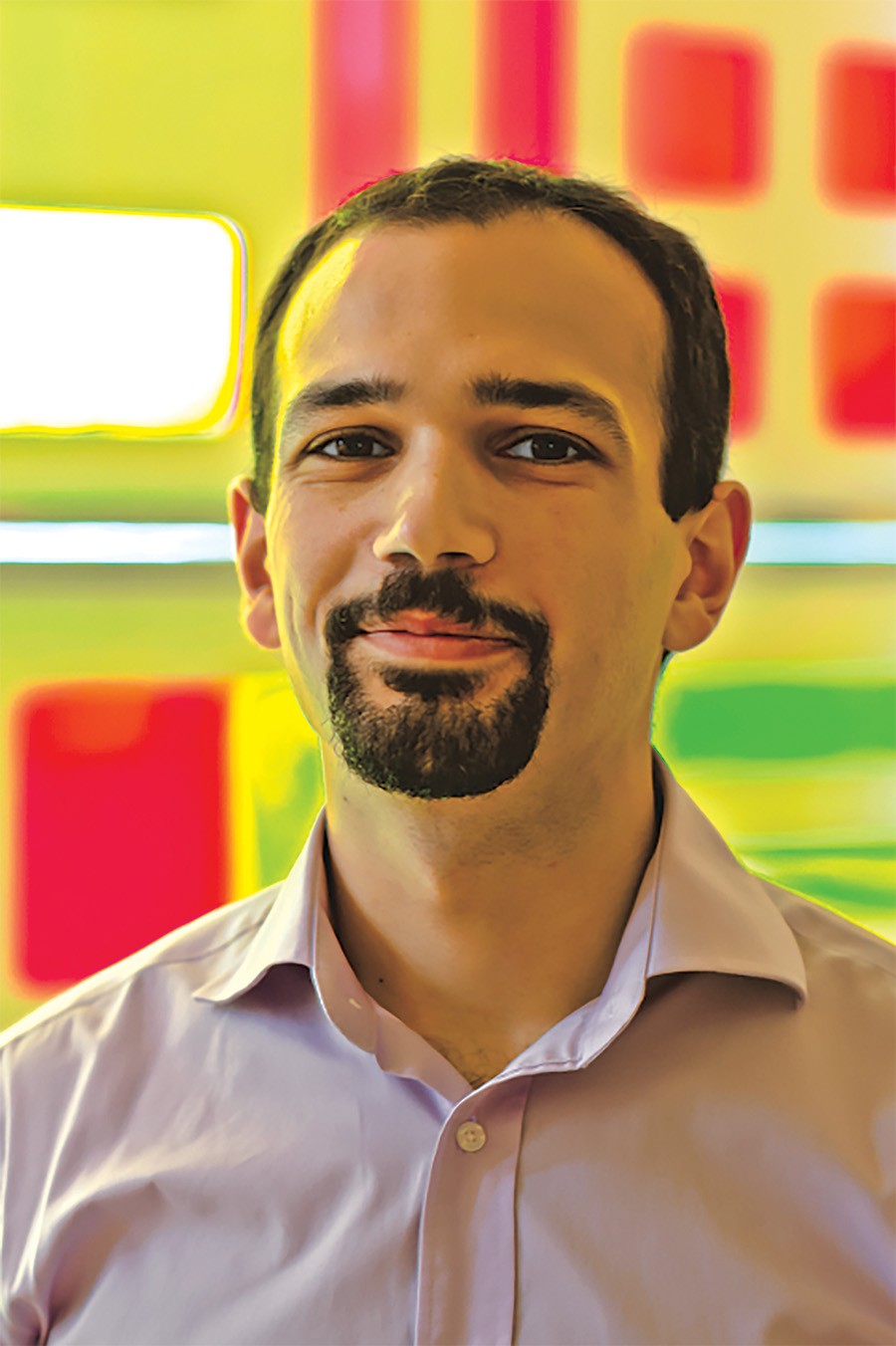
Dr André Xuereb
Money changes things. And while it does allow people to work hard and answer more questions, it has also fostered expectations from stakeholders. Investors want fast results that will improve their business or product. We, the end-user, want to see our lives changed, one discovery at a ti me. We’re no longer satisfied with research for research’s sake. At least for the most part.
Quantum physicist Dr André Xuereb (Faculty of Science, University of Malta) is all too aware of this issue and its effects on scientific progress. Xuereb explains scientists’ frustration: ‘A lot of funding, in Malta and elsewhere, is dedicated to bringing mature ideas to the market, but that is the ti p of the iceberg. There is an entire innovation lifecycle that must be funded and sustained for good ideas to develop and eventually become technologies. The starting point is often an outlandish idea, and eventually, sometimes by accident, great new technologies are born,’ he says.
STARTING POINTS
Over the past few years, Xuereb has been exploring new possibilities in quantum mechanics.
The field of quantum mechanics attempts to explain the behaviour of atoms and what makes them. Its mathematical principles show that atoms and other particles can exist in states beyond what can be described by the physics of the ordinary objects that surround us. For example, quantum theorems that show objects existing in two places at once off er a scientific basis for teleportation.
Star Trek fans know exactly what we’re talking about, but for those rolling their eyes, the reality is that many things in our everyday lives wouldn’t exist without at least some understanding of quantum physics. Our computers, phones, GPS navigation, digital cameras, LED TV screens, and lasers are all products of the quantum revolution.
The starting point is often an outlandish idea, and eventually, sometimes by accident, great new technologies are born
Another technology that has changed the way we live and work is modern telecommunications technology. When you pick up your phone to message a friend overseas, call a loved one, or email a colleague, telecoms networks spanning the earth carry the data across continents and under oceans through thousands of kilometres of optical fibres.
The 96-kilometre submarine telecommunication link between Malta and Sicily was Xuereb’s focus in 2015. He organised a team of European experts to begin investigating the potential for building a quantum link between the two countries.
The Austrian, Italian, and Maltese trio were particularly interested in a strange property called ‘entanglement.’ This is a curious property of quantum objects that can be created in pairs of photons, connecting them together. This entanglement can be distributed by giving one of these photons to a friend and keeping the other for yourself, establishing a quantum link between you and this friend—an invisible quantum ‘wire,’ so to speak.
Through this connection, you and your friend can send data faster than over ordinary connections; by modifying the state of the photon at your end, you can instantly affect the state of your friend’s photon, no matter how far apart you are in the universe. Using quantum links such as these, all manner of feats can be performed, including super-secure communications. ‘We wanted to demonstrate that quantum entanglement can be distributed using a 100km-long, established telecoms link, using what was already available, with no laboratory facilities in sight,’ explains Xuereb. His team also wanted to demonstrate that entanglement using polarisation of light was possible. Previously it was thought impossible in submarine conditions, even though it has some very technologically convenient properties.
Two years and several complex experiments later, Xuereb and his team have indeed proven the possibility of quantum communications over submarine telecommunication networks. And with one question answered, a slew more lifted their heads.
The Italian subteam, led by Davide Calonico (Istituto Nazionale di Ricerca Metrologica, INRIM), now turned their attention to a different set of questions for the Malta-Sicily telecommunication network.
MORE TO COME…
Atomic clocks keep the world ticking by providing precise timekeeping for GPS navigation, internet synchronisation, banking transactions, and particle science experiments. In all these activities, exact timing is essential.
These extremely accurate clocks use atomic oscillations as a frequency reference, giving them an average error of only one second every 100 million years. Connecting the world’s atomic clocks would create an international common time base, which would allow people to better synchronise their activities, even over vast distances. For example, bank transactions and trading could happen much faster than they do at present.
This can’t be done by bouncing signals off of spaceborne satellites, since tiny changes in the atmosphere or in satellite orbits can ruin the signal. This is where the fibre-optic network comes back into the picture. Researchers have recently been looking at the telecoms network as a way to make this synchronisation possible. Scientists can use an ultra-stable laser to shine a reference beam along these fibres. Monitoring the optical path and the phase of the optical signal of the beam can then allow them to compare and synchronise the clocks at both ends.
Whilst Calonico and his team were testing this idea on the submarine network between Malta and Sicily, a few thousand kilometres away, meteorology expert Dr Giuseppe Marra was monitoring an 80km link in England. On October 2016, everything changed. One night, he noticed some noise in his data. Unable to attribute the noise to misbehaving equipment or a monitoring malfunction, his gut told him to turn to the news from his home country, Italy. There, he saw that the town of Amatrice had been devastated by an earthquake of 5.9 magnitude.
Further testing confirmed that the waveforms Marra saw in the fibre data matched those recorded by the British Geological Survey during the earthquake. His system even recorded quakes as far away as New Zealand, Mexico and Japan. This was huge news.
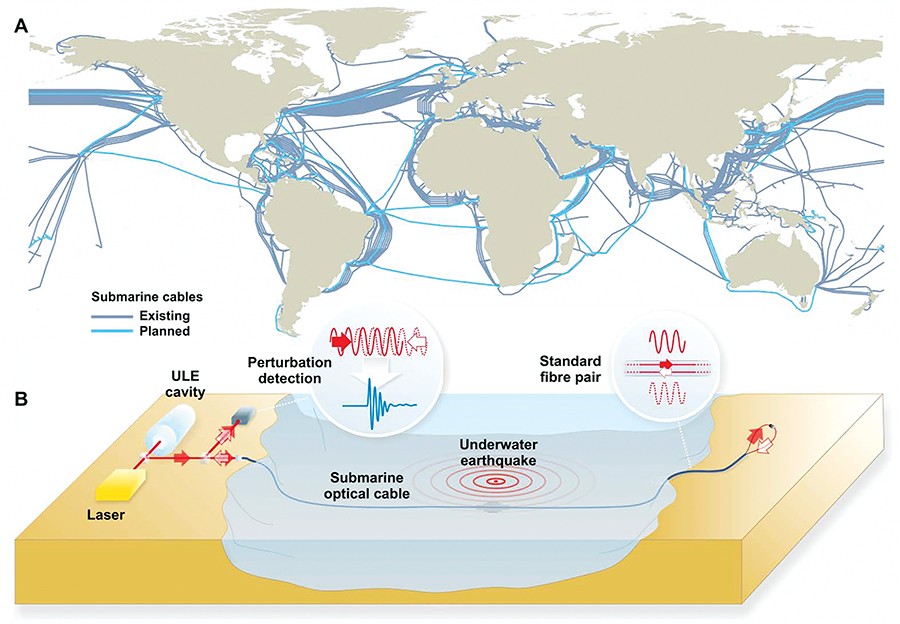
Diagram illustrating how even the smallest underwater seismic waves can be detected.
In simple terms, the seismic waves from an earthquake tremor cause a series of very slight expansions and contractions in fibre-optic cables, which in turn modify the phase of the cable’s reference beam. These tiny disturbances can be captured by specialised measurement tools at the ends of the cable, capable of detecting changes on the scale of femtoseconds: a millionth of a billionth of a second.
The majority of seismometers are land-based and so small that earthquakes more than a few hundred kilometres from the coast go undetected. Conventional seismometers designed to monitor the seabed are expensive and don’t usually monitor underwater seismic activity in real time. Telecoms networks could offer a solution that would allow us to observe and understand seismic activity in the world’s vast oceans. They would open up a new window through which to observe the processes taking place underneath Earth’s surface, teaching us more about how our planet works. In future, it may even make it possible to detect large earthquakes that cause untold devastation earlier.
The beauty of this discovery is that the infrastructure already exists. No new work is needed. All that is required is to set up lasers at either end of these cables, using up a tiny portion of a cable’s bandwidth without interfering with its use.
THREADS COMING TOGETHER
Marra got together with Xuereb and Calonico, who were already working on the undersea network between Malta and Sicily, to conduct some initial tests. The underwater trial, published in the world-leading journal Science this year along with the terrestrial results, was able to detect a weak tremor of 3.4 magnitude off Malta’s coast. Its epicentre was 89km from the cable’s nearest point, which reinforced the idea that cables can be used as a global seismic detector. ‘We would be able to monitor in real time tiny vibrations all over the planet. This would turn the existing network into a microphone for the Earth,’ Xuereb explains.
If we don’t fund the initial few steps of the innovation lifecycle, how will we ever develop new technologies?
The system hasn’t been tested on an ocean cable. An interesting target would be a cable that crosses the mid-Atlantic ridge, where the drifting of Eurasian and African tectonic plates creates an area of high seismic activity. Based on the results so far and on conservative assumptions, trials are being planned for the near future on a larger scale, which will give us a better idea of the possibilities.
FURTHER DOWN THE RABBIT HOLE…
In many ways, it is understandable that agencies that fund science favour smaller, more goal-driven research programmes. They seek tangible results in a timely manner to reap quick rewards. But as this story goes to show, a change in mentality is needed.
‘If we don’t fund the initial few steps of the innovation lifecycle, how will we ever develop new technologies? This is a problem that affects scientists from many countries and comes from a mismatch in timescales. A year is a long time in politics, but a decade is often a short time in science,’ Xuereb comments.
Innovation has to start from somewhere, and it often starts from ideas which may have no apparent relevance to our everyday lives. We need to support researchers by keeping an open mind to unknown long-term possibilities—or the world might not only miss the next earthquake but also the next life-changing discovery.
You come to Malta to attend Medical School, and you end up in an English class. Nicola Kirkpatrick talks to Dr Isabel Stabile, Omar N’Shea, and Edward Wilkinson about the often unappreciated value of the University of Malta’s Medical Foundation Programme and its impact on international medical students’ lives.
A sea of blank faces stared him down. Omar N’Shea had asked his students a question, but no reply came. None of them wanted to be there. The University of Malta’s Medical Foundation Programme (MFP) aims to equip high school graduates with less than 13 years of formal education with the skills they need to enter Medical or Dentistry school. But its focus on academic English is what receives the most ire. N’Shea, one of the programme coordinators, understands. ‘They don’t see the value initially. They think to themselves: ‘I didn’t travel thousands of miles away to sit in an English class. No, I want to study medicine.’ The frustration is understandable,’ he nods.
Omar N’Shea
But when so many international students were struggling with the medical course due to language and communication difficulties, something clearly had to be done.
Looking back at the challenges she was facing when the Medical School opened its doors to international students, Director of Studies Professor Isabel Stabile notes the discrepancy in language skills. What was expected was quite distinct from the reality of the situation. ‘What is interesting about our student body is that their spoken level of English is really high,’ says N’Shea, ‘but their written level of English needs work to keep up with the demands of an academic course.’
English Programme Coordinator and tutor Edward Wilkinson agrees, highlighting that ‘resources were lacking. Teaching exercises and materials were sourced online and everyone did the best they could. But a gap quickly emerged as far as Medical English was concerned.’ Stabile further clarifies, ‘Most books available were aimed at teaching doctors and nurses bedside manner and care for patients, but there was little to none out there that focused on academic medical English.’
Prof. Isabel Stabile
With this philosophy in mind, Stabile, N’Shea, and Wilkinson joined forces to develop a series of books called Academic Medical English for Pathway/Foundation Programmes. These books provided a framework for students to deal with the language in which scientific subjects are taught. The material improves their academic literacy in ways important to medical students, equipping them with skills such as reviewing research papers, writing reflective essays, and answering essay questions.
The book was ‘born out of the needs of these students and the medical program,’ says N’Shea. ‘The concept is to present to the students the core skills required by the medicine and surgery degrees, so that students become aware of the differences between using English as a lingua franca and using English within the framework of academic literacy.’ To enable this, the team included topics to reflect those covered in the science classes that students attend throughout the course. ‘So if they’re doing pulmonary topics in science classes,’ N’Shea says, ‘then they’re discussing them in English classes too. We used the science as a framework for our English lessons, and that was essential. Rather than teaching two disciplines with no dialogue, we created a bridge.’
This approach saw immediate shifts in perception. Dr Hussein Alibrahim, now a house officer in Kuwait, says his primary and secondary education was all in Arabic, and the foundation course, where English and science stood side by side, ‘was an advantage and a necessity. Skimming carefully through an article, identifying keywords, summarising, criticising, asking questions, and looking for the right answers are all skills that I learned for the first time in the foundation course and are skills I still use today,’ he added.
Edward Wilkinson
But the programme was not only useful for medical school. Alibrahim noted how it changed his day-to-day life as well. It taught him important lessons on punctuality and work ethic. ‘If you don’t learn [these things in foundation school] then maybe you’re in the wrong place,’ he notes.
With time, the team refined the course. After looking into the discrepancy between spoken and written levels of English, N’Shea and Wilkinson determined that the most probable reason behind it was a lack of reading by the students. Due to this, reading is now a core element of the course and is based on science topics to keep students’ interest piqued.
Now that the coursework has been implemented, positive results can already be seen. Students are so ready and raring to go that ‘sometimes they even want to take over the sessions,’ says N’Shea. ‘A student came up to me in class one time and asked to explain a concept to the others. It was such a dramatic shift.’ This has made it a joy to be in class, he adds, saying that ‘it became an active classroom. Students are totally immersed now.’ He feels that, through this course, the students are empowered ‘because they feel they can bring into the classroom all the things they know from science, but explore them through language.’ This way, ‘English is presented as a skill set to enable them to better achieve their goal in the career path of choice. It makes English less of an extra subject and more of a tool,’ he adds.
N’Shea, Wilkinson, and Stabile all agree that they will continue to perfect the programme. Currently in the works is a coursebook dedicated to developing listening skills. It will concentrate on areas such as note writing and identifying and differentiating words even when people speak with different accents. However, before the ‘listening book’ (as they fondly call it) is released, we will see the ‘reading book’, which will provide scientific passages for the students to read and be assessed on. All editions of this book will have the added bonus of a teacher’s book, meaning that the coursework can be taught by any teacher around the world, even if their knowledge of science is lacking.
With students communicating more, isolation is less of an issue and this is immensely beneficial. ‘We have to remember the dramatic shift that these students are going through,’ Stabile says. ‘They’re moving country, dealing with culture shock, all while fending for themselves for the first time in their lives, an adjustment local students do not need to make.’ This, along with the pressure that comes with a course you only get one chance to pass, is significant.
With students communicating more, isolation is less of an issue and this is immensely beneficial.
The fruit of their hard work is evident. According to research conducted by the team, between 2008 and 2015, 86% of MFP graduates progressed through Medical School. Moreover, the proportion of MFP students who repeat Year 1 of their medical degree is only 8.2% compared with 8.8% for EU (mostly British) students between 2014 and 2017. They also found that MFP students who started in 2010 and graduated medical school in 2015 achieved the same average grade over the whole five years as did local students in that cohort.
That said, all this work is not just about grades. Stabile says the team’s intentions go beyond seeing students pass exams. What they want to do is to ‘place them on a trajectory for success.’ And that is definitely a goal they are achieving, one year at a time.
Aspirin is often considered a wonder drug due to its versatile use in treating inflammation, reducing pain, and helping to prevent heart-related disease. However, there is more to it. Aspirin is actually cancer-preventive. Studies have shown that a daily low dose of aspirin, medically prescribed for more than five years, lowers the risk of cancer-related deaths by at least 30%. So, should we all start taking aspirin on a daily basis to lower our chances of getting cancer?
No, not exactly. This is because many aspects of aspirin’s cancer-preventive effects are still poorly understood. Particularly, researchers have not yet pinpointed what enables aspirin to selectively kill early-stage cancer cells and not healthy cells. This is the scope of the research currently being carried out at the Yeast Molecular Biology and Biotechnology Laboratory (headed by Prof. Rena Balzan).
Maria Azzopardi
The secret behind aspirin’s tendency to kill certain cells but not others seems to lie in the physiology of the exposed cells. Aspirin exploits the natural differences between healthy and cancerous cells to eliminate malignant cells before they can take over.
Oxygen, if transformed into ‘Reactive Oxygen Species’, is known to cause DNA mutations that can lead to cancer. Through this research, we studied mutated yeast cells which are a relevant model of early-stage cancer cells due to their low tolerance to oxygen-associated stress. We then identified genes in these mutant yeasts which are affected by aspirin.
One of aspirin’s targets is a key metabolite required for the production of energy-rich compounds vital for cell survival. We found that aspirin creates a shortage of this metabolite in mutated yeast cells, causing them to run out of energy and die.
This implies that early-stage human cancer cells may suffer a similar fate and, more importantly, partly explains how aspirin prevents tumour formation. Such knowledge may prove useful in the development of novel anti-cancer treatments.
This research was carried out as part of Project “R&I-2015-001”, financed by the Malta Council for Science & Technology through the R&I Technology Development Programme. This research is being carried out as part of Azzopardi’s Ph.D. project at the Centre for Molecular Medicine & Biobanking and the Department of Physiology & Biochemistry, University of Malta
EcoMarine Malta’s boat tours are leading the way in environmentally sustainable tourism around the Maltese Islands. Founder Patrizia Patti talks to Edward Thomas about how economic success doesn’t need to be sacrificed in order to protect nature.
Aquarter of Malta’s GDP comes from the tourism industry. It accounts for €2 billion annually and shows no sign of slowing down. Tourist expenditure went up by 13.9% from 2016 to 2017 alone. It constitutes one in every seven jobs in the local economy and maintains a close link to development: better hotels, improved roads, more diverse shops and restaurants. Beyond the economic benefits, tourism promotes and celebrates local customs, food, traditions, and festivals, creating a sense of civic pride.
However, there are concerns. In July and August, Malta, Gozo, and Comino are covered by thousands of holiday-makers flocking in. This is a not only a burden on already strained island resources and infrastructure including water, waste management, and traffic congestion, but it pushes many coastal habitats and aquatic ecosystems to the breaking point, with drastic impacts on local biodiversity.
Patrizia Patti, founder of EcoMarine Malta
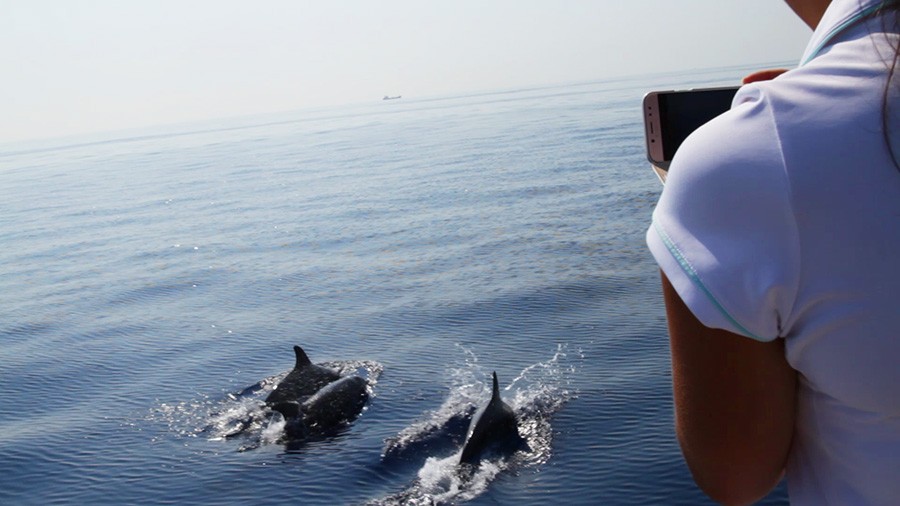
Marine biologist Patrizia Patti laments how ‘people go with speed boats to Comino carrying beers, drinking, throwing bottles into the sea, playing loud music… it disturbs everything.’ If larger tour companies made a small effort to be more responsible, it could have a large effect, she says. ‘Even a simple announcement on a microphone, reminding people they are in a protected area and to behave in a certain way, advising people to respect nature, would help. It’s only a small reminder but it would help a lot.’ Always looking to lead by example, and to show that small actions can have a great impact, Patti set up EcoMarine Malta. The start up organises responsible boat tours around the island, where the international code of conduct is followed and people can experience the joy of encountering dolphins, turtles, and seabirds in their natural habitat.
FACE TO FACE
Patti says their goal is to establish profound personal connections between people and the sea in the hopes that it will change behaviour. She has been passionate about marine biology since the age of 17, when she first encountered a dolphin. That happened during a school trip to an aquarium. She says ‘it was exciting because it was the first time I saw a dolphin, but it was terrible seeing it trapped in a small tank. It made me so sad.’ The emotional response was strong enough to move Patti to tears. ‘It was at that point I decided I wanted to become a marine biologist. I wanted to help.’
Patti went on to study the ecology of sperm whales in the Ligurian Sea before travelling far and wide, gaining experience working with marine mammals in Canada, the Maldives, and the Red Sea. In 2013, she cofounded Costa Balenae Whale and Nature Watching in Italy, a company, like Eco Marine Malta, which strongly focuses on bringing humans closer to marine wildlife, forming lasting memories that inspire them to consider their environmental impact and educating both children and adults about the natural biodiversity of the Mediterranean Sea.
How can you love something and want to protect it when you’ve never seen it?
Seeing these animals and experiencing their natural environment first hand is vital to establishing an emotional bond. This is what then engages people and inspires them to change their behaviour. ‘How can you love something and want to protect it when you’ve never seen it?’ Patti questions. By opening local and tourists’ eyes to the majesty of indigenous species, EcoMarine Malta create compassion and motivate people to take responsibility for the environment too. They also chip away at the sense of helplessness many feel when it comes to ‘actually making a difference.’ EcoMarine Malta provide education and information for their passengers to follow. Patti, who leads the tours herself, goes into how they can enjoy Malta’s beaches responsibly and sustainably, empowering them to take ownership for their actions and decisions before it’s too late.
MONEY PROBLEMS
Filming the dolphins swimming by the side of the boat
It’s not always been plain sailing for EcoMarine Malta and their boat trips. Patti firmly believes that environmental conservation can be a tool to increase economic growth and employment in Malta. ‘Even if we act like an NGO, we decided to be a private company
because we want to create job places and grow and be able to provide the best service possible,’ Patti says. But not everyone agrees. Patti has received plenty of push back from others in the field as she lobbies for best practices to be enforced around the islands.
Some views are severely narrow and short-sighted, rooted in the belief that any sort of restriction of operations is bad, even if inspired by respect and protection for the natural resources they use. ‘People have to understand that a protected area is to enjoy for a long time. Maybe not now, maybe for one or two years you have to be careful, you can’t do everything you want to do. But after those two years, you can enjoy a new beautiful area, rich in life,’ explains Patti. Setting up EcoMarine Malta as a for-profit enterprise to prove these people wrong, however, has led to another kettle of fish. Because they’re not an NGO, applying for sponsorship and funding is a major challenge. Potential benefactors often dismiss collaboration, telling Patti that the company should be able to support its own endeavours.
This lack of support saw EcoMarine Malta having to rent boats from various charter companies, a massive expense. Externally renting a boat brought with it uncertainty and inflexibility. Last-minute dropouts or weather changes forced them to cancel tours and lose a lot of money. ‘The boat rental still had to paid for,’ she says. But things are looking up. EcoMarine Malta purchased their own boat this summer, and Patti is working hard on getting all the permits in place to have it out on the water as soon as possible. ‘Now we will be able to plan our own routes and diversify the tours we offer. At the moment, we have six tours available to choose from, including a sunset tour when marine life is at its most active,’ she smiles.
GET THEM YOUNG
2018 might be EcoMarine Malta’s first full summer season, but that doesn’t stop Patti from dreaming big about their future. She and her team want to do more outreach and education and are working on offering a series of courses for students aged between 10 and 16 years old. These children will be able to participate in a day of hands-on classroom activities, discovering and learning about sustainability and the ecosystem of the Mediterranean, followed by a boat trip to implement their new knowledge, observing and identifying the variety of wildlife and nature surrounding them and their island. ‘We hope to inspire a whole new generation of marine biologists and environmental scientists,’ Patti says.
With an army of environmentalists in the making, Patti hopes they will take over her role in the future. That would allow her to refocus on a passion she is itching to pick up again: searching for evidence of sperm whales in the Mediterranean surrounding the Maltese Islands. Her eyes light up as she admits to me, ‘I love outreach, but my personal dream is to spot sperm whales in Malta.’ Researchers know that juvenile and female sperm whales in the Atlantic remain in warm waters while the males migrate to the poles to feed, but movements and social dynamics of pods in the Mediterranean are still unclear.
With an army of environmentalists in the making, Patti hopes they will take over her role in the future.
Looking forward, Patti is working hard to establish networks with other entities and NGOs who share the same vision. EcoMarine Malta already collaborates with the likes of Birdlife Malta and has been involved with beach ‘Clean Up’ projects in the past year. Patti asserts that despite everything, ‘the Maltese public and tourists are some of the most enthusiastic and passionate people we’ve worked with so far. It’s great to see people of all ages and backgrounds, coming together to work on a common goal.’
‘Everyone can contribute different things, and together, it adds up to make a big difference.’ Patti is keen to encourage people to help in whatever way they can. To cooperate with others and not feel overwhelmed or alone in their efforts. ‘It’s not possible to do it alone. We need to work together, holistically, caring about the land, sea, and air, to protect the island’s environment.
For more information visit: ecomarinemalta.com.mt
Further reading:
Briguglio, L. (2008). Turismo sostenible en jurisdicciones de islas pequeñas con especial referencia a Malta. ARA: Revista de Investigación En Turismo, 1(1), 29–39. Retrieved from http://revistes.ub.edu/index. php/ara/article/view/18966 Croes, R., Ridderstaat, J., & van Niekerk, M. (2018). Connecting quality of life, tourism specialization, and economic growth in small island destinations: The case of Malta. Tourism Management, 65, 212–223. http://doi.org/10.1016/j. tourman.2017.10.010 Markwick, M. (2018). Valletta ECoC 2018 and cultural tourism development. Journal of Tourism and Cultural Change, 16(3), 286–308. http://doi.org/10.108 0/14766825.2017.1293674
In the challenge of keeping our seas clean, plastics FAIL. And yet, during the last decade, we produced more of it than in the last 100 years combined. Dr Adam Gauciwrites about his team’s efforts to categorise the microplastics from Malta’s beaches and how those efforts will contribute towards the war on plastic.
STEM subjects tend to intimidate, seeming inaccessible to the untrained eye. Dr Vanessa Camilleri, Dr Marie Briguglio, and Prof. Cristiana Sebu speak to Becky Catrin Jones about how they are challenging preconceptions by combining science and art at Science in the City, Malta’s national science festival.
It’s 2018. We live in a world where saliva samples sent out from the comfort of our own homes return to us with a sprawling outline of our ancestry and where some of the biggest social media influencers are robots. Despite this progress, utter the word ‘scientist’ and the outdated image of men in white lab coats still abound.
When advances in STEM (Science, Technology, Engineering, Mathematics) direct almost every aspect of life, why is it that so many still switch off the minute we mention science?
Researchers haven’t always had the best PR. In films and TV, science is often portrayed as a foreign language, gibberish to most. Real life is not always that much better, with some researchers needing to carry a jargon-busting dictionary around to translate what they study. To improve its reputation, we need a more creative approach that can break these stereotypes and bring science to the masses in a way that doesn’t send people running for the hills.
Science in the City (SitC), Malta’s science and arts festival, is the perfect opportunity for researchers at the University of Malta (UM) to bring their research to citizens in a way that doesn’t need subtitles.
Prof. Cristiana Sebu
Professor Cristiana Sebu (Department of Mathematics, UM) joined UM only three years ago, but has already made a firm mark. With a background in Applied Mathematics, she moved to the university as an Associate Professor, setting up a new course stream for undergraduate students in Biomathematics. Sebu’s interests lie in the practical applications of mathematics, particularly in biology, and in exploring how mathematics underpins essentially everything in life. ‘The links between mathematics and biology are strong,’ Sebu asserts. ‘We need to be able to make predictions and apply mathematical modelling to understand complex and intertwined biological systems such as signalling pathways in the body or ecosystems in the environment.’
That said, Sebu is still very aware that her love for mathematics is not often shared by the wider world. The word ‘mathematics’, however applied it might be, still strikes fear into the hearts of many. In an effort to counter this reaction and replace it with a more positive one, Sebu is joining the myriad of researchers at SitC and adding music to the mix.
‘Maths provides the building blocks and the structure of music,’ says Sebu. ‘Debussy, Mozart, Beethoven, and so many more used a mathematical pattern known as the Fibonacci Series in their scores.’ The Fibonacci sequence is an infinite pattern of numbers where the next number is the sum of the two previous ones, going from 1, to 1, 2, 3, 5, 8, where (1+1) = 2, (1+2) = 3, and so on. This sequence is closely related to what’s known as the Golden Ratio, an infinite number which can be found in so many examples throughout nature, from the composition of bee colonies to the shape of seashells and the patterns in sunflower seeds.
Debussy, Mozart, Beethoven, and so many more used a mathematical pattern known as the Fibonacci Series in their scores.
To highlight this elegance, Sebu has teamed up with jazz composer Diccon Cooper. The performance, entitled ‘Jazzing the Golden Ratio’, will feature presentations of the Golden Ratio in art, the environment, and the human body, accompanied by Fibonacci-inspired jazz music specially commissioned for the festival. Sebu herself will also be there, sharing her thoughts about the significance of this pattern in the world around us. ‘People see arts and science at odds, but the two are very much embedded in each other,’ Sebu states. ‘Hopefully we’ll be able to demonstrate the beauty of mathematics at Science in the City this year.’
Dr Vanessa Camilleri
The significance of this connection between arts and science is a notion shared by Dr Vanessa Camilleri (Faculty of ICT, UM). After working on a project combining Artificial Intelligence (AI) with behavioural studies at Coventry University, Camilleri found a niche research environment using immersive technology and design to influence our decisions and behaviours. Returning to the UM, she worked on a Virtual Reality (VR) headset allowing teachers to experience what it might be like for a child with autism in a classroom.
‘Unless you experience something, it’s very difficult to reach a deep level of empathy,’ Camilleri said of the idea behind the project. ‘We wanted to give [teachers] the opportunity to build new memories through VR, and help them understand the needs of the child in greater detail.’
For SitC this year, Camilleri is taking a different approach. The VR headsets are having the night off, and attendees will need nothing but their smartphones to see science brought to life in artistic form. Using Alternative Reality (AR) methods, she’s collaborating with artists Matthew Attard and Matthew Galea to bring a fourth Triton to the fountain for one night only through a project funded by Valletta 2018. By downloading the smartphone app, attendees will see the new fountain brought to life through their phones. In the build-up to the festival, the artists are using eye-motion tracking and heat mapping sensors on volunteers to see which bits of the current statue draw their attention. This is then translated into the final depiction, making the fourth Triton as eye-catching as the current three.
Prof. Cristiana Sebu
Lecturer Dr Marie Briguglio (Faculty of Economics, Management & Accountancy, UM) is also hoping to use art to bring her subject to life, albeit in a more sober manner. As a behavioural economist, Briguglio’s focus is on a population’s impact on environment and how we can police this. In particular, at SitC, she wishes to convey the ‘Tragedy of the Commons’—the notion that free or common assets such as public space or air are likely to be exploited by the masses due to sense of entitlement combined with lack of responsibility.
To do this, Briguglio recruited the expertise of Steve Bonello, a cartoonist with a political bent. ‘Working out how best to design environmental regulation underpins much of the research I am involved in. But it’s also very evident in many of the cartoons Steve draws,’ says Briguglio. ‘I soon realized that there was enough material to write a book.’ And so they did, combining the work of faculty with cartoons to produce the comic The Art of Polluting.
Home truths about how we personally damage the world we live in might not make for easy reading, but Briguglio hopes the fusion between arts and science will make this message easier to swallow. ‘It is intended to bring to light research on environmental pressures, status, and responses in a manner that is accessible and also fun.’ The book itself will be displayed as part of a larger instalment titled No Man’s Land, which will include a live action play, more detailed research, and even a free tree-planting stall.
Putting research on the main stage is no new concept to any of these three, and this year’s SitC is certainly not their first venture into science communication. The projects they’ve put forward have all stemmed from previous public engagement ideas. Camilleri worked with the same artists on an AR feature about Greek Mythology, and she regularly translates her research for mass media. A science communication event, Go For Research, which was spearheaded by the Faculty of Science and Directorate of Curriculum Management and aimed at the Junior Science Olympiads was where Sebu’s idea for highlighting the beauty of mathematics was born.
The passion for their subjects is infectious in all three researchers. Each one listed the prospect of inspiring their audience as their top goal for the festival. Shaking up science communication by presenting it in a way we wouldn’t expect, through musical maths, theatrical economics, and artistic AI, provides an opportunity for researchers and citizens alike to see science through a new lens. One where progress seems brighter and kinder.
Sharks are a vital part of marine ecology, keeping everything beneath them in the food chain in check. But they’re being caught and consumed at an alarming rate, and people aren’t even realising it. Randel Kreitsberg writes about Sharklab Malta founder Greg Nowell’s work in raising awareness and preserving these fantastic creatures.
I’ll pick you up at 2.45,’ Greg says casually. ‘AM?’ ‘Yes,’ he smiles.
There is a one hour gap, between three and four in the morning, before the Pixkerija (fish market) in Marsa opens to the public. This is the time when fishermen arrive with their catch, but their clients, chefs and managers of Maltese restaurants, have yet to appear.
It is also when Greg Nowell, founder of the Sharklab Malta elasmobranch conservation group, and a small crowd of volunteers inspect the shelves and boxes of fresh catch. They’re looking for two local catshark species—nursehounds and lesser spotted catsharks—so they can cut them open and save the viable eggs still inside the females in the hopes of releasing them back into the wild.
AN ENGLISHMAN’S LIVING ROOM
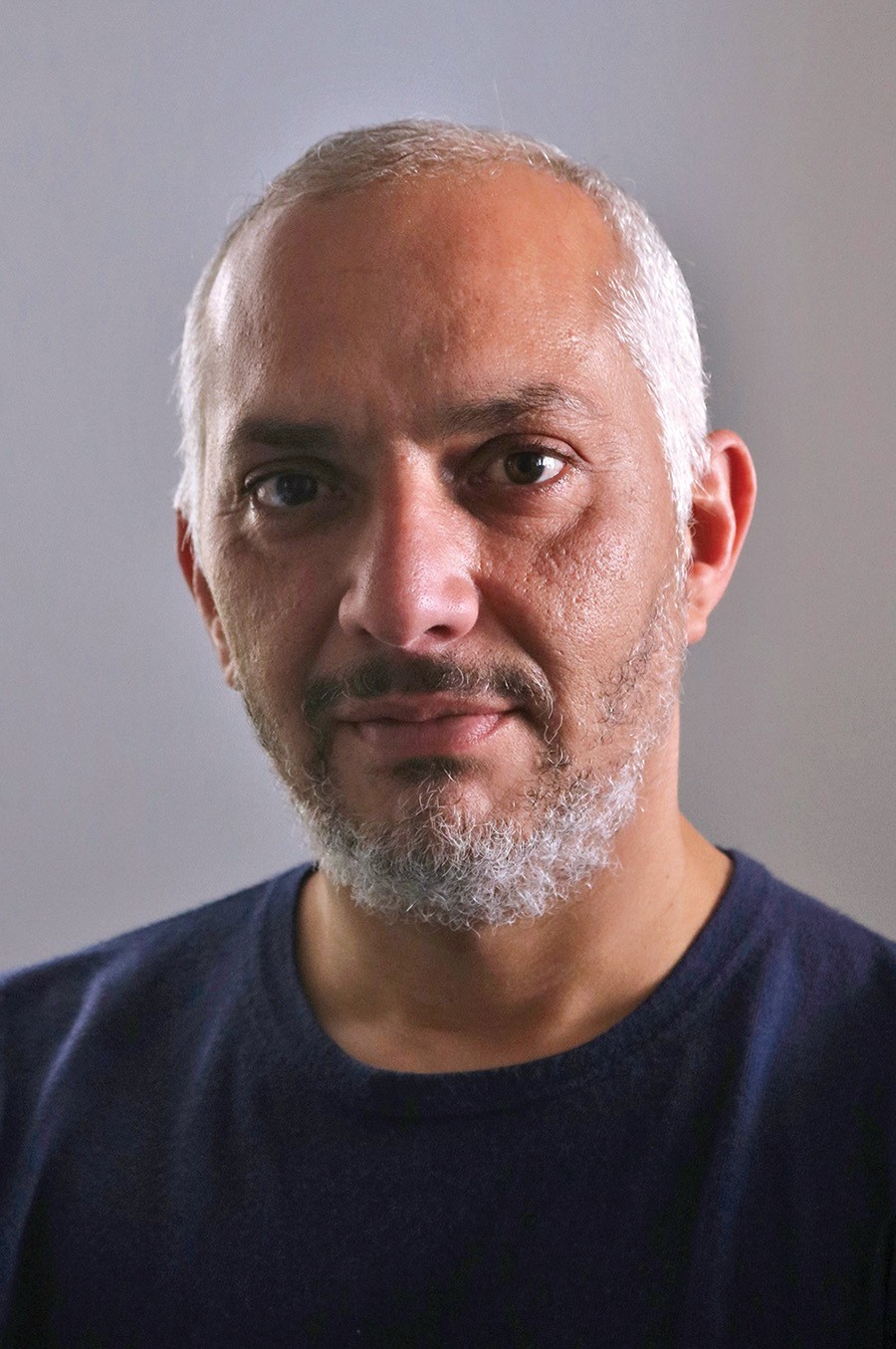
Greg Nowell is a diver whose ‘regular’ job involves electronics quality auditing and building renovation works. In 2011, while at a local fish market, Greg noticed something unusual. One of the catsharks on sale had an egg protruding from it. ‘I took it out, and it looked intact. I could see there was something inside,’ he says. He decided to put the egg in an aquarium to see what would happen, and while the shark pup inside developed successfully over the course of a few weeks, it eventually died before the two month mark. Looking back, Nowell can confidently say now that it had everything to do with temperature.
‘Originally, we didn’t know all the parameters we needed to develop the eggs. Temperature was the big eureka moment. Most of the eggs collected during the year’s early months started to develop nicely, but after some time most of them simply stopped – until we installed the cooling system! Now if we have an egg that starts to develop, it has a 95% chance of making back into the sea,’ Nowell says proudly.
It took two years to successfully release the first market-sourced shark pup. Nowell released the baby himself. ‘I don’t know if it was saltwater in my mask or tears—it was beautiful!’ More than 280 shark babies have been released into our seas since then.
MOVING ON
Today, a lot has changed. The Sharklab team and volunteers proactively check all the egglaying shark species in fish markets before they’re sold. The shark pup aquariums have also moved out of Nowell’s living room and into tanks in the Malta National Aquarium, where citizens can learn and foster an appreciation for them.
While the initial plan for our interview was to go to the fish market and save the eggs still alive in the female sharks, a storm put an end to those plans. The fishermen couldn’t go out to sea, so we made our way to the Malta National Aquarium instead.
The aquarium looks different from others I have visited over the years. Yes, there are some tropical species and colourful Japanese Koi Carps, but the majority of species there are local. This includes 20 to 30 cm nursehound pups and their empty egg-cases. It immediately strikes me that the focus of the aquarium is conservation and education, rather than the display of pretty fish.
Sharklab science officer Lydia Koehler praises the national aquarium for their support. She emphasises that with the help of the national aquarium, other countries are following suit and scavenging viable eggs from caught female sharks. Currently, there is a Sharklab in Bosnia Herzegovina, founded with Sharklab Malta, as well as activities in Spain and Greece, which are making strides. ‘In Spain they have a lot of Blackmouth Catsharks,’ Koehler says. ‘They had their first release couple of weeks ago.’
WHAT CAN WE DO?
‘A major part of what Sharklab Malta does is raise awareness and educate people,’ Koehler says. ‘And we have seen a change amongst younger people, appreciating the animals for what they are.’ But there are challenges too. ‘There is a generational gap,’ she notes. ‘Some older people don’t go into the water because there could be sharks in it. They are still very afraid of them.’
At the same time, shark is still a popular menu item with locals and tourists, which is why populations are heavily exploited in Malta. Koehler says that the volume of catches is astounding. ‘The first few times you go to the fish market, you don’t actually realise how many sharks they bring back. That was one thing that really shocked me. Especially for the small spotted catsharks. They come in boxes of 40 to 60 individual sharks. Once we saw them bring in 40 boxes in one day.’
Koehler says that most people don’t even know they are consuming shark. ‘Traditional Maltese fish soup, aljotta, often has several different species of shark in it,’ she says. ‘The issue is people don’t call them sharks—they call it fish soup. If you ask people whether or not they eat shark, their reply is: no, we don’t. But if you ask: do you eat mazzola? The reply is yes. They don’t know sharks are used in it,’ Koehler says, joking then that we should give up mazzola for good.
But there is more to Sharklab than the sharks themselves, Nowell notes. Towards the end of our trip to the aquarium, he highlights the need for better ecosystem management. ‘The animals, as fascinating as they are, live in an environment,’ he says. That itself deserves attention.
‘Plastic is a major issue for all marine life, and if you start affecting any part of it, you’re affecting sharks,’ Nowell says. ‘We also need to be knowledgeable about the species we’re consuming. Overexploitation of fish species because we like to eat them has a direct impact on sharks, because they can get caught accidentally as bycatch.’ Being apex predators, sharks have a critical role in maintaining the species below them in the food chain. They remove the weak and sick individuals, all while keeping competitors balanced to ensure species diversity. Sharks are essential for ocean health, and they have to be protected.
There is much to be done. And there are lots of opportunities to get started, as Nowell and his volunteers have clearly shown by empowering themselves and taking action. But as with every environmental issue, larger numbers make the loudest noise. And so it always boils down to a very simple question: Do we care enough to add our voices to the call?
A scientist and a linguist board a helicopter, and the scientist says to the linguist, ‘What is the cornerstone of civilisation, science or language?’ It might sound like the opening line of a joke, but it’s actually from the opening sequence of the film Arrival (2016). In the film, aliens have landed on our doorstep, and our scientist and linguist have been chosen as suitable emissaries to establish contact. The scientist, perhaps wishing to size up his new colleague, then poses the question. Whose field has been more important to the advancement of the human race? Science or language?
In reality, they are both wrong (or both half-right). It is true that language was necessary for us to organise as a species, forming complex networks of cooperation over vast distances and time. Without specialising our efforts and collaborating, we could not have built our great structures, supported large communities, or migrated over all continents. Yet, without science, without improving our understanding of the natural world, we would still be at its mercy.
Science is the tool we use to change circumstance. When populations are dying from an infectious disease, we create a vaccine. When we’re unable to grow enough food to support ourselves, we develop a better strain of crop. When we struggle to transport materials over great distances, we create machines that will do it for us. Science is our secret weapon, transforming problems into possibilities. However, science alone means little. If innovation dies with its creator, who does it help? Science must be communicated to others before it can make a difference in any meaningful way.
It would be incomplete to bestow language or science with the title of ‘the cornerstone of civilisation.’ It was science communication that really drove our development. And I don’t just mean this in the external sense. After all, is the transfer of genetic information from one generation to the next not science communication? What are we but a biological game of Chinese Whispers, the message mutating through each host but somehow continuing to make sense over millions of years?
The human race not only benefits greatly from science communication; we are the product of it. It is embedded into our biological and cultural history. Proof that it is not just knowledge but the sharing of knowledge that is the real root of power.






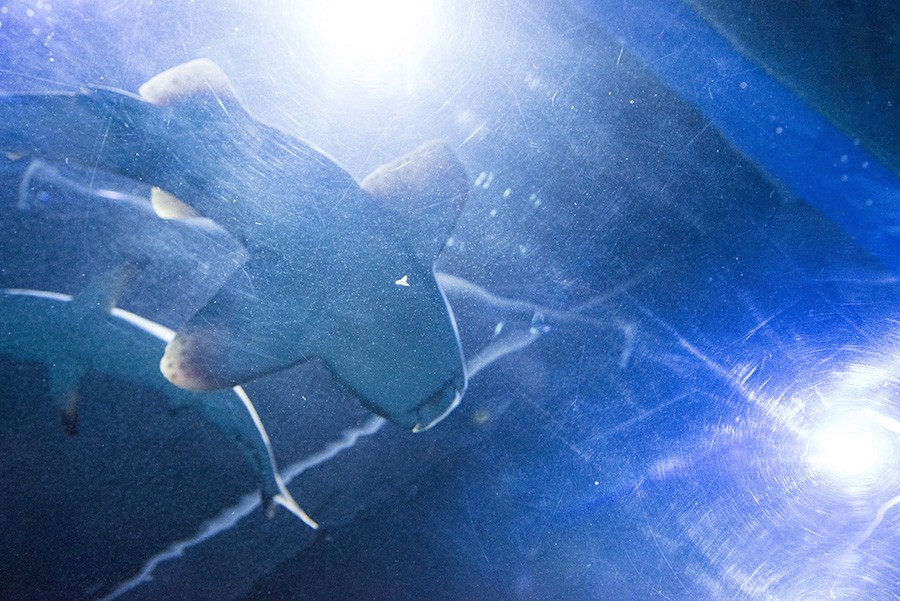 Greg Nowell is a diver whose ‘regular’ job involves electronics quality auditing and building renovation works. In 2011, while at a local fish market, Greg noticed something unusual. One of the catsharks on sale had an egg protruding from it. ‘I took it out, and it looked intact. I could see there was something inside,’ he says. He decided to put the egg in an aquarium to see what would happen, and while the shark pup inside developed successfully over the course of a few weeks, it eventually died before the two month mark. Looking back, Nowell can confidently say now that it had everything to do with temperature.
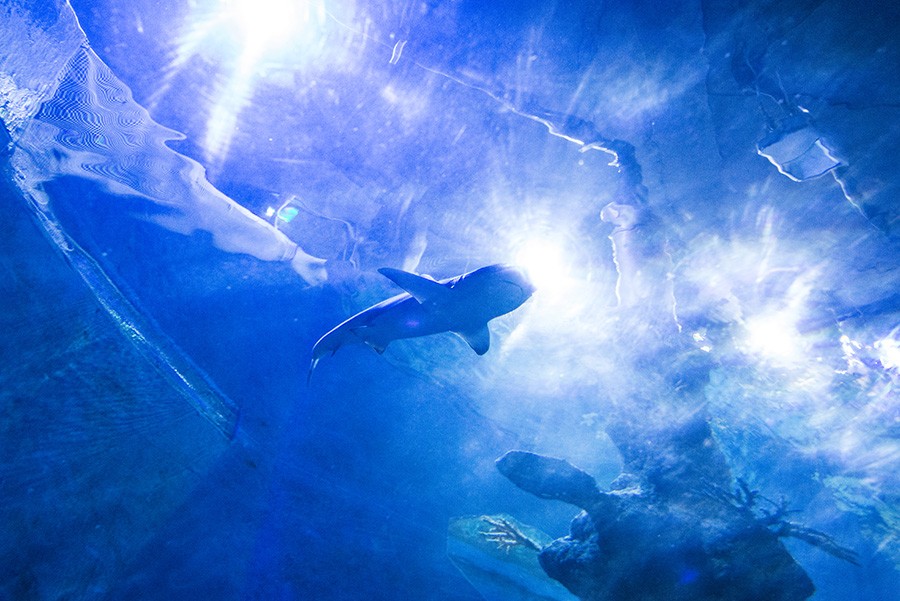 While the initial plan for our interview was to go to the fish market and save the eggs still alive in the female sharks, a storm put an end to those plans. The fishermen couldn’t go out to sea, so we made our way to the Malta National Aquarium instead.
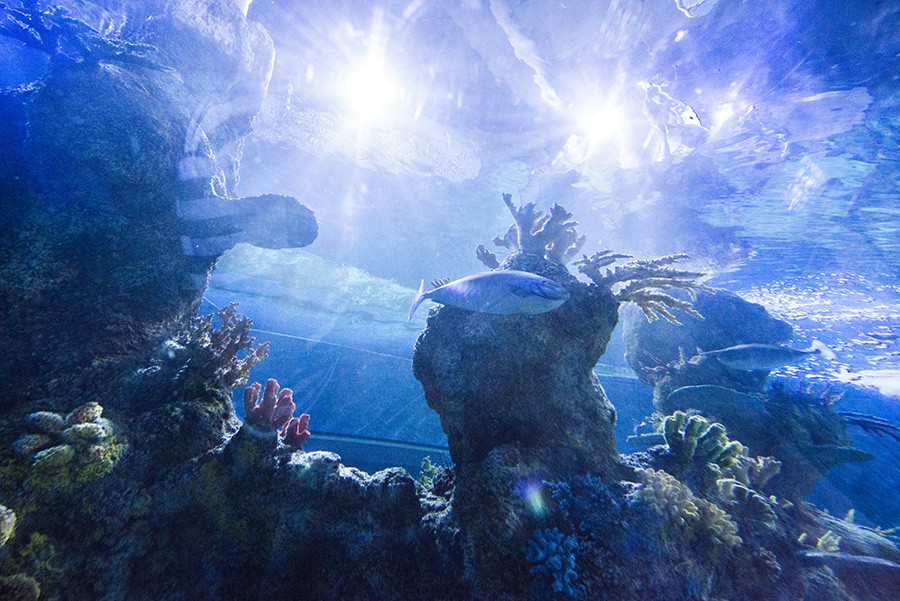 But there is more to Sharklab than the sharks themselves, Nowell notes. Towards the end of our trip to the aquarium, he highlights the need for better ecosystem management. ‘The animals, as fascinating as they are, live in an environment,’ he says. That itself deserves attention.