Written in blood

Maltese researchers are leading the way in developing new diagnostic tools for cancer. Dawn Gillies finds out more from Prof. Godfrey Grech and Dr Shawn Baldacchino.

Breast cancer survival rates have been improving steadily in recent years. In Malta, 86.9% of patients currently survive, up 7% over the last decade. Thanks to new targeted therapies, the outlook is increasingly bright. But precision therapies need precision testing.  

Breast cancer diagnosis has reached new heights and with current tests using tissue biopsies, pathologists can classify patients for specific treatment. Precision medicine goes a step further. It provides more information, predicting the aggressiveness of the cancer and measuring the number of cells from the tumour that spread into the bloodstream. 

Dr Shawn Baldacchino

This does not mean that all requirements in precision therapy have been met. 

At the time of writing, there is no simple method to test patients’ ongoing benefit from treatment or to measure different tumour areas from one sample. For this to be possible, we need super-sensitive tests. This is where Prof. Godfrey Grech and Dr Shawn Baldacchino at the University of Malta come in.

Detecting the undetectable  

During his PhD, Baldacchino studied a new class of breast cancer representing most cases of the triple negative type, which affects 12% of breast cancer patients in Malta. 

In triple negative breast cancers, tests for estrogen receptors, progesterone receptors, and excess HER2 protein all result in negatives and are associated with aggressive tumours.  

To detect this new class of breast cancer, Grech’s team have created a new test that uses molecular substances we naturally produce in our body—biomarkers. By pinpointing the right combination of certain biomarkers, they can test for this new class within the triple negative breast cancer cases.

They initially used the test to look at biopsies from past patients. These exercises showed that they could accurately detect the cases—even in samples that were over a decade old! In fact, the test was so successful that the team is now working with biological testing industry giant Luminex to use it in hospitals worldwide. With a patent filed, research labs will get their hands on it later this year with the hope that by 2021 it will be used to directly help patients in hospitals. 

However, there is more work ahead. Encouraged by the results so far, the team wants to take the test and other current biomarker tests a step further. They want to use a simple blood sample which is less invasive, allowing patients to be monitored during therapy.

Pushing boundaries

With the method Grech and his team have optimised, obtaining information on new classes of patients that predict therapy use, detecting different tumour areas in one sample, and the use of blood to monitor the benefits of therapy have become a

Prof. Godfrey Grech, Dr Shawn Baldacchino and the team
Photo by James Moffett

possible reality. With technologies from Luminex and Thermo Fisher, they can now read over 40 biomarkers in one test simultaneously. But with blood they need a new angle. And that is happening through another test using particles that originate from cells called exosomes.

Exosomes are tiny messenger bubbles which cells release into the blood . ‘We believe that when there is a tumour in the patient, there will be a signature in these exosomes circulating in the blood,’ says Baldacchino. 

Finding these exosomes could mean detecting cancer at an earlier stage than is currently possible. The team believes they would be able to detect the exosomes that point to cancer long before a tumour shows up in scans and other regular tests—and so, they would be able to nip the cancer in the bud. But to do this, they need to be able to decode the messages the exosomes are carrying.

Positives for patients

It’s not only in the realm of breast cancer diagnosis and classification that the team can help patients—they might also be able to improve treatment. ‘Most targeted therapies currently try to inhibit specific receptors and proteins to stop the uncontrolled growth of cancer cells,’ Grech says. But through their research, the team has found that targeting the low activity of specific complexes of proteins in tumour cells is key. Their research models show that increasing the activity of these protein complexes is possible using specific drugs.  

This is true for triple negative breast cancer, where the amount of PP2A protein is extremely low. The PP2A protein enables the body to fight the cancer, so increasing its activity would create a chain reaction in the body which could limit the growth and spread of that category of cancer cells.

This approach to treatment has applications beyond triple negative breast cancer. Grech is hopeful that PP2A production could be amped up for different types of cancer too, and lead to positive results.

Managing the unmanageable

When organising a project like this, it’s expected that things won’t go to plan. One of the biggest challenges for Grech’s team has been establishing collaborations with other groups across the globe. They need these connections to provide the samples required to test their systems. With other groups working on similar projects, time is a limited resource. Thankfully, the team found collaborators in Leeds (UK), and Barcelona (Spain), allowing the group access to the samples they need. 

What is certain is that support for this work has come in many shapes and forms. The project received funding both from public donations and the Malta Council for Science and Technology. Baldacchino also found an ally in the charity foundation Alive with the help of the Research Trust of the University of Malta (RIDT). He is the first recipient of funding from them, and their first graduate.

Predicting the future

Thanks to projects like these, cancer research has a bright future in Malta. The team has their product launch to look forward to later this year, which will see a drastic reduction to the time and effort it takes researchers and doctors to determine the type of breast tumour.

But a lot of challenges lie ahead. The biggest challenge will come in the move to early stage cancers. These cancers have low levels of substances to detect, which means that any test they develop will have to be extremely sensitive in order to be effective. Successfully identifying these cancers would signal a massive breakthrough for the global medical community—and, more importantly, for patients. Early detection through basic blood tests would open the door to early stage treatment and a higher rate of survival. Nothing could matter more. 

Project ‘Accurate Cancer Screening Tests‘ financed by the Malta Council for Science & Technology through FUSION: The R&I Technology Development Programme 2016.

Taking solar to sea

In a world first, a small team of engineers at the University of Malta is attempting to prove that harnessing solar power in the open sea is theoretically possible and cost-effective. Laura Bonnici speaks to Prof. Luciano Mulѐ Stagno to learn more about the ground-breaking Solaqua 2.1 project.

Renewable energy is in the spotlight. In Malta—an island that is said to enjoy an average of 300 days of sunshine per year—solar power has become mainstream, enabling the country to reach its goal of using 10% renewable energy by 2020. 

But any advantage Malta has in terms of abundant sunshine, it loses through its lack of another vital resource: space. Measuring just 316 km², Malta’s limited surface area means that, beyond the existing photovoltaic (PV) panels installed on rooftops or disused quarries, any land left for larger PV installations is rare and expensive. 

Prof. Luciano Mulѐ Stagno

Prof. Luciano Mulѐ Stagno at the University of Malta believes the answer to this problem lies not on land, but at sea. Malta being surrounded by water, he has proposed that installing solar panels in open water, in offshore floating PV farms, could be as cost-effective and reliable as those on land—an idea that has never progressed beyond the theoretical stage anywhere in the world. 

‘There are many PV projects happening on fresh water everywhere, from China and the UK to France and USA. But none of them are working on open sea,’ explains Mulѐ Stagno. ‘Their PV farms are installed in more sheltered, land-locked waters such as irrigation ponds or lakes, believing that PV farms cannot survive sea conditions. The Solaqua project aims to prove that they can survive, and do so at a comparable cost to land-based PV farms.’ 

When funding was secured from MCST in 2012, the previous Solaqua 1.0 project set about achieving these ambitious aims. Testing various prototypes out at sea, it confirmed that large, floating platforms were viable, cheap to construct, and could produce more power than similar systems on land.

The sea proved beneficial for many reasons. ‘The offshore panels produced around 3% more energy than similar land-based modules simply by being at sea, possibly due to the cooler temperatures at sea and a less dusty environment.’

The success of the first project inspired a second. With this one, the modular raft was designed and tested. ‘Solaqua 2.0 was financed by Takeoff [The University of Malta’s business incubator] in July 2017, with a preliminary design for the platform almost completed. Now discussions are underway about possible patents for the design,’ Mulѐ Stagno elaborates. ‘The ultimate aim is to launch a large farm in Maltese territorial water which, if it meets

Solaqua prototype 4 – testing concept of low cost structure

the cost and power output targets, will be followed by other systems worldwide.’

The Professor and his team (marine structural engineer Dr Federica Strati, systems engineer Ing. Ryan Bugeja, and engineer Martin Grech) are now starting the next phase of the Solaqua project. Before the team builds and launches a full-scale system, they have to conduct a series of rigorous wave tank tests. Using a scale model while mimicking the worst possible sea conditions that the system may encounter, the team will be able to refine the design and optimise power output by testing the effect of water motion, cooling, or even different types of panels. 

‘Through Solaqua 2.1, we hope to reassure investors that the system is viable. Once completed, we will be ready to launch a full-scale system that could be used not only by islands such as Malta, but also in coastal cities around the world which have insufficient land available for PV systems.’  

Investors are being invited to join this project to push for global commercialisation. To reach this stage, several local entities supported the project. The Regulator for Energy and Water Services, with the help of the RIDT (the University of Malta’s Research Trust), invested €100,000 to cover the cost of constructing the scale model, as well as testing, equipment, transport, and engineers. And now that the project is commanding international interest, potential investors are being sought for the half a million euros needed to achieve a full-scale floating solar farm in Maltese waters.

‘This is a homegrown project, in which Malta could be an example to the world,’ explains Mulѐ Stagno. ‘We have already placed Malta at the cutting edge of this research area by being the first to test small systems in the open sea. Now we need to find an investor willing to take the plunge and help us create the world’s first full-scale floating solar farm. With Solaqua, Malta could be at the forefront of a ground-breaking new global industry—one which has the potential to change the way solar power is collected and used the world over.’ 

Bursting the RRI bubble

Relationships are based on trust, communication, and mutual respect. The same can be said of Responsible Research and Innovation (RRI). Behind all the new ideas, it all boils down to a group of people, hailing from different walks of life, coming together to try and create a better future for everyone.  At the fourth annual NUCLEUS conference, researchers, academics, science communicators, creatives, and business people flocked to the tiny isle of Malta to share their stories and attempts to embed RRI into their institutions and communities. As everyone settled in, dialogue flowed among delegates and the room was abuzz. University of Malta pro-rector Prof. Godfrey Baldacchino opened the conference with a question: How similar are universities and Valletta, the fortified capital that was hosting the conference? Having been constructed following Malta’s infamous Great Siege, the Knights encased Valletta in massive bastions, allowing only four small entry points. ‘Valletta is an island on an island,’ Baldacchino said. ‘Are universities the same? Are we trying to protect our own?’ The question had many heads nodding in response. 

Most people in the room expressed a feeling of obligation to render knowledge more accessible, more relevant, and more digestible to a wider audience. But they encounter a myriad of challenges. Engaging with publics or policy makers isn’t easy. It means addressing different needs in different ways, sometimes even pandering to whims and flights of fancy. Most people noted issues with time, funding, and resources, calling for processes to be formalised. Others pointed to a lack of creative skills and, sometimes, general interest across the board. What also quickly emerged was frustration with the term RRI itself, creating confusion where there needn’t be any. 

With all of these difficulties, however, came solutions. Dr Penny Haworth from the South African Institute for Aquatic Biodiversity, said that in her experience ‘we need to look at what universities are already doing and work smart. Win hearts and minds.’ University of Malta’s Nika Levikov also pointed out that ‘there are a lot of people practicing RRI who are not conscious of it.’ And for those who do not believe it to be a priority, for those who do not want to engage? ‘You have to set them aside and show them it is possible in a way they understand,’ says Zoran Marković from MISANU, Serbia. 

Picking up Baldacchino’s thread on bringing down the walls of universities and research institutions, Dr Annette Klinkert from Rhine-Waal University of Applied Sciences in Germany summed up her main takeaway from all the discussions. ‘What we can learn here is that it’s time to burst the bubble in which we work. Especially this field of RRI. It is time to leave our cosy little community with our results.’ The results are the various projects that NUCLEUS has been championing over the past years, bringing research to its audiences. ‘All the projects are useless if they can’t merge and get out [into society and communities],’ she emphasises. ‘If they don’t merge, they’re pointless. It is time to burst the bubble.’  

Author: Cassi Camilleri

Pushing for Malta’s industrial renaissance

With all the cranes strewn across the Maltese landscape, it appears that the construction industry is one of Malta’s primary economic drivers. But there are other, less polluting ways of generating income. Dr Ing. Marc Anthony Azzopardi discusses MEMENTO, the high-performance electronics project that could pave the way for a much-needed cultural shift in manufacturing. 

Continue reading

The sky’s role in archaeology

In 1994, Czech poet-president Vaclav Havel wrote an article discussing the role of science in helping people understand the world around them. He also noted that in this advance of knowledge, however, something was left behind. ‘We may know immeasurably more about the universe than our ancestors did, and yet it increasingly seems they knew something more essential about it than we do, something that escapes us.’ Almost all traditional cultures looked to the sky for guidance. Cosmology is what gave our ancestors their fundamental sense of where they came from, who they were, and what their role in life was. While arguably incorrect, these ideas created codes of behaviour and bestowed a sense of identity. The cosmology of European prehistoric societies has been studied independently by archaeologists and archaeoastronomers (an interdisciplinary field between archaeology and astronomy). Despite their shared goal of shedding light on our past lives, thoughts, and ideas, the two fields have often failed to merge, mainly due to different approaches. A clear local case is the question of the Maltese megalithic temples.

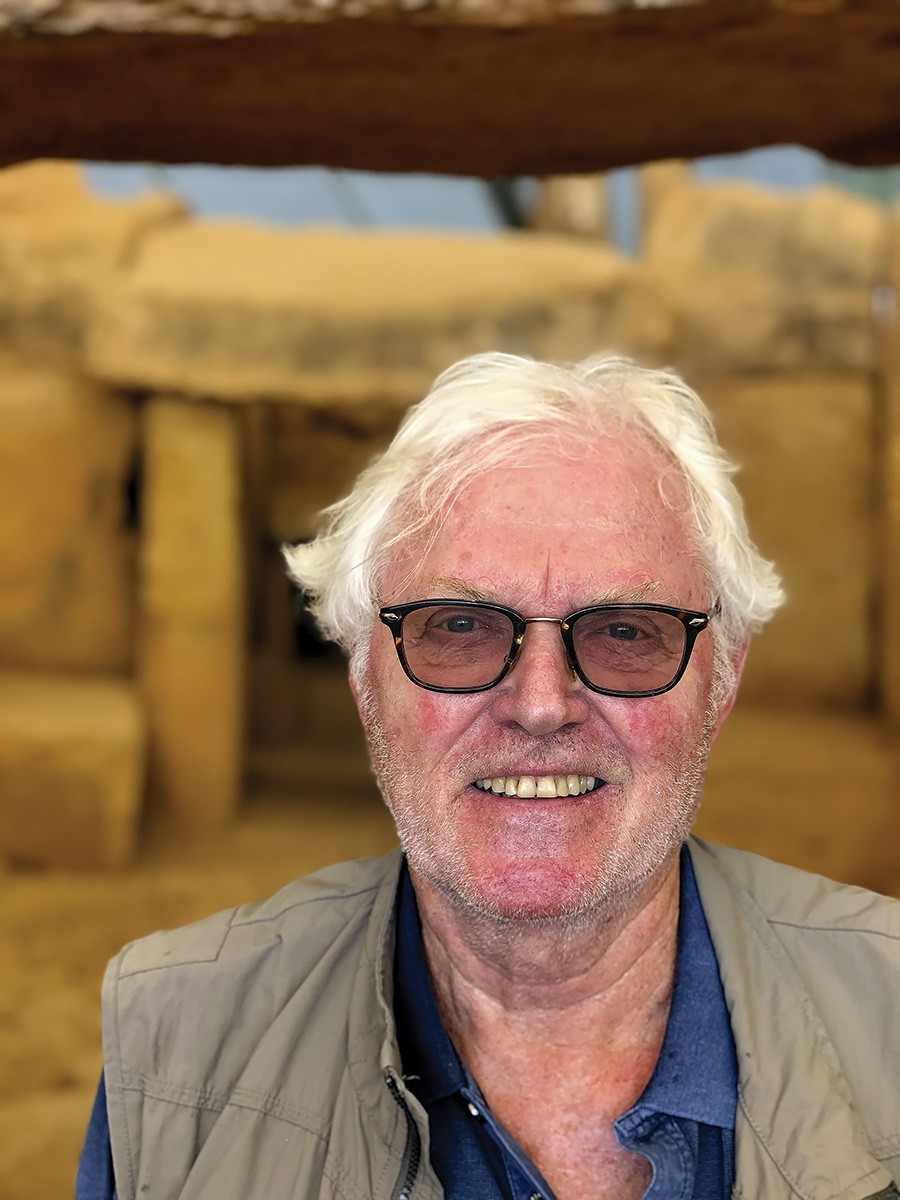
Tore Lomsdalen

The Mnajdra South Temple on Malta predates both Stonehenge and the Egyptian pyramids. It is the oldest known site in the world that qualifies as a Neolithic device constructed to cover the path of the rising of the sun throughout a whole year. What is unfortunate is that, so far, archaeologists and archaeoastronomers have studied the site largely in isolation.

Whether the temples were built to visualise the effects of the rising sun as seen today is an open question. But with such specific and repetitive patterning, one cannot deny that the sky was an important element in the builders’ understanding of the world—their cosmology.

With some exceptions, archaeologists have largely ignored, excluded, or underrated the importance of the sky in the cultural interpretation of the material record. When studying ancient communities, chronological dating and economic concerns are often given precedence over the immaterial.

But the fault does not lie solely with disinterested archaeologists. Archaeoastronomy has often been too concerned with collecting astronomical and orientation data, neglecting the wider archaeological record, and ignoring the human element in cosmology.

We need to find a common ground. Both sides need to open themselves up to different professional perspectives and convictions and embrace alternative interpretations and possibilities. Bridging the gap between archaeology and archaeoastronomy will allow us to paint a detailed picture of past societies. And maybe it will shed light on that lost knowledge about the universe and our place in it.


Lomsdalen and Prof. Nicholas Vella are organising an afternoon workshop on Skyscape Archaeology as well as an open symposium on Cosmology in Archaeology. For more information, visit: um.edu.mt/arts/ classics-archaeo/newsandevents

  Author: Tore Lomsdalen

Kidney Stakes

A small team of scientists at the University of Malta is trying to determine what causes children to be born with serious kidney defects. Laura Bonnici speaks to Prof. Alex Felice, Dr Valerie Said Conti, Esther Zammit, and Alan Curry to find out more about this ground-breaking programme.

‘I’d sell a kidney for that!’ Most of us have been guilty of using this expression when faced with something desirable. But do we fully appreciate the real value of what we are offering before the words escape our lips?

Kidneys are our body’s official waste disposal system, filtering out toxic build-up from our blood, which can poison us if left unchecked. With kidney failure posing such a threat, renal research has become an ongoing global goal.

A team of scientists from the University of Malta is currently honing in on what may cause children to be born with ‘CAKUT’, or Congenital Anomalies of the Kidney and Urinary Tract.

With between three and six cases recorded per 1000 live births worldwide, CAKUT is the most common cause of end-stage kidney disease in children. Since early identification of these anomalies may reduce kidney damage later in life, the LifeCycle Malta Foundation has raised funds for a renal research programme which targets CAKUT and its causes.

‘We know that a number of children are born with a kidney defect, but in many cases, we are not sure why,’ explains the programme’s principal investigator, Dr Valerie Said Conti . ‘There are many factors that can affect the development of the kidney, both genetic and environmental. We are trying to understand those influences so that we can carry out preventative strategies, diagnose issues earlier, and target personal therapeutic interventions.’

A number of children are born with a kidney defect, but in many cases, we are not sure why.

For this team of renal researchers, the first three years of initial research has been the first step in a far longer journey. ‘We hope to contribute our data to the international literature pool,’ continues Prof. Alex Felice, consultant and supervisor on the programme. ‘We will need a massive amount of data to create a robust theory with which to progress. We hope that our findings regarding CAKUT will be useful when we come to the stage of creating new interventions.’

It’s an end-game that has kept the small team focused as they approach the programme’s expected completion date this year. Having had to start literally from scratch, they collected biological samples from patients with a range of kidney diseases, including CAKUT, nephrotic syndrome, and Bartter syndrome. This allowed them to build the renal disease collection at the Malta BioBank, a vital storehouse for scientists.

‘For research projects like this, you see what material is available and you work with it,’ explains Said Conti . ‘A big part of it so far has been sourcing the samples from families attending the clinic with their formal consent for the material to be used in this project. We are hugely grateful to those who accepted to take part in the research. Without them, it would have been impossible.’

This project has set the groundwork for renal research in Malta to continue. ‘Without funding, projects such as this one simply could not exist,’ Said Conti remarks of the €100,000 donation LifeCycle Malta Foundation made to RIDT. ‘It enabled us to employ a full-ti me Research Support Officer, involve other laboratories, attend international meetings to share insights, perform ultrasound tests, and invest in ‘Next Generation DNA Sequencing’, genetic technology that maps out genes, revolutionising our world.’ But there is much more to come.

The Founder of the LifeCycle Malta Foundation, Personal Fitness Consultant Alan Curry, agrees. ‘Renal failure is an ever-increasing problem with figures going up every year, and LifeCycle is the only NGO that is actively supporting renal patients and their families in Malta. Our annual LifeCycle Challenge, which this year is routed from Dubai to Oman, aims to raise €150,000. It’s a huge responsibility, but we are sure that, by funding research programmes such as this, we will significantly improve the lives of kidney patients.’

  Author: Laura Bonnici

Accidental science

Do scientists need to have a clear end-goal before they dive down the research rabbit hole? Sara Cameron speaks to Dr André Xuereb about the winding journey that led to the unintended discovery of a new way to detect earthquakes.

Some of science’s greatest accomplishments were achieved when no one was looking with a purpose. When studying a petri dish of bacterial cultures, Alexander Fleming had no intention of discovering penicillin, and yet he changed the course of human history. Henri Becquerel was trying to make the most of dwindling sunlight to expose photographic plates using uranium when he stumbled upon radioactivity. A chance encounter between a chocolate bar in Percy Spencer’s pocket and the radar machine that melted it sparked the invention of the household microwave.

One would think that with this track record of coincidental breakthroughs, the field of science and research would continue to flourish by embracing curiosity and experimentation. But as interest piques and funding avenues pop up for researchers, there has been a shift in mindset.

Dr André Xuereb

Money changes things. And while it does allow people to work hard and answer more questions, it has also fostered expectations from stakeholders. Investors want fast results that will improve their business or product. We, the end-user, want to see our lives changed, one discovery at a ti me. We’re no longer satisfied with research for research’s sake. At least for the most part.

Quantum physicist Dr André Xuereb (Faculty of Science, University of Malta) is all too aware of this issue and its effects on scientific progress. Xuereb explains scientists’ frustration: ‘A lot of funding, in Malta and elsewhere, is dedicated to bringing mature ideas to the market, but that is the ti p of the iceberg. There is an entire innovation lifecycle that must be funded and sustained for good ideas to develop and eventually become technologies. The starting point is often an outlandish idea, and eventually, sometimes by accident, great new technologies are born,’ he says.

  STARTING POINTS

Over the past few years, Xuereb has been exploring new possibilities in quantum mechanics.

The field of quantum mechanics attempts to explain the behaviour of atoms and what makes them. Its mathematical principles show that atoms and other particles can exist in states beyond what can be described by the physics of the ordinary objects that surround us. For example, quantum theorems that show objects existing in two places at once off er a scientific basis for teleportation.

Star Trek fans know exactly what we’re talking about, but for those rolling their eyes, the reality is that many things in our everyday lives wouldn’t exist without at least some understanding of quantum physics. Our computers, phones, GPS navigation, digital cameras, LED TV screens, and lasers are all products of the quantum revolution.

The starting point is often an outlandish idea, and eventually, sometimes by accident,
great new technologies are born

Another technology that has changed the way we live and work is modern telecommunications technology. When you pick up your phone to message a friend overseas, call a loved one, or email a colleague, telecoms networks spanning the earth carry the data across continents and under oceans through thousands of kilometres of optical fibres.

The 96-kilometre submarine telecommunication link between Malta and Sicily was Xuereb’s focus in 2015. He organised a team of European experts to begin investigating the potential for building a quantum link between the two countries.

The Austrian, Italian, and Maltese trio were particularly interested in a strange property called ‘entanglement.’ This is a curious property of quantum objects that can be created in pairs of photons, connecting them together. This entanglement can be distributed by giving one of these photons to a friend and keeping the other for yourself, establishing a quantum link between you and this friend—an invisible quantum ‘wire,’ so to speak.

Through this connection, you and your friend can send data faster than over ordinary connections; by modifying the state of the photon at your end, you can instantly affect the state of your friend’s photon, no matter how far apart you are in the universe. Using quantum links such as these, all manner of feats can be performed, including super-secure communications. ‘We wanted to demonstrate that quantum entanglement can be distributed using a 100km-long, established telecoms link, using what was already available, with no laboratory facilities in sight,’ explains Xuereb. His team also wanted to demonstrate that entanglement using polarisation of light was possible. Previously it was thought impossible in submarine conditions, even though it has some very technologically convenient properties.

Two years and several complex experiments later, Xuereb and his team have indeed proven the possibility of quantum communications over submarine telecommunication networks. And with one question answered, a slew more lifted their heads.

The Italian subteam, led by Davide Calonico (Istituto Nazionale di Ricerca Metrologica, INRIM), now turned their attention to a different set of questions for the Malta-Sicily telecommunication network.

  MORE TO COME…

Atomic clocks keep the world ticking by providing precise timekeeping for GPS navigation, internet synchronisation, banking transactions, and particle science experiments. In all these activities, exact timing is essential.

These extremely accurate clocks use atomic oscillations as a frequency reference, giving them an average error of only one second every 100 million years. Connecting the world’s atomic clocks would create an international common time base, which would allow people to better synchronise their activities, even over vast distances. For example, bank transactions and trading could happen much faster than they do at present.

This can’t be done by bouncing signals off of spaceborne satellites, since tiny changes in the atmosphere or in satellite orbits can ruin the signal. This is where the fibre-optic network comes back into the picture. Researchers have recently been looking at the telecoms network as a way to make this synchronisation possible. Scientists can use an ultra-stable laser to shine a reference beam along these fibres. Monitoring the optical path and the phase of the optical signal of the beam can then allow them to compare and synchronise the clocks at both ends.

Whilst Calonico and his team were testing this idea on the submarine network between Malta and Sicily, a few thousand kilometres away, meteorology expert Dr Giuseppe Marra was monitoring an 80km link in England. On October 2016, everything changed. One night, he noticed some noise in his data. Unable to attribute the noise to misbehaving equipment or a monitoring malfunction, his gut told him to turn to the news from his home country, Italy. There, he saw that the town of Amatrice had been devastated by an earthquake of 5.9 magnitude.

Further testing confirmed that the waveforms Marra saw in the fibre data matched those recorded by the British Geological Survey during the earthquake. His system even recorded quakes as far away as New Zealand, Mexico and Japan. This was huge news.

Diagram illustrating how even the smallest underwater seismic waves can be detected.

In simple terms, the seismic waves from an earthquake tremor cause a series of very slight expansions and contractions in fibre-optic cables, which in turn modify the phase of the cable’s reference beam. These tiny disturbances can be captured by specialised measurement tools at the ends of the cable, capable of detecting changes on the scale of femtoseconds: a millionth of a billionth of a second.

The majority of seismometers are land-based and so small that earthquakes more than a few hundred kilometres from the coast go undetected. Conventional seismometers designed to monitor the seabed are expensive and don’t usually monitor underwater seismic activity in real time. Telecoms networks could offer a solution that would allow us to observe and understand seismic activity in the world’s vast oceans. They would open up a new window through which to observe the processes taking place underneath Earth’s surface, teaching us more about how our planet works. In future, it may even make it possible to detect large earthquakes that cause untold devastation earlier.

The beauty of this discovery is that the infrastructure already exists. No new work is needed. All that is required is to set up lasers at either end of these cables, using up a tiny portion of a cable’s bandwidth without interfering with its use.

  THREADS COMING TOGETHER

Marra got together with Xuereb and Calonico, who were already working on the undersea network between Malta and Sicily, to conduct some initial tests. The underwater trial, published in the world-leading journal Science this year along with the terrestrial results, was able to detect a weak tremor of 3.4 magnitude off Malta’s coast. Its epicentre was 89km from the cable’s nearest point, which reinforced the idea that cables can be used as a global seismic detector. ‘We would be able to monitor in real time tiny vibrations all over the planet. This would turn the existing network into a microphone for the Earth,’ Xuereb explains.

If we don’t fund the initial few steps of the innovation lifecycle,
how will we ever develop new technologies?

The system hasn’t been tested on an ocean cable. An interesting target would be a cable that crosses the mid-Atlantic ridge, where the drifting of Eurasian and African tectonic plates creates an area of high seismic activity. Based on the results so far and on conservative assumptions, trials are being planned for the near future on a larger scale, which will give us a better idea of the possibilities.

  FURTHER DOWN THE RABBIT HOLE…

In many ways, it is understandable that agencies that fund science favour smaller, more goal-driven research programmes. They seek tangible results in a timely manner to reap quick rewards. But as this story goes to show, a change in mentality is needed.

‘If we don’t fund the initial few steps of the innovation lifecycle, how will we ever develop new technologies? This is a problem that affects scientists from many countries and comes from a mismatch in timescales. A year is a long time in politics, but a decade is often a short time in science,’ Xuereb comments.

Innovation has to start from somewhere, and it often starts from ideas which may have no apparent relevance to our everyday lives. We need to support researchers by keeping an open mind to unknown long-term possibilities—or the world might not only miss the next earthquake but also the next life-changing discovery.

Author: Sara Cameron