
PLAS

Think breadth: broadening your knowledge, pursuing your passion and acquiring useful transferable skills.

Think opportunity: studying at your own pace while juggling many commitments. An opportunity to continue your education or improve your career prospects.

Think flexibility: designing your own programme of studies by choosing any and as many short courses as you wish from a wide variety of fields. You can take just one or several classes, but you can also build up a diploma or a degree, with no time limits.

The University of Malta’s Programme in the Liberal Arts and Sciences (PLAS). Think about it. Visit www.um.edu.mt/clas 

Storytelling 2.0 — The art of telling stories in a connected world

JeanPierreMagro

The rapid advancement of technology has transformed us into The Jetsons. But the use of these tools to enhance our storytelling makes us seem more like The Flintstones. Writers, creators, producers and academics are still busy developing ways to create richer, more engaging and more profitable transmedia experiences. Dr Jean Pierre Magro speaks to Think on the fascinating and lucrative world of transmedia narratives. Illustrations by Sonya Hallett

Continue reading

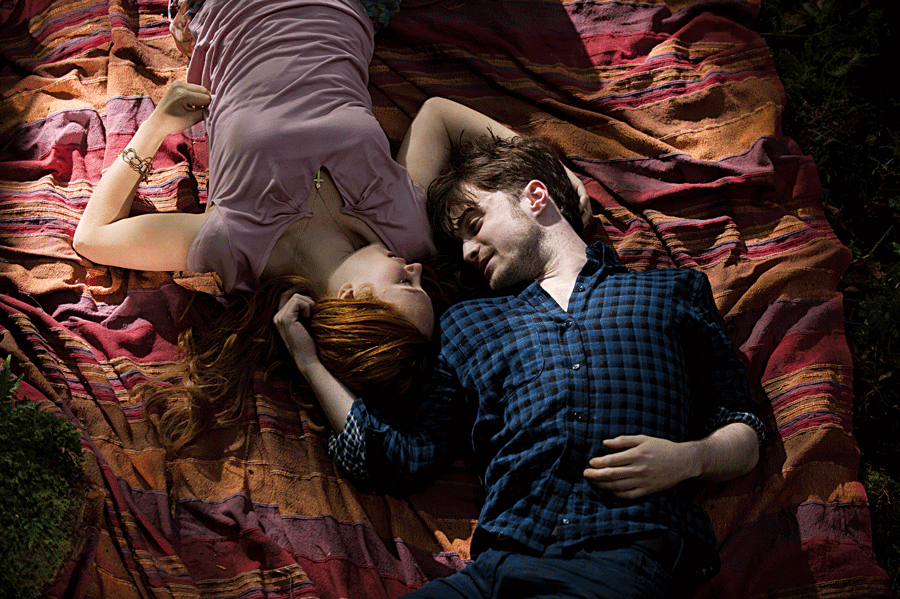
Afflicted — Film Review

Film ReviewNoelKrista

Noel: I was surprised to see that Afflicted was a vampire movie. From the trailer I gathered that it was going to be a contagion film. Vampires and pestilence share a common history but I was thinking 28 Days Later (2002) rather than The Addiction (1995). Unfortunately, despite finding it entertaining, it hardly broke any new ground in terms of vampire lore. Apart from its use of shaky-cam film-making, we’ve seen it all before.

Krista: Speaking of vampire lore—one highlight for me was the ill-fitting conversation referencing ‘traditional’ vampire lore (‘Well you should have the ability to turn into mist.’) which contrasted with that attempted ‘realist’ style. I’m actually impressed that they didn’t fall into the usual US stereotyping and made it happen in some ‘mysterious’ backwoods of ‘Old Europe’, but chose Paris as a hub of civilisation.

N: However the filmmakers still kept the vampire at arms’ length, making the monster foreign. As you pointed out, it’s not Transylvania or the Yorkshire moors; but it’s still an American who got infected by a European.

K: I also liked that despite their attempt to be innovative, they weren’t pretentious and even included traditional jump scares. I liked the first-person perspective (fpp) during the run—kind of game-like.

N: His heightened perception and supra-human powers reminded me of Chronicle (2012). It was fun but I wouldn’t want to watch it again.

K: The film spends a while setting up the friendship, so I’m not sure why it was ended early. It was a brave move and foregrounded isolation but the ending fell flat for me. I was disappointed with the half-hearted fight sequence and the cringe-worthy moralising and sentimentalising. That vigilantism could be an interesting parody and critique of institutionalised ‘justice’, seen in many ‘revenge films’. But here it just brought it back in line with conservative morality.

N: The moralising was a shaky-cam version of Louis in Interview with the Vampire (1995). Even if we had to isolate Derek’s crisis (the main character) and take it for what it was, it’s still not that interesting. It reminded me of a bad Pepsi Max advert, highlighting thrills and shallow been-there-done-that moments. On another note: what do you think about the found footage? Is it overstaying its welcome? I think so. I’m finding it tedious and boring for an entire feature-length film. Get a tripod!

K: I’m surprised that found footage has outlived its ‘novelty’ factor. I was kind of sceptical about that but several films, including V/H/S (2012), have convinced me there’s still life in it. I have three main reasons: (1) its DIY possibilities, which gives a new lease to indie directors without the backing of glossy production; (2) its proximity to some fpp video games—disorientation, chase; (3) it seems to be associated with the horror genre. Other genres borrow it as a device; horror embraces it. I’m not sure why exactly but ‘found text’ is found in horror literature, from Bram Stoker to Mark Z Danielewski, it’s an established device.

N: So, final verdict? I recommend Afflicted if you’re looking for an hour and a half of harmless entertainment. A camp-fire story for the tech-savvy generation.

K: Perhaps more of a ‘teen adult’ horror; it references a horror tradition, but doesn’t add much that’s new, perhaps more rewarding for less ‘seasoned’ horror fans.

You’re Next — Film Review

Film-ReviewKBRG

A home-invasion movie with the possible tag-line ‘they got more than they bargained for’. No, it’s not Home Alonethough you may be forgiven for thinking that.

From part of the team that gave us V/H/S, You’re Next bears Adam Wingard’s trademark playful-violent stamp (think Home Alone’s cartoonish violence, with lethal contraptions thrown in). Wingard makes an appearance in both V/H/S and as himself in his segment for The ABCs of Death (‘Q’); though he doesn’t appear in You’re Next, the latter film incorporates a characteristically self-conscious knowing wink, featuring writer Simon Barrett and fellow film-makers Ti West and Joe Swanberg in supporting roles — Ti West’s Tariq introducing himself as a ‘documentary film-maker’, with high ‘intellectual’ (and short-lived) aspirations.

Adam Wingard self-consciously plays with conventions, without quite overturning expectations. The ‘final girl’ slasher convention is here taken a little further, Sharni Vinson’s Erin is not a scream queen fleeing danger, with a dash of luck on her side, she is resourceful and an equal match for the ‘invaders’. The villains’ usual resistance to death is here transferred to a less likely character, in a ‘why won’t you hurry up and die already?’ moment that is brilliantly played up for comic effect.

Little nods to other home-invasion movies frame particular moments: such as an animal-masked figuresimultaneously disconcertingly jarring and ridiculoussitting on a couch beside a propped-up dead body in an upper-middle class setting, for a quiet Funny Games pause in the action, with an added cartoonish element.

The generally fast-paced action is spaced out with moments of tension, and an effective balance is struck between the danger trying to penetrate into the space of the family/parents’ home, and the danger already ‘within’.

The ‘home’ itself is a newly-acquired house, territory as unfamiliar to the family and guests as it is to the uninvited invadersnot quite lived in, not quite a ‘home’ yet, just as the family-relations are themselves characterised by awkwardness. While lessening the terror that stems from the violation of a warm and safely welcoming homely space, this accentuates the unsettling absence of refuge for the characters, with vulnerable interior–exterior boundaries.

With two striking exceptions, death scenes were disappointingly standard. The premise and set-up of the movie could easily have led to more inventive devices. You’re Next is slasher, home invasion, and murder mystery, all rolled into one; yet, it remains firmly and respectfully within genre conventions. Nothing wrong with thisI’m not about to make any apologies for a genre I have so much affection for. Yet, there is a lingering sense of an opportunity missedWingard’s self-awareness and sense of the ridiculous gives a glimpse for greater potential here restrained.

Yourenext

The Conjuring — Film Review

Film ReviewNoelKrista

Krista: James Wan’s film is irresponsible for its appalling suggestion that the Salem witch hunt was somehow a justifiable massacre. The dead earnestness of those who ‘inspired’ it makes me shudder. The ‘true story’ malarkey is common in horror taglines but this movie seems more earnest about those credentials by basing its characters on real people.

Noel: You’ve got a point there. Even though the story revolves around female characters, most of them are either ghosts or victims. The true menace is motherhood itself. Even Annabelle the doll exploits maternal instinct to haunt its hosts. The ghost of the witch, despite being after the children, first possesses the mother then tries to make her kill the child.

K: Are you suggesting that the film distorts the maternal instinct?

N: Yes, as far as the witch’s ghost is concerned. That is why it tries to corrupt the other mothers. The males simply orbit.

K: That’s another thing: how seriously does it take itself? There’s the playfulness one associates with a Wan film, especially references to other horror movies, such as The Evil Dead (‘groovy’). Wan is a horro fan who indulges in it for its own sake.

N: I found The Conjuring very dark in tone, compared to Insidious, his previous ghost film. The geeky paranormal researchers play a less central role.

K: How does the motherhood bond in The Conjuring compare to the fatherhood bond in Insidious?

N: The fatherhood bond is tenuous there. The mother is most worried about their haunted son.

K: You are right about the mother being the emotional centre and her level of concern in Insidious. However, the problem originates from the father, who passes on the legacy of astral projection. And it’s the father who rescues the son. I thought the mother-son relationship was more peripheral. She tries to influence events but isn’t a moving force.

N: Off on a tangent: James Wan is such a good filmmaker. He’s confident and knows exactly what he wants to get across without resorting to boo! gimmickry. The scariest bits in the film happen with a static camera and no cuts. Just mise-en-scène — a visually artful way of telling a story. For example, the bedroom scene with the two sisters. One of them points at a ghost that is never seen. Since we’re watching a horror film, we know it’s there. And Wan sustains the scene long enough to get under our skin. Brilliant!

K: That’s true. Though in terms of unexpected shifts, these do occur often. Take that ‘odd’ devil scene in Insidious where it feels like a different horror subgenre. There are these shifts in tone and style in The Conjuring too, but it is more consistent than Insidious overall.

N: Insidious is simply superb up until the ‘ghostbusters’ appear; then it becomes goofy.

K: Though I’d take any Lin Shaye character over the Warrens.

N: I am with you on Wan’s playful approach. Honestly, I’d love to see a ‘mature’ James Wan film through and through. Given the right script, he would make a great film. Krista, could we say that The Conjuring is a second take at Insidious?

K: I agree with what you said when we came out of the cinema — that it refers back to his earlier film. Though I still prefer Insidious, because of those jarring shifts from subtle to unsubtle, which are tricky to pull off, but
somehow work. The Conjuring is certainly more polished, but I cannot quite see it as more ‘mature’ than Insidious, mainly because of its political irresponsibility.