
A sports addict confesses


Prof. Giuseppe Di GiovanniContinue reading
When researchers are at work, they are taking steps that will eventually change our lives. Some steps are very small and will take years to complete, while others are faster and larger. Researchers are part of a global process that will provide solutions to a multitude of challenges. They can resolve our problems to provide energy, safeguard the environment, maintain food supplies, improve healthcare, and sustain efficient transportation. These solutions need innovation and the research that fuels it; this is the only way for societies to survive… let alone thrive! Our future needs hard work and new approaches, ‘doing what we’ve always done’ will not be enough.
The globe’s successful economies all invest huge amounts of money in research; much more than Malta, even if scaled to our economy. Locally, research is particularly relevant since we all know that Malta’s only real resource is the resilience, ingenuity, and diligence of its people.
THINK magazine helps pay tribute to the valuable work of researchers within the University of Malta. Over the centuries, the University has supplied Malta’s intellectual driving force. This institution has produced the graduates who have transformed a small barren archipelago into a civilised developed country within the European mainstream. Apart from a strong academic orientation, the University of Malta is an increasingly important centre for world-class research projects, across a wide range of disciplines. The University also collaborates with other major seats of learning, educational centres and institutes in a number of significant projects. This publication is committed to expose research and its social benefits.
| How can you help? |
|
If you share our objectives, please consider what you or your organisation can do to help us to achieve them.Has the University of Malta helped you arrive at where you are today? You can donate financially through the RIDT website. There you can choose whether your contribution goes to the current priorities of the RIDT, or to a faculty, institute, or centre of your choice.Why not consider leaving a contribution to the RIDT in your will? Talk to us for more details. Your gift, of whatever size, will play an important part in enabling the University of Malta to increase its research activities and to develop the necessary environment for excellence.
You can donate and get to know more about the RIDT by visiting www.ridt.org.mt |
For the University of Malta to fulfil its true ‘University of the Future’ role, a much greater emphasis on research and innovation is needed. This will serve as a catalyst for on-going development and progress. For this future to happen, society, and the individuals within it, will need to support the University of Malta’s thrust to prioritise research and innovation. Malta will then achieve a better, more sustainable, and ‘higher value added’ future.
The Research, Innovation and Development Trust (RIDT) has been set up with this specific goal: to engage with all sectors of society in a drive to support research activity. During the past year the RIDT has managed to secure an encouraging number of supporters who have made a donation towards its mission. Private companies, public institutions and individuals have come forward with their donations — large or small — because they believe that for a country to thrive and prosper it needs the backing of a strong University that maintains its role as a higher education institution and as a centre for research and innovation.
 Thanking our donors
During 2012 the RIDT received an encouraging number of donations from individuals, companies and public institutions. The University recognises the generosity of donors and would like to publicly thank them. Together with these donors mentioned here, the RIDT received a number of donations from individuals and organisations that preferred to remain anonymous.
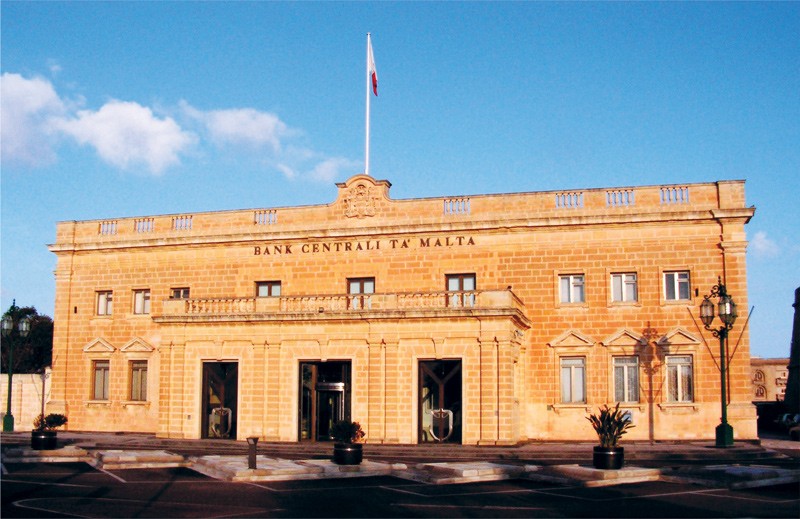
The Central Bank of Malta
The donation of the Central Bank of Malta will go towards the establishment of The Central Bank of Malta’s Chair in Economics at the University of Malta. The chair will be instituted within the University’s Faculty of Economics, Management and Accountancy. The agreement will run for five years, starting 1st October 2012.

Malta Freeport Terminals Ltd.
Malta Freeport Terminals Ltd will be supporting the Research, Innovation and Development Trust (RIDT) of the University of Malta, over a five year period starting 1st January 2013. The funds will be received through the University’s Research Trust, and will be administered by RIDT’s Board of Trustees.
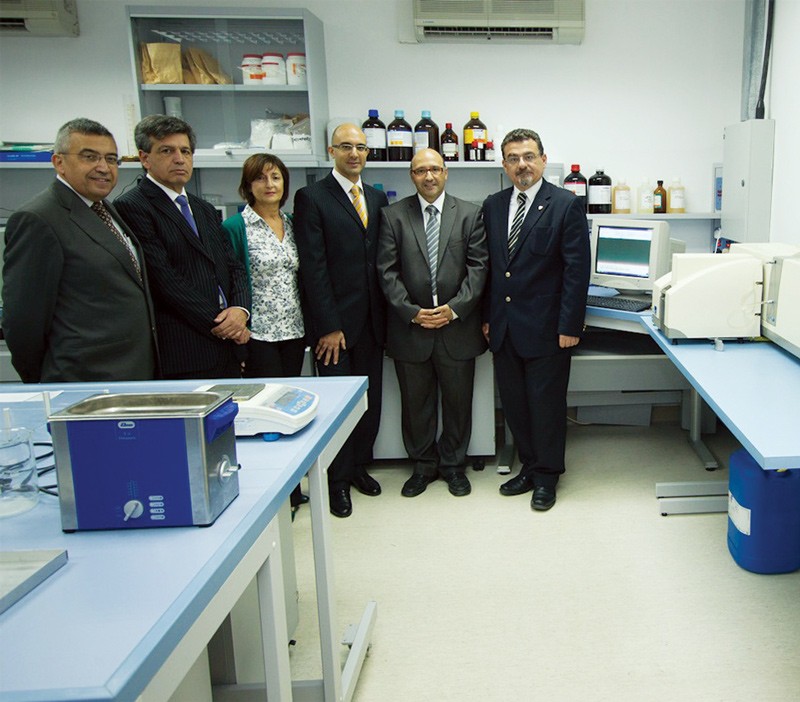
Evolve Ltd.
Through the RIDT, Evolve Ltd, a subsidiary of Attard & Co that provides laboratory products and services, donated three instruments to the Chemistry Laboratory of the University of Malta. The instruments include a Gas Chromatograph, a Particle Sizer and a FTIR (Fourier Transform Infrared Spectrophotometer). The new equipment will enable the Department of Chemistry to increase its research activity while providing better facilities for post-graduate students.
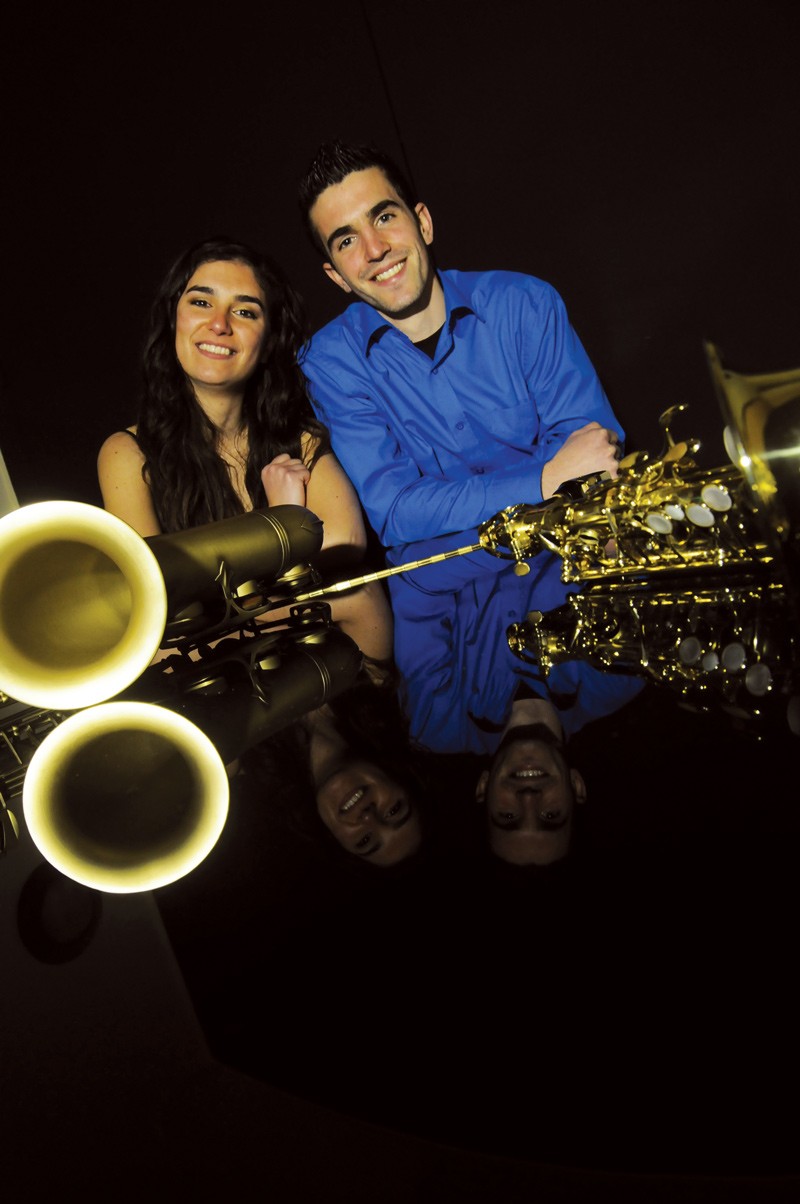 Music and Research
Two university students, Christine Zerafa and Philip Attard, came up with a brilliant idea earlier this year. They put their musical talents to good use and managed to raise funds that were donated to the RIDT. Christine is finishing her Ph.D. in Chemistry and has recently obtained a Master’s degree in performance music, making her an accomplished concert pianist. Philip is doing a Bachelor’s degree in Music Studies and is fast becoming one of Malta’s leading saxophone players.

B yDr Ernest CachiaContinue reading

Malta has a problem. It relies heavily on fossil fuels such as oil to meet its energy needs. Whenever oil prices increase, either the people or the government take the brunt of the cost. The country also faces a strict deadline: by 2020 it needs to supply 10% of its energy needs from renewable sources such as wind, solar, or wave. To help reach this goal, a new project at the University of Malta is custom-designing offshore wind turbines.
Malta’s territorial waters are quite extensive but deep. The Hurd Bank area is the most suitable site at a depth of 50 to 70 metres. These depths are beyond the reach of current commercially available technology and the latest project in the windy, turbulent North Sea reaches 45 metres (The Beatrice
Project). 
To construct a wind turbine for the Maltese region, Thomas Gauci (as part of a team consisting of University academics and industrial partners) is designing a structure specific to Malta. Seventy-metre deep waters will increase costs. On the other hand, the Mediterranean is relatively calm compared to the North Sea, so the support structure keeping the wind turbine in place can be lighter, which shaves off tons of raw materials and reduces the final price.
An offshore wind turbine needs to resist waves, corrosion, and storms. The design process of an offshore support structure is essential to keep it in place and starts with determining exactly where the turbines will be embedded and how they will be supported. After these questions are answered, the turbines’ exact specifications need to be determined, such as material, height, width, and what forces it can resist over a number of years. Speed of blade rotation also needs to be checked to make sure it does not cause discomfort to nearby humans and animals. Mr Gauci’s concept design meets all of these needs in compliance with international and EU standards. At this stage, the design needs to
be costed, right down to the installation and maintainance of the turbines.
If Malta builds these offshore wind turbines it would easily meet the 10% baseline set by the EU. Undeniably, such a large project will face numerous challenges, but perhaps Mr Gauci said it best: “not a day goes by when I don’t learn something new.”
Read more HERE.
This research was performed as part of a Masters of Science from the Faculty of Engineering
and is supported by MCST (Malta Council for Science and Technology).

The economies of small states are vulnerable. Their size and open nature leaves them exposed to economic shocks. William Gatt (supervised by Dr Gordon Cordina) from the University of Malta and Central Bank of Malta modeled an economy to study the effects of government policies in limiting economic turmoil. The researcher used a Dynamic Stochastic General Equilibrium (DSGE) model of a small, open economy to simulate an economy similar to Malta. The model could study an economy over time, determine its reaction to random shocks, and the effect of changes in policy. Mr Gatt compared a government policy which directly shored up ‘at risk’ households to another policy with which government boosted economic activity by directly buying goods from the market. Direct transfers to households accelerated a faster economic recovery after drops in foreign demand.
Further studies showed that government intervention is more beneficial when more ‘at risk’ households exist. The downside to this policy is a requirement of a large economic surplus. Government would need to save when the economy is strong to buffer in times of distress. In this light, the role of government is as a saver, meaning that it should ensure precautionary savings adjusting policy targets for a budget surplus. 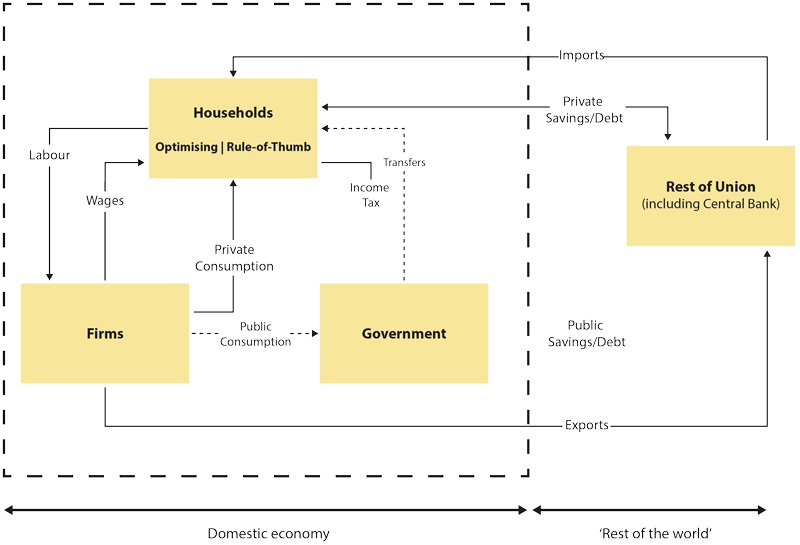
This research was undertaken as part of a Master of Arts in Economics from the Faculty of Economics, Management and Accountancy. Opinions expressed are those of the author and not necessarily those of the Central Bank of Malta.