
Developing new cancer treatments

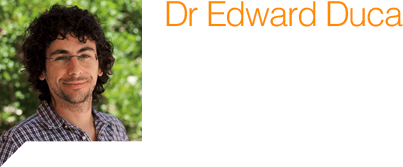
The lab is my second home, with the rugby pitch a close third. My fascination with lab work and science started when I visited Tays Hospital in Finland. It was during my bachelor degree in Medical Laboratory Science. This three-month placement helped me choose cytogenetics for my final year project. My work involved developing a technique to allow for doctors to better manage sporadic and recurrent miscarriage patients.

My interest in cytogenetics (the study of chromosomes where genes are found) evolved to genetics, when I started working at the biotech company MLS BioDNA Ltd. This laboratory focused on the testing of inherited diseases, paternity and forensics, as well as food and water microbiology. Working in a diagnostic laboratory was very satisfying but I had always wanted to pursue research. So I moved to Sheffield to read for a Masters in Molecular Medicine, with the help of the Malta Government Scholarship Postgraduate Scheme (MGSS). My intention was to just stay for the course and return home, however, my current supervisor offered me a 10-month contract to work in a molecular microbiology lab. This was a very pleasant experience, and encouraged me to pursue a Ph.D. I received a scholarship for a Ph.D. in Immunology at the University of Sheffield, which I am currently working on.

Vaccines can prevent certain infectious diseases. Potentially, they can also treat cancer. Vaccines today are based on small proteins, which by themselves do not elicit a strong immune response. To treat cancer a strong response is needed. Immunological adjuvants that amplify the immune response are used to accomplish this. However, no one really understands how these adjuvants work. For my Ph.D., I am part of a research group that focuses on an immunological adjuvant which increases the immune response by over 1,000 times. Understanding how these adjuvants work will pave the way to more targeted treatments and fewer side effects.
My job is to understand which immune cells are responsible for this effect. The adjuvant has been shown pre-clinically to be effective in B cell lymphoma, a type of cancer of the blood that originates in the lymph glands. Patients are currently treated with the drug Rituximab which depletes certain immune cells called B cells. If our treatment requires other immune cells to work, it can be used in addition to therapies such as Rituximab.

Although a Ph.D. is something which I really wanted to do, it was still a shock to my system. Scientific research can be very frustrating as long hours and hard work do not necessarily translate into results. In spite of this, the long-term goal of this project keeps me going making the sweat and tears worth it.

Funding of academic chairs by FIMBank and The Alfred Mizzi Foundation

As from the next academic year, the Faculty of Economics, Management and Accountancy of the University of Malta will be providing a course in International Trade Finance which is being sponsored by FIMBank Malta plc and the International Factor Group (IFG). The same faculty will also introduce a course in Digital Marketing which is being sponsored by The Alfred Mizzi Foundation. These new additions will offer a unique educational experience in modern commercial activities to both local and foreign students. The financing of the courses has been facilitated by the RIDT. 

Cycling for breast cancer research

Forty cyclists will be covering an endurance route of 720 km. They will cycle from London to Brussels to Paris this July to raise funds for breast cancer research at the University of Malta. For this initiative to happen, the RIDT has teamed up with two not-for-profit organisations, Action for Breast Cancer Foundation and ALIVE Charity Foundation. The former is an organisation that brings together breast cancer survivors, patients, and well-wishers, while ALIVE consists of a group of cyclists are dedicating their cycling efforts towards good causes.

The cyclists are currently undergoing training to get in shape for this challenge. Their objective is to each raise €1,800. 

KSU joins list of donors

In a typical case of charity beginning at home, the Kunsill Studenti Universitarji (KSU) has donated €1,000 towards the research trust of the University of Malta. Speaking during the presentation of the donation, Mr Mario Cachia, former president of the KSU pledged that the KSU shall venture to promote the objectives of the Trust among the students it represents, and encourage them to support it, even by organising activities to raise funds for specific future research. 

Can you die of boredom?

A tricky question since boredom is a mental state. Usually it is triggered by an uninspiring, monotonous environment and/or certain brain chemicals like dopamine (more on dopamine). People who produce less dopamine, or are less sensitive to it, are bored more easily.

People bored for a very long time can suffer from clinical depression, which surely reduces lifespan. Other boredom sufferers have ADHD (attention deficit hyperactive disorder) and extreme ways of combating boredom can be equally dangerous. They could abuse drugs and alcohol or seek thrills in risky sports. Others could become sexually promiscuous. All of these behaviours reduce lifespan. 

Send your questions to think@um.edu.mt and we’ll find out if it’s the truth or just a fib!

An Alternative Currency

Mario Frendo

Malta — a tiny Island, a minute social reality, a precursory canovaccio of European unification — has a unique asset it ought to be prouder of: Culture. For millennia our bonsai place has attracted a continuum of passing civilisations leaving behind them a most colourful and diverse compendium of customs, behaviours, artistic expressions, and intellectual attitudes. Malta’s investment in this unique legacy should not be limited to conservation. It needs to be kept alive through constant support of the contemporary expression of its youth. This attitude will certainly transform our Culture into a most effective and efficient currency of change and growth.

Hotline Miami

Game Review_Costantino

Push start. Grab a weapon. Get shot. Repeat… ad infinitum. ‘Punishing’ hardly describes a session of Hotline Miami. Typically, within 10 seconds you could die three or four times. It is just as frustrating as it is challenging. Addictively, you will not give up until you pass that sneaky little passage. 

Hotline Miami is an ultra-violent, psychotic game, where your only aim is to kill all the ‘bad guys’.

Yet, every little move counts, and deciding which weapons to use or which door to open first will reveal the deep strategic possibilities of the game’s intense experience. As you make your way through a pile of corpses, the suspense builds up to unbearable levels as you risk losing all in-game progress for just a little mistake. The massacre is only interrupted by brief moments that reveal details of our mysterious ‘hero’s’ back-story. Keeping true to expectation, even these interludes are awkward if not disturbing, and hardly shed light on our displaced, faceless avatar. 

The excellent game tops it all with an irresistible ‘80s aesthetics and a neurotic electronic soundtrack. You’ll quickly find out why this game has stolen the show winning so many awards, and has hooked fans of Grand Theft Auto and of good old shoot’em up games. Hotline Miami is a joy in repetition, providing that being stuck in a Clockwork Orange–like scenario is your idea of joy. 

Screenshot from Hotline Miami

www.hotlinemiami.com