

A prosthetic limb is always a work in progress. Even after fitting and adjustments, the body keeps changing. Weight shifts. New pressure points show up. A socket that feels fine one month might cause irritation the next. For many people, comfort relies on a device that cannot sense what is happening.
PREMIERTOGO tackles this problem head-on. Prof. Ing. Philip Farrugia leads the project, treating the lower-limb prosthesis as a system that can be designed, monitored, and adapted for each person. ‘Most existing prosthetics are still largely passive. They don’t capture what’s happening during use, nor do they adapt to it. We wanted to change that baseline,’ says Mr Adrian Mercieca, who works as an RSO on the project.
This ambition shapes every part of the project, from the cover to the knee, ankle, foot, and the sensors inside. The result is more than just one improvement. It is a new way to think about prosthetic design. The most obvious change is the fully 3D-printed cover, which is not just for looks. It shows how 3D printing can make prosthetics better and easier to produce.
Form Follows Force
The team started by looking at the old design. The previous cover was bulky, complicated, and hard to put together. It used standard fasteners, offered little room for personalisation, and had too many parts. The redesign aimed to use fewer parts, make assembly easier, cut weight, and improve its appearance without weakening it.
The cover was designed for 3D printing from the start, rather than being adapted later. That decision matters. Additive manufacturing rewards different shapes, connections, and internal features. ‘If you design for 3D printing from the start, you stop thinking in terms of traditional constraints,’ Mercieca explains. ‘You can simplify structure, reduce components, and integrate features directly into the geometry.’
Two main ideas shaped the cover: modularity and generative design. The modular system breaks the cover into separate parts, including interchangeable front panels. Users can change how it looks without touching the main structure. In a field focused on function, that offers something rare: choice.
Generative design provides the engineering logic. Instead of solid surfaces, the structure uses algorithm-driven patterns. Material goes where it is needed and is removed where it is not. The goal is not decoration. It is efficiency. ‘We’re not removing material for the sake of it,’ Mercieca says. ‘We’re placing it precisely where it needs to be.’
The design then moved into parametric CAD. Parts were shaped for efficient printing. Snap-fit connections replaced bolts and glue, making assembly faster and maintenance simpler. The cover was also aligned with the existing prosthetic system, avoiding a full redesign.
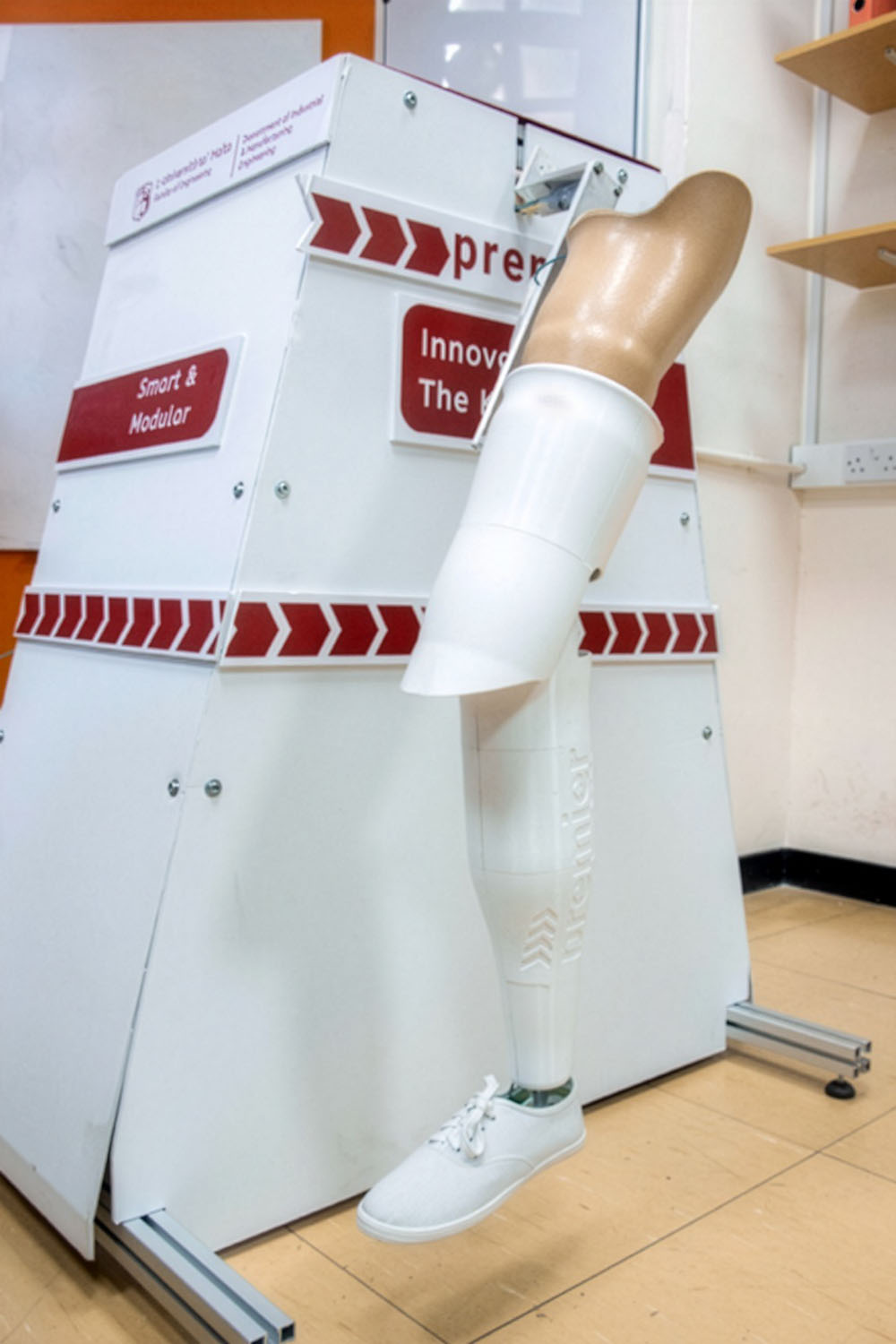
From there, the design was refined step by step. Wall thickness, pattern density, and connection points were adjusted to balance strength, flexibility, and manufacturability. Generative features were used only where they made structural sense. The final cover is lighter, easier to assemble, and visually distinct, without added complexity.
Material choice followed the same logic. The design was optimised for widely available printers such as PRUSA and Ultimaker. ‘There’s no value in a design that can’t be produced reliably. We had to make sure it works with real-world equipment,’ Mercieca notes.
Less Material, More Intelligence
Generative design sits at the centre of the project because it solves two problems at once. First, it improves structural efficiency. Material follows load paths instead of filling space by default. That reduces weight while preserving strength.
Second, it allows controlled flexibility. By adjusting parameters such as cell size and density, a part can absorb energy in one area and remain stiff in another. In a prosthetic system, that balance shapes both comfort and stability.
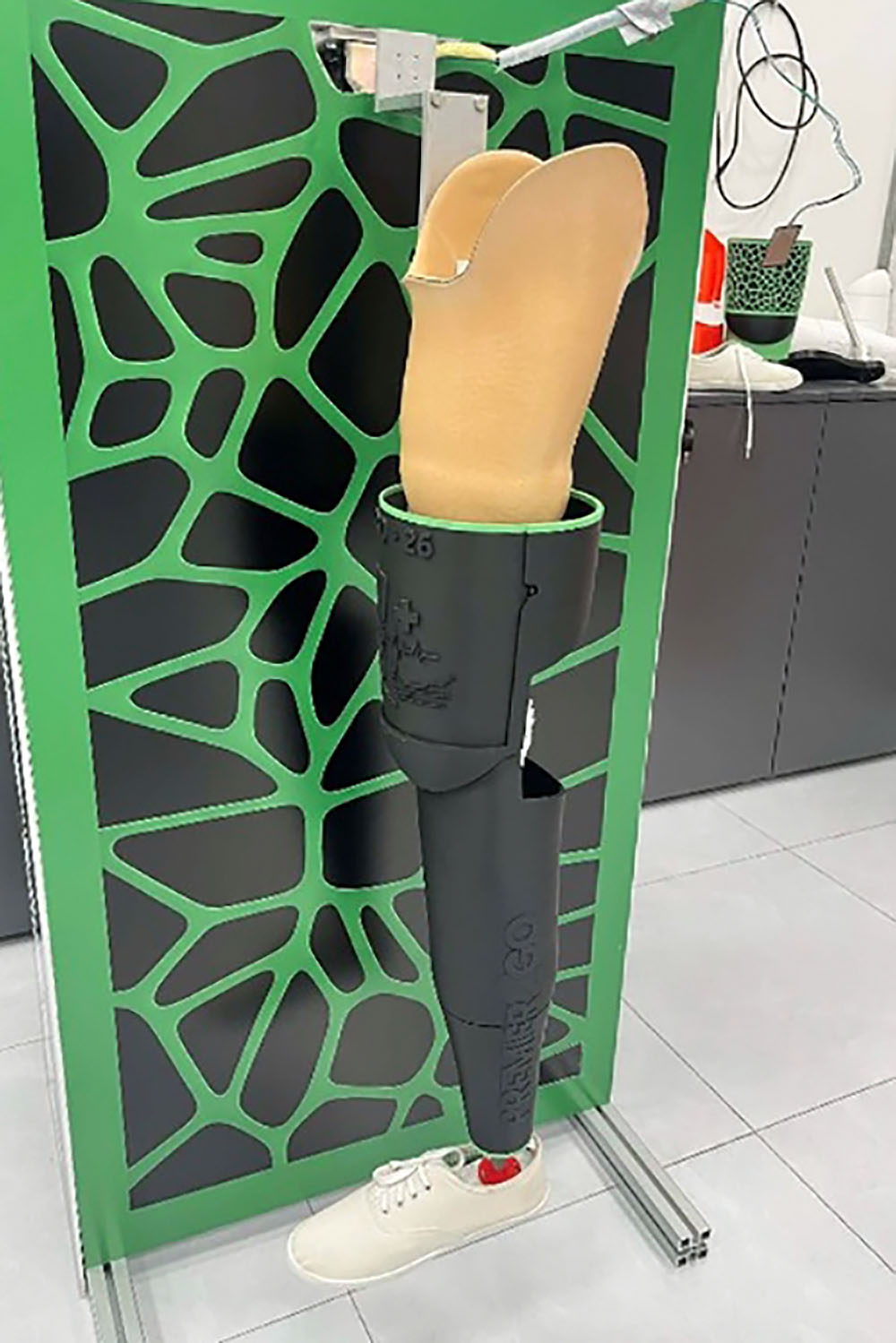
It also changes the device’s appearance, as the same base geometry can produce different patterns through small changes in input. Personalisation becomes scalable rather than bespoke. ‘Prosthetics are not just functional devices,’ Mercieca says. ‘They become part of a person’s identity. Giving users some control over how they look matters.’
These gains come with trade-offs. Additive manufacturing allows complex geometry but raises questions about strength, durability, and printability. Removing too much material can weaken a part. The solution lies in preserving critical load paths and removing material only from low-stress regions.
Integration brings another challenge. The prosthesis includes sensors and wiring that must fit inside without weakening the structure. Internal cavities and routing channels were designed directly into the model, avoiding post-processing and improving repeatability.
Printability also sets limits. Some materials require specialised equipment. To keep the system accessible, the design was aligned with standard printers. Shapes were refined to reduce warping, improve adhesion, and minimise support structures.
Durability was tested through simulation and iterative refinement. Stress points were identified and reinforced before physical prototypes were produced. Manufacturability and performance were treated as one problem.
Mechanics That Listen
The project also revisits the mechanical core. The knee subsystem saw some of the most visible changes.
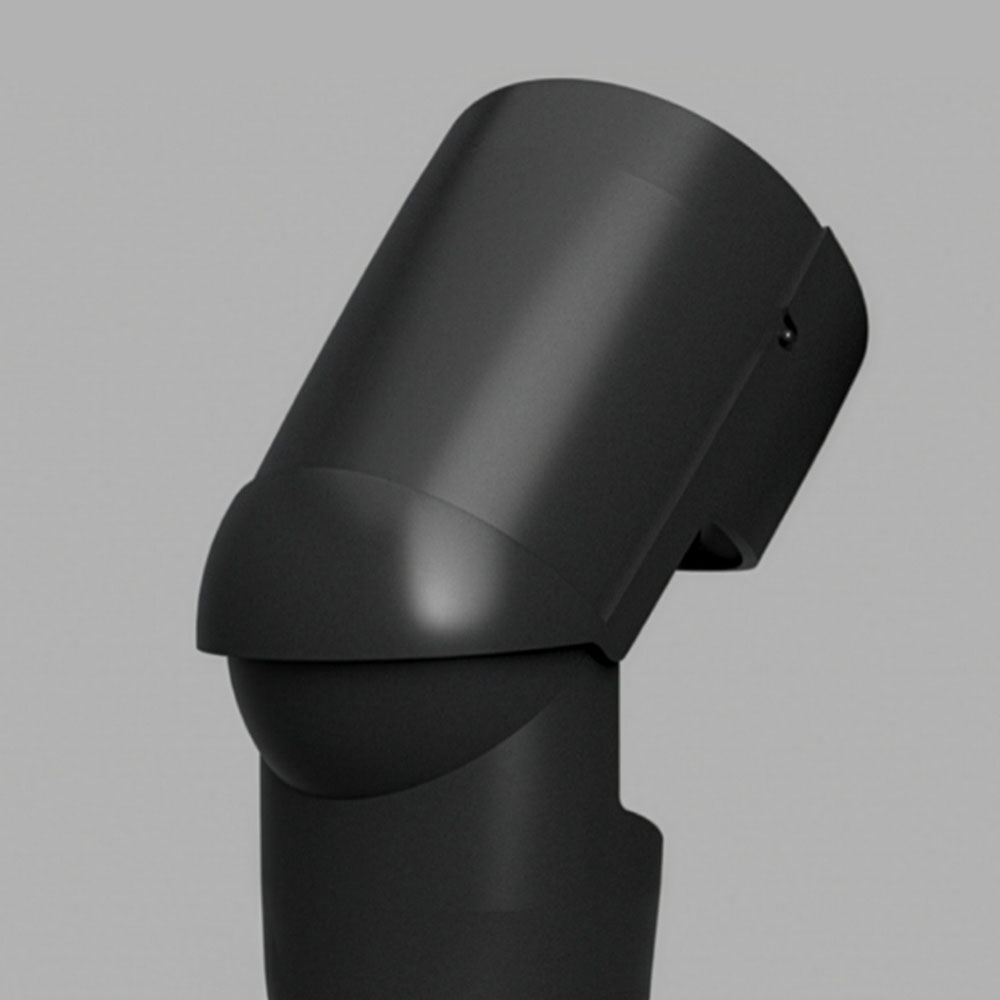
The earlier design was bulky, with exposed components at the rear. This reduced comfort and increased the risk of damage. The new knee is smoother and more compact, following the natural profile of the leg. It is easier to wear and less intrusive.
A flexible rear cover now protects internal components while allowing movement. The design avoids full enclosure, preserving access for maintenance. ‘We had to balance protection with accessibility. You can’t design something that’s sealed but impossible to service,’ Mercieca says.
A closer view of the knee design used in the PREMIERTOGO prosthesis (Photo courtesy of Adrian Mercieca)
The ankle and foot were also redesigned. The earlier system lacked space for sensors and wiring. The new version includes dedicated cavities and internal routing channels. Material changes improved stability, replacing overly soft elements with structures that support load while retaining some flexibility.
Weight reduction remained a priority. Generative design removed excess material from the foot without reducing strength. Less weight reduces fatigue. In prosthetics, small gains compound over time.
At system level, these mechanical changes connect to data. Embedded sensors track pressure, motion, and usage during daily movement. Pressure sensors map how force is distributed across the foot, from heel strike to toe-off. This reveals asymmetries and areas of excessive load. Inertial sensors track orientation, acceleration, and movement patterns. Over time, the system builds a clearer picture of real-world use. This data enables adaptability. Machine-learning models can define a user’s normal gait and detect deviations.
‘The goal is to move from a static device to something that can learn from the user. Once you have that data, you can start adapting in real time,’ Mercieca says. In practice, this could allow the prosthesis to adjust to terrain or walking style. It could flag uneven loading before it causes injury. It could also support clinicians, replacing occasional check-ups with continuous insight.
The latest system was recently presented at a seminar covering 18 months of work. Researchers, engineers, and participants reviewed the design and tested the prosthesis directly. The session ended with a structured evaluation. Feedback from participants will guide the next stage. That matters because prosthetic design must be judged in use, not only in models or simulations.
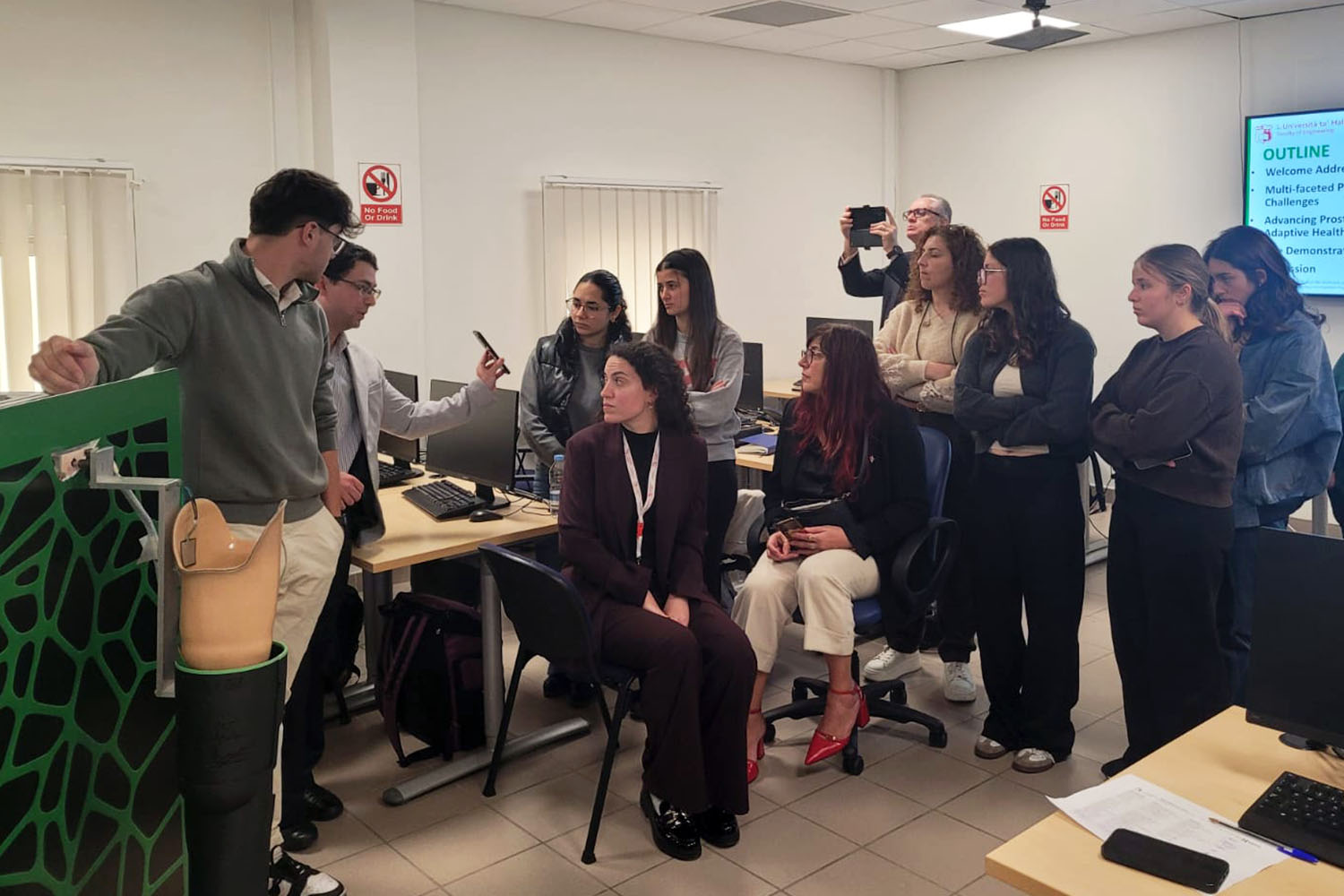
The project also relies on institutional support. The Department of Industrial and Manufacturing Engineering provided technical and academic backing, while Xjenza Malta supported development. Together, they helped move PREMIERTOGO from concept to working system.
The next phase is already underway. PRAGMA will build on this foundation but focus on the socket, where many problems begin. The socket must secure the limb without causing harmful pressure. That balance is difficult, especially as the body changes.
PRAGMA aims to develop an adjustable socket using generative design and AI. Generative design will control stiffness across different regions. AI will use user data and biomechanical constraints to generate more personalised geometries.
The direction is clear. Prosthetics are moving away from fixed devices and towards systems that can be tuned, monitored, and improved over time. PREMIERTOGO lays the groundwork. PRAGMA extends it. ‘We’re not just improving a component. We’re changing how the whole system is designed and how it behaves over time,’ Mercieca concludes.
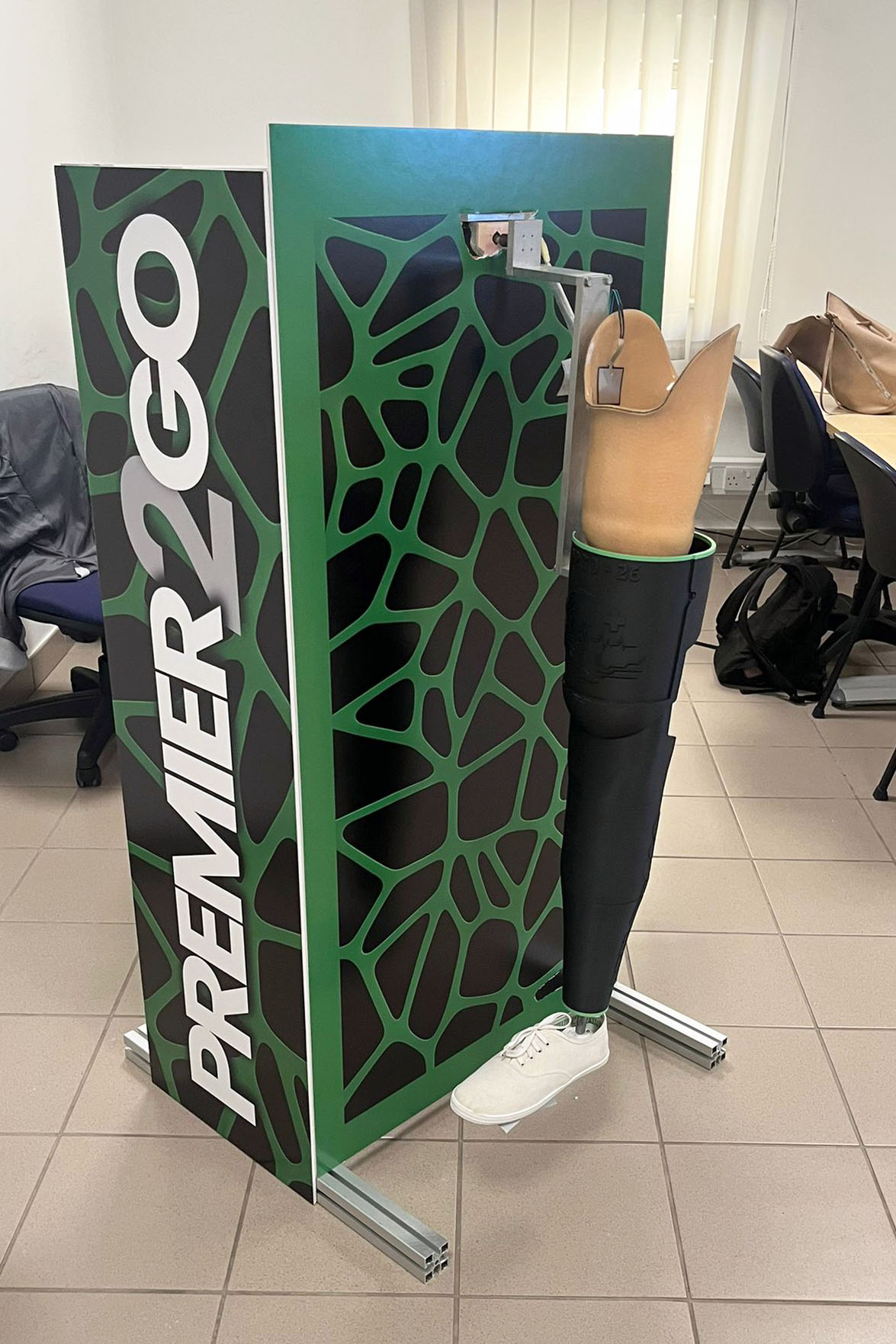
The PREMIERTOGO project was funded by Xjenza Malta’s MCST FUSION R&I – Research Excellence Programme (R&I-2024-013L). The following individuals worked on this project:
- Prof. Ing. Philip Farrugia, as principal investigator, Department of Industrial & Manufacturing Engineering
- Prof. Ing. Jonathan Borg, as co-investigator, Department of Industrial & Manufacturing Engineering
- Prof. Alfred Gatt, as co-investigator, Department of Podiatry
- Prof. Ing. Owen Casha, as co-investigator, Department of Microelectronics & Nanoelectronics
- Dr Nicholas Patiniott, as Research Support Officer, Department of Industrial & Manufacturing Engineering
- Mr Adrian Mercieca, as Research Support Officer, Department of Industrial & Manufacturing Engineering



Comments are closed for this article!