
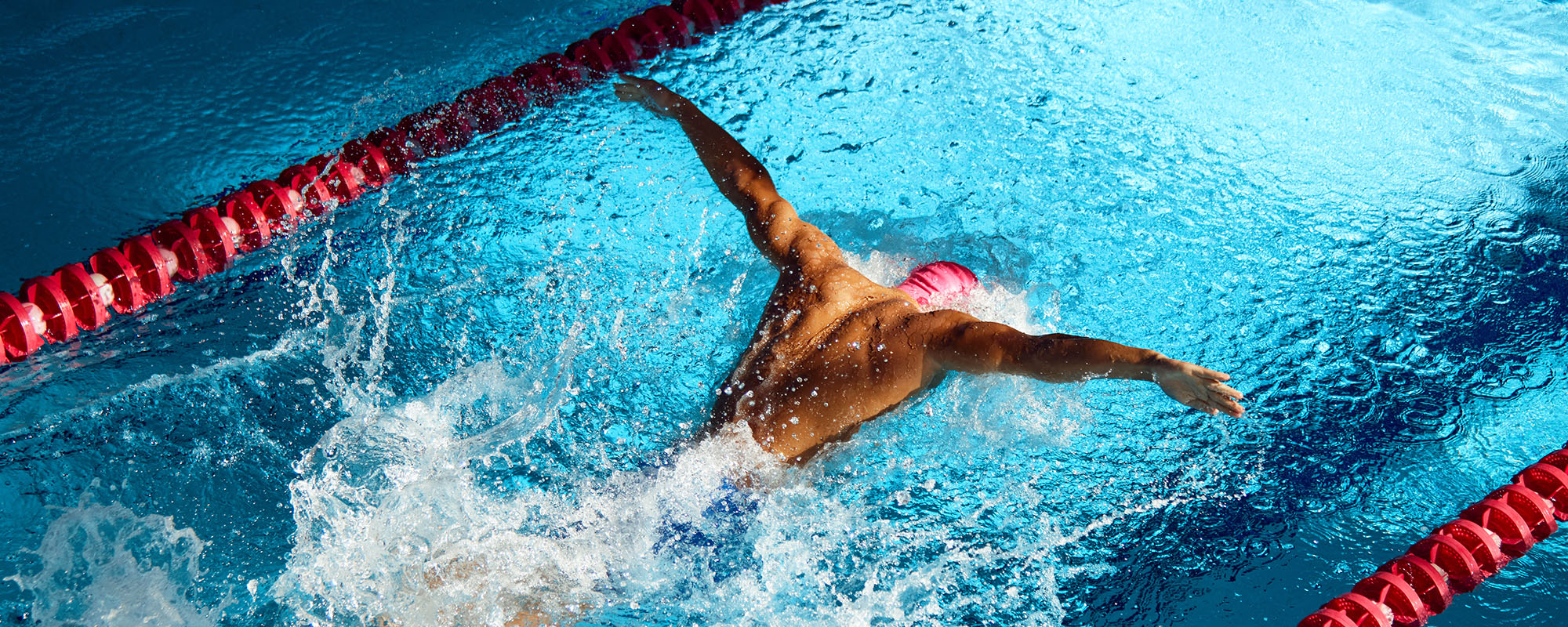
When a curious mother and seasoned AI researcher dipped her toes into the world of competitive swimming, she did not expect to launch one of the most comprehensive sports-tech initiatives Malta has ever seen. Now, through two intertwined projects – DIVE and SWIM-360 – Dr Vanessa Camilleri and her team at the University of Malta are capturing the full stroke of what makes swimmers fast, efficient, and injury-free.
Although it is still before eight o’clock in the morning, the Mediterranean sun is already beating down on the open-air National Pool Complex in Msida – the heart chakra of swim sports in the island nation, nestled right beside the flyover separating the university and the pool.
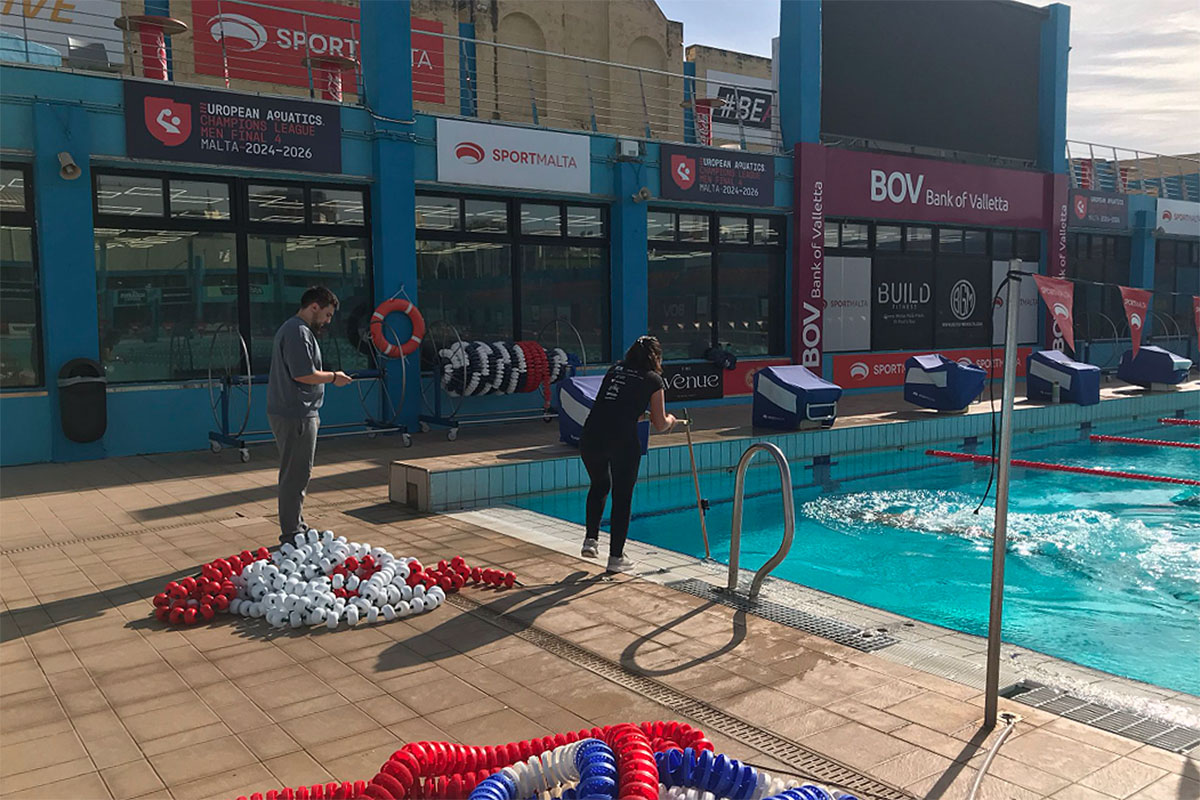
A thin veil of heat shimmers above the turquoise, crystal lanes, and the black sun-kissed scoreboard reads 41°C, even though the air temperature hovers just under 30. The stone bleachers, still empty of spectators, radiate the warmth stored from yesterday’s sun as early summer hints at the upcoming heat waves, soon to reach the tiny Mediterranean island from the African continent. The silence is broken only by the rhythmic splashes of sportspeople engaging in early training sessions, the buzz of cicadas fending off the heat, and the soft click of sports cameras being prepped for the data collection.

Down by lanes eight and nine, a small team of researchers from the University of Malta is hunched over cables, monitors, and a makeshift camera rig. The researchers nod quietly to one another, adjusting their setups while swimmers sign consent forms for anonymised data storage, stretch by the pool, or bounce on their toes, as they chit-chat about swimming, their minds locked in ritual. One of them is being fitted with soft palm straps, the unassuming yet powerful wearables that will feed real-time motion data into the learning algorithm, one lap at a time.
This is where the work begins: in the heat, in the repetition, in the routine. But behind the familiar drills of dive-turn-finish lies something new. Every stroke today will be captured, annotated, and fed into an evolving AI model, part of two ambitious research projects called DIVE and SWIM-360. It is a collaboration of sweat, code, and curiosity, unfolding beneath the vast Maltese sky.
Poolside Stories
Like any story worth telling, as swim sports enthusiasts will attest, it started at the poolside. Dr Vanessa Camilleri, a senior lecturer at UM’s Department of Artificial Intelligence, found herself volunteering at her son’s swim meets. Not as a pushy parent, but as a curious mind trying to understand a world she was suddenly immersed in.
‘My son is a competitive swimmer,’ Camilleri tells THINK as she quickly sets up the data collection session before heading out for a day-long conference on artificial intelligence. ‘And while I never wanted to interfere with his training, I wanted to understand his experience better so I could support him. That naturally turned into wanting to understand how swimming works, not just emotionally, but technically.’
As she immersed herself in the strict rules and sploshing rhythm of the sport, her academic background quickly took over. You can take the researcher out of the lecture room, but never the curiosity out of the researcher. ‘You see, children train incredibly hard – hours a day, endless laps – but results can feel unpredictable. That’s frustrating not just for parents, but also for coaches and swimmers. So I started asking: Why? What’s missing?’ Camilleri says.
From this question sprang DIVE – a research initiative aimed at pulling back the surface of swimming performance. In Camilleri’s world, observation was not enough. She wanted data. Real, useful, open data.
Diving In
DIVE is an 18-month project that aims to capture and analyse swimmers using AI-powered video, but it is not just footage. The research team, comprising Justine Scicluna and Gianluca Aquilina, is building a dataset that splits each swim into critical segments: the start, the stroke, the turn, and the finish.
‘Swimming is full of hidden rules and biomechanical expectations,’ Camilleri says. ‘Take breaststroke, for example, which is incredibly complex. You can only perform one butterfly kick at the start of the swim. Your hands must reach the hipline before you start the stroke, and every turn and finish must be done with a simultaneous two-hand touch. Miss one detail? You’re disqualified.’
These are not abstract rules. They are biomechanical moments that affect both performance and legality, and that is exactly the subtle code Camilleri’s team wants to record – and crack.
The AI models they are developing go beyond identifying strokes; they segment each stroke, break it into phases, and overlay pose estimation data to understand the swimmer’s technique, from head alignment to hand entry angles.
The DIVE team capturing footage of swimmers at the National Pool Complex
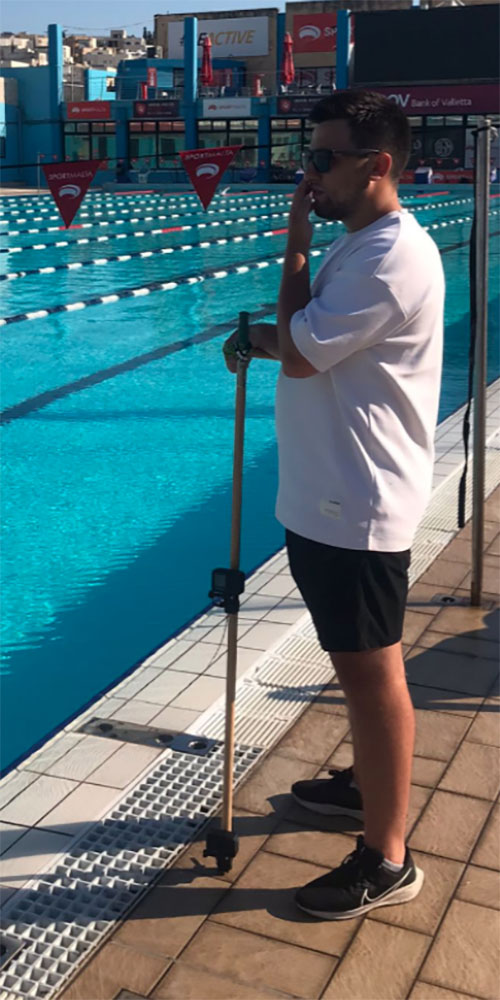
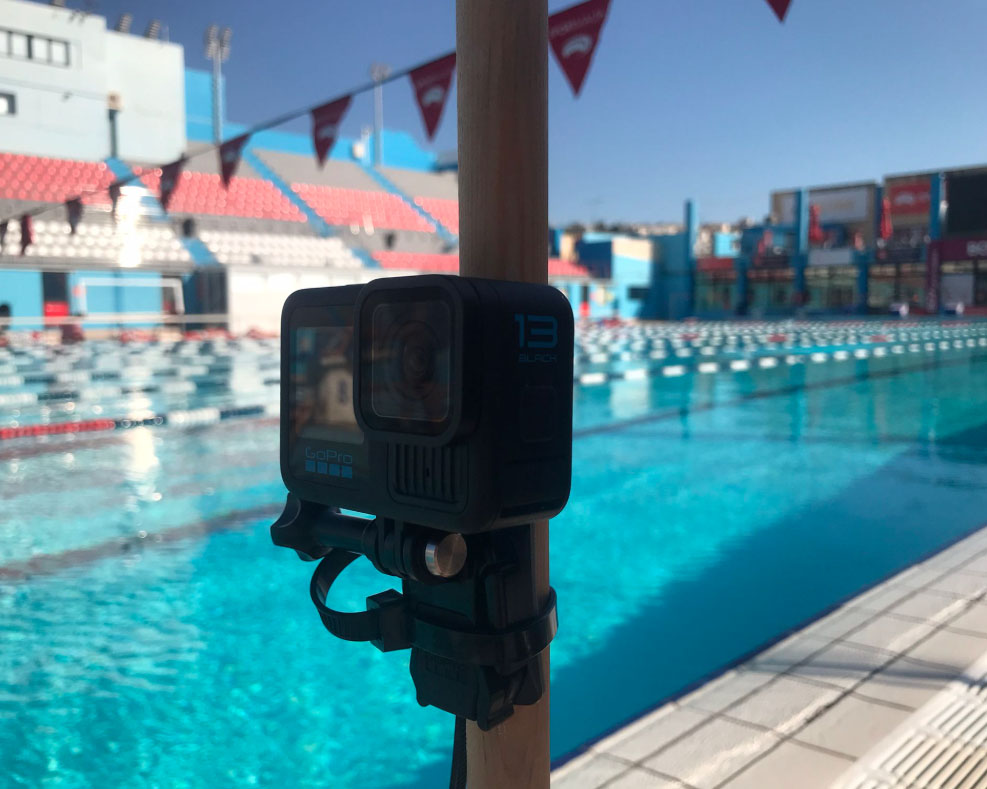
But they are not doing this in a million-euro lab. ‘We are using two GoPro Hero 13s fixed on a homemade rig out of a stick,’ Vanessa says. ‘One above the surface, one below, positioned along the same vertical axis. A researcher walks the length of the pool with the swimmer, keeping the rig steady. It’s simple, accessible, and effective.’
This accessibility is crucial. ‘We didn’t want to build something only replicable by rich labs. We wanted a method that other researchers, anywhere in the world, could adopt. If your method depends on €4,000 cameras and high-tech equipment, you’ve already excluded half of the possible users, including coaches and athletes,’ Camilleri says.
Anatomy of a Stroke
So, what exactly does DIVE measure? The answer stretches far beyond what the eye can catch in real-time. At its core, the project uses AI-powered pose estimation to decode the biomechanics of swimming in granular detail. The system is trained to identify the type of stroke being performed – freestyle, breaststroke, butterfly, or backstroke – and to recognise and segment the whole arc of the swim into its essential phases: the explosive start, the body of the swim, the turn, and the final stretch to the finish.
But it goes deeper still. For each phase, the AI assesses the swimmer’s posture, tracking how arms and legs move in relation to one another and to the water. The synchronisation between limbs is scrutinised, as is the alignment of the head, one of the subtlest yet most critical components of swimming efficiency. Speed, stroke count, and even how long a swimmer stays underwater after the start or turn are all captured, logged, and analysed. The result is a comprehensive biomechanical snapshot of each lap – precise, dynamic, and rich with endless insight.
For strokes such as freestyle, butterfly, and backstroke, swimmers must surface before reaching 15 metres. For breaststroke, this can extend slightly. The AI system keeps track.
More importantly, it can flag biomechanical inefficiencies. ‘If your arms open too wide during breaststroke, you lose propulsion,’ Camilleri says. ‘The model can track that and show it. Over time, we want to feed that back visually, so the swimmer and coach both see not just that something’s wrong, but how to fix it.’
Ethical Currents, Real-World Challenges
However, collecting good data is not just about camera placement. It is about diversity. On the day that THINK visited the data collection session, master swimmers battled the pool’s waves, the heat, and the slight discomfort of the wearables to teach the machine.
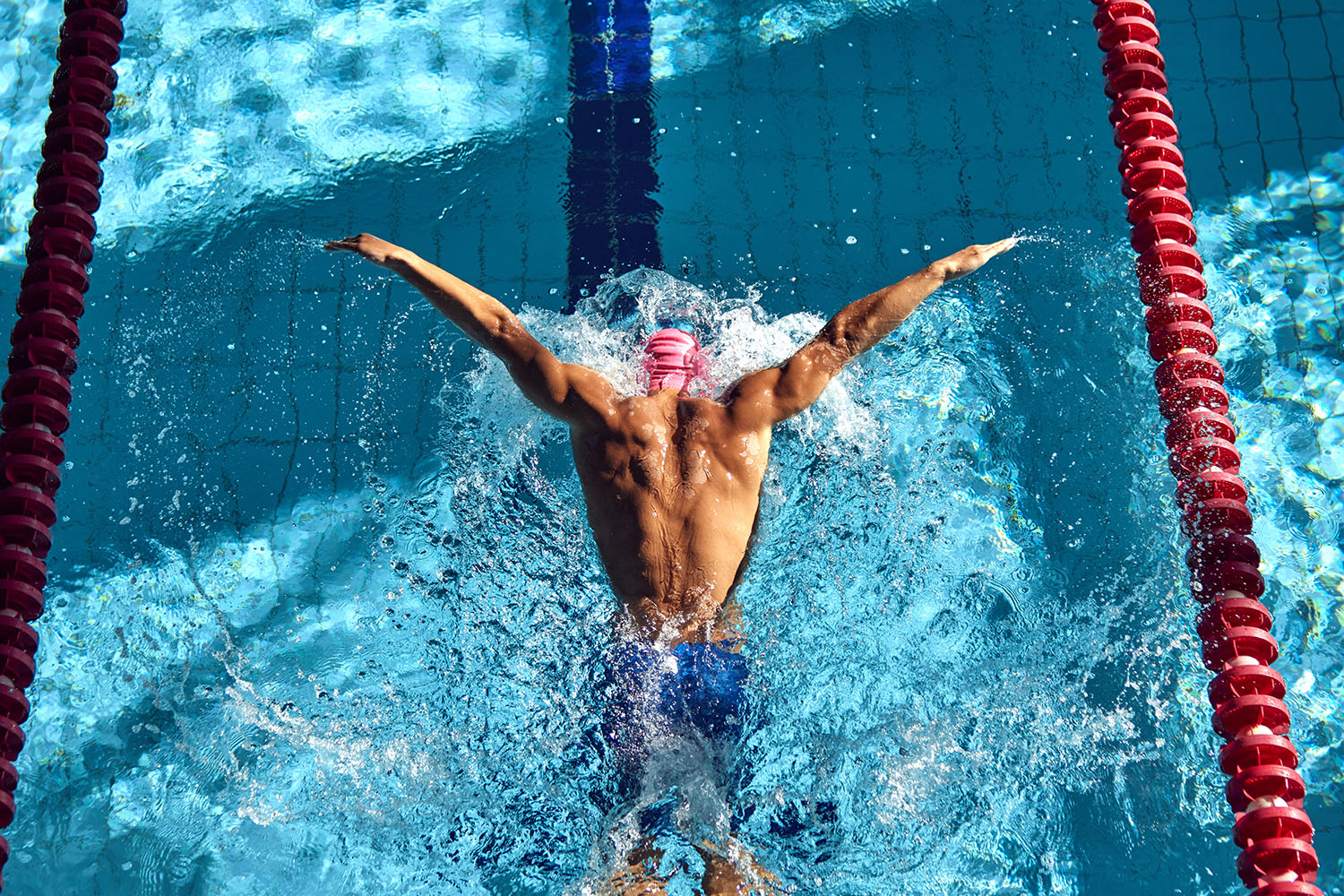
‘To train an AI properly, we need a wide range of swimmers, different ages, body types, and genders,’ Camilleri says. ‘Right now, young competitive swimmers can do all four strokes well, but as they age, that variety drops. Master swimmers tend to focus on freestyle or maybe backstroke. Butterfly? That’s rare.’
It is a challenge that researchers are actively working to address, trying to ensure the dataset is not biased toward one stroke or body type. And of course, all data collection is happening under strict ethical oversight.
‘This is human data, videos and graphs of bodies in motion. It can’t be treated lightly. From day one, we’ve prioritised explainability, transparency, and consent. We’re not just ticking boxes. We’re building systems that could eventually impact people’s training, health, and even careers,’ Camilleri says.
360 Degrees of Insight
If DIVE is about understanding what you can see, SWIM-360 – a second project developed in parallel to DIVE – is about what the eyes cannot see. Running concurrently as a two-year project, SWIM-360 builds on the DIVE dataset and will eventually add two powerful layers: biological and physical data. The researchers working on this project Reno Yuri Camilleri, Mark Fialovszky, and Daniel Pace, work collaboratively with DIVE researchers to ensure continuity and coherence between the two projects.
‘We will be using two types of wearable sensors,’ Camilleri says. ‘The first, which we are already using, is a palm-worn accelerometer. It captures the entry angle, force, and rotation, so we know exactly how the hand enters the water. The second is a muscle oxygenation sensor.’
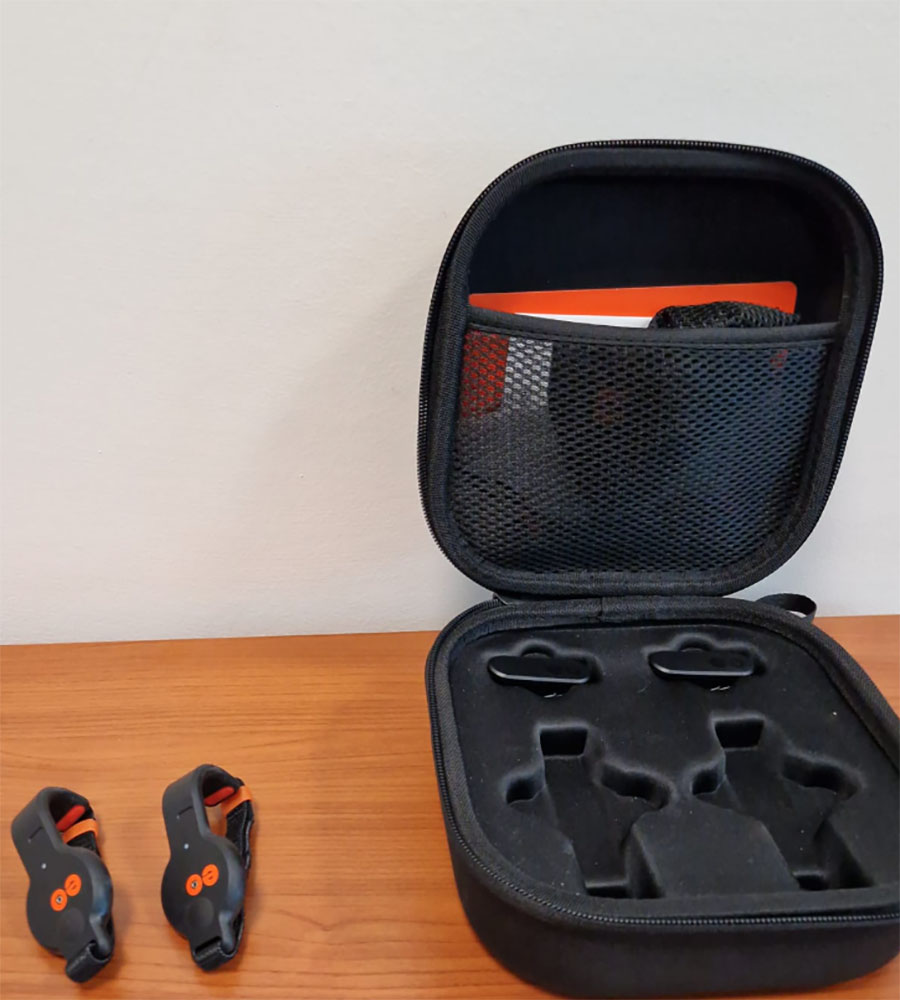
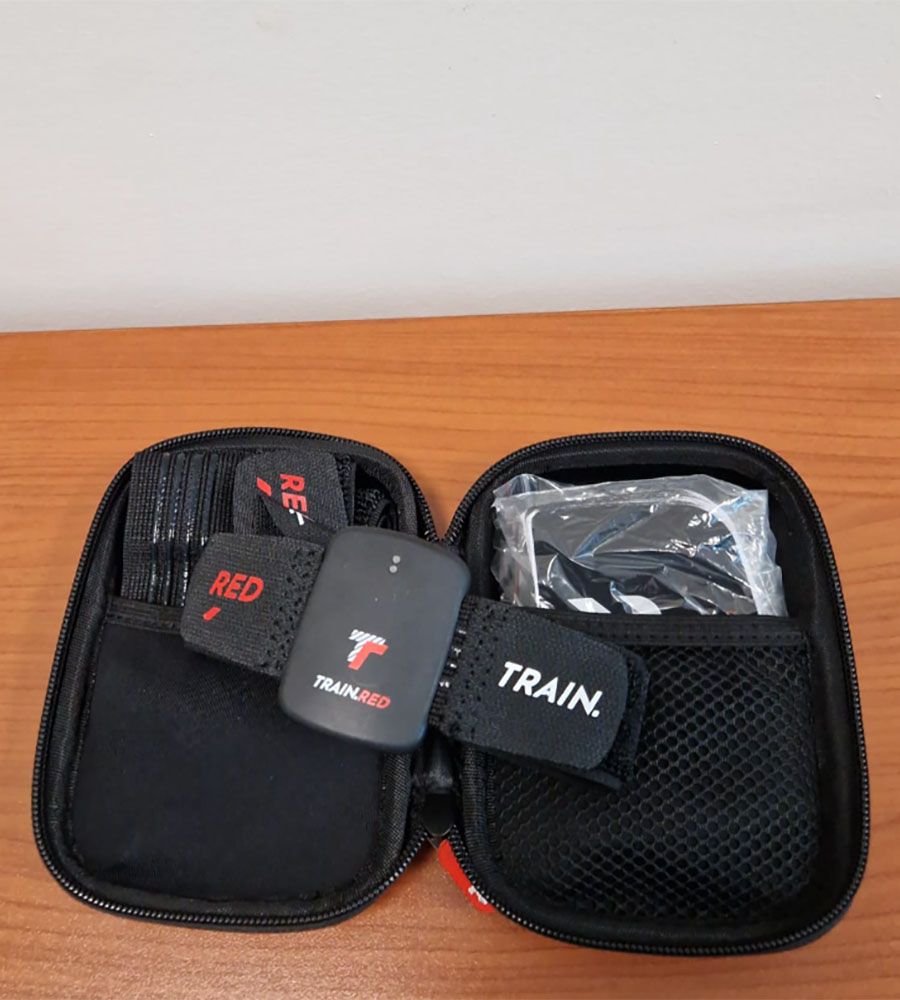
The latter opens up new possibilities. ‘As a swimmer becomes fatigued, their muscle oxygen levels tend to fall. That has an impact on technique and overall performance. By monitoring these changes, we can build a clearer picture of how fatigue develops in the water and adjust training programmes to improve efficiency and reduce the risk of overuse injuries,’ Camilleri says.
Combining this biological feedback with video and pose data gives what Camilleri calls a true 360-degree view of the swimmer. ‘It’s not just external observation. It’s insight from inside the athlete’s body, without being invasive or overly expensive,’ Camilleri adds.
Coaches’ Role
Still, one thing is clear: The AI will never replace the coach. It was never designed to. The entire architecture of both DIVE and SWIM-360 is built around the idea of support, not substitution. The aim is to act as an intelligent assistant, an extra set of eyes that never blink, a silent observer that notices what even the most experienced coach might miss during a fast-paced training session or competition.
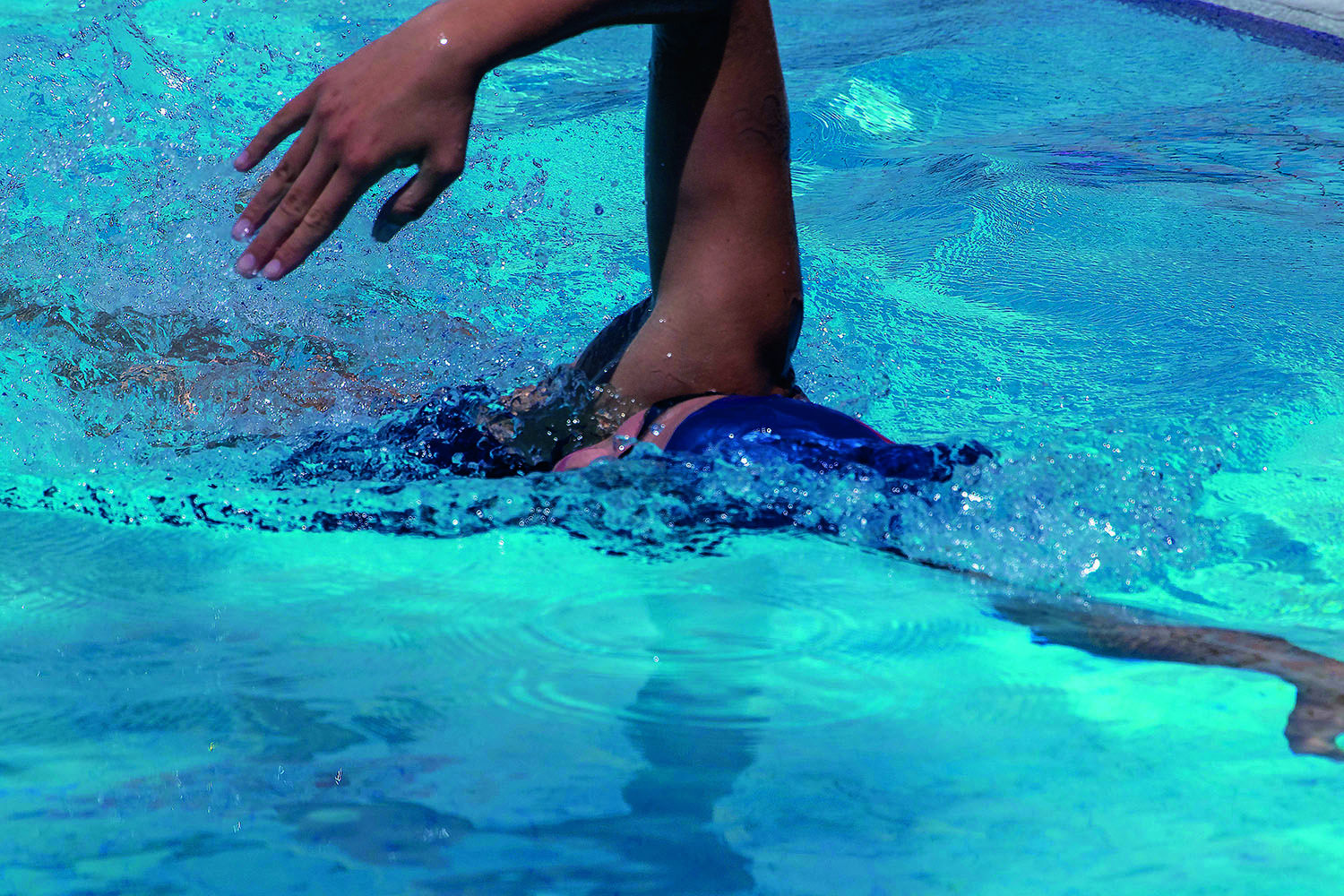
‘Coaches know their swimmers better than any machine ever could,’ Camilleri emphasises. ‘They understand the emotional, psychological, and physical rhythms of each athlete. What we’re offering is a tool that gives them more visualisation, more clarity, and more context.’
‘Having the Aquatic Sports Association of Malta on board with us has been crucial in shaping this vision,’ Camilleri continues. ‘Their direct involvement ensures that the system is developed not in isolation, but in constant dialogue with those who understand the realities of the poolside. It grounds the technology in practice, aligning innovation with the needs and expertise of athletes and coaches.’
Rather than dictating technique or prescribing changes, the AI provides granular, explainable feedback, highlighting subtle misalignments in hand entry or drops in underwater distance over time, all backed by visual overlays and biomechanical data. With this insight in hand, the coach remains the decision-maker, empowered with data that enhances their own judgment and deepens their understanding of the swimmer’s performance. It’s not about automation. It’s about amplification.
‘I’ve been very clear on this,’ Camilleri says. ‘The role of the coach is central. What the AI provides is richer information and a clearer view, so coaches can make more informed decisions.’
The team is working on an interface that overlays key insights over video clips. ‘You’ll see posture deviations, biomechanical inefficiencies, even a predicted injury risk. But more importantly, you’ll see why. It’s explainable AI,’ Camilleri said.
For example, the system might detect that a swimmer has a 65% likelihood of developing shoulder strain based on the current technique. ‘But we won’t stop there. We’ll show the angles, the patterns, and the moments that led to that prediction. It’s about visibility. It’s not replacing the coach’s intuition, but empowering it.’
Global Lane
Despite starting as a local initiative, DIVE and SWIM-360 have quickly gained international interest.
‘Researchers from Norway, the Netherlands, the United Kingdom, and Sweden have all reached out,’ Camilleri says. ‘I didn’t send any press releases. They found us through social media and academic networks. That tells me there’s a real hunger for this kind of open, collaborative work.’
Conversations are also underway with the Norwegian Swimming Federation, and initial interest has been expressed from research centres in Australia. These links highlight the potential for cross-national collaboration and for sharing insights across different swimming cultures.
Long Haul
Both projects are still in their infancy – just nine months into their respective timelines – but the groundwork being laid is already hinting at much bigger possibilities. Camilleri is not just focused on the immediate research outcomes; she’s actively envisioning how this foundational work could evolve into long-term systems that transform training environments, influence sports science curricula, and potentially shape commercial applications built on solid ethical principles.
‘In two years, we’re not going to have a finalised product,’ she says. ‘But we’ll have models, datasets, and validated tools. And from there, we can build further tools.’
Discussions are already underway about applying for further development grants. But Camilleri is cautious. ‘It has to be ethical. We can’t just package it and sell it. Human lives are involved – swimmers, coaches, young athletes. We have to get it right.’
For now, the focus remains on development, testing, and transparency. ‘We’re collecting data from both young athletes and master swimmers. We’re diversifying our dataset. We’re learning every day,’ she adds.
Final Turn
As a former swimmer and water polo player, your columnist must confess: this project hits home. I know the subtle magic of perfect technique when swimming for hours, the way fatigue shifts your kick, and the microscopic adjustments that separate victory from struggle. What Camilleri and her team are building is not just a tool – it is a translator between instinct and insight, between feeling and fact.
And the most powerful part? It is not just for the elite few training in Olympic facilities or funded by national federations. The tools being developed – accessible camera setups, non-invasive wearables, and explainable AI interfaces – are deliberately designed to be affordable, replicable, and adaptable for everyday coaching environments. Whether it is a local swim club, a university team, or a dedicated master’s swimmer training before work, the vision is to democratise high-performance feedback, making advanced insights available to anyone with the passion to improve.
‘I truly believe this kind of technology should be available to every coach, every swimmer,’ Camilleri says. ‘If all it takes is a couple of GoPros, a wearable sensor, and a bit of training, then this doesn’t need to be a luxury. It can be a standard.’
She paused for a moment before adding, ‘Right now, when a coach records part of a swim with their phone and shares it with the swimmer, it already makes a big difference. Just imagine when we can offer them the whole swim, segmented, analysed, and explained – clearly, visually, and scientifically. That’s not just powerful. That’s transformative,’ Camilleri concludes.
Project DIVE is financed by Xjenza Malta through the Research Excellence Programme (REP).
Project SWIM-360 is financed by Xjenza Malta and the Malta Digital Innovation Authority, through the ‘R&I Thematic Programmes: Digital Technologies Programme’.
Both Dive and SWIM-360 are carried out with the ongoing support and help of the Aquatic Sports Association of Malta (ASA).




Comments are closed for this article!