
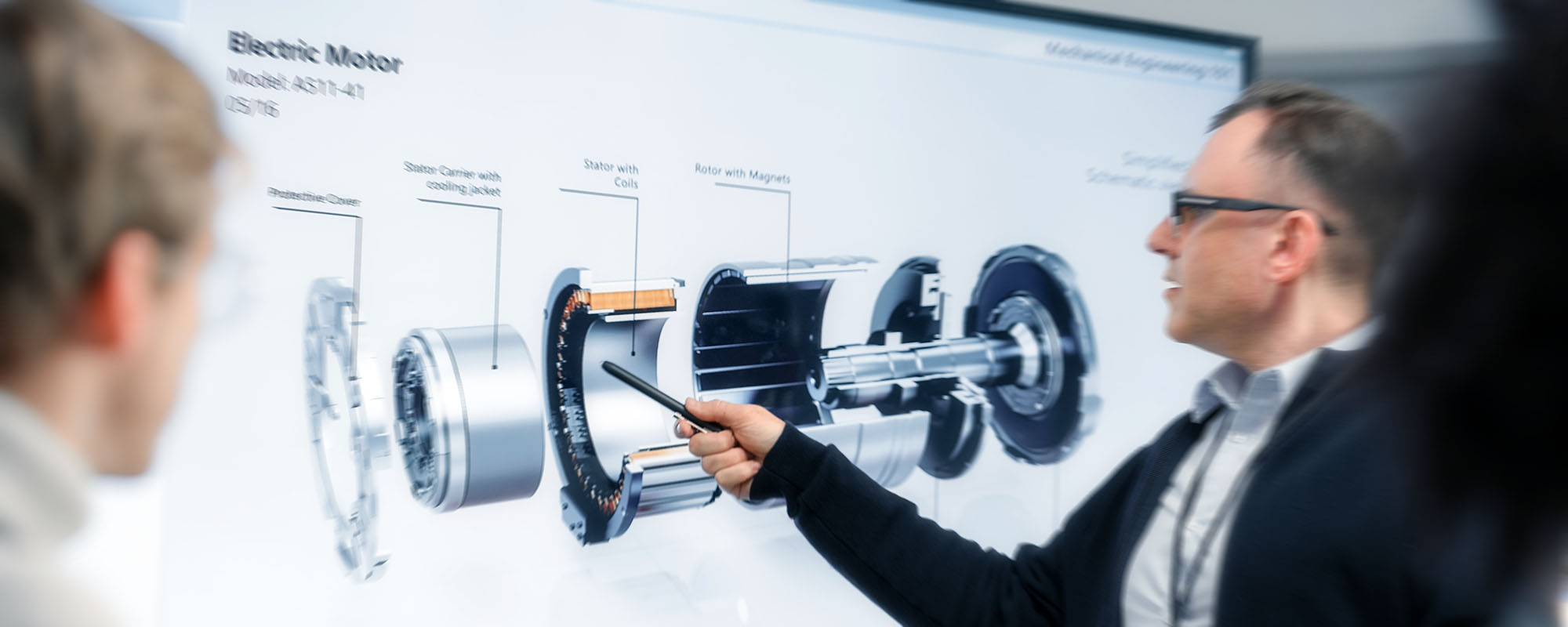
Electric motors are everywhere in modern infrastructure. If they are improved, the economic and environmental benefits are vast. Professor of Engineering Reiko Raute and his research team are developing an efficient, hybrid drive system that can be paired with induction motors or, yet more efficient, permanent magnet synchronous motors of his own design. He speaks with Jonathan Firbank about the technologies and the possibilities they represent.
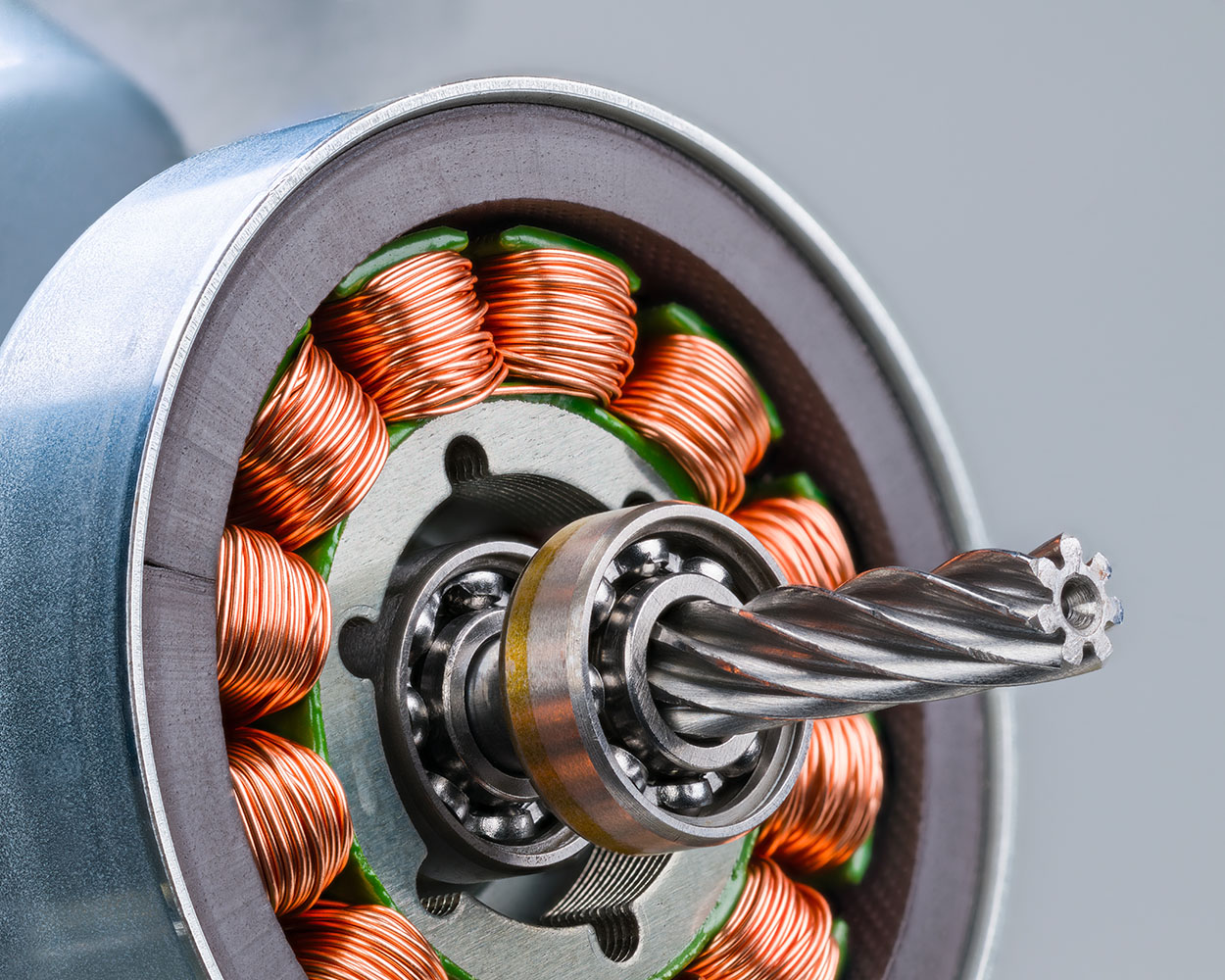
Modern civilisation is run by electric motors. Pumps, fans, compressors and conveyors bring us our water and process our waste. They facilitate the generation and delivery of energy that is then largely used by yet more electric motors. Beneath our feet, unseen and easily forgotten, there are overlapping networks of motor-dependent infrastructure, running endlessly and consuming vast amounts of energy. Half of our electricity is consumed by electric motors like these. Were they to become fractionally less efficient, it would be an economic and environmental disaster. Should they become fractionally more efficient, the benefits would be just as dramatic.
Prof. Reiko Raute from UM’s Department of Electrical Engineering has made a career of pursuing greener, more efficient technology in this field. This is well evidenced by his publication credits, and his work on efficient heat pump motor controllers in the private sector. But his current work on electric motors has particularly broad implications. He is developing two technologies. The first, the Hybrid Inverter Drive (HID), can be paired with conventional electric induction motors to improve their efficiency. The second, a novel permanent magnet synchronous motor, can be enabled by the HID. In tandem, they are more efficient still. These developments can provide electricity savings of 3–5%, respectively. When you consider the sheer amount of electric motors in use, that number represents something vast.
Our Motor Infrastructure
As Raute explains, ‘electric induction motors can run directly connected to the 50Hz grid, but only at a fixed speed. Alternatively, there are variable speed inverters that can be used to drive induction motors at any speed.’ Being able to control the speed of a motor inherently improves efficiency when less speed is needed. But for periods of time when the ‘fixed speed’ set by the grid is optimal, a direct grid connection of the motor might be 3% more efficient than with the operation of a variable speed inverter. This may not sound like much, but electric motors are omnipresent in modern infrastructure. In the West, ‘around 50% of our electric energy is consumed by electric motors. When you look at the industry, you see that approximately 70% of those are fixed-speed motors directly connected to the grid – often induction motors.’ Therefore, each percentage of efficiency represents a staggering amount of money and an even more important impact on our environment.
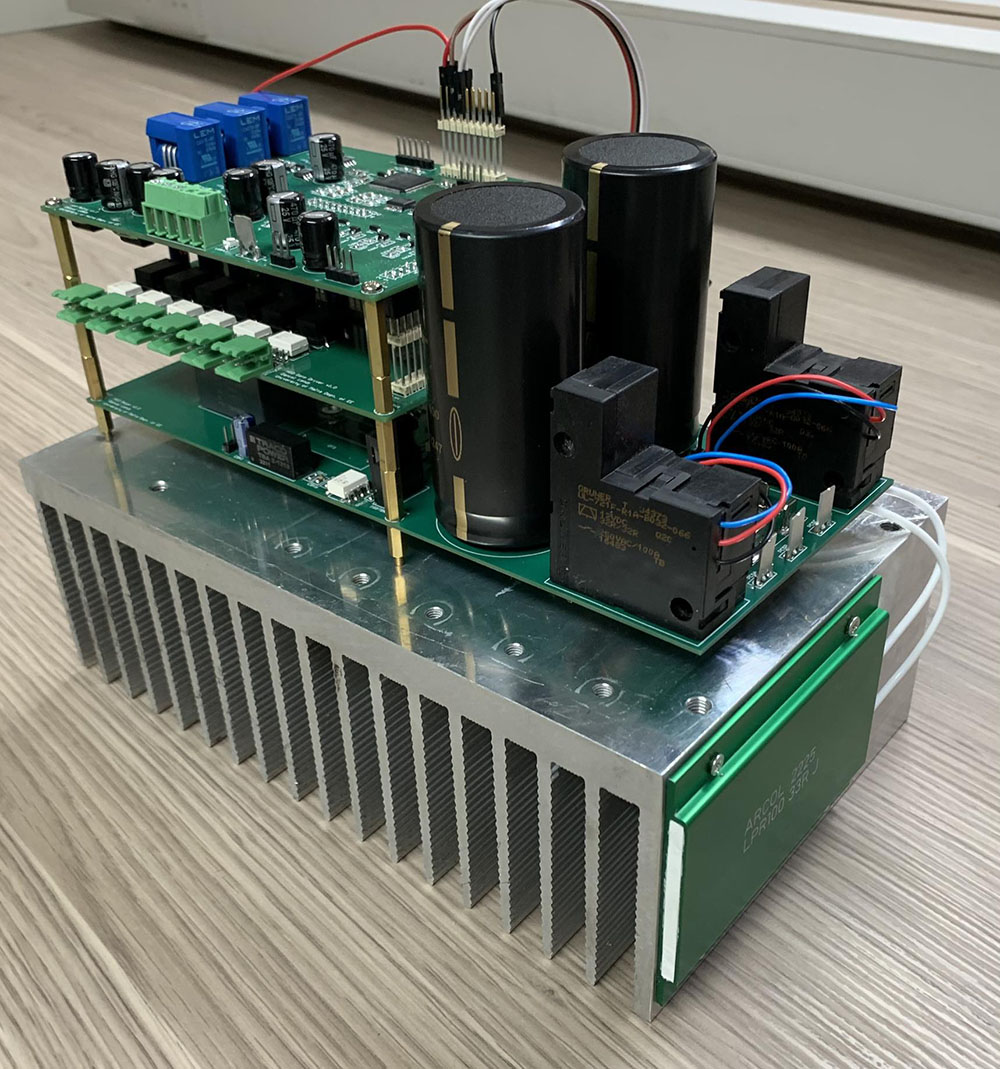
(Photo courtesy of Reiko Raute)
The examples Raute provides are pumps and fans, commonly found across our utility infrastructure. A fan might operate for a long time at the same speed, incentivising a simple, direct grid-connected motor operation. But, from time to time, conditions might lead to less demand on the fan. In those moments, a variable speed inverter should be used to allow optimal energy saving. The HID provides the capability of operating the motor with a variable speed inverter or direct grid connection. The internal smart algorithm detects when a direct grid-connected motor operation at 50Hz might be more efficient and switches the internal variable speed inverter off. On the other hand, when less speed is needed, the motor will be controlled by the internal variable speed inverter.
‘The name comes from hybrid cars. These cars choose between electricity and combustion depending on efficiency.’ Crucially, they do this automatically and seamlessly. ‘You don’t have to manually change a hybrid car’s propulsion, and you don’t feel a disturbance when it makes this switch.’ The HID needs to be just as automatic, and just as seamless, synchronising motor and inverter perfectly. When turning off, ‘the HID measures the grid voltage frequency to ensure the motor voltage is in exactly the same position. Then it switches so fast that there is no torque transient.’ Torque transient is the fluctuations in torque that strain and wear down a motor over time. A motor’s longevity can be as crucial as its efficiency, infrastructure that isn’t effectively ‘future-proofed’ is a financial time bomb.
Magnetic Efficiency
In the time since he last spoke to THINK, Raute has discovered that the HID can have a broader application, pushing efficiency to new heights by pairing it with a novel permanent magnet synchronous motor. These types of motors use permanent magnets on the rotor, instead of a rotor squirrel cage circuit used by conventional induction motors. They are extremely reliable, and their magnetic field does not demand a constant source of electricity. This answers the question of efficiency and longevity in the same instant. However, unlike self-starting induction motors, permanent magnet motors cannot start if plugged directly into the 50Hz grid. To that end, Raute sees the HID as ‘enabling technology.’ ‘We can use the HID as a motor starter. With its variable speed control, it can bring it from 0–50Hz in just 5 seconds, then switch over and connect the motor directly to the grid. With motors like these, we can increase efficiency by approximately 5% compared to standard induction motors.’
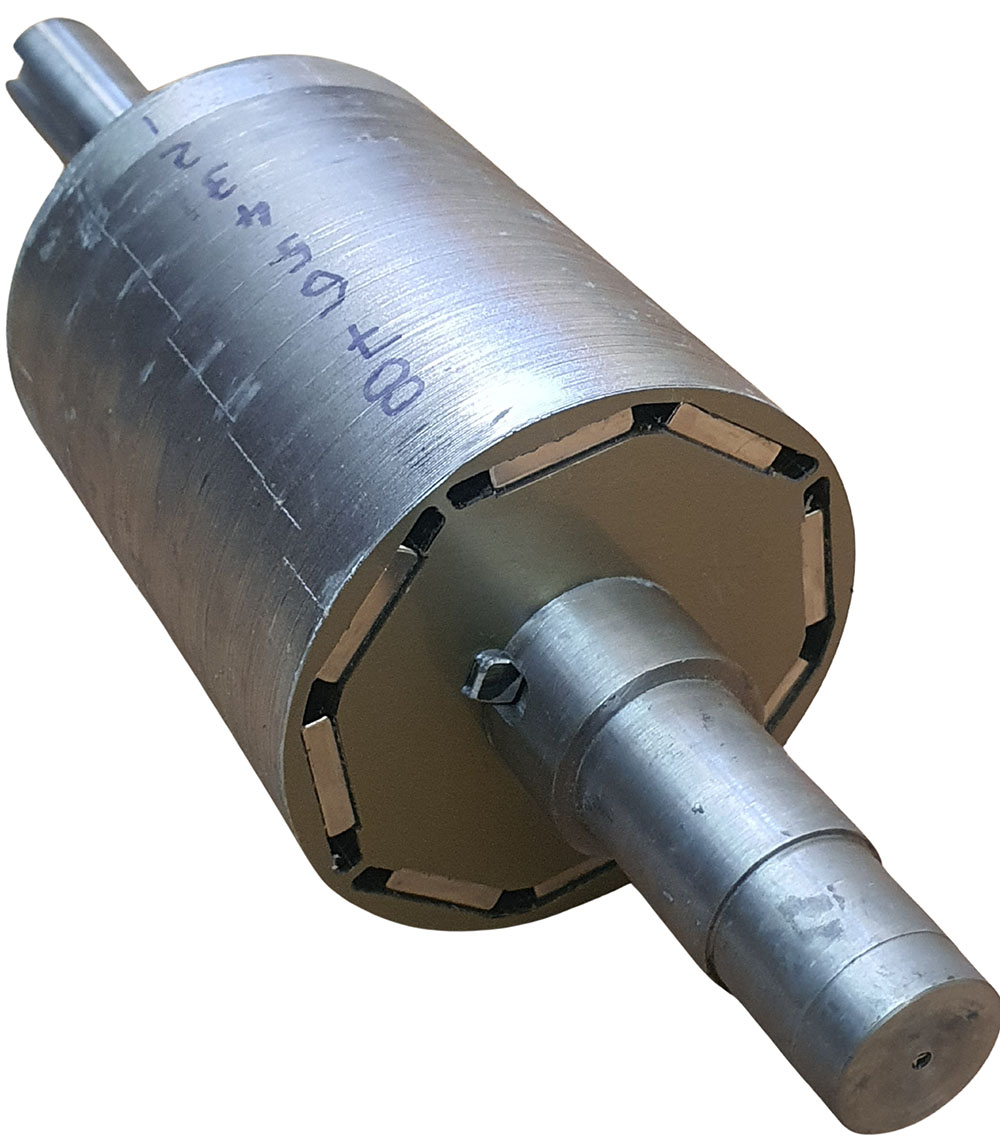
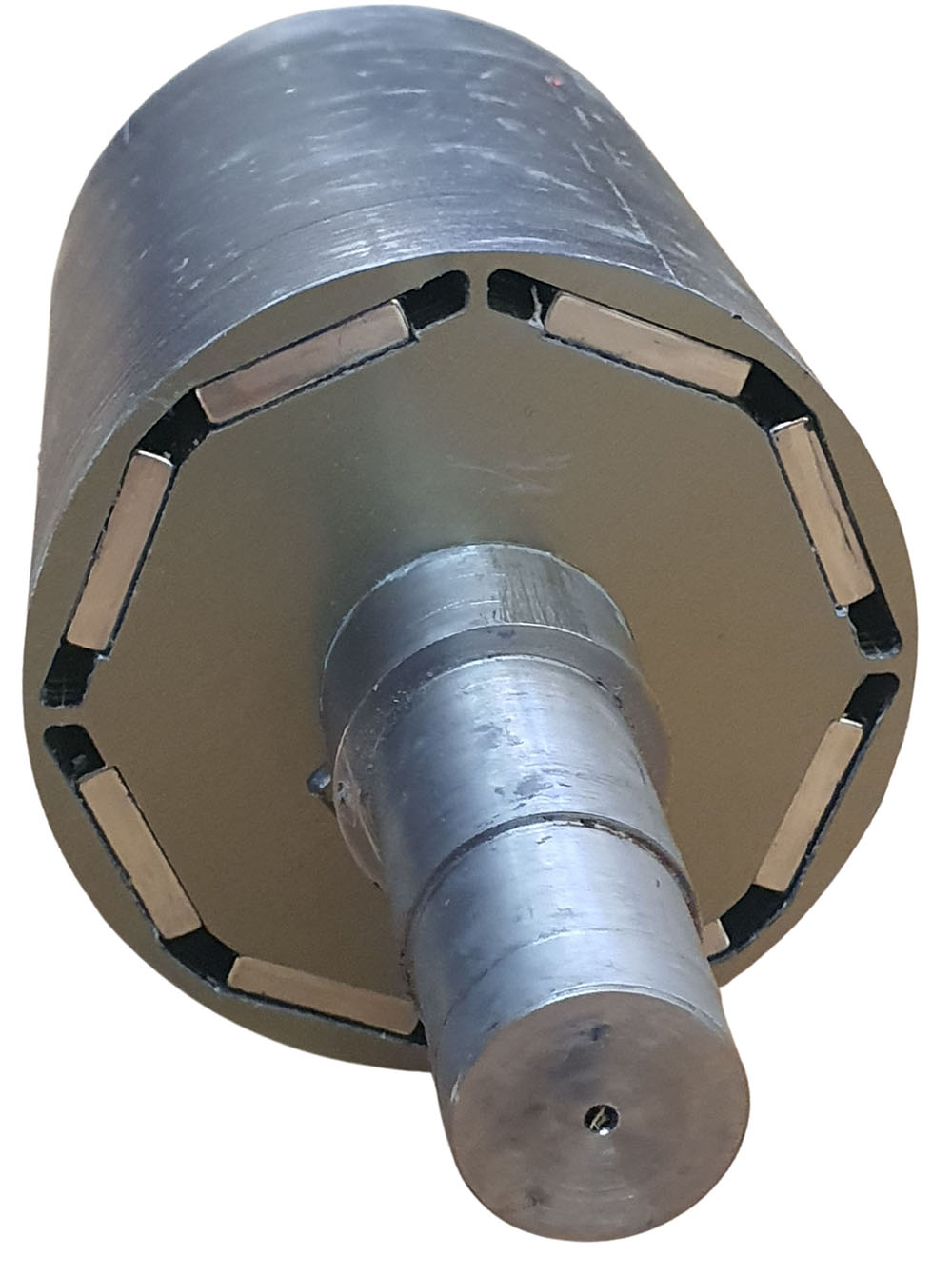
(Photos courtesy of Reiko Raute)
The benefits are clear, but to incentivise adoption of this technology, there needs to be no apparent drawbacks. This can be ensured with high manufacturing standards. ‘Induction motors are robust, industrial workhorses, with very simple construction that is paid for with less efficiency. A permanent magnet motor with an integrated HID device seems more complex. But with modern manufacturing capabilities, we can achieve the same reliability.’ The only caveat remaining is the upfront cost of these motors, which are higher than legacy technology. But ‘manufacturing costs are going down over time, while electrical power is still very valuable.’ Even now, manufacturing costs would be recouped by energy savings within a quarter of the motor’s lifespan – and this equation will look better and better over time.
Regulation is another factor that could drive the adoption of the HID, whether it is supplementing induction or permanent magnet motors. ‘The European Union classifies motors according to their efficiency, from IE1 to IE5. From this year onwards, only motors with at least IE3 efficiency can be sold within the EU.’ IE3 efficiency represents a plateau for basic induction motors, as ‘it’s very difficult for that technology to reach higher levels, such as IE4.’ IE5 efficiency is yet more demanding, a seemingly incredibly high standard. But the combination of HID and permanent magnet synchronous motors is an example of technology that could, one day, normalise this standard. In turn, this would enable regulators to raise the bar once again. This brings costs down, reduces environmental impact, and makes HID the motor that drives our infrastructure.
Project ‘Hybrid Inverter Drive (HID)’ is financed by Xjenza Malta, through the FUSION: R&I Technology Development Programme.




Comments are closed for this article!