
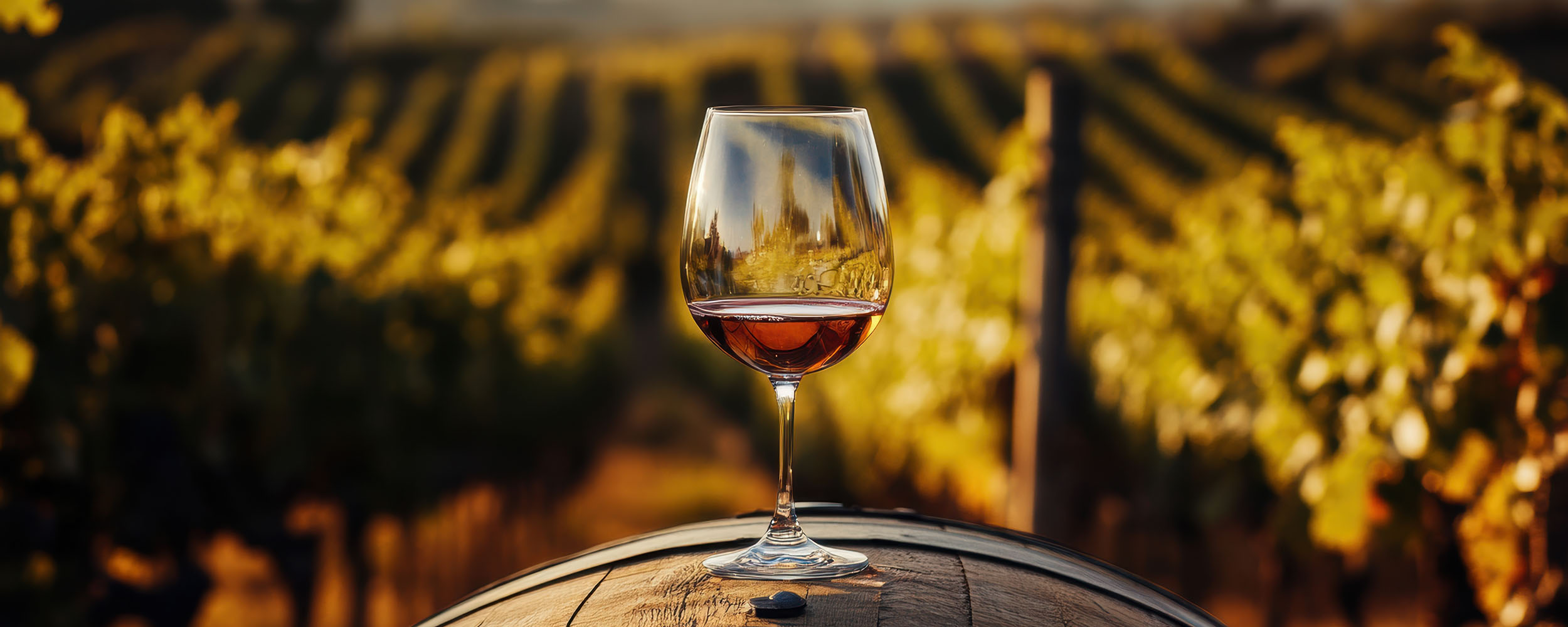
A bottle of wine goes through many steps before it reaches the glass. Starting from the grape, it is monitored, barrelled, bottled, registered, regulated, stored, moved, and sold. At each stage, people rely on trust instead of checking every detail. This can lead to issues such as counterfeit bottles, lost records, and questions from buyers about the wine’s origin. The main challenge is making wine traceable without adding cost or slowing down the process. Prof. Joshua Ellul and Prof. Gordon Pace at the University of Malta, and their team, are working on this problem.
VinoVeritas is a University of Malta research project by Prof. Joshua Ellul and Prof. Gordon Pace (Department of Computer Science), which aims to restore trust in wine. The project looked at Malta’s existing wine certification process and notarised aspects of it on the blockchain.
The project focuses on concrete solutions to providing tamperproof traceability. ‘Although VinoVeritas is still at the prototype stage, we have built a solution addressing two concerns. One is providing stronger assurances that the certification processes are tamperproof. The second is adding Internet-of-Things components such as sensors and various imagery data and linking it to each wine bottle,’ says Ellul.
Bringing together process checks and data collection reveals the current state of wine traceability. The primary objectives are to prevent fraud, simplify audits, instil confidence in buyers, and comply with regulations. A recent survey found that blockchain’s principal value in wine is creating a secure record that covers every step, from the vineyard to the store. This allows one to provide and check proof that the wine is genuine, meets regulations, and hence builds trust and makes it harder to counterfeit bottles.

(Photo credit: VinoVeritas Team)
Most wine businesses still use paper, spreadsheets, and barcodes because they’re inexpensive and familiar, but these can be lost and, more worryingly, easily tampered with – sometimes unintentionally. Newer tools, such as QR codes and RFID tags, help, but they don’t solve such issues of centralised data that can be changed. They can be copied or misused, and they don’t provide buyers or regulators with the full traceability they desire. A traceability ledger that records who did what and when doesn’t fix everything, but it makes cheating harder and checking easier.
Enter VinoVeritas
VinoVeritas began by examining the certification steps that the Maltese authority already employs, including winery registration, harvest declarations, and basic checks. Instead of redesigning the process, which would require the different players to be on board with the changes, the team simply added a layer of trust to the existing process. They identified the points of trust at each step and set up a solution that allows data to be recorded on the blockchain.
‘We created an attestation flow framework allowing for any entity to design their own process,’ Ellul says. The first iteration was a graphical tool; after initial user testing, the team pivoted to a chat-like interface since it fit better with how people actually think.

What gets recorded on the blockchain? Two things. Firstly, proof that each step happened in the correct order. Secondly, hashed evidence, which serves as a unique fingerprint of the data for that step. For wine, this could include temperature logs, humidity or soil readings, drone photos showing water or heat stress, thermal camera images, or lab tests.
‘We notarise hashed data, but that’s not too interesting if it’s just publicly available records of the weather. We also keep richer records, including imagery, with a hash of the drone image to guarantee that they have not been tampered with,’ Ellul says. That guarantee is valuable as it confirms that the photo you review today is the same one the winery submitted then.
The project has also integrated various hardware devices. The team has a robotic dog that walks through the vineyard, navigates through vine rows, and links each area or variety to a future bottle. The robot can collect field data automatically and associate it with the finished wine.

(Photo credit: VinoVeritas Team)
The team wanted the system to be simple. They knew that requiring users to install a crypto wallet would reduce acceptance, so they built a standard web app with a wallet-less approach. Users do not see the blockchain behind it. Keys are set up in the user’s browser, and the server handles transaction submission sent to the blockchain. Of course, there are trade-offs with this approach, yet the aim is to keep things manageable.
Public or Private?
Should regulators run their own blockchain? ‘I’m not convinced that’s the right way to go about it. For simple certification proofs, notarising the information onto the blockchain doesn’t cost much money. And a public chain adds resilience. Even if government servers are down, a consumer scan would still retrieve relevant data,’ Ellul says. Whilst some data should be public, other sensitive and proprietary data – such as detailed imagery or proprietary agronomy – should reside off-chain with robust access controls. The chain carries the guarantees, but the data sits in systems that enforce roles and rights.
The hybrid architecture mirrors broader best practices. Reviews of wine-chain deployments reveal that many solutions combine permissioned ledgers for stakeholder collaboration with public anchors for consumer transparency. Similar projects like VinAssure (IBM/eProvenance), My Story (DNV/VeChain), and Chai Vault (Everledger) vary in focus – temperature stewardship, storytelling, fine-wine authentication – but they all lean on the same trio: shared process records, IoT data, and an auditable trail a buyer can interrogate with a scan.
Wineries care about data. With a reduction in annual rainfall, producers need models to protect grape quality with less water. The primary challenge is obtaining sufficient data to build these models without compromising trade secrets. A future research goal is to find ways to share key information without revealing private details. This is a primary area of academic focus as we move beyond the current status of the project: facilitating collaboration while maintaining data privacy.

(Photo credit: VinoVeritas Team)
Studies show that the most complex problems in wine supply are not technical. They are about people and organisations. These include working together, maintaining data consistency, verifying data quality, protecting privacy, adhering to rules in different countries, and explaining the value to non-technical audiences. Blockchain does not solve all these problems, but it can help with some of them.
Attestation Lens
VinoVeritas can be viewed as a set of attestation steps, including clear, code-based checks, signatures, and state changes, that comprise the certification process. A machine can check each step, and each link is clear. When a regulator records an attestation stating ‘harvest declared’ or ‘bottling batch verified’, they add a fact to a shared, time-ordered log that any stakeholder or consumer can check later. Sensitive data is hashed and kept off the blockchain.
In research, attestation-based designs on Ethereum or similar blockchain platforms are popular. They allow developers to embed process logic into smart contracts, while keeping large or sensitive data off-chain and linked by hash.
Wine is not fintech. It should not be complicated. Ellul and Pace, who are collaborating on VinoVeritas, are discussing where blockchain is helpful and where it is not. They are clear about its principal value.
‘Blockchain is good for one thing and one thing only, and that’s bringing together different entities that do not trust any entity more than the other,’ Ellul says. That includes certification authorities and wineries, wineries and importers, importers and retailers, and retailers and consumers. Where everyone wants receipts, a neutral, append-only log earns its keep.

He is also clear about what matters most. ‘Most effort now in future projects would be on looking at predicting how to come up with a good-tasting wine, given certain water limitations and environmental challenges. The tech will fade into the background,’ he says. Blockchain will not be used everywhere. It will be used where auditability between parties helps track who did what and when.
That matches the evidence. A careful review of wine-chain deployments reveals better temperature stewardship in transit, easier label-claim verification, and quicker recall or dispute processes when ledgers are adopted – none of which require consumers to understand what a consensus mechanism is. They need a scannable identity, a shared log, and well-governed data.
Many producers are resistant to these ideas when they first hear them: If competitors can see my terroir data, why should I share it? The answer is simple: you should not.
The public ledger should only display what buyers and regulators require, such as key milestones and proof of integrity. All other data stays private, possibly in fully centralised private systems with a permissioned network of trusted partners. Ellul describes this split: a public record for consumer certification, and private storage for sensitive data, with the option to give access to authorities. In the future, if privacy-preserving data sharing improves, producers may share certain features in exchange for insights they cannot obtain on their own.
For winemakers, the system should feel like any modern phone app. ‘It’s a standard web-based interface, a walletless approach. Scan, submit, sign – without a crash course in crypto UX. For consumers, it’s even simpler: a QR code on the back label that resolves to a minimal, verified story – where, when, who – plus any extras a brand wants to tell. The complex engineering lives off-screen: signing keys in the browser, a relay that pays transaction fees, and tamper-evident linking between a bottle’s identifier and the facts attested to it,’ Ellul says.
Handle with Caution
None of this replaces the basics. Blockchains do not create truth; they only keep it. Bad data, even if timestamped, is still bad data. This is why research focuses on data validation, standardisation, interoperability, and energy-efficient systems, especially in an industry that relies on caring for the land.
The primary challenges in the wine industry include counterfeit bottles, inaccurate records, regulatory hurdles, buyer concerns, and climate change. Blockchain can help with these issues without requiring a complete overhaul. Start by recording the steps you already do and make them permanent. Link these records to each bottle. Add more details, such as temperature logs or drone photos, as needed.

(Photo credit: VinoVeritas Team)
And keep the pitch honest. ‘The wineries are not too interested in the blockchain itself,’ Ellul reminds. And that is fine. ‘They’re interested in surviving the next decade of weather and regulation while protecting their name. The ledger helps not because it’s fashionable, but because – quietly – it raises the cost of lying and lowers the cost of checking,’ he concludes. For wine and for institutions, that is often enough.
The VinoVeritas Project is co-funded by the European Union under the M16.2 of the Rural Development Program (RDP) for Malta 2014–2022. The University of Malta team worked closely with the National Viticulture and Oenology Centre (NVOC) in exploring experimental aspects of the project.
Read our previous article on the VinoVeritas Project to learn more.




Comments are closed for this article!