
Students are already using Artificial Intelligence, so what should libraries do about it? Drawing on research and observation at the University of Malta Library, this intern-led article investigates how students actually use AI, and whether library services are keeping pace. It ultimately reframes the conversation: not what libraries can build, but what users truly need.

As AI rapidly reshapes virtually every sector – especially academia – libraries are racing to explore its potential uses. However, this presents a complex challenge for libraries, which must simultaneously regulate AI to comply with legal requirements, such as copyright law, while meeting students’ growing demand for its integration into services. To address this, libraries have begun incorporating AI into their systems, introducing new services that impact both backend operations (e.g., digitisation) and user-facing functions (e.g., reference searches). Still, a critical question remains: are these AI-driven services genuinely meeting patron needs, or are academic libraries chasing a popular new technology without providing substantive user benefit?
Paul Nikolaus Koch is a Swiss intern currently training at the UM Library
(Photo courtesy of Paul Nikolaus Koch)
Where Have Libraries Implemented AI?
When students use AI, it is usually for one of a few things:
- To get a quick answer to a question
- To generate, rewrite, correct, or summarise a text
- To assist their studies by explaining complex topics
- To help brainstorm a topic or ideas
- To find references or help as they research
Most students use well-established chatbots like ChatGPT for such inquiries. In academic institutions, the prevalence of AI use has led to the adoption of AI-detection software to ensure fairness. However, beyond this, educational institutions have become an experimental landscape exploring AI use for the betterment of knowledge transfer and research.
For libraries, it makes the most sense to implement AI into existing services. In the 2025 Pulse of the Library report, 67% of libraries reported exploring or implementing AI. A common application has been the use of chatbots in reference services or to provide quick answers to simple questions about library services, even when staff are unavailable. AI is also being used and tested on the backend, for instance, in digitisation and cataloguing. Although users cannot directly access these processes, they still benefit indirectly. Improvements include better digitisation via enhanced text recognition and faster cataloguing, which can also increase the discoverability of resources through systematic tagging.

Still, there is quite a difference between student expectations and current library provisions, likely stemming from the fact that, aside from internal use, no library appears to have fully implemented generative AI (GenAI) as a widely accessible service. The reasons for this are very simple. It would be a completely new service for libraries, not an improvement on an existing one, and generative AI is the most expensive AI model. Large language models (LLMs) such as ChatGPT aren’t a very viable option for libraries, as their usefulness for library services is fairly limited, and they require the most training data, which could pose copyright issues for libraries.
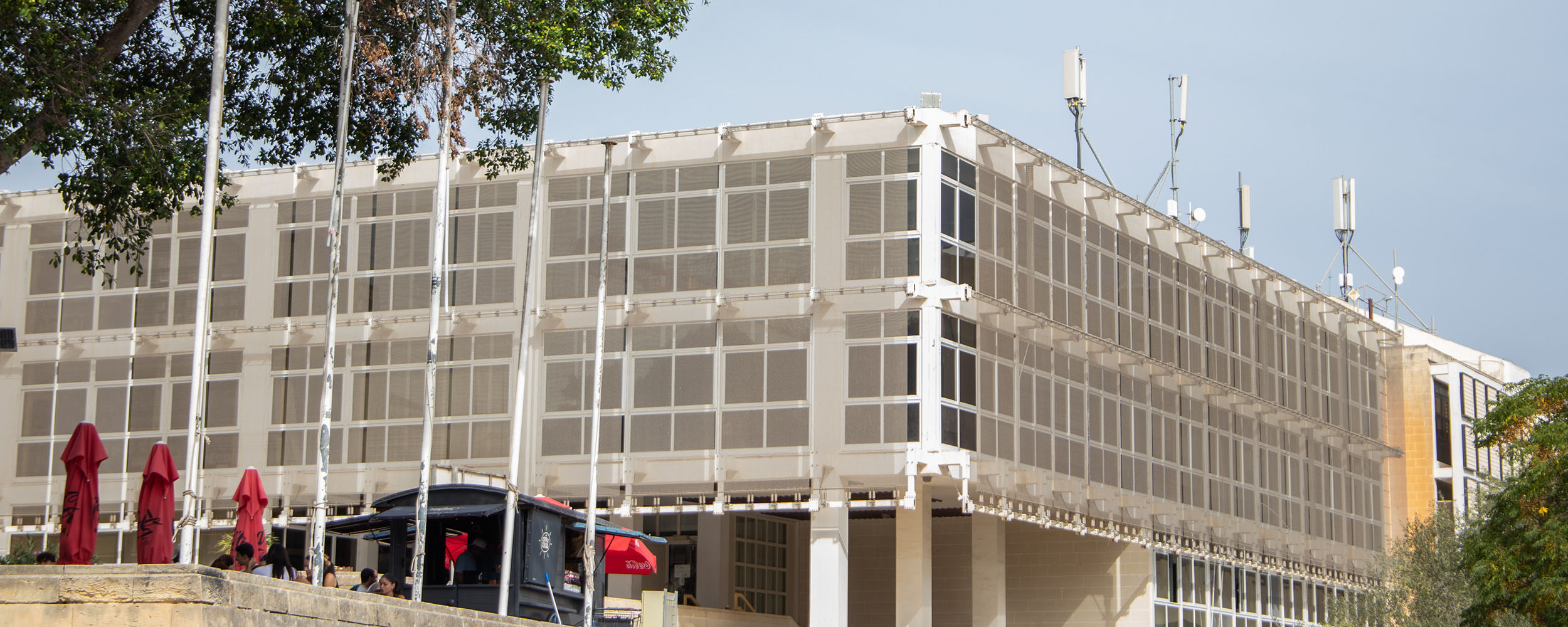
The UM library’s Digitisation Unit is currently exploring advanced AI-driven technologies like Transkribus for Handwritten Text Recognition (HTR) to transcribe historical Maltese manuscripts into searchable digital text (Photo by James Moffett)
Libraries should not implement GenAI or LLMs; rather, they should teach patrons how to use AI properly and ethically. Both the cost and the resources required to apply GenAI in the library setting aren’t worth the limited value they would provide to library users or staff, who would likely continue using AI models they are already familiar with outside the library. As such, academic libraries should focus on AI use that better assists patrons; it is not necessary to accommodate students’ AI needs beyond this scope.
Hurdles and Fears of Adopting AI
Copyright Issues and Unreliability
GenAI has, in many cases, been trained on accessible media, regardless of the rights of use. Because AI often does not cite its sources unless prompted, students can easily run into copyright issues when using it. Students could also run into self-plagiarism issues when providing their own excerpts to chatbots to summarise, inadvertently feeding their own content to the AI.
Aside from copyright concerns, GenAI has also been found to hold biases based on gender and race, possibly owing to the lack of diversity within its training data. It also tends to present made-up information as facts and to spread untrustworthy sources as truthful, thereby further circulating misinformation.
Budget and Job Cuts
Another problem libraries might face is the high cost of AI, which ranges from $5,000–500,000 depending on the desired services – the more complex and capable AIs are, the more expensive they get. Academic libraries have to carefully consider which services will best serve their patrons to avoid investing in tools students neither need nor want. Notably, 47% of respondents in the 2025 Pulse of the Library report cited budget constraints as their top challenge, making it the greatest concern in 2025.
Perhaps one of the most common fears about AI is that it could replace workers. With budgets being such a concern, even if job losses do not occur due to automation, they may happen because of the high costs associated with AI in its early stages.
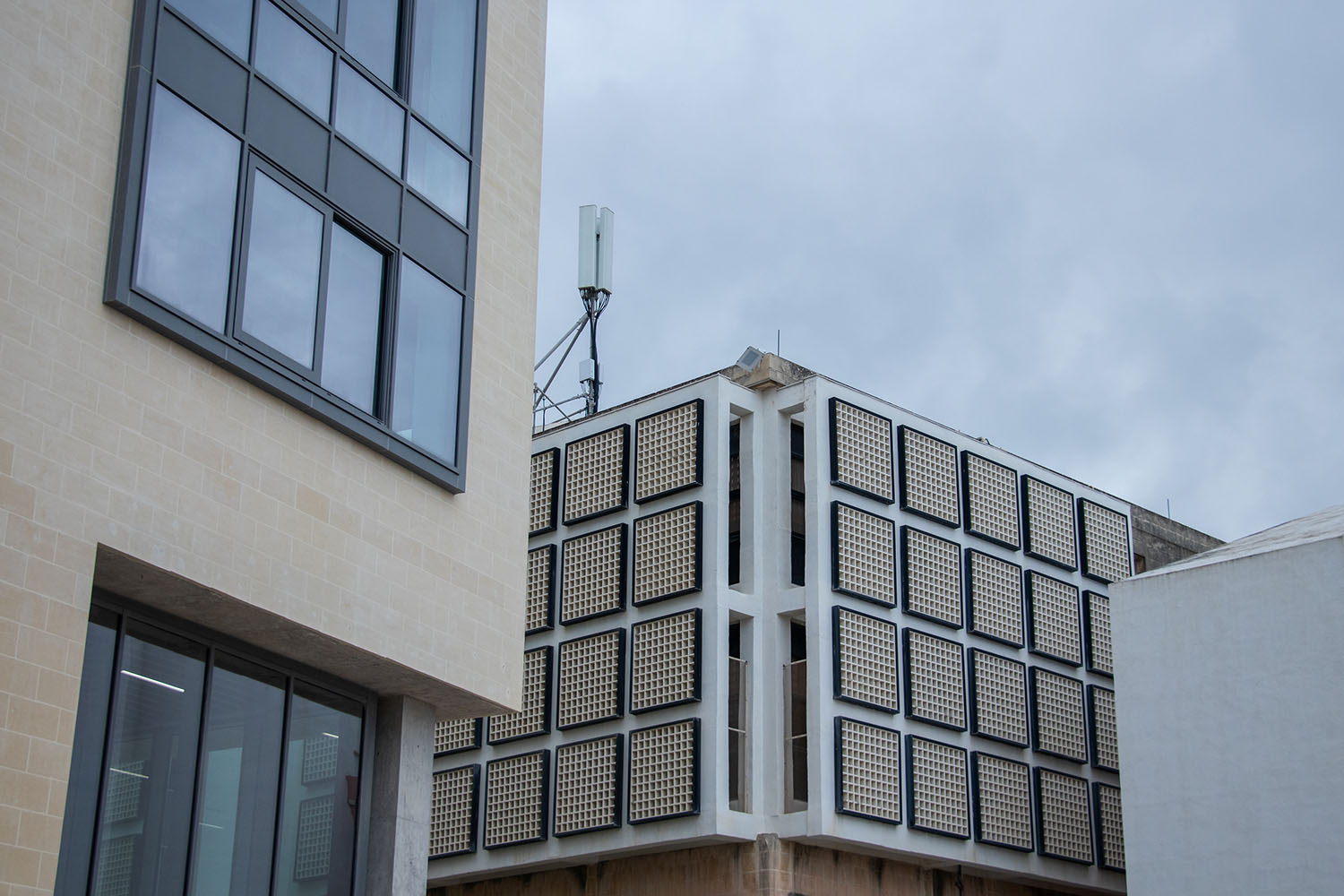
As physical book storage is optimised, more space is being reclaimed for workshops, exhibitions, and outreach events where students can engage with the campus community (Photo by Ryan Scicluna)

Dependency and Lack of Staff Training
As more individuals, especially younger students, become increasingly dependent on AI to write simple texts or answer generic questions, there is a growing fear that they are slowly but surely degrading their own ability to perform these tasks. An overreliance on AI can cause several problems, which is why it should be used strategically and with restraint.
Although a much larger concern for students, library staff often feel they lack proper training regarding AI use. Due to insufficient staff training, workers find it more challenging to use AI effectively and are more prone to overreliance on it. Notably, some cataloguers worry that excessive reliance on AI can lead to limited critical thinking in how items are catalogued. Libraries should focus on educating their staff on how to use AI and the implemented services effectively, while being mindful of overuse.
AI in Academic Libraries: Case Studies and Ideas
AI has been noted to increase efficiency and even reduce stress for students, as they are less worried about assignments and have an easier time studying. As such, having supportive AI services at the Library can elevate students’ study experience while also decreasing their stress.
At Mount Royal University and the University of Calgary, AI chatbots for referencing have been successfully implemented, albeit still at an early stage. Similarly, the University of Delaware Library’s referencing chatbot was trained by reference librarians, staff, and student workers, who entered reference questions they received from students and checked the accuracy of the answers. This helped to dispel some fears surrounding the reliability of the service. These chatbots can now answer simple reference questions, prompting users to ask librarians more complex questions.
Besides chatbots, many academic libraries, such as the Leddy Library at the University of Windsor and the University of Western Australia Library, offer AI literacy courses and have created guides to assist students in using AI for their schoolwork.
Teaching Proper AI Use at the UM Library
At the University of Malta Library, both the physical and digital spaces are continually being improved, and given the prevalent and valuable use of AI across many sectors, the Library seeks to determine its patrons’ expectations for new AI services. Drawing on the hurdles and issues of AI use, the librarians have observed a need to educate students about the responsible and ethical use of AI.
Alongside the UM Library’s implementation of AI, courses on the effective use of AI for students and academic staff would be a valuable addition. Courses could also be offered on learning strategies and study skills to help students who might otherwise turn to AI. These courses can take place throughout the year, but should especially be offered and directed towards newer students, who are the most impressionable and might find it difficult to change their study habits later on. Internal training would also be offered to library staff who will be using AI internally, as well as to assist patrons in using public-facing services.

Besides such courses, the UM Library is also keen to offer an introduction to the AI services provided, such as through a brochure and instructional YouTube Videos, so even without attending a course, students have an easier time understanding how to use the services, what not to do, and maybe learn some general tips about using AI along the way.
AI has proven itself useful, increasing the efficiency of those who use it despite the issues it raises. As libraries move away from physical media and become information and event hubs, more applications are expanding chatbot capabilities in reference services and implementing chatbots to answer simple, frequently asked questions. The UM Library is keen to explore these services to support its patrons and staff… but where should they start?

Do you want a hand in shaping the UM Library’s AI services? Help out by filling this brief survey: https://forms.gle/wxDjd76Uh3JPjAao9
Further Reading
- Shantha, P. (2024). Transforming Library Services with Artificial Intelligence: A New Era of Automation. Iconic Research and Engineering Journals, 8(5), 1258–1272. https://www.irejournals.com/formatedpaper/1707271.pdf
- Young, A. L. (2025). Implementing AI Chatbots in Academic Libraries. Journal of the Korean Society for Library and Information Science, 59(4), 315–335. https://doi.org/10.4275/KSLIS.2025.59.4.315




Comments are closed for this article!