

Residential battery storage systems are an excellent tool for homeowners to increase renewable energy self-consumption. However, their role becomes truly meaningful during a grid outage. While mainstream battery storage inverters now commonly offer an Emergency Power Supply to support critical loads, a key question remains: how does maintaining this ‘backup readiness’ actually impact the long-term efficiency and day-to-day operation of the system?
As feed-in tariffs for renewable energy have decreased, residential battery storage systems have gained popularity. While their primary objective is to increase self-consumption, modern technological advancements now offer a suite of additional features. At the University of Malta, the ACTUATE Project (Enhancing the Contribution of Residential Battery Storage Systems) focuses on improving these technologies. The project is led by a specialist team from UM’s Department of Electrical Engineering, including Principal Investigator Prof. Cedric Caruana, Prof. Ing. Reiko Raute, Dr Assia Mahrouch, and Kurt Farrugia. THINK speaks with the ACTUATE team to examine the complexities and capabilities of the Emergency Power Supply (EPS) feature.
What is the EPS Function?
For safety reasons, grid-connected inverter systems must include anti-islanding protection that disconnects them from the grid in the case of grid failure. This is a mandatory safety requirement designed to prevent electricity from being fed back into the grid while utility personnel are working on it.
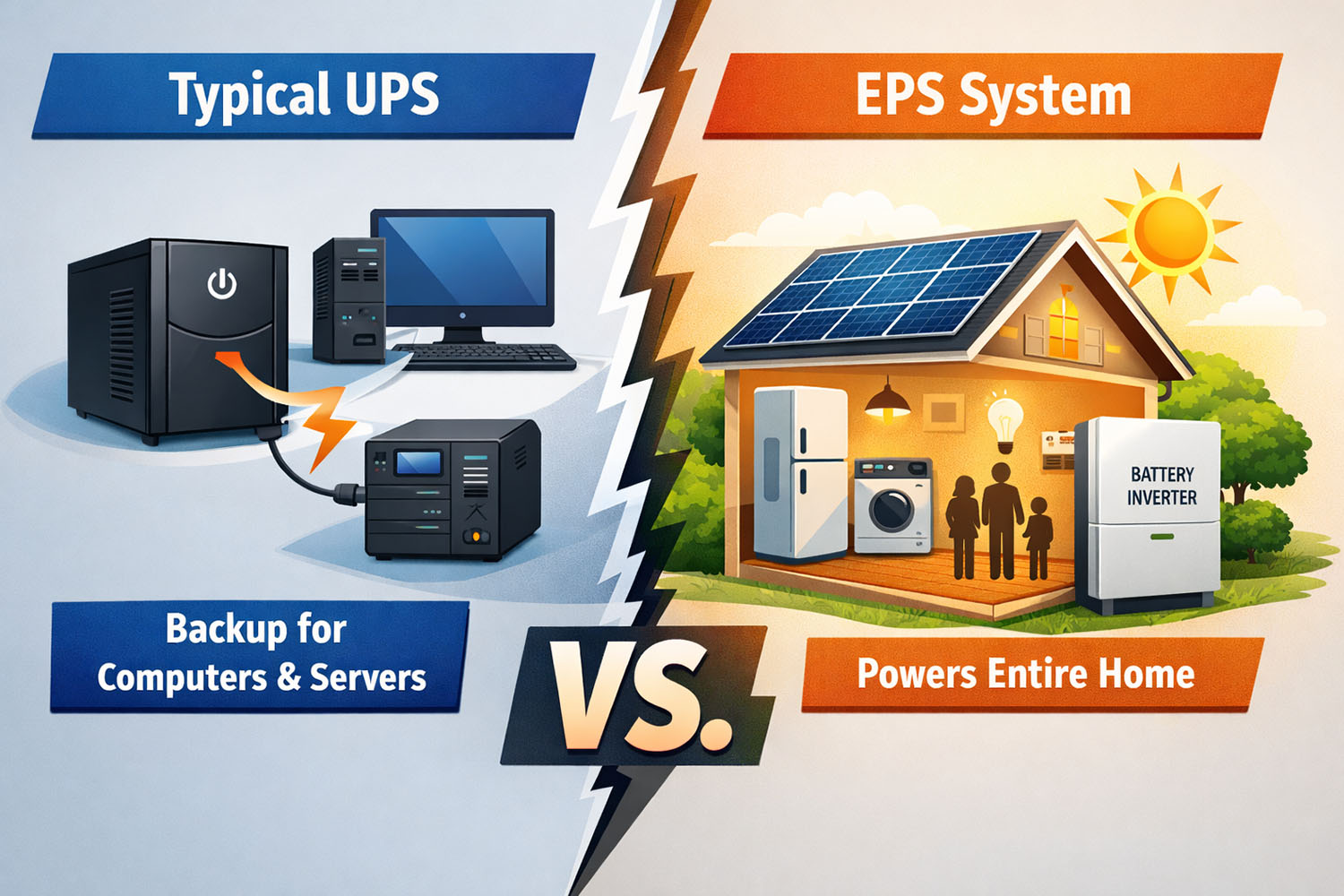
Recently, mainstream battery storage inverters have started to integrate EPS functionality, enabling homeowners to continue using stored energy even during grid faults. Manufacturers use various terms to describe this functionality, including backup, anti-blackout, and microgrid operation. The feature differs from that of a traditional Uninterruptible Power Supply (UPS) as it does not provide strict voltage or frequency regulation but operates with more relaxed parameters to accommodate a wider range of household loads.
The EPS Changeover Switch
Operating an EPS requires a changeover switch to isolate the inverter and its associated loads from the grid, forming a localised network within the property. Depending on the inverter’s configuration, this transition – which can be performed automatically or manually – can be very fast in the range of milliseconds or may involve a short delay of a few seconds, which is acceptable for most household appliances. Hardware availability also varies, with the switch being either integrated or sold as an external add-on by some manufacturers. In most cases, the inverter power and changeover switch ratings may not cover all household loads, therefore it is crucial to identify critical or priority loads, such as refrigerators and main lighting circuits. In particular, motor loads are generally not supported due to their high starting currents.
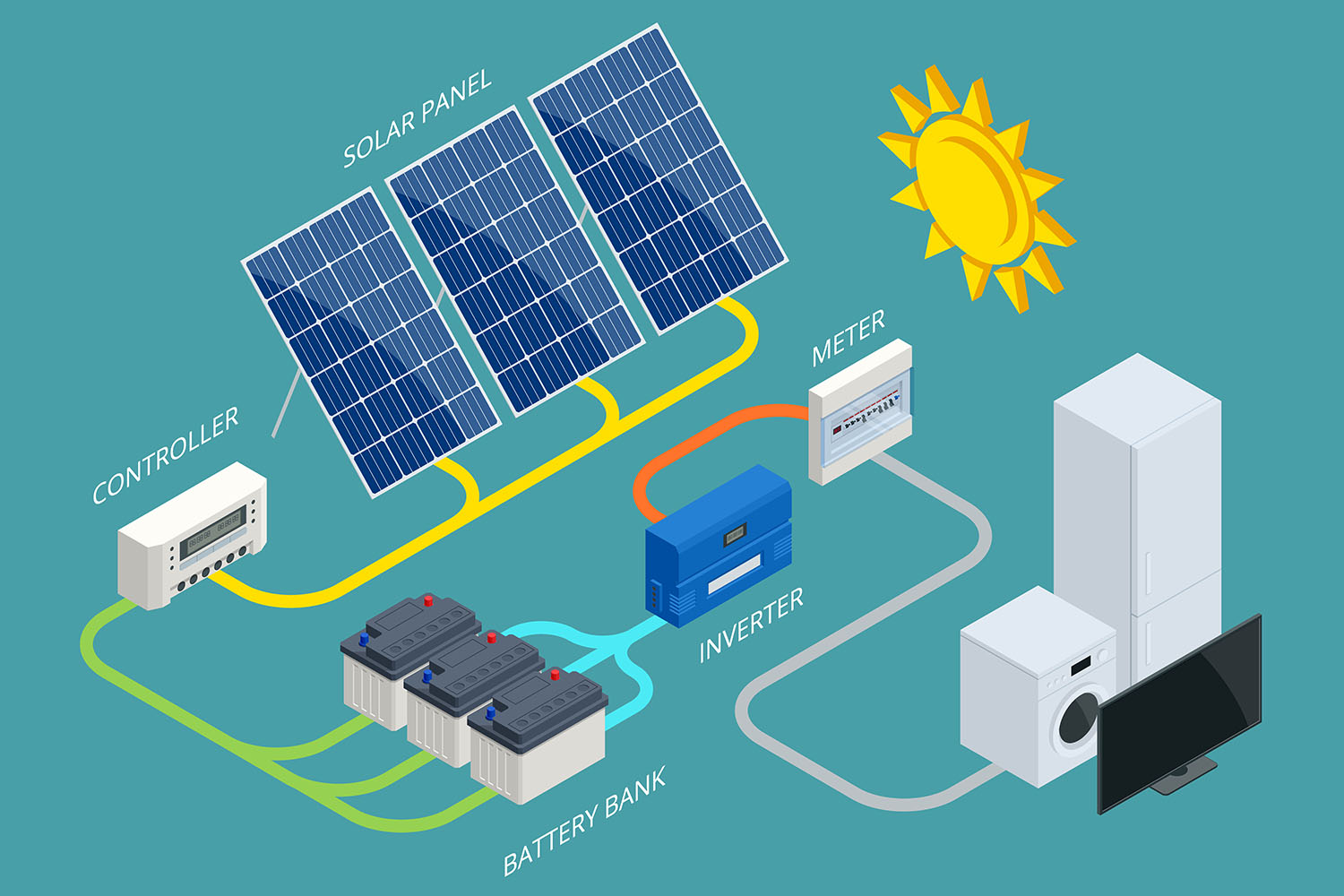
Some inverter brands go a step further and allow photovoltaic (PV) generation to be utilised in the event of a fault during the day. Any excess generation can recharge the battery, thus extending the backup duration well beyond the battery’s capacity. Utilising PV generation is straightforward in the case of hybrid inverters with DC-coupled batteries. For AC-coupled batteries, the process becomes more challenging because the system must accommodate excess PV generation when the battery is full. Utilised solutions include a communication channel between the battery and PV inverter and AC frequency shifting to notify the PV inverter to halt generation if there is an oversupply.
How Do the Inverters Ensure Energy Availability During Faults?
Battery storage inverters reserve a portion of the usable battery capacity for the EPS function. This guarantees backup availability, even if the battery has been heavily used. Reserving capacity for the EPS is generally implemented using two minimum State of Charge (SOC) thresholds: the upper threshold is used for normal operation, and the lower threshold is activated upon detection of a grid fault. The difference between the two thresholds is the percentage of battery capacity reserved for the EPS. While increasing this reserve extends autonomy during a power outage, it is difficult to standardise an optimal percentage due to the unpredictable duration of grid faults and the specific power requirements of the selected priority loads.
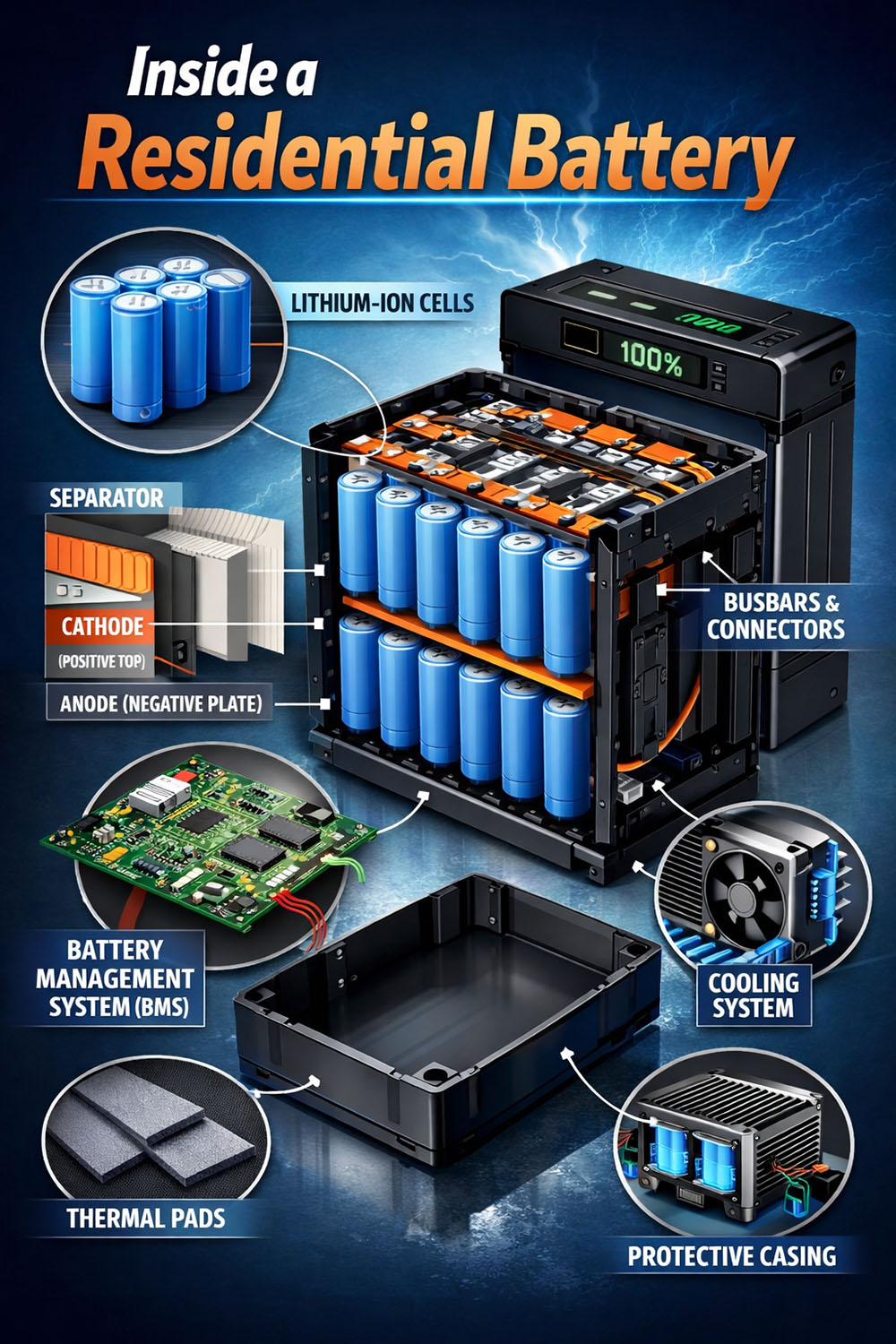
The internal components of a battery storage system (Image courtesy of Prof. Cedric Caruana)
Balancing Daily Use and Emergency Needs
Determining the optimal EPS allocation requires careful balancing of security with economic return, especially as reserving part of the battery storage capacity for EPS reduces the usable percentage for daily self-consumption. Self-consumption is intended to replace grid electricity purchases at higher rates, so operating with the equivalent of a smaller battery translates to decreased revenue. For example, for a household with annual consumption in tariff band 3, the self-consumption decreases by approximately 17% for a 30% EPS allocation. Notwithstanding the lower financial return, having backup power during grid faults can be seen as priceless. Ultimately, this is a trade-off that individual users must make.
While a high EPS reserve provides security, it forces the battery to spend the majority of its life at an elevated SOC. This ‘high-pressure’ environment triggers a chain reaction of chemical degradation. Elevated SOC levels promote electrolyte oxidation at the cathode, leading to the growth of the Cathode Electrolyte Interphase (CEI) – a resistive layer of decomposition products. These degradation byproducts can migrate to the anode, accelerating the growth of the Solid Electrolyte Interphase (SEI). Together, these layers ‘clog’ the battery internally, prematurely ageing the battery and degrading its performance.
Based on the findings from the ACTUATE project, the following are three strategic recommendations for the smart use of the EPS function.
- Selective Load Prioritisation: While the convenience of full-property backup is appealing, users must carefully select which loads are critical. Reducing demand on the EPS port directly minimises the reserve capacity required, preserving the system’s economic return.
- SOC Management: To mitigate the chemical degradation associated with sustained high SOC levels, users should avoid a consistently high percentage allocation for the EPS function. A more effective strategy would be to temporarily increase the reserve during high-risk weather events or planned power cuts.
- Value in Flexibility: For those prioritising high autonomy, there are alternative ways to utilise idle energy in the EPS reserve. By engaging with aggregators or energy communities, homeowners can consider providing grid flexibility services, allowing them to earn additional financial return.
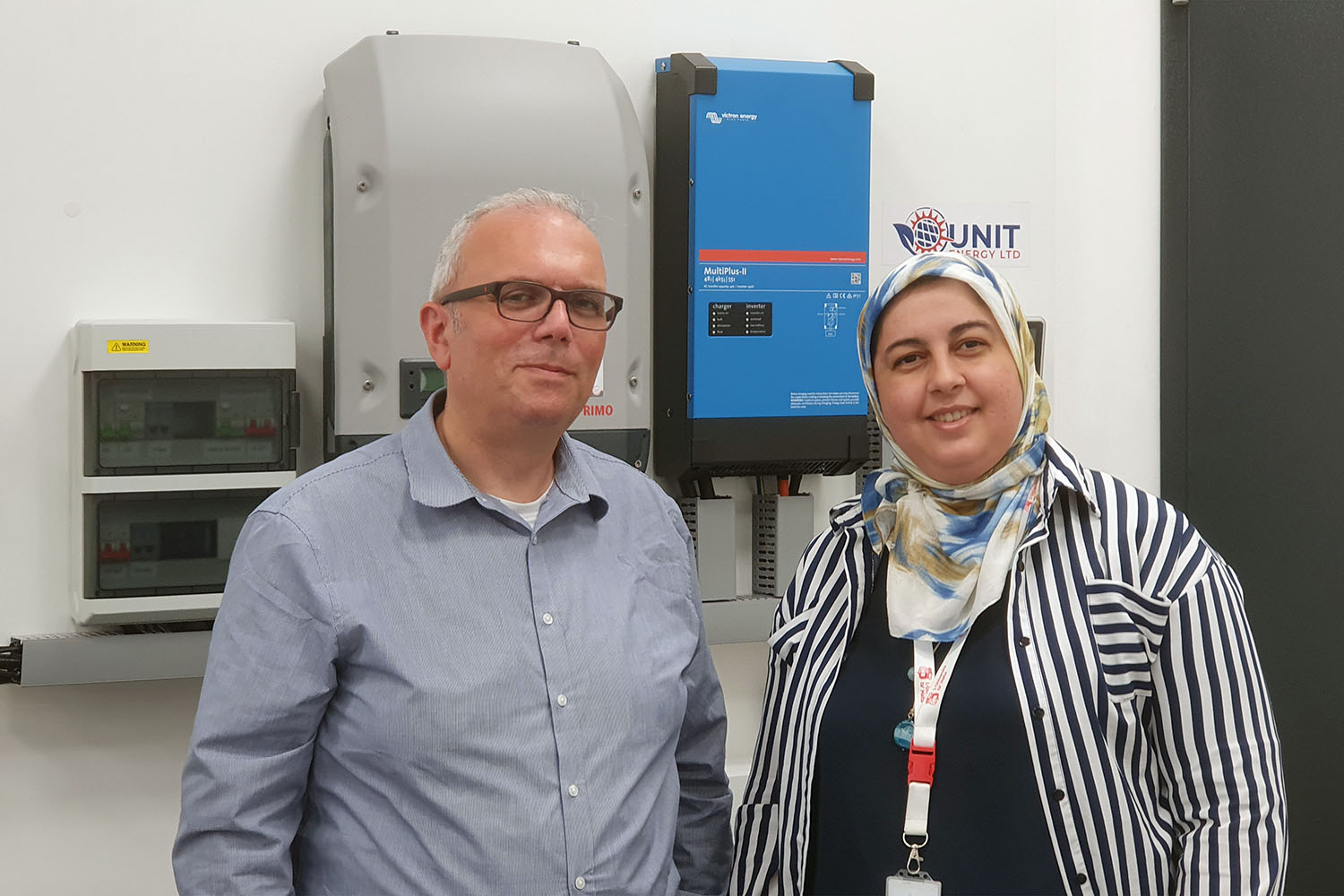
The ACTUATE Project is financed by Xjenza Malta through the FUSION: R&I Research Excellence Programme (Grant Number REP-2024-014).




Comments are closed for this article!