
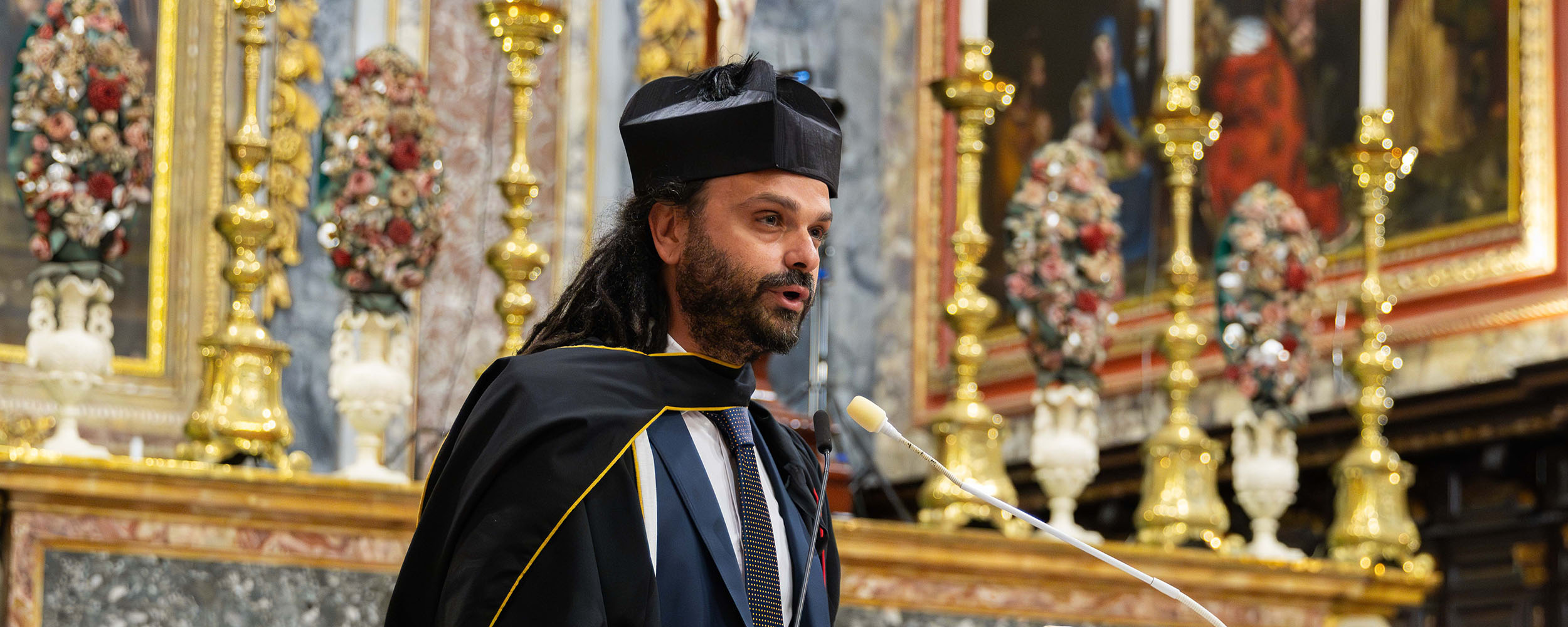
HUMS marked the conferment of an honorary doctorate on Dr Andrè Callus by inviting him to discuss his activism in detail, shedding light not only on his background but also on the meaning behind the activism. The unique and personal insights offered by Callus illuminate the context within which one of Malta’s leading NGOs operates, and what has made it a success.
On 21 November 2025, Moviment Graffitti spokesperson Dr Andrè Callus was awarded a Doctor of Social Sciences honoris causa for his longstanding commitment to social activism. The University of Malta honoured him for ‘embodying a selfless public-spirited social philosophy; for his steadfast and longstanding commitment towards social justice, the protection of the environment and the prevention of unfair and unsustainable land use; and for fearlessly and courageously standing up against the powers that be when he perceives the perpetration of injustices.’ Three days later, Callus took the stage in the Aula Magna of the Old University Building in Valletta at the invitation of the Humanities, Medicine and Science Platform (HUMS) Coordinator Prof. Clare Vassallo. There, he was able to speak at greater length and take questions in a panel discussion with Prof. Elisabeth Conrad and Prof. Michael Briguglio. This allowed the occasion of his award to shed further light both on himself personally, Moviment Graffitti, and the role of activism in a troubled world.
When Andrè Callus took the floor, he began by expressing his surprise at the occasion. The conferment of an honoris causa, he said, was not something he had anticipated, though he accepted it with gratitude. The remark set the tone for a reflection that resisted self-congratulation, instead turning outward to the experiences, structures, and motivations that have shaped his activism over the years.
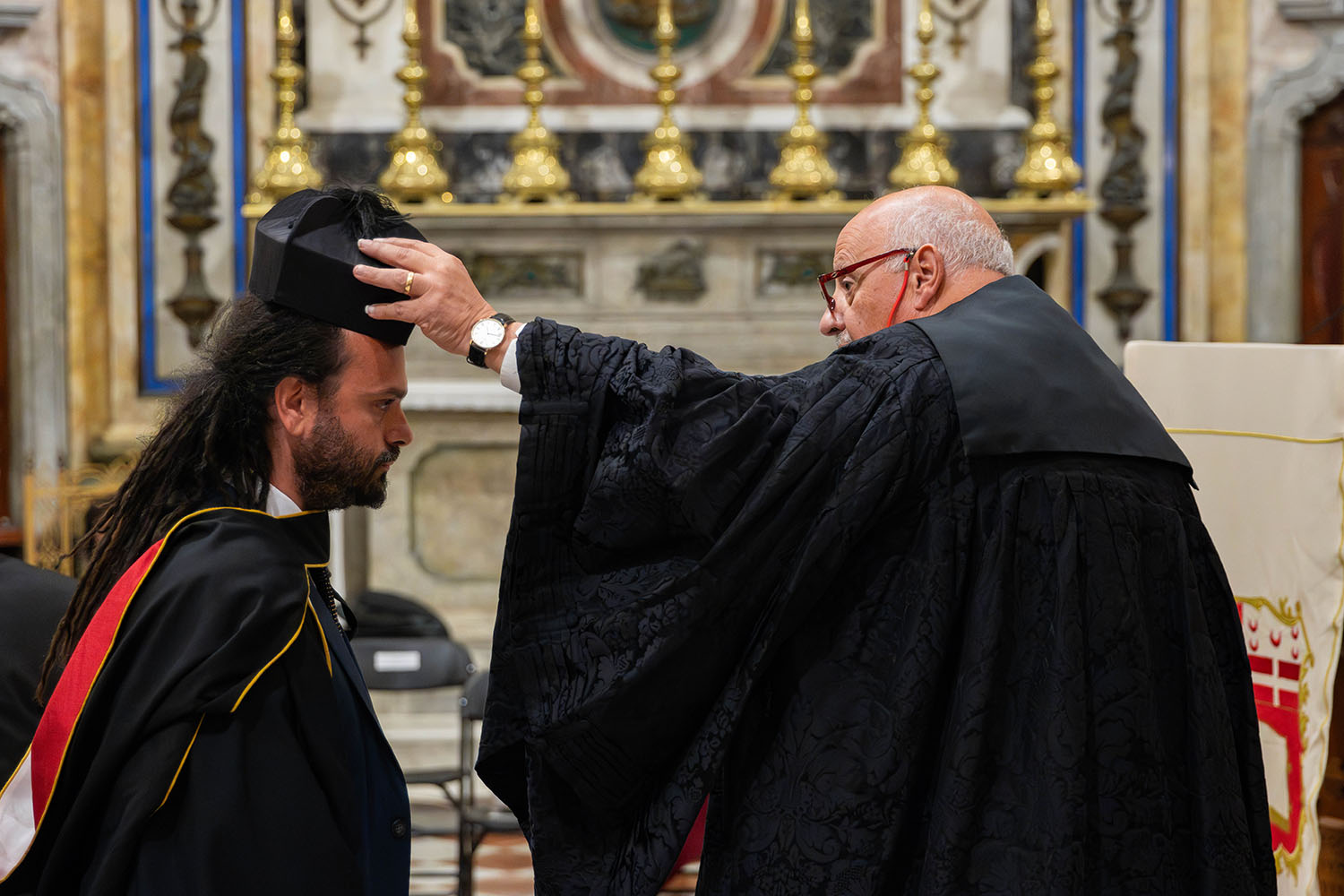
(Photo by James Moffett)
Origins of a Public Voice
At Briguglio’s invitation to learn about the man in his private life, contrasted with his public image, Callus traced his political engagement back to his youth. He recalled attending his first protest with Moviment Graffitti at Portomaso as a teenager. Callus described himself then as shy and introverted – an image which is at odds with the persona we know today. The protesters at Portomaso left a lasting impression on Callus, driving him to engage in activism ever since.
Over the years, while Callus says he has been supported by his family, his activism is not necessarily a result of his upbringing, describing a typical Maltese family with the common fears around speaking out in a partisan country where opposing the powers that be can endanger one’s prospects and career. This unfortunate reality did not stop him, nor did it lead to a withdrawal of his family’s backing.
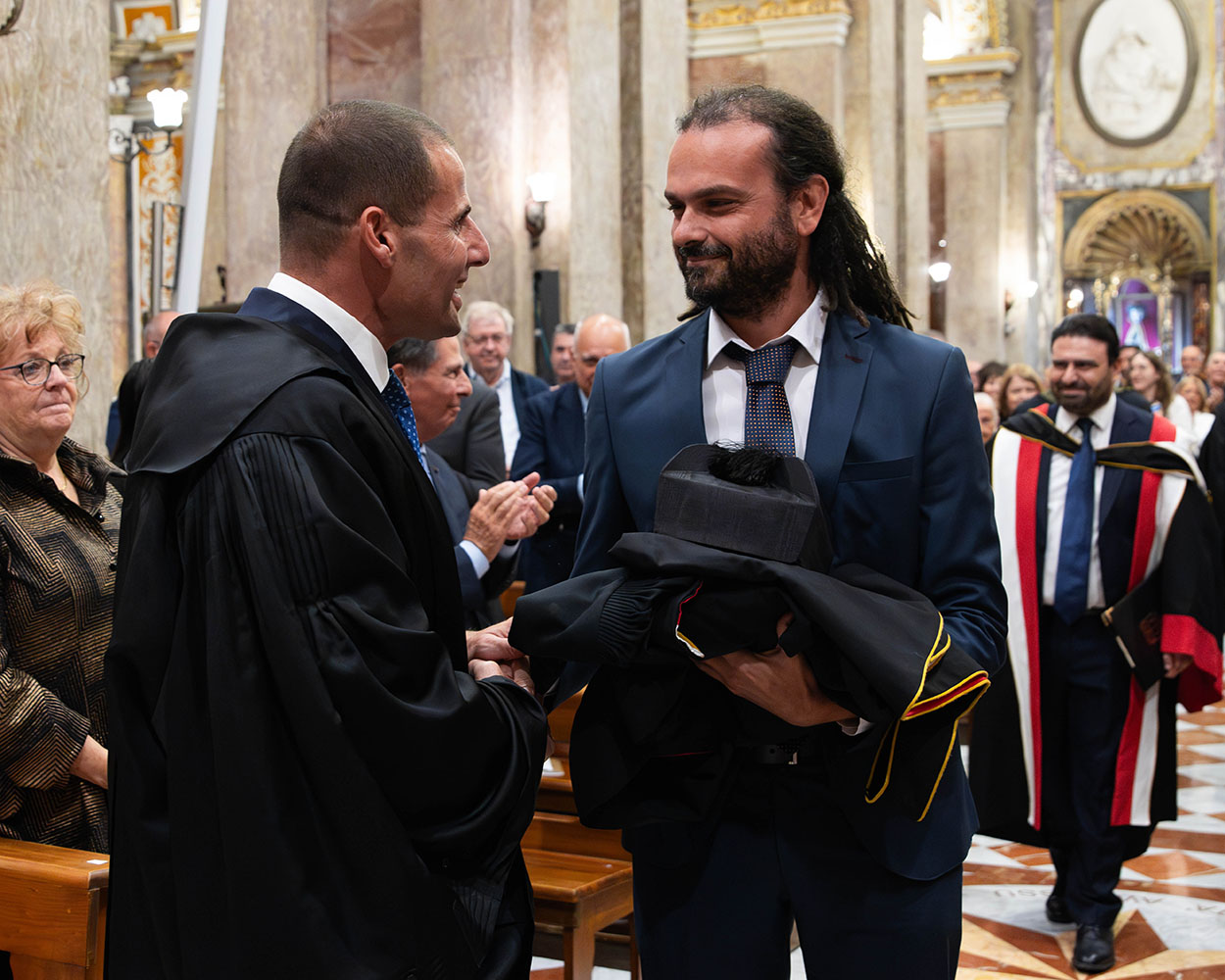
(Photo by James Moffett)
Dignity in Resistance
Callus’s worldview and commitment to his cause were bolstered by a formative experience during a visit to Palestine. He spoke at length about the plight of the Palestinians, which he witnessed, but emphasised a particular moment that has always stuck with him. Callus had heard about a regular peaceful protest against the blockage of roads by Israeli settlers, who were commandeering key infrastructure arteries and forcing Palestinians to take longer routes to remain connected to one another and to their land. Given the unreliability of public transport, when available at all, Callus began to walk to the distant location of the protest, while wearing the iconic patterned keffiyeh.
A passing farmer offered him a lift, which Callus gratefully accepted. Concerned about the aggression from Israeli roadblocks, which wearing the keffiyeh might attract, Callus removed the item of clothing. The farmer challenged him, asking him why, and Callus explained his concerns and the trouble he might invite on the farmer’s behalf. The farmer, however, kindly encouraged him to put the scarf back on, explaining that while the settlers had taken almost everything, the one thing they could never take away was their dignity.
This principle left a lasting impact on Callus, particularly given the significant power imbalances activists face on a daily basis. Activism must be goal-oriented, Callus explained, and certainly it should not become part of one’s identity, lest it simply feed one’s ego.
How Movements Hold Together
Callus showcased how activism serves other functions, too. Beyond its function and the dignity it offers in resistance, activism offers community and a sense of purpose. Callus says that the sense of personal investment in a cause like Moviment Graffitti’s can be linked to its structure. While Callus said that hierarchical organisations can function just as well, the flat leadership structure he operates in may have been a key to its long-term survival, consistency, and success.
The movement’s deliberate choice not to rely on formal hierarchies or fixed leadership roles distributes responsibility and prevents decision-making from concentrating in the hands of a few individuals. While certain figures such as himself may become publicly associated with campaigns, the internal structure resists personalisation. Decisions are taken collectively, and members are expected to participate actively in discussions, planning, and action. While decisions do not need to be unanimous, and there can be disagreement, legitimacy arises from the formation of a general consensus.
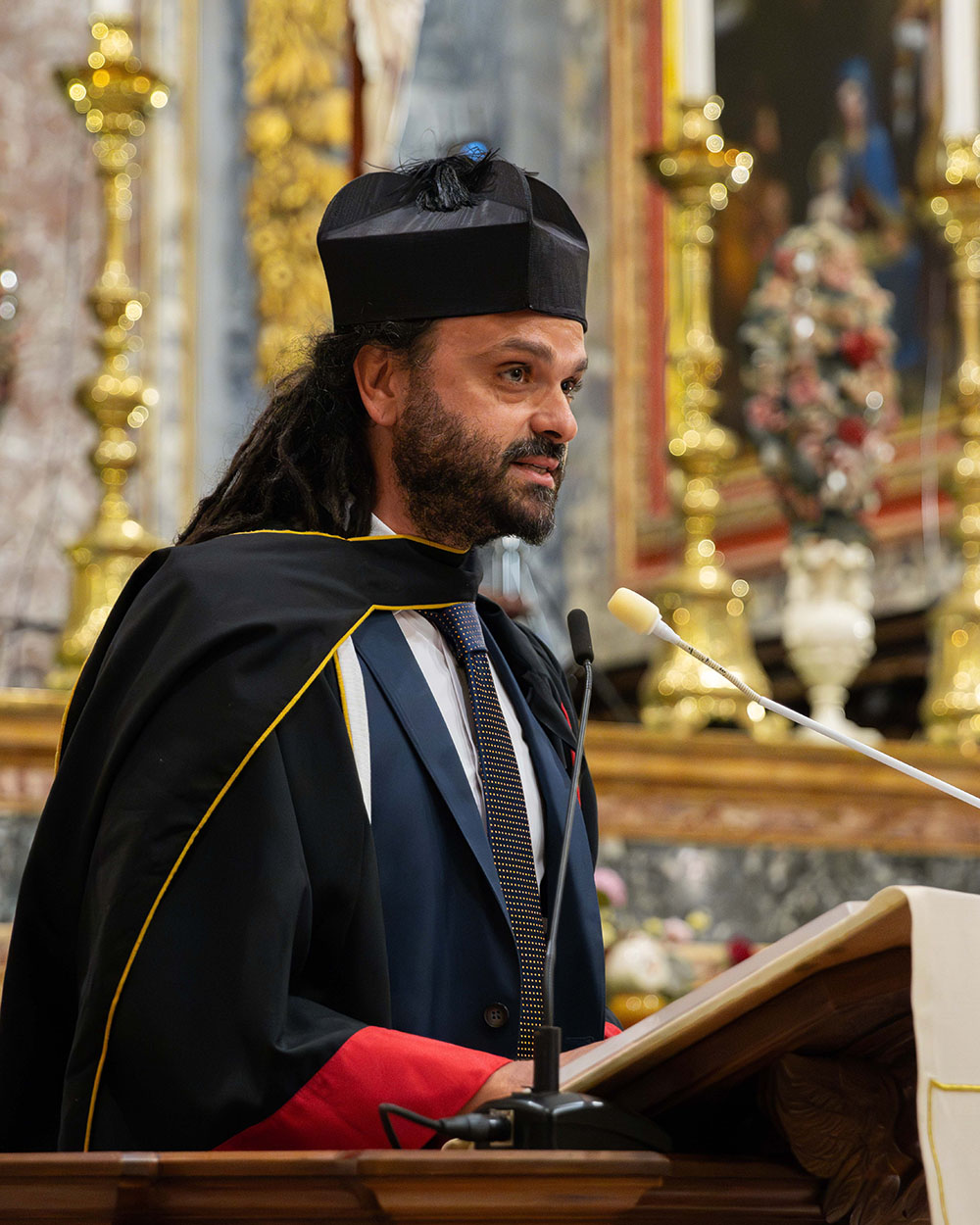
Dr Andrè Callus giving an oration at the Basilica of Our Lady of Safe Haven & St Dominic, Valletta (Photo by James Moffett)
This model, Callus acknowledged, carries its own challenges. Flat structures demand time, patience, and sustained commitment. Extended debates are common, and not everyone is able to contribute equally, given the pressures of work, family, and other obligations. Yet he argued that this process is central to the movement’s durability. By prioritising collective ownership over efficiency, Moviment Graffitti aims to maintain engagement over the long term and to guard against the emergence of activism driven by individual ambition rather than shared purpose.
Making Sense of Power
Callus points out that activism further offers a lens through which people may interpret what is happening to them. Callus suggested that many people experience injustice, environmental degradation, or overdevelopment without a framework that allows them to make sense of what is happening to them or why. Movements like Graffitti, he argued, offer an interpretive lens. They connect individual frustrations to broader systems, providing language and context where there is otherwise confusion or isolation. In this sense, activism functions not only as protest but as a form of public pedagogy.
Callus also addressed the political evolution of Moviment Graffitti itself. While unambiguously leftist, the movement has learned to resist puritanism. Contemporary leftist groups have risked insulating themselves from the wider public, mistaking internal coherence for mass representation. Traditional leftist movements used to be embedded in everyday life, while newer forms of activism sometimes spoke only to those already convinced, becoming intellectually inaccessible. Graffitti’s response has been to remain firm on principles while actively engaging with communities and other groups beyond its immediate ideological circle. Callus maintained that dialogue and cooperation are necessary and need not come at the expense of principles. Graffiti remains clear in its messaging while sharing activist space with other organisations. Similarly, while they do not offer speaking space to politicians at protests, they do not bar them from attending.
Conversation as Case Study
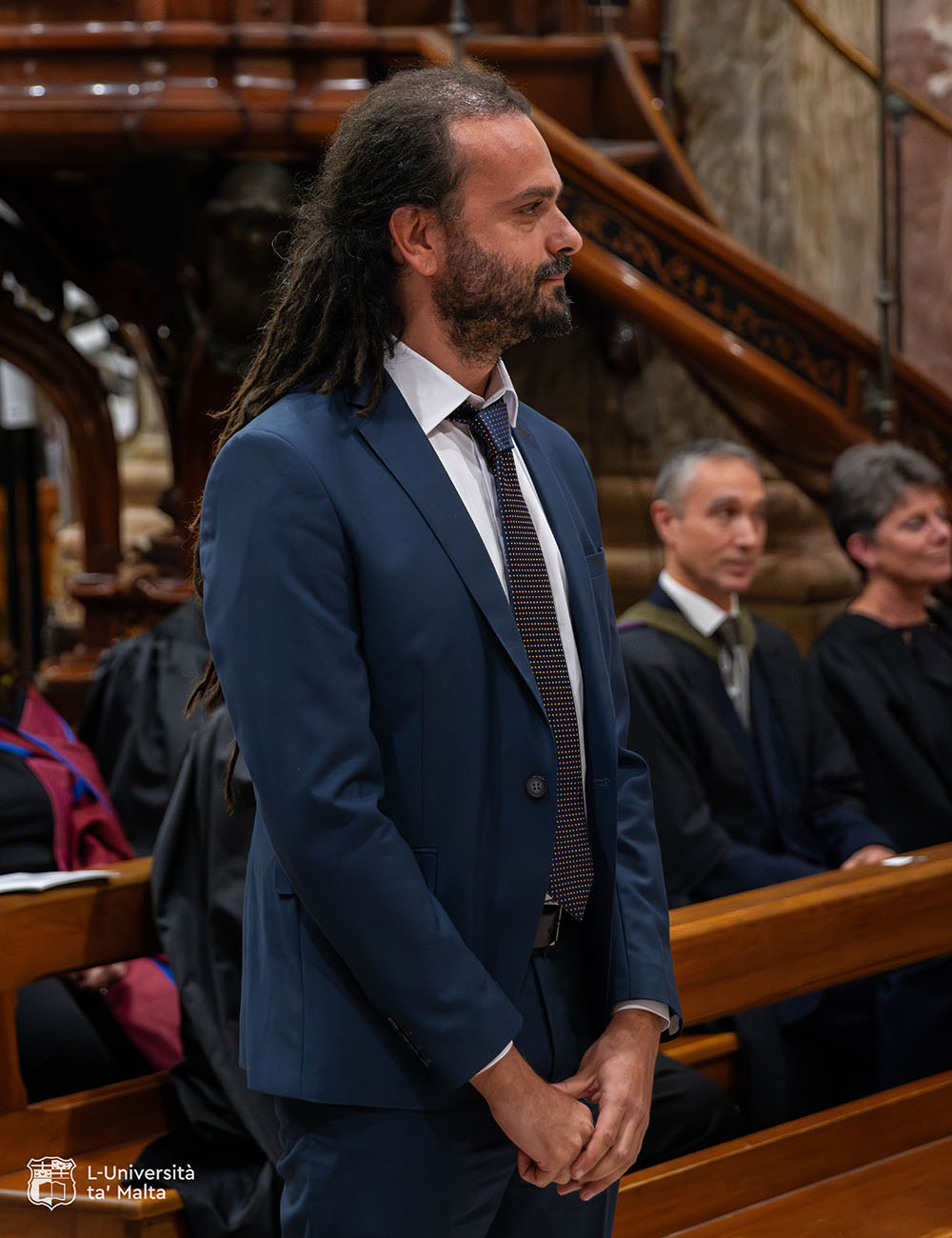
(Photo by James Moffett)
Callus’s message of bringing people together beyond traditional boundaries mirrors HUMS’s founding principles as a University platform dedicated to fostering dialogue across disciplinary boundaries. Now in its fourteenth year, HUMS has long positioned itself as a space where complex social questions can be approached from multiple perspectives without being reduced to technical problems or ideological slogans.
The conferment of an honorary degree on Callus thus carried a meaning beyond personal recognition. Honorary doctorates traditionally acknowledge scholarly contribution, public service, or cultural impact. When awarded to activists, they recognise forms of knowledge produced outside formal academic structures. By hosting Callus’s reflections within a public academic forum, HUMS facilitated the sharing of this knowledge and demonstrated how universities can engage with critical voices in ways that open new avenues of collaboration, conversation, and meaning-making.


Comments are closed for this article!