

Every second counts in space, where a minor error can set an entire mission on a path to disaster. ASTRA-AI is a project led by researchers at the University of Malta that is exploring the possibility of using Artificial Intelligence to detect anomalies in satellite data before they escalate into serious problems.
Thousands of satellites are flying high all around the world, monitoring the weather, enabling communication, and guiding GPS with incredible precision. But even the most advanced machines aren’t immune to problems. Sometimes, a simple glitch in a sensor can trigger a series of failures that can compromise the integrity of an entire space mission. An undetected issue can cause a satellite to drift off orbit, transmit faulty data back to Earth, or fail completely; however, most of these issues are not sudden and show early symptoms.
The early signs of failure appear in the satellite’s telemetry data – a stream of values showing information about the satellite’s state, ranging from temperature to magnetic field readings. However, with thousands of numbers pouring in at every moment, finding these hints for trouble can be harder than spotting a needle in a haystack.
That’s the challenge that Anomaly detection for Spacecraft TelemetRy dAta using Artificial Intelligence (ASTRA-AI) is taking on. Led by Prof. Ing. Gianluca Valentino from the Department of Communications and Computer Engineering with the support of Dr Asma Fejjari from the same department, as well as Prof. Robert Camilleri and Alexis Delavault from the Institute of Aerospace Technologies at the University of Malta, this project explores how artificial intelligence (AI) can detect anomalous behaviours in satellites before they become a bigger problem.
From Fixed Rules to Machines that Learn
Traditionally, engineers relied on fixed rules to indicate when something went wrong. For example, if the temperature of a given component exceeds 100ºC, an alarm would go off. These solutions work well when issues are well-defined, but they are insufficient to identify subtle and complex problems.
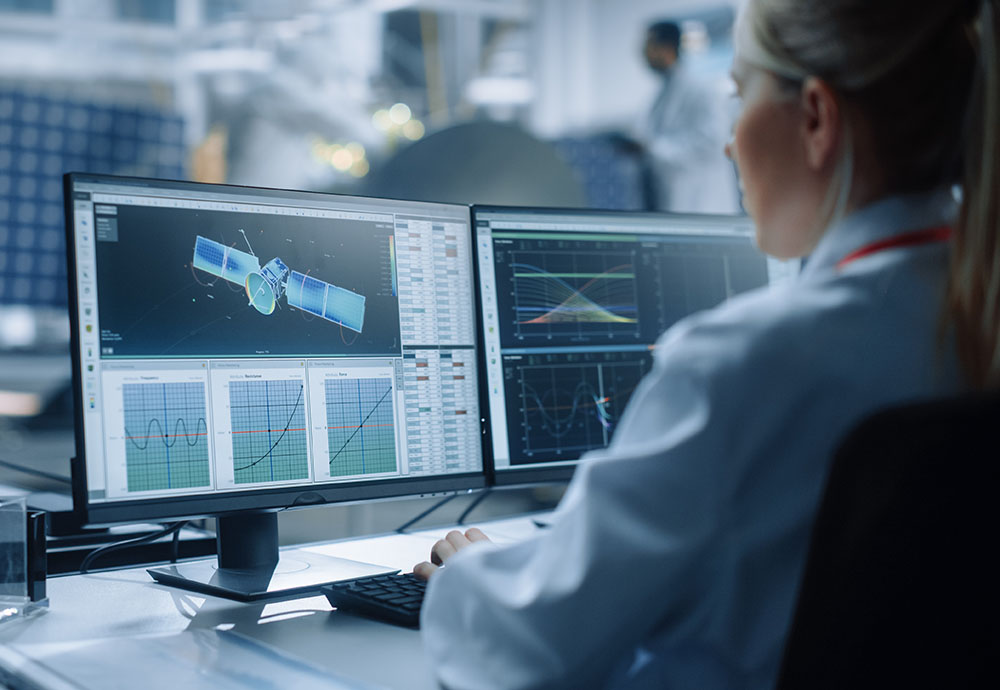
Satellites generate mountains of data, with intricate relationships between different parts. This makes it impossible to use clear-cut rules and requires more ingenious solutions. This is where computers come in, with their ability to process enormous amounts of information, they are the perfect tools to tackle this problem.
But how can machines identify what is normal and what is not? Through Machine Learning. At its core, Machine Learning is about teaching computers how to recognise patterns. Rather than writing out lengthy lists of rules, a Machine Learning model can be trained by examining numerous examples. In this way, the computer learns what to expect and when reality doesn’t match those expectations. Just like an experienced maestro is capable of identifying a section of the orchestra that is slightly out of tune, a model can hear the ‘dissonances’ in the data.
There are many types of Machine Learning models, each with its strengths. Some are excellent at identifying general patterns, like finding out the genre of a given song or spotting an object in an image. Others are designed to understand how things evolve. When it comes to analysing satellite telemetry, understanding the sequential changes of the data is fundamental.
Telemetry data is essentially a timeline of everything happening inside a satellite, where each data point gains meaning only in relation to what comes before and after. For instance, a sudden spike in a temperature reading might not mean much in isolation, but if it is followed by a drop in voltage or a slight change in trajectory, it might be an indicator of a larger issue. Much like in music, a single note only makes sense in the context of the entire composition and an instrument’s line may sound uncanny in isolation but fit harmoniously when heard alongside the whole orchestra.
Transformers: From Language Translation to Anomaly Detection
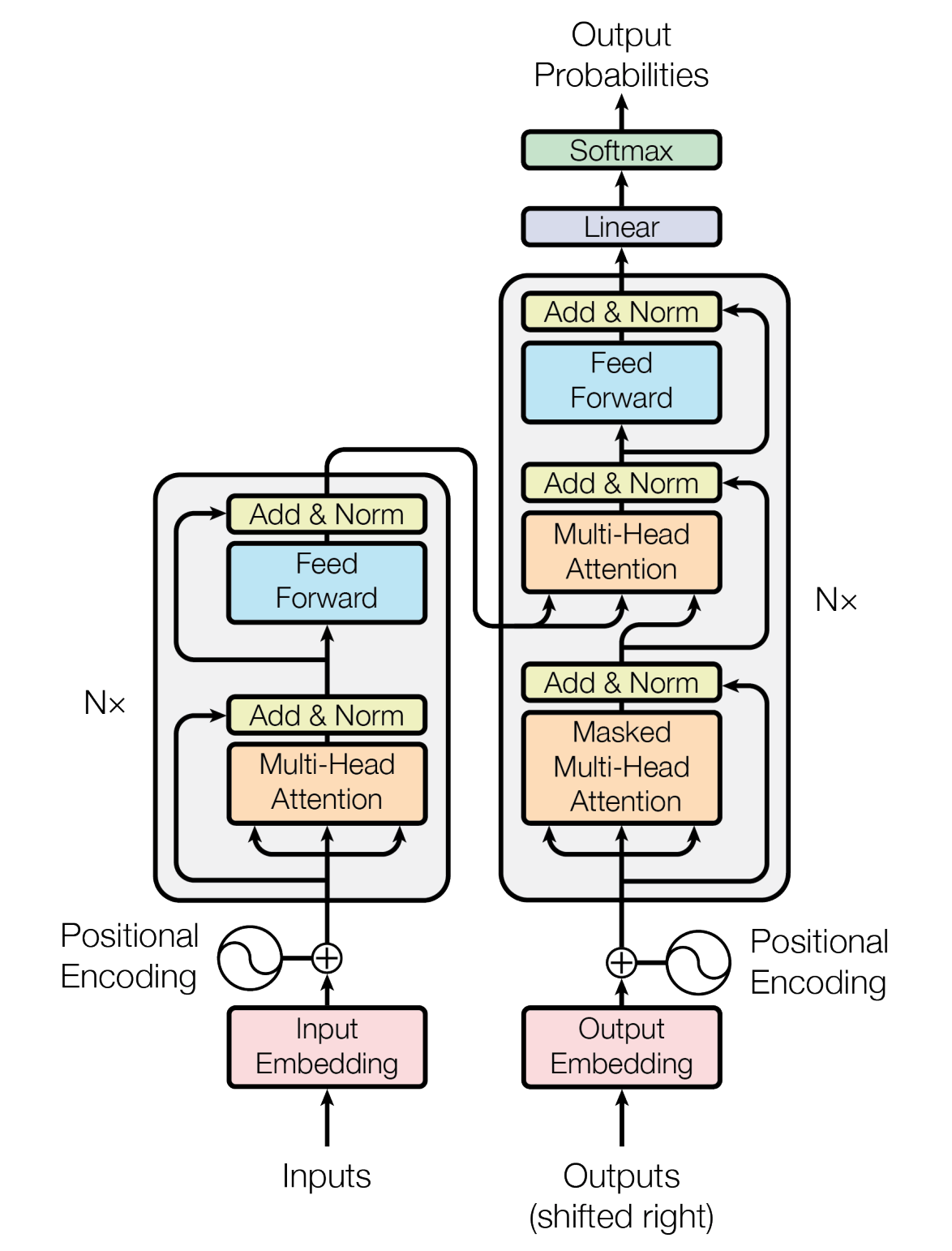
One of the most successful types of Machine Learning models for understanding sequential data comes from a surprising place: language. In recent years, a family of models known as Transformers has completely changed the way machines interpret and generate human language. Originally, they were designed for language translation, and since then, they’ve revolutionised the field of AI. In fact, if you used tools like ChatGPT (where GPT stands for Generative Pre-trained Transformer), you’ve already seen Transformers in action.
What makes these models so powerful is their ability to capture context. They rely on a mechanism called attention, which, similar to how we switch our focus between our surroundings to make sense of something, adapts and selects the most relevant parts of the context to make sense of a relevant piece of data. Think of reading a mystery novel, a detail buried in Chapter 2 might be the key to solving the crime in Chapter 7. A Transformer, just like an attentive reader, is capable of paying attention to subtle details and making intricate connections.
Until recently, satellite monitoring relied on traditional Machine Learning models, which not only struggled to capture long-term, complex patterns but could also be quite slow. In the words of Fejjari, ‘we need to detect the anomalies in real-time to be able to act, and, with the Transformer, we can have high detection precision with very fast inference time.’ This makes them ideal for the task, where every second can make the difference between a successful and a failed mission.
The use of Transformer models is still relatively new in the field of satellite monitoring. ASTRA-AI is bringing the cutting-edge of AI to detect anomalies in satellite telemetry, exploring how these models can be used to spot problems faster and recognise patterns that older systems would miss entirely. But building a system like this is not just about choosing the right model – it is also about how it is trained.
Training the Model and Digital Twins
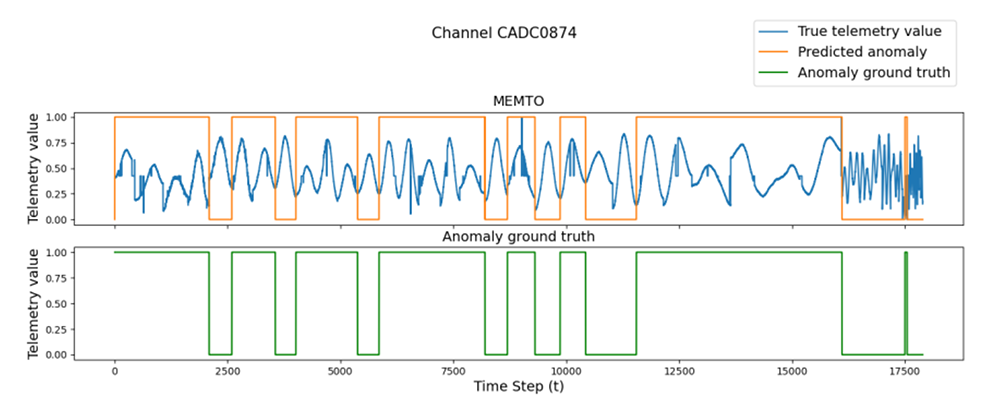
Just like a maestro needs to listen to countless hours of music to learn how to spot the most subtle mistakes, a Transformer needs to be trained with a huge amount of data to learn how to spot anomalies in the telemetry records. For this, ASTRA-AI used data collected on board the OPS-SAT satellite by the European Space Agency (ESA) over the course of two nights in May 2024, which was made publicly available for the purpose of training such models. However, most malfunctions are rare and might not be represented in a single dataset. That’s where the other part of this project kicks in with the aim of creating a digital twin of the satellite.
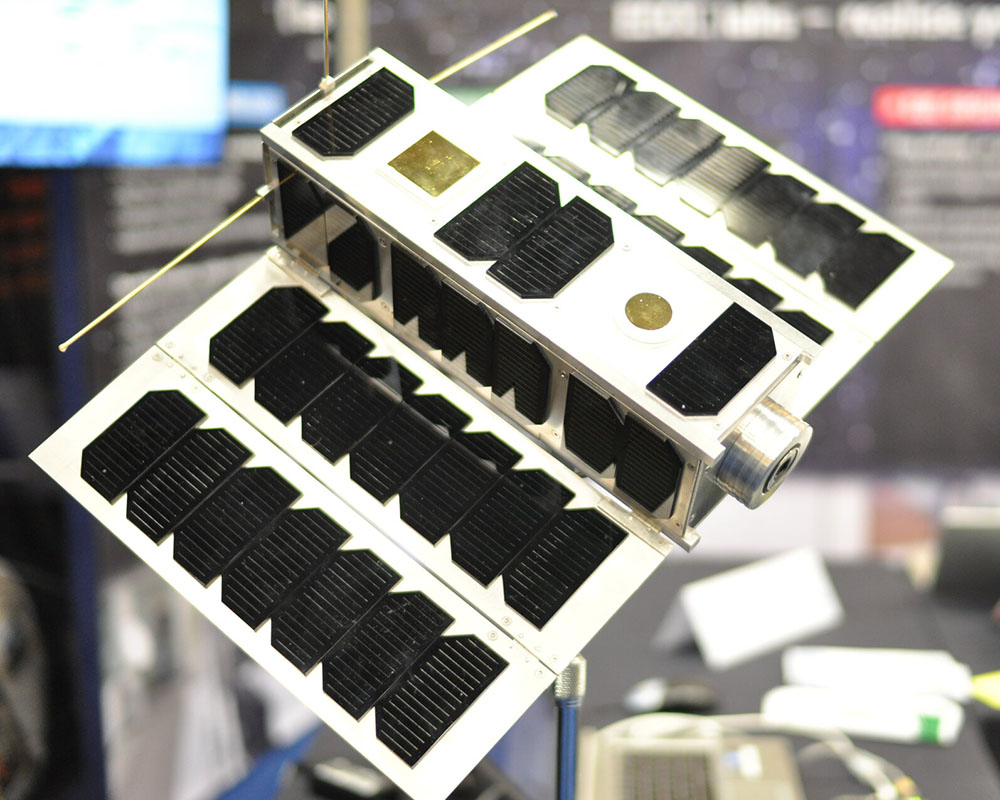
A digital twin is a virtual representation of a satellite that allows the team to simulate the satellite’s system. ‘For example, by modelling how the electrical power system works, we can simulate possible anomalies, such as a failure in a photovoltaic panel,’ illustrates Valentino. In this way, the researchers can see how the telemetry data is expected to change in different scenarios, no matter how rare and unlikely they may be. ‘We are not using just an existing dataset, we are also testing our models in the anomalies we simulate,’ highlights Valentino. This allows the anomaly prediction model to be tested under conditions that might not be present in its training dataset, thereby increasing its robustness for real-world applications.
Smarter Systems, Safer Skies
As more and more satellites move through our skies, monitoring the climate or enabling navigation on Earth, it becomes increasingly important to ensure that they are functioning properly and detect the slightest anomalies before they become significant problems. ASTRA-AI is defining a new frontier of spacecraft security – a future where problems are anticipated with unseen accuracy, rather than fixed.
ASTRA-AI highlights that AI isn’t just about replacing human tasks – it’s about extending human perception. It helps us see patterns we may miss, notice signals buried in noise, and act when timing matters most. In space or on Earth, the ability to listen, learn, and protect may become one of AI’s most valuable contributions.
Project ASTRA-AI is financed by Xjenza Malta through the FUSION Space Upstream Programme.



Comments are closed for this article!