

MindOnly has developed an Artificial Intelligence tool that can assess your attachment style. This Malta-based research project, supported by Xjenza, has created a platform that reads non-verbal cues to better understand users. This may prove to be a useful personal development tool and, crucially, a valuable resource for mental health practitioners.
We are a product of our upbringing. Our relationships with our parents, or the lack thereof, can be pivotal in shaping expectations for each subsequent relationship. This process begins within a year of our birth, through pre-verbal bonds with primary caregivers. If these formative attachments are traumatising, they disorder how we connect with others. Our understanding of this is in its own infancy. Attachment theory is less than a century old, a mere blink of an eye next to the history of generational trauma. It is utilised by mental health practitioners such as psychologists and counsellors, either to better understand causal factors in people’s mental health issues or to maintain a healthy, secure relationship between therapist and patient.

Broad public understanding of attachment theory is brand new, surging into popular consciousness via social media virality. We want to understand ourselves, and to repair what we can. MindOnly is meeting this demand. They have recently concluded a research project on an AI-based video assessment tool, with the support of Xjenza Malta. Their project, titled ‘Mental Health Care Automated Video Interview Diagnosis with AI, has culminated in a virtual interviewer that reads non-verbal cues, such as facial expressions, to better determine a patient’s attachment style. This empathic AI is an example of what could be the future of psychotherapy – affective computing.
Keeping such an AI platform subordinate to human diagnosticians, rather than replacing them, is intuitively vital (as discussed in THINK Issue 48, pp. 63–65). Ethics were heavily dwelt on in the project’s feedback stage. Before this, attachment theory itself primed MindOnly to consider ethics. There have been well-publicised cases of people seeking a therapeutic relationship with a large language model (LLM) – a type of AI – accidentally creating a harmful relationship in the process. A dependent attachment style can create a feedback loop with an LLM that is equally keen to please. Therefore, some characteristics of ‘chatbots’ must be avoided. Conversely, there is now space for AI assessment tools that are built responsibly, with the guidance of healthcare professionals. These may offer an alternative specifically designed to avoid unhealthy, paratechnical relationships.
The buck has to stop with a human being… I’m not a proponent of replacing the human with the digital. I think that they can work hand in hand.
Anonymous Participant Family Therapist
Discovering Your Attachment Style
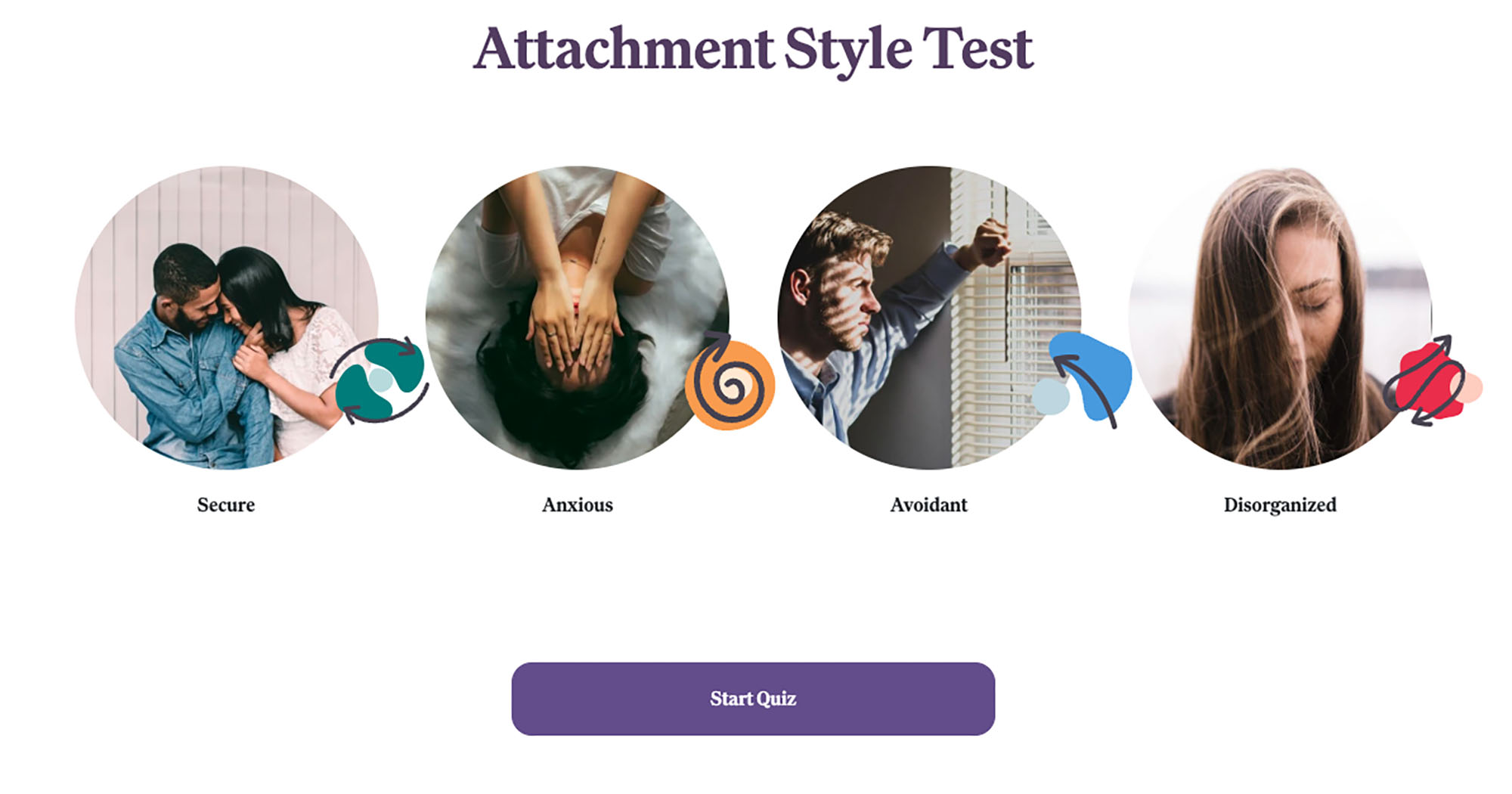
Even these most modern of interactions are coloured by childhood experiences. Healthy, dependable relationships with caregivers are likely to result in the child developing a ‘secure attachment style’, while the inverse can lead to insecure attachment styles, categorised as ‘anxious’, ‘avoidant’ and ‘disorganised/fearful avoidant’. A particular attachment style is likely to sound familiar to many people who encounter this framework. But without lengthy, oft-expensive therapy, it’s hard to get a deeper understanding of how your formative relationships have impacted you. Traditional assessments like self-report surveys only scratch the surface of such a nuanced issue.
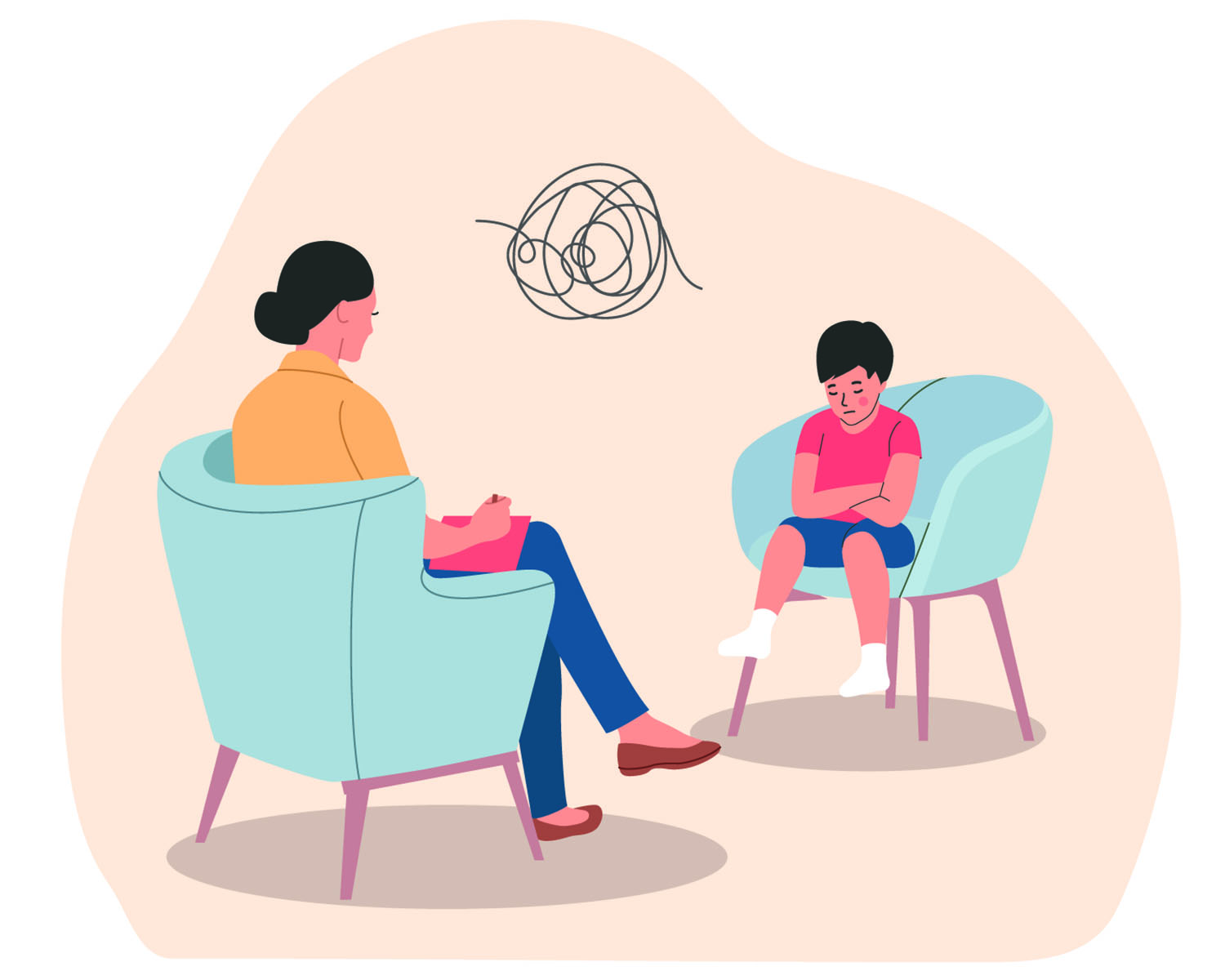
AI enables a more comprehensive, video-based assessment tool that can interpret non-verbal cues. This could be valuable for those seeking personal development without formal psychotherapy. More importantly, it could be a cutting-edge tool for mental health practitioners, such as therapists and counsellors. Currently, assessing attachment disorders calls for a lengthy, in-person interview process. If an assessment platform could be accessible as a questionnaire while offering the depth of an interview, it would relieve a great deal of time and resources for practitioners and patients alike.
I think that it is another tool in the professional’s arsenal… we are living in a digital age, and I think it is important that, rather than resist these innovations, it’s learning how to work with them.
Anonymous Participant Psychotherapist
Building Affective Computing
MindOnly Ltd was founded by Jock Gordon, an entrepreneur who encountered attachment theory as he sought to understand the impact of his own family’s generational trauma. He set out to improve access to quality information about the theory amidst a deficit of specialists – and a rapidly increasing demand. MindOnly provides resources for learning more about attachment styles, and the testing and therapy one might seek afterwards. Among their free offerings are anonymous questionnaires.
These questionnaires provided the project’s initial dataset, thousands of text responses. These would refine the later video interviews that trained the AI platform – key questions were identified, and then utilised in hundreds of recorded psychological assessment interviews. The AI platform was then trained on the multimodal data these videos provided, learning from all the audible and visible cues that communicate emotion. Finally, the AI platform itself was tested by dozens of laypersons and a smaller group of mental health specialists, including family therapists, an integrative therapist and both clinical and non-clinical professionals. The results were compelling. The platform accurately assessed attachment styles, particularly excelling at identifying avoidant attachment. The specialists consulted in the study unilaterally considered it a powerful therapeutic aid, provided that it was a supervised supplement in clinical practice – with all the confidentiality that implies.
A Multimodal View

First, as we expect from AI, the platform analyses verbal responses and can interpret ambiguity, or the broadening of an initial question. But, as mental health practitioners know, the raw content of someone’s speech is not the full picture. The platform also interprets the emotional characteristics of a person’s voice and visual cues. Affective computing reads facial expressions and other physiological data to better interpret a person’s emotional state. Anxiety, for example, is sometimes easier seen than heard. Someone suffering from a fear of abandonment, with an anxious attachment style, may not fully articulate it, but may demonstrate it in other ways.
Even more pertinent are the avoidant attachment styles, which are inherently hard to detect. People conditioned to understate feelings, act tough or evade intimacy will, naturally, withhold information. MindOnly found that avoidant attachment styles seemed to ‘disappear’ when language content is the sole data. Instead, avoidant attachment revealed itself through non-verbal information, such as facial expressions. This multimodal approach – collecting holistic data – could prove useful for those who find it difficult to express themselves in words.
Moving Past Questionnaires
The value of a tool like this is best demonstrated through comparison. In their feedback, one mental health practitioner contrasted the AI platform with a Likert Scale. In this questionnaire, of the same kind used in the earliest stages of the project, participants indicate on a five- or seven-point scale how strongly they agree with a statement. This scale may be reductive for personal questions, but it’s a necessary part of mental health assessments. For example, it may help direct patients to further care or evaluate the urgency of their condition.

But, as a consulted attachment specialist stated, the answer to many of these questions could be ‘it depends’. For example, how we experience relationships is contingent on contexts, which may change from year to year or day to day. Furthermore, our definitions of ‘strongly agree’ or ‘disagree’ are different. They could be impacted not just by our unique perspective, but even by culture or dialect, which may lead us to under- or overstate a subjective feeling. A remote assessment tool that can accommodate all these nuances, without placing additional strain on mental health practitioners, represents a vast technological leap.
This is a powerful use of the technology we are seeing coming up across the world. If we do not learn how to integrate this we could get left behind.
Anonymous Participant Integrative Therapist
Automated Assessment
Technology is driving public awareness. This facilitates understanding, but also creates massive demand for effective, interactive mental healthcare. This cannot necessarily be met by the current number of mental health practitioners. Malta, for example, has a critical shortage of psychiatrists per capita. First, if the public could access more nuanced personal development tools, such as MindOnly’s empathic AI, it might have a cooling effect on this imbalance. Second, if mental health practitioners had robust onboarding assessment tools, it would help them manage this growing workload.
Ultimately, attachment theory serves as a mirror with which we can better perceive ourselves. This is ever more crucial in a world that demands honest introspection. Its compatibility with machine learning has a certain poetry. Nothing reflects quite like AI.
The project ‘Mental Health Care Automated Video Interview Diagnosis with AI’ was financed by Xjenza Malta through the FUSION: R&I Technology Development Programme LITE.





Comments are closed for this article!