
Words are one of, if not the most, versatile tools one may employ. They may serve to sway opinions in favour of one’s own, express original knowledge to which one may be credited, and even prolong the memory of an individual long after life’s end. In a sense, words are worlds. However, there is one condition. For words to have power, people need to understand the language. Unfortunately, this isn’t always the case.

Led by Dr Carmel Serracino and Skye Vassallo, the Corpus Inscriptionum Melitensium, or CIM for short, is an ambitious project seeking to create an online database of all Latin inscriptions present in Malta and Gozo. Taking Valletta alone into perspective, this would be no mean feat, but the need for such a reference tool is nonetheless recognised. Serracino notes that various scholars across multiple disciplines, such as History and Anthropology, often find themselves dealing with Latin and find it difficult to progress in their research due to limited fluency or familiarity with the language. This impedes invaluable research, leading to either substantial gaps in one’s findings or an inability to continue until assistance from a Latin-speaking colleague is sought. The reality though is that such people are few and far between.
In Malta especially, the gap of knowledge is substantial, even though, as Vassallo notes, ‘the bulk of inscriptions are in Latin’. The island’s history is rich in its broader details, such as the Great Siege of Malta or Benito Mussolini’s incessant aerial bombings during World War II, yet a wealth of historical knowledge remains largely unaccounted for. The little details that may be found within these Latin inscriptions that pepper the communities of the Maltese islands are plentiful and insightful. Unfortunately, it may as well be for nothing. Such wealth remains untapped simply due to a language barrier. This is where CIM comes in.
Lacking Latin? No Problem!
One of CIM’s main aims is to break the language barrier and, in a sense, revive Latin from its decrepit state. It is interesting to see how, to this day, inscriptions are still being etched and put up, despite the fact that practically no one will know what’s been written. This suggests an innate importance that people associate with Latin. CIM recognises this too, and in broadening our access to the language, the team hopes to revive Latin and the memory of the people from way back when.
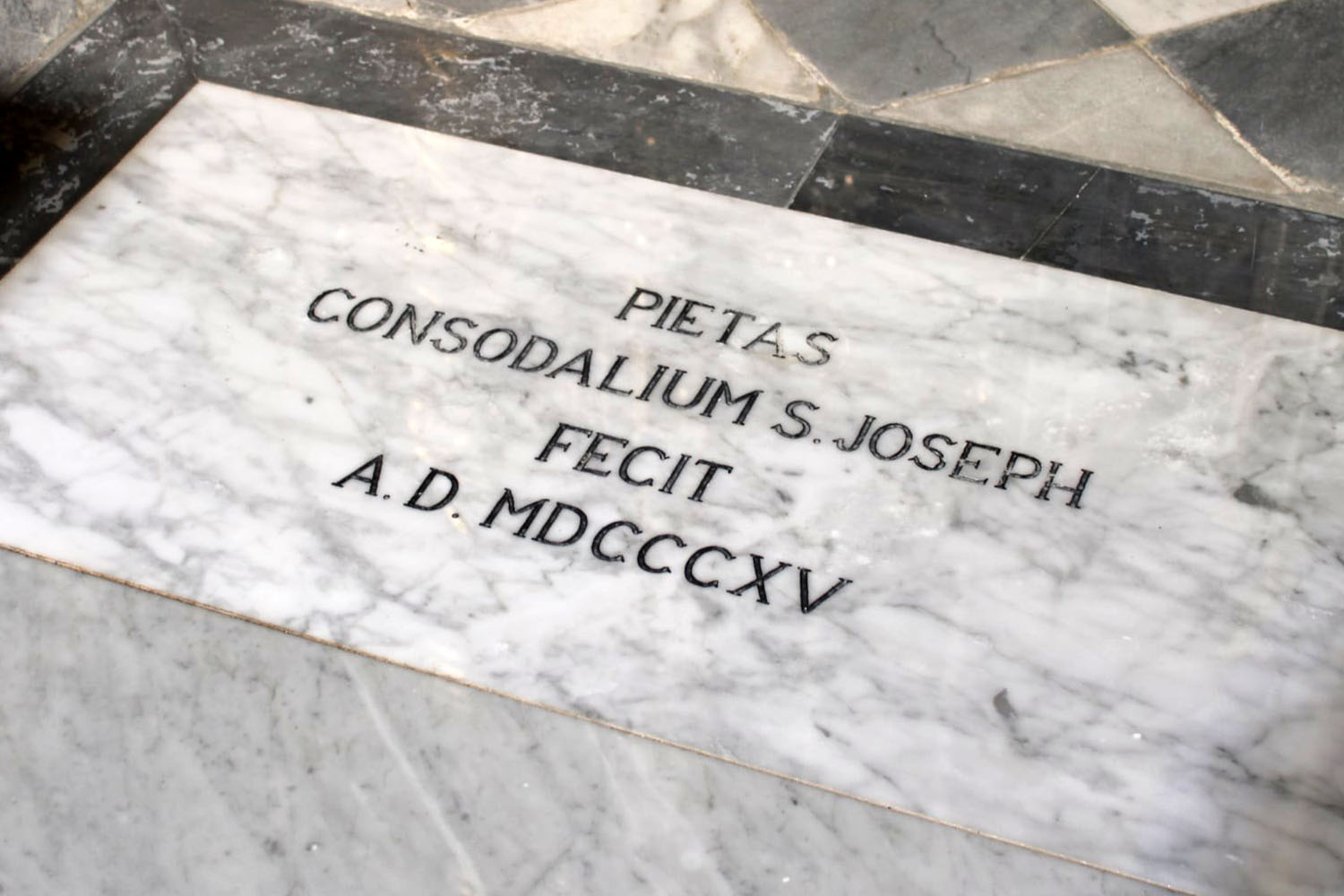
As per current findings, most of Malta’s Latin inscriptions contain biographical information, including the lifestyle or achievements of a particular person. At other times, an inscription would serve as a memorial to honour that individual’s memory. One such instance is the inscription of Agostino Randon, located just at the gate of Buskett. It’s quite unmissable. Yet, the 19th-century Maltese philanthropist heavily involved in the agriculture industry, has gone more or less unnoticed and forgotten in current research, despite being important enough to merit having his legacy etched on a slab of marble. There are undoubtedly many other instances of prominent figures, often belonging to a rank of nobility, who have been diluted into obscurity within Latin letters present in the corners, nooks and crannies of the island (with token luck granted to the few found in higher traffic areas).
Other inscriptions serve to commemorate events, such as the inauguration of a monument, and the key people involved. The religious element also emerges through numerous inscriptions expressing prayers for protection, with a recurring message to keep the people and the island safe. The information is intriguing and invaluable as it allows us to observe the implications of social dynamics and beliefs at various points in Malta’s past. It’s a more detailed account of our history that cannot afford to go unexamined.
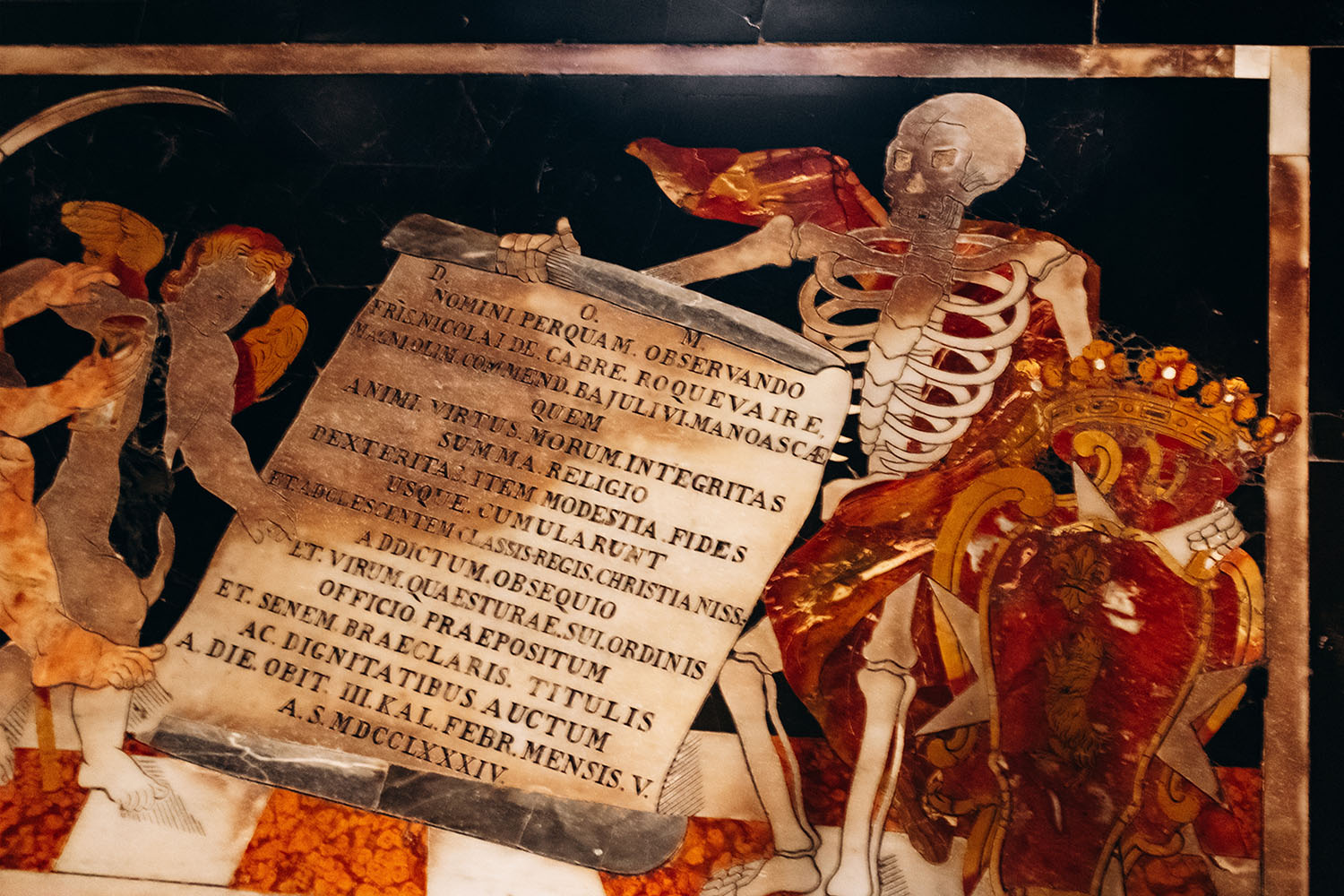
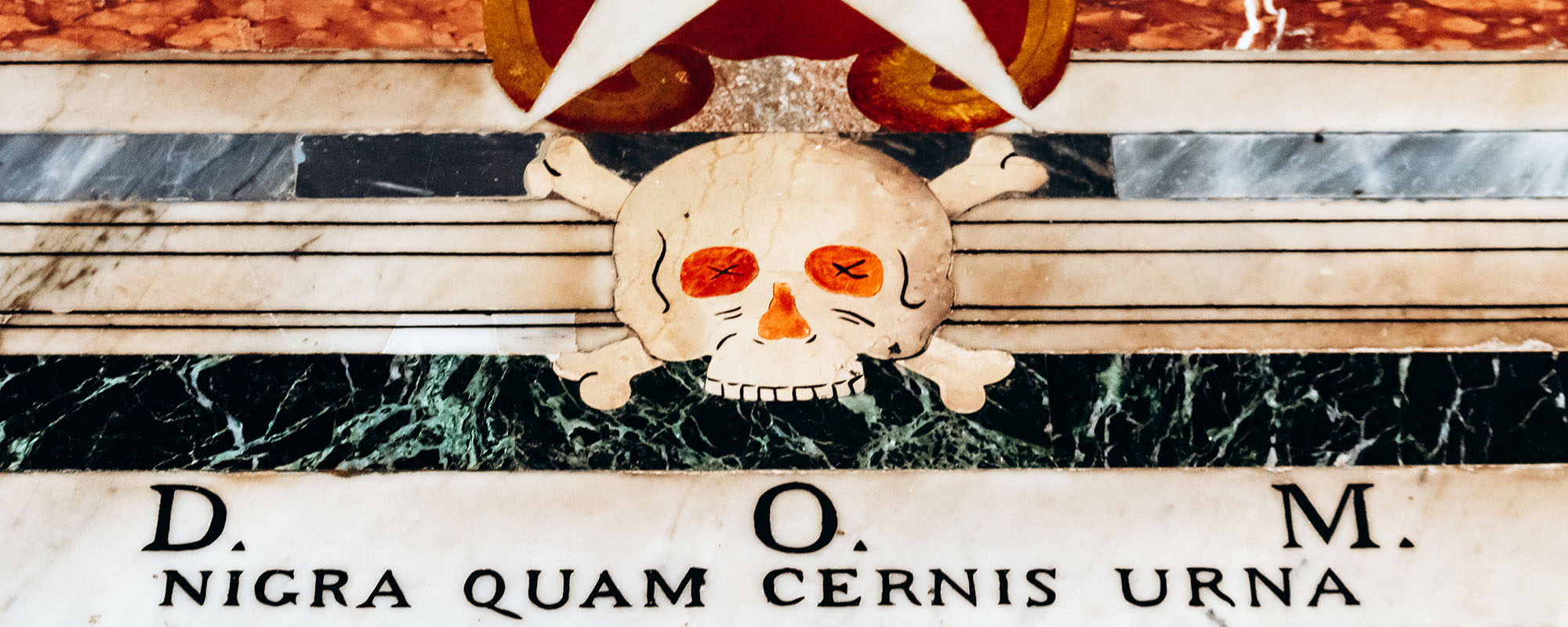
Right: The marble tomb flooring of St John’s Co-Cathedral often features Baroque inlays, family crests, Latin inscriptions, and vivid skull motifs
The meticulous work in transliteration and transcription by Vassallo drives the project forward. And, I say ‘meticulous’ because it is the most fitting word for the scope of this project. CIM’s database takes into account not only current inscriptions but also those designated as ‘temporary’ inscriptions. These latter would have been crafted for a particular occasion and then destroyed following the event’s conclusion. The only records of such having existed would be present in written records. The range to be covered in such a project is heavily ambitious, even if one were to take just Valletta alone.
Of course, the team is prepared for this – they have an effective process by which they discover and document Latin inscriptions. Moving through each locality, the team consults with the current literature first, which may provide insights into inscriptions already noted and perhaps analysed to a degree. After this, on-site observations take place, in which photos are taken, descriptions are noted, and practical details like coordinates are recorded. Each instance is then shelved into its own section in a database, where Vassallo and the rest of the team get to perhaps the most challenging part – translation.
Aside from the decreased legibility of the inscriptions due to age, Latin is a complex language. Serracino notes how one word in Latin ‘can have 20 different possible translations’, if not more. This is because other factors, like context and abbreviations, need to be accounted for, and these too can complicate the process considerably in their own right.
The upside to this difficulty is that, at the very least, you won’t have to worry about translating any Latin. You can leave that to the CIM team. What’s more, you don’t even need to know Latin to help with this project. CIM invites volunteers to submit their own sightings of Latin inscriptions across the island.
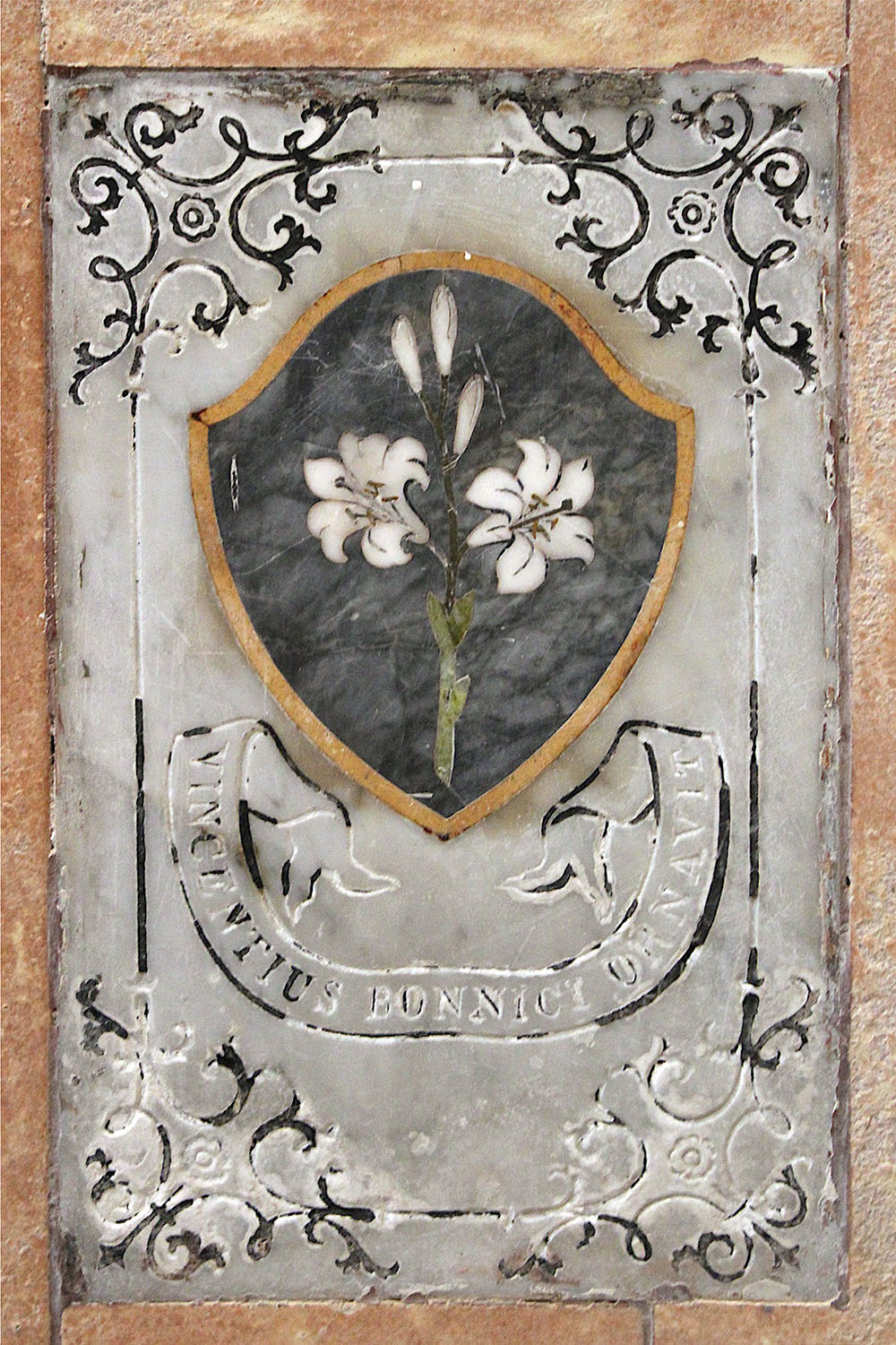
In St Philip’s Church (Senglea), Vincent Bonnici is commemorated through a marble plaque for his effort in decorating the place of worship (Photo courtesy of the CIM Team)
Calling In More! Help CIM Out
Doesn’t it vex you when you see something that obviously looks important or, at the very least interesting, but you just can’t figure out what it’s about? You see the Latin etched on marble in a prominent building, or out in a location of interest, accompanied by a vivid piece of art or entrancing statue, and yet, if you can’t read the words, the effect is spoiled. CIM can fix that for you.
With a photo of the inscription and some additional information, such as the location and any relevant background information, CIM would be glad to add it to its database. ‘Contributors will be credited,’ says Vassallo, so in case you’d like to make a small dent in history with your name on it, this may be a nice way to do so.
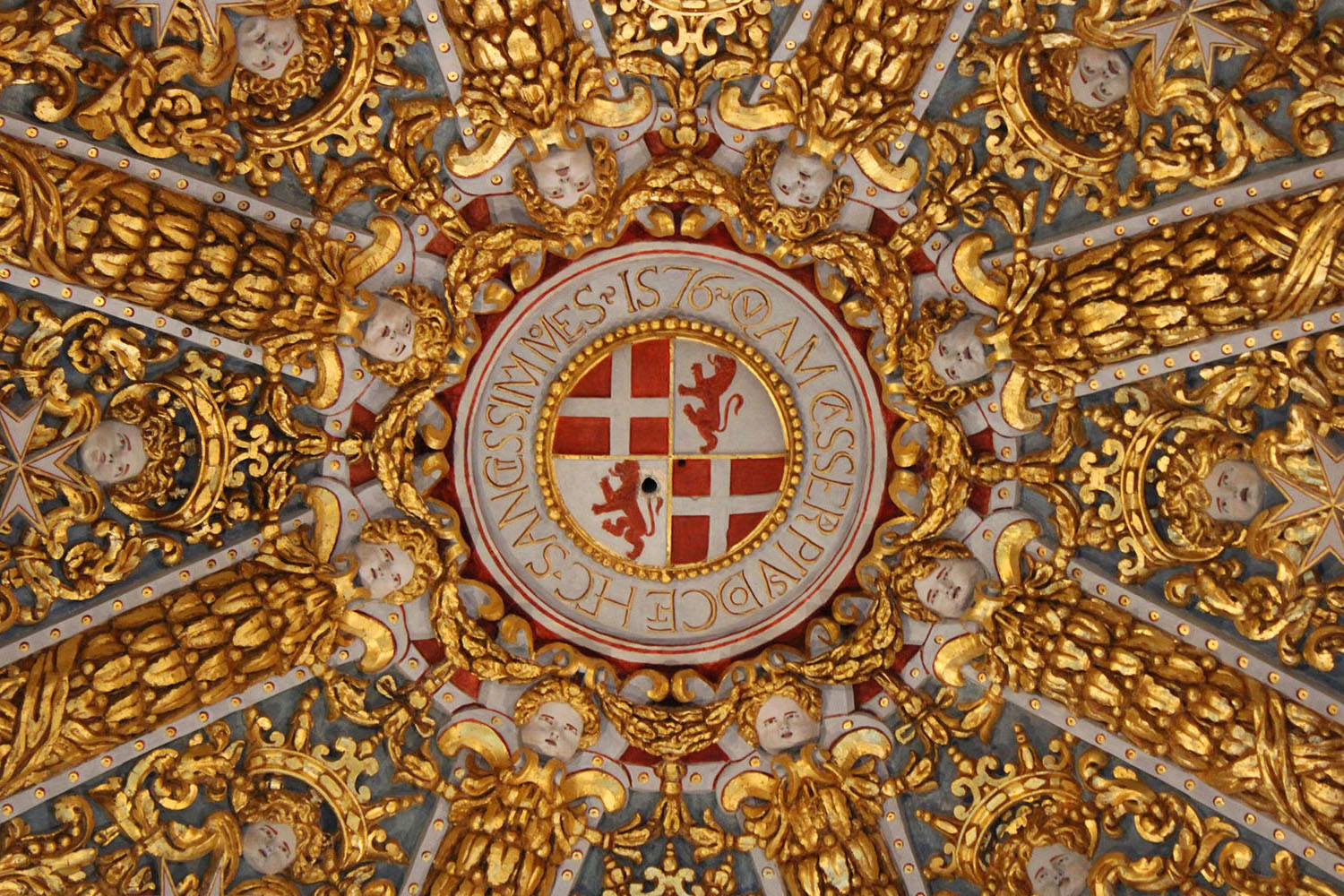
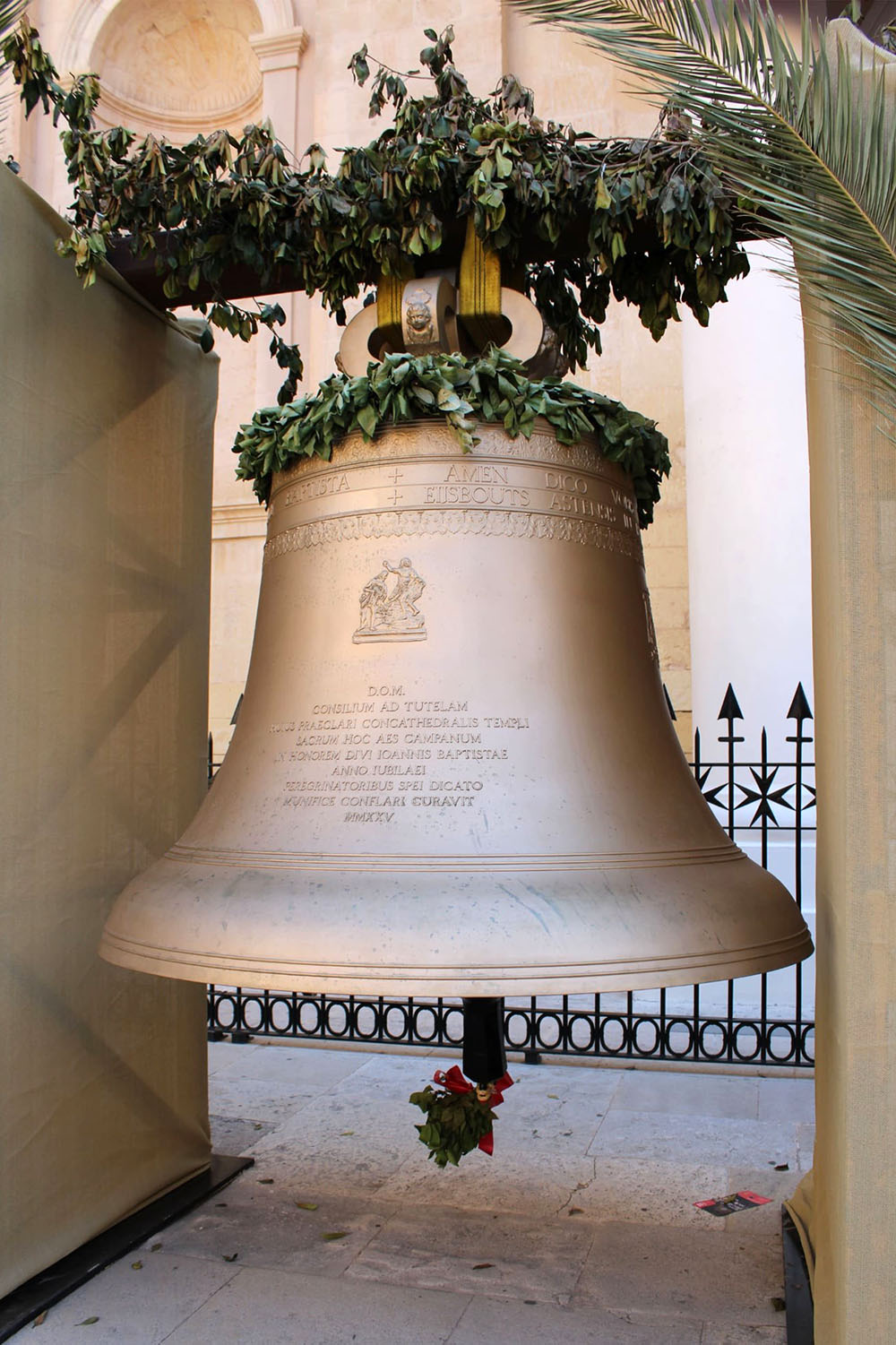
The new bell named ‘Carola Francisca’ was inaugurated at St John’s Co-Cathedral, bearing a number of Latin inscriptions (Photo courtesy of the CIM Team)
Submissions may be sent through the project’s Facebook page, CIM Project at UM, or via email at cim@um.edu.mt. Once analysed and catalogued, the images and inscriptions will be featured on the CIM Website. It could be a fun little treasure hunt one may engage in during their free time. I don’t know who wouldn’t like a good adventure.



Comments are closed for this article!