
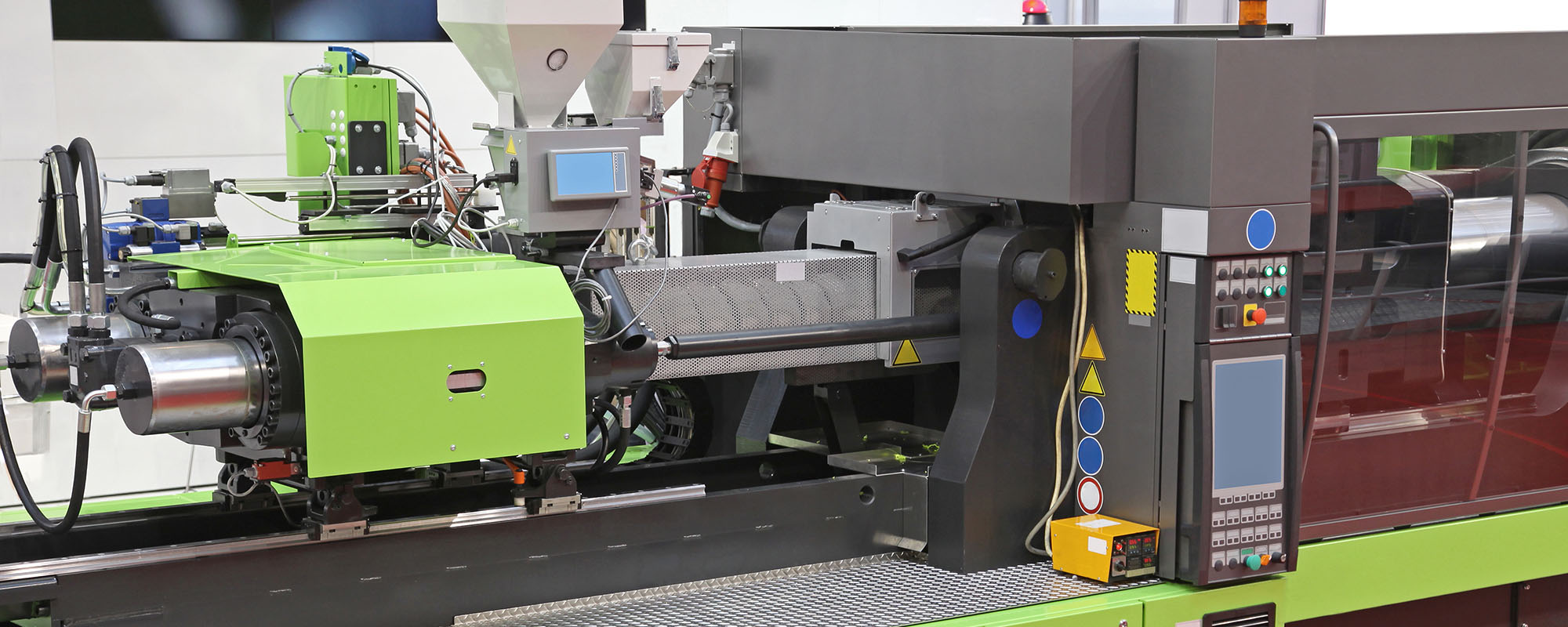
Injection moulding is a staple of industrial production, responsible for creating everything from phone cases to medical devices. It is especially preferred for producing plastic parts quickly and efficiently. But even an industry favourite process this mature is not immune to inefficiencies. THINK speaks to the VacuUM team to learn more.
The process of injection moulding entails melting plastic material and injecting it into a mould cavity, where it cools and solidifies into the desired shape, often in just a matter of seconds. This often leads to one of its most overlooked issues – air entrapment, where pockets of trapped gas form during the injection of molten polymer into a mould. These air traps may seem minor, but they lead to significant defects like burn marks, incomplete filling, weak weld lines, and unsightly surface blemishes. They also force manufacturers to slow down cycle times or discard faulty parts, resulting in more material waste, higher energy use, and increased costs.
How Local Innovation Fuels Sustainable Manufacturing
The VacuUM project, led by the University of Malta under the supervision of Prof. Arif Rochman and funded by Xjenza Malta through the FUSION R&I Technology Development Programme, set out to tackle this long-standing issue. The team developed and tested a new Active Vacuum Venting (AVV) system – a smart, modular unit that could be fitted onto existing injection moulding machines without major modifications. The system detects when the mould is about to close and activates a vacuum to clear out trapped air just before injection. This results in better cavity filling, improved packing, and far fewer defects.
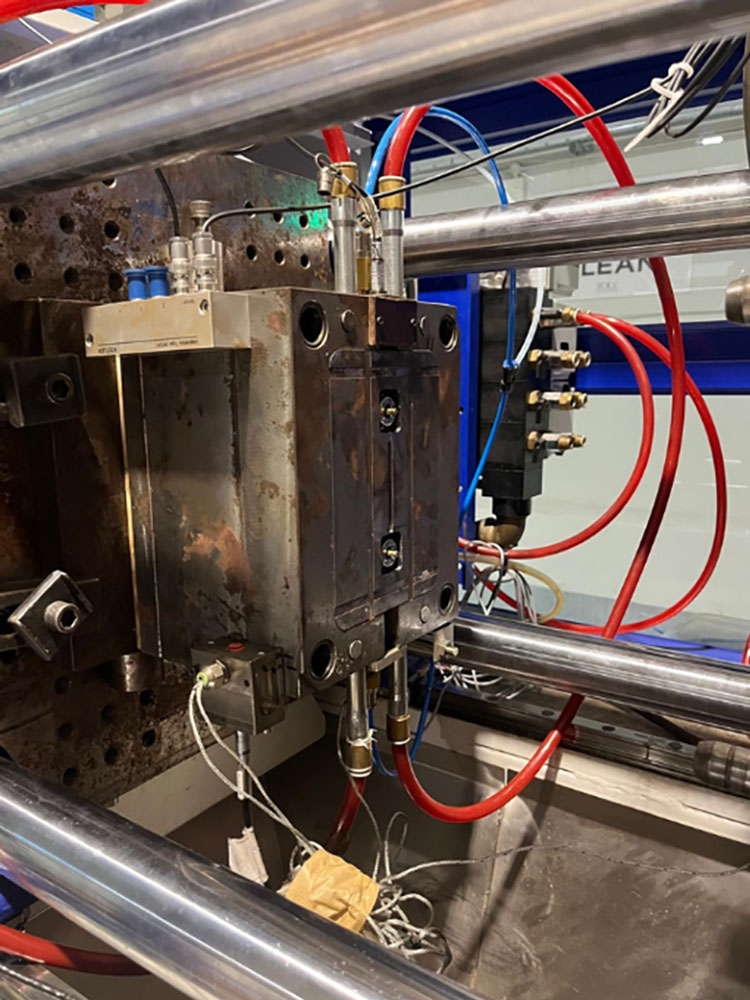
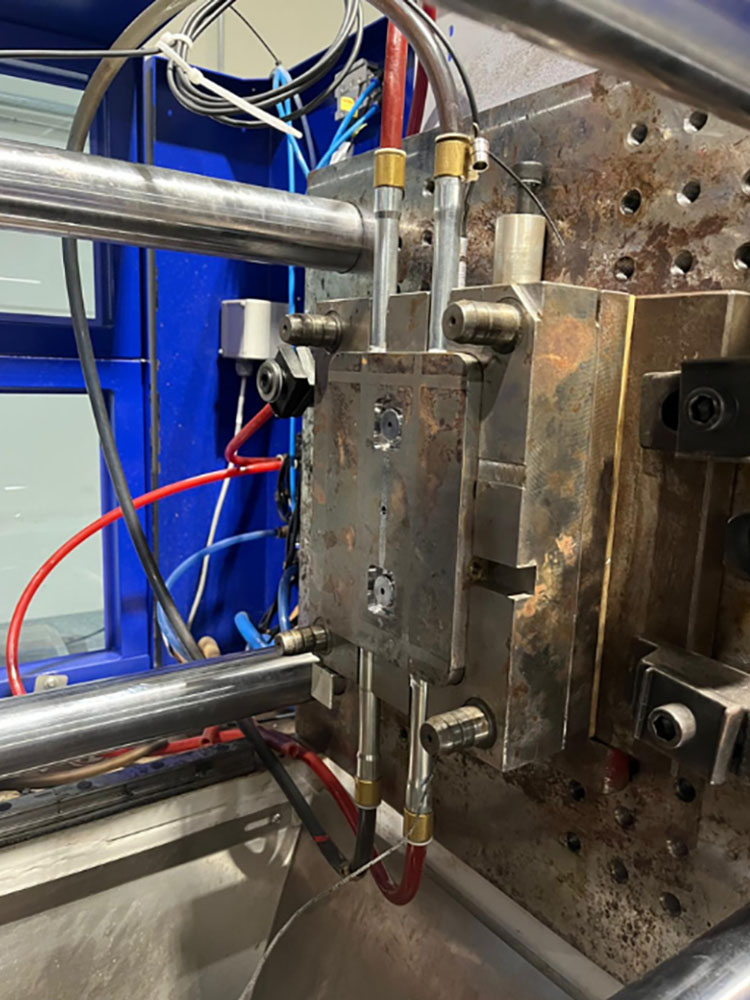
Unlike traditional passive venting approaches, which rely on air exiting the mould through the machined grooves and open channels that passively allow air to escape, this system uses sensors, a compact ejector, and a Programmable Logic Controller (commonly referred to as a PLC) to time the vacuuming process precisely. It was designed to work without needing full mould sealing, making it easier to install and more adaptable to different industrial setups. This approach fits the needs of today’s high-volume manufacturing, where speed and flexibility are essential.
Developing and Testing the Active Vacuum Venting System
To test the system, the team carried out trials comparing three different setups: no venting, passive venting, and the new AVV system. To test the system, the team carried out trials comparing three different setups: no venting, passive venting, and the new AVV system. Using a mould designed to reflect common air trap issues, they recorded data such as cavity pressure, surface quality, cycle times, and energy use.
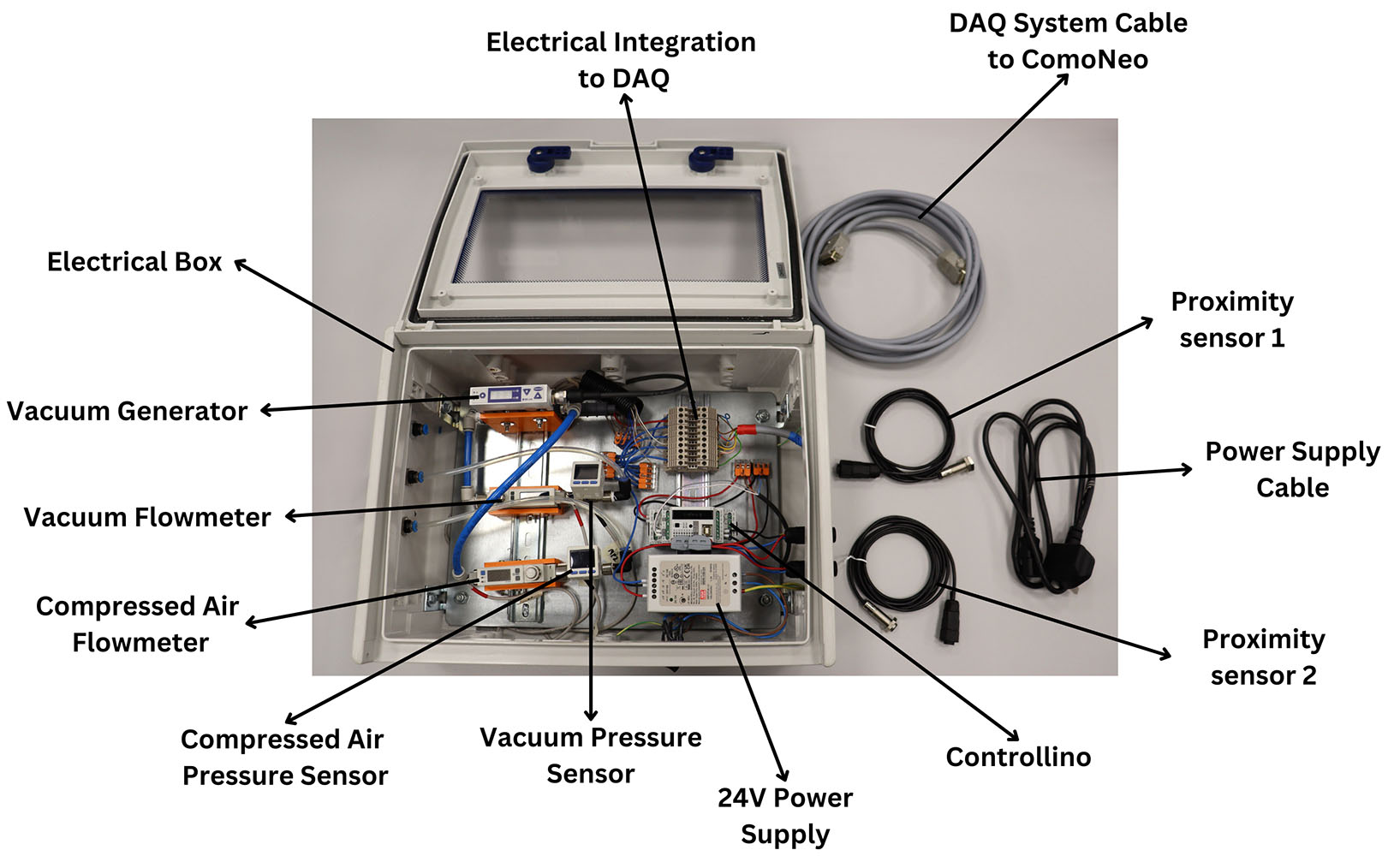
(Photo credit: Sarah Mifsud)
The results were clear. The AVV system reduced cycle times by nearly a quarter, improved cavity pressure stability, and cut sink marks – by over 60%. It also improved the appearance and consistency of the moulded parts, which is essential for both quality control and customer satisfaction.
One of the biggest wins was in energy savings. Shorter cycles meant less energy per part. Despite introducing the air evacuation step with its own energy consumption owing to the compressed air used, the system’s overall energy demand per cycle dropped by 15%. This included the energy needed to generate compressed air. And with an estimated cost below €2,000 per unit, the return on investment for manufacturers looks very promising.
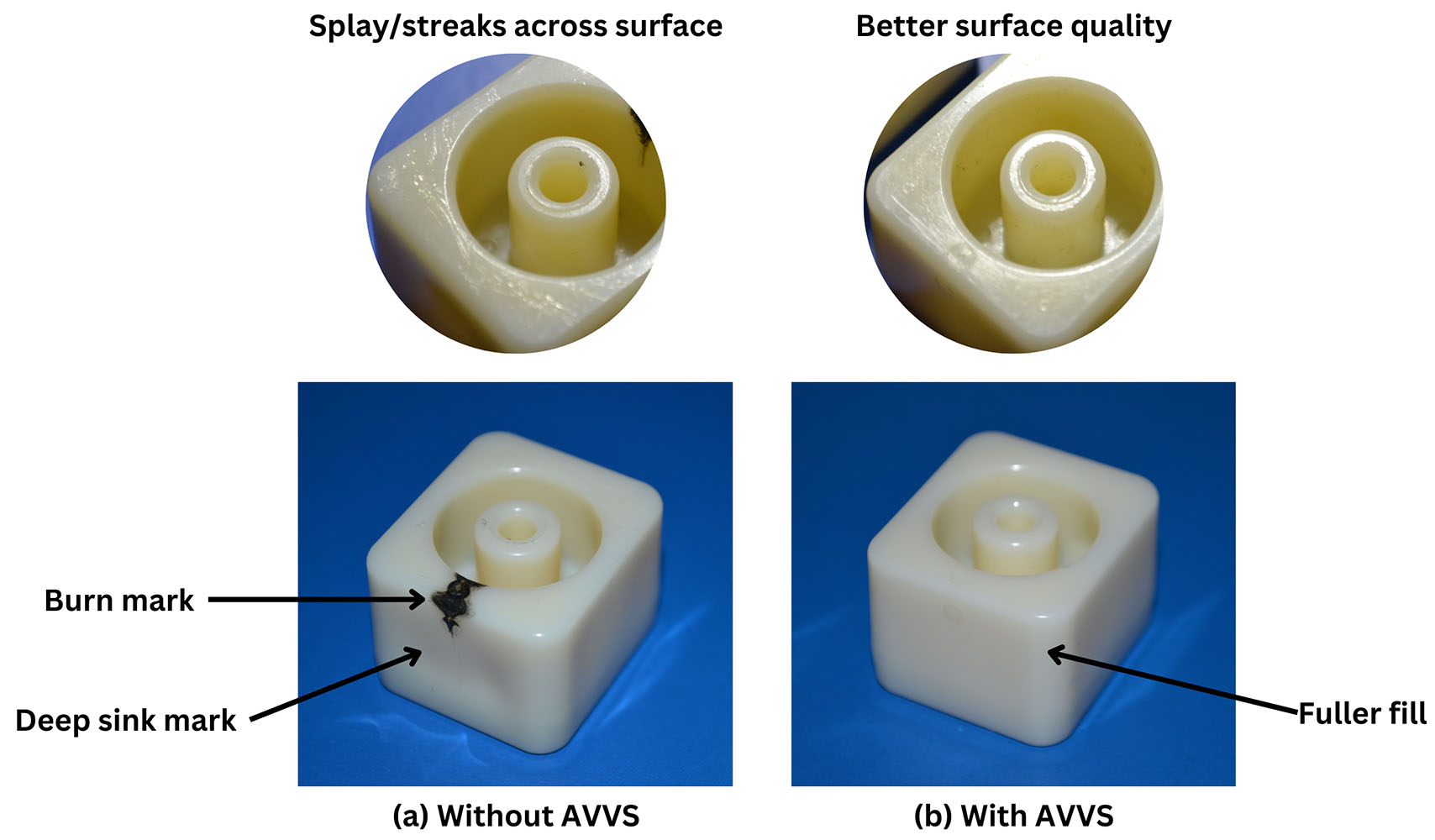
(Photo credit: Sarah Mifsud)
To ensure the system worked beyond the lab, the team from UM partnered with Toly Products Ltd., a major Maltese manufacturer with extensive injection moulding operations. With input from Olaf Zahra, Keith Pretty, Luke Sultana, and Luke Micallef, the team ran trials on active production lines. Their feedback helped refine the design and showed the system’s practicality in real-world conditions.
The project was also a platform for academic collaboration and growth. Prof. Ing. Paul Refalo led the sustainability analysis, assessing how the system affected energy use and resource efficiency. Sarah Mifsud, the Research Support Officer for this project, was deeply involved in the design and testing while also pursuing her PhD studies in the same field. Furthermore, the project would not have achieved its success without the support and contribution of the University of Malta’s technical team, primarily Ing. John Paul Borg, Josef Attard and Josef Briffa. This collaboration showed how industry and academia can work hand-in-hand to produce results that are both innovative and applicable.
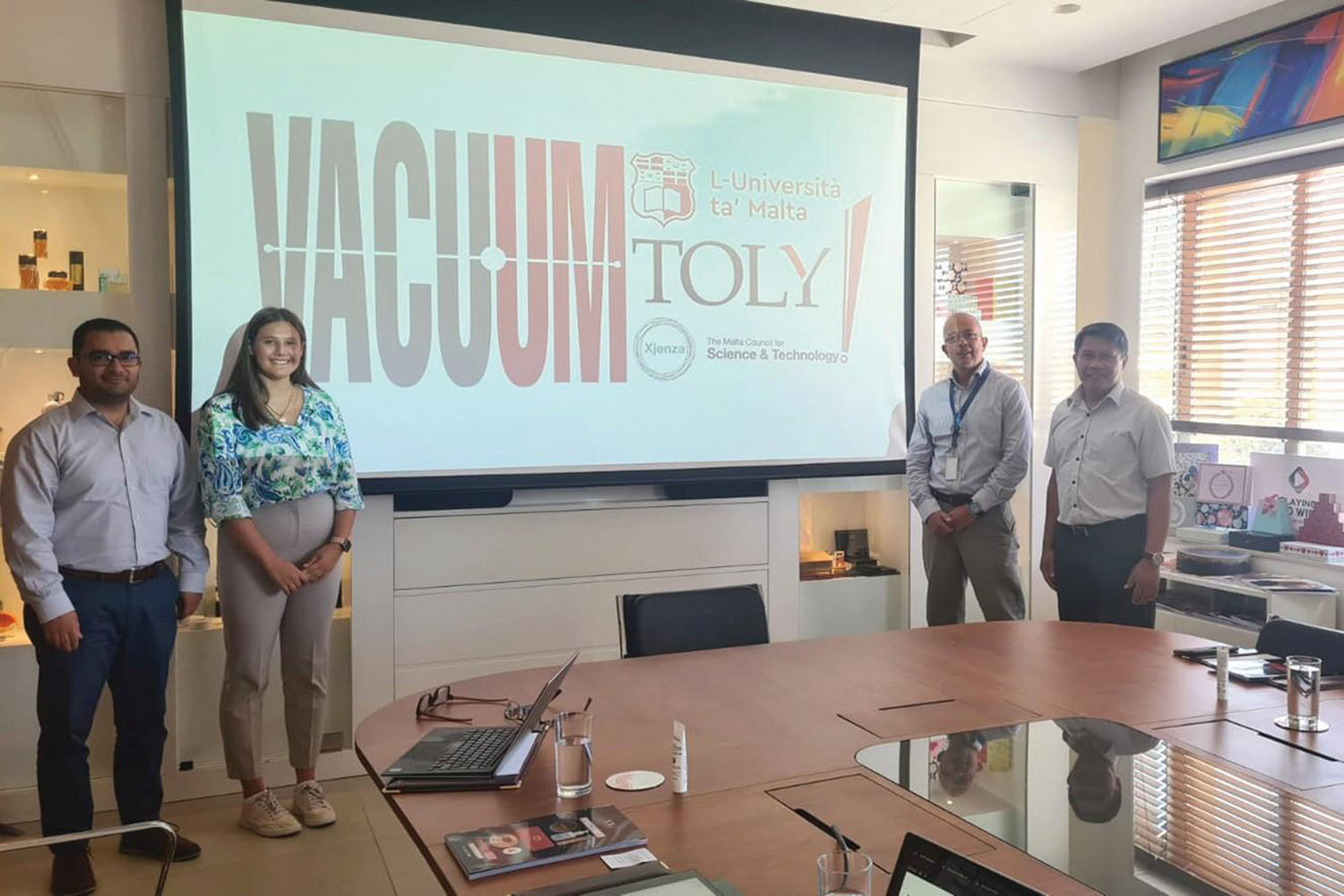
(Photo courtesy of the VacuUM team)
Advancing the Vision: Next Steps for VacuUM
Looking ahead, the team sees potential for further development, aiming to focus more on refining the device and pushing for its commercialisation. The VacuUM project shows that making meaningful improvements to industrial processes doesn’t always require radical changes. Sometimes, all it takes is a well-placed upgrade rooted in good design and solid data. As industries around the world look to reduce waste and energy consumption, systems like this could become essential tools in the shift toward more sustainable manufacturing.
This work is a strong example of how UM and Malta as a whole are carving out a role in sustainable innovation. By focusing on practical, scalable solutions and close collaboration between the university and manufacturers, projects like VacuUM show what’s possible when research moves beyond the lab and into the real world.




Comments are closed for this article!