
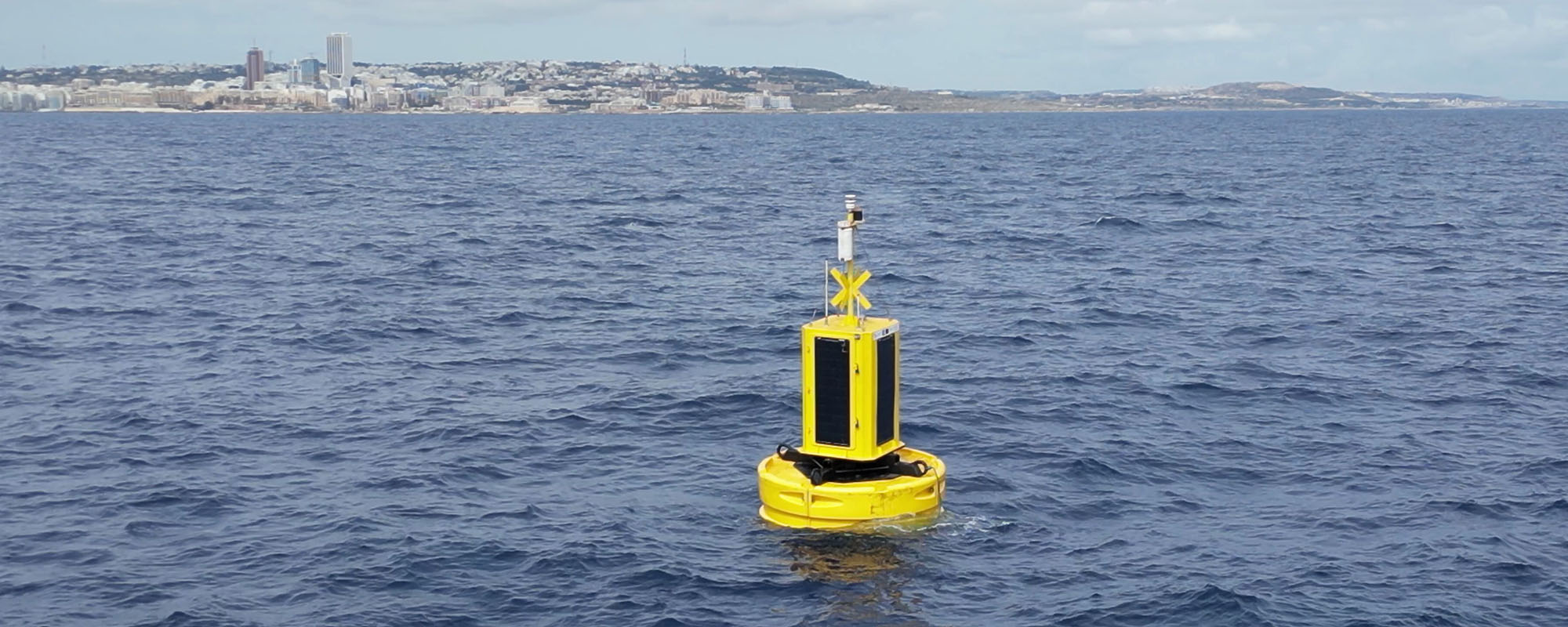
Malta is launching its first ocean observatory system, a floating collection of instruments designed to monitor every aspect of the Mediterranean. Dr Adam Gauci is a lecturer at the Department of Geosciences at the University of Malta and has years of experience in oceanographic data science. He sat down with Colan MacKenzie to discuss the trials and tribulations of turning this idea into reality and the future role this observatory will play in combating climate change.
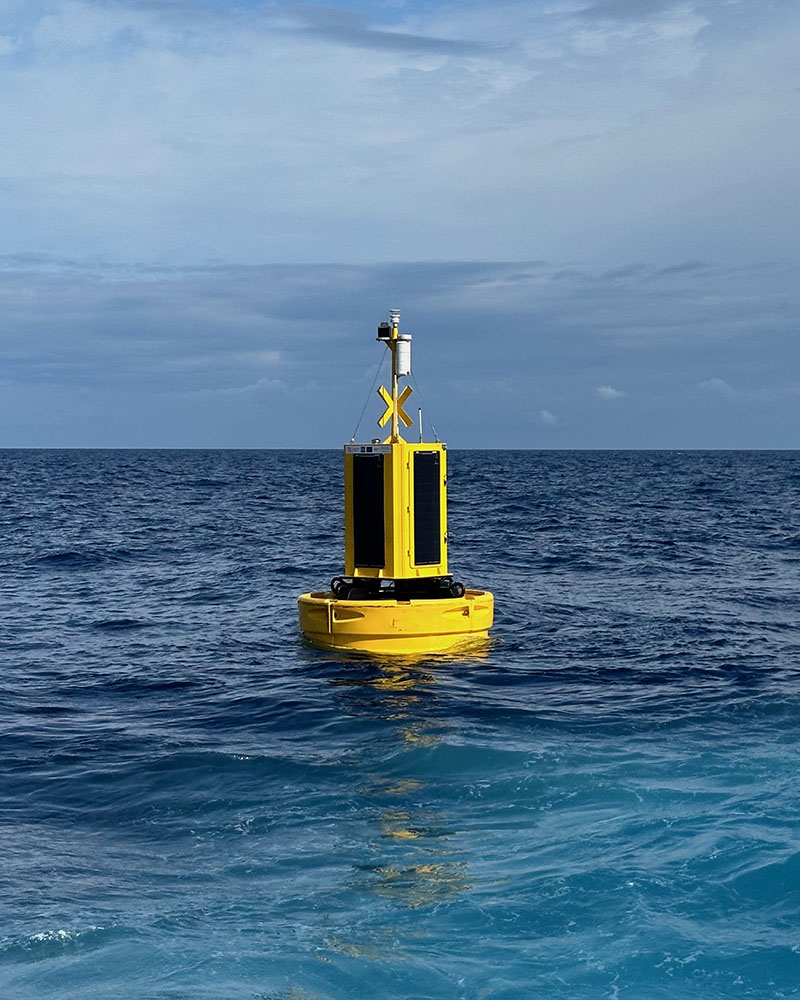
(Photo courtesy of Dr Adam Gauci)
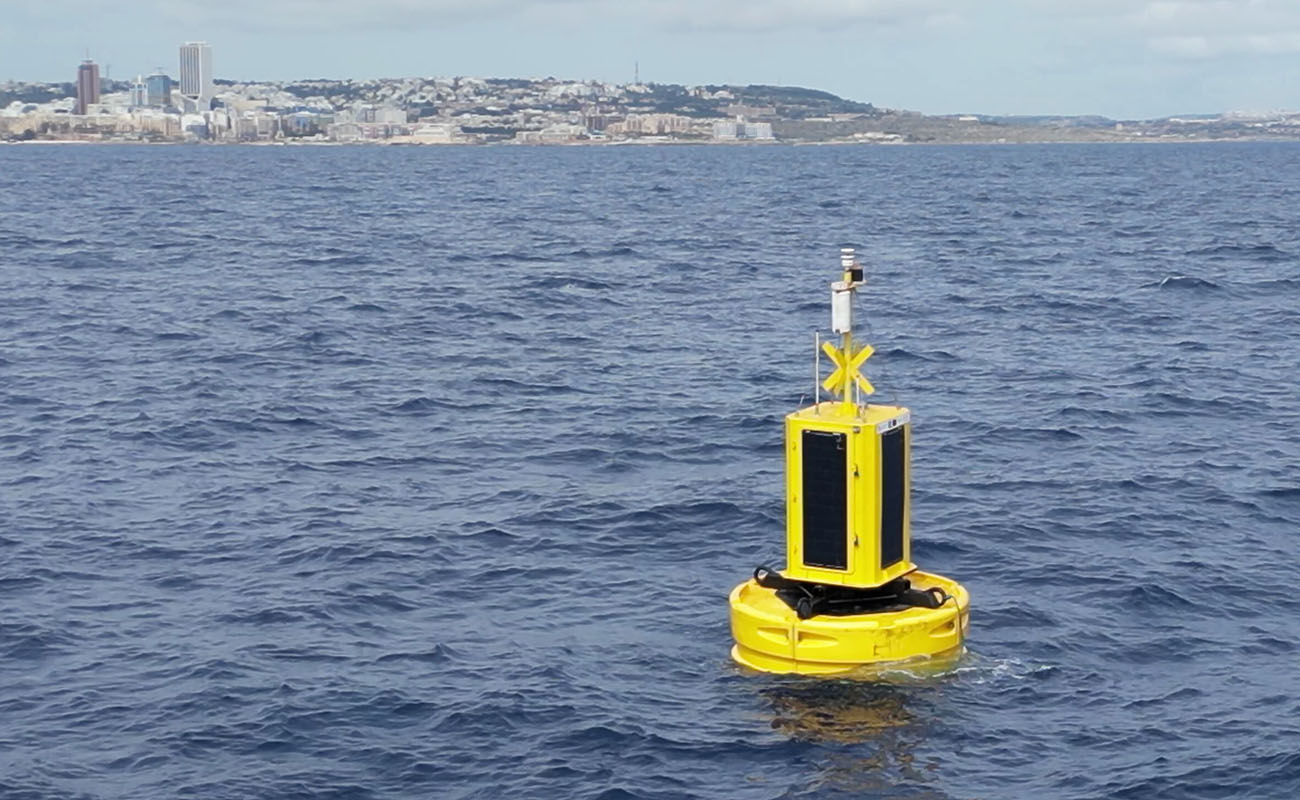
Just over two nautical miles off Valletta’s coast, a floating machine is learning how to listen to the ocean. Officially, it is called the Buoy for Long-term Underwater Exploration – BLUE for short – though its body is a cheerful banana-yellow, an amusing irony noted by the researchers directing the project. BLUE is Malta’s first fixed-point ocean observatory. It is like a satellite for the Mediterranean and, if you ask Dr Adam Gauci, one of the scientists who shepherded it from schematic to sea surface, it has ‘its own personality.’
‘All of the national stakeholders are going to use this,’ Gauci explains the value of this new frontier in Maltese data science. ‘And I get the advantage of working with the people who actually need this data. For instance, an operator from the vessel traffic service did not manage to access the interface, so they got in touch for help – knowing that people are using the data makes it worthwhile.’ The primary beneficiaries of this data are the people of Malta, who rely on the sea not just for trade but for drinking water. They are particularly vulnerable to the ravages of climate change as a result.
Process
Gauci is a lecturer at UM’s Department of Geosciences, where he has taught since 2007. He describes the three-year journey and the various levels of coordination required to make BLUE a reality. ‘I started drafting the specs back in June of 2022,’ noting the year, Gauci laughs, ‘The procurement process was particularly challenging. It involved conducting a market analysis to ensure the best possible technical requirements, and consulting with foreign colleagues and other project partners such as the Environment and Resource Authority (ERA).’ BLUE was procured as part of the €17 million LIFE IP project, which is led by the Energy and Water Agency (EWA) under the LIFE IP RBMP initiative, for a €330,000 price tag. The challenge is now finding another €50,000 per year for its annual maintenance and insurance – ‘It’s either a house or this thing.’
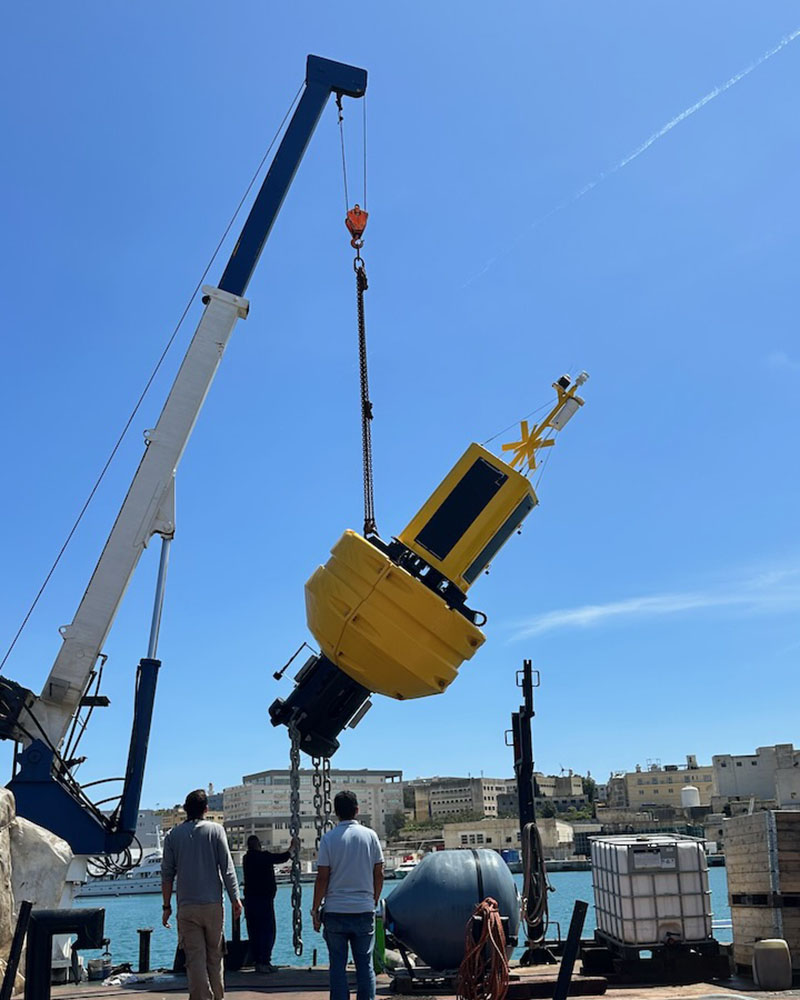
(Photo courtesy of Dr Adam Gauci)
The buoy arrived in Malta for assembly in November 2024, which was just as well because the winter seas were completely unworkable. They needed three to four days for the deployment process, but ‘couldn’t find a day without wind’. Gauci and his team waited. December passed. Then January. Then February. Adding to the logistical difficulties, they had to fly in a specialist from the UK (BLUE’s place of birth) to assist with the entire process and needed to time that arrival with the fickle spring weather.
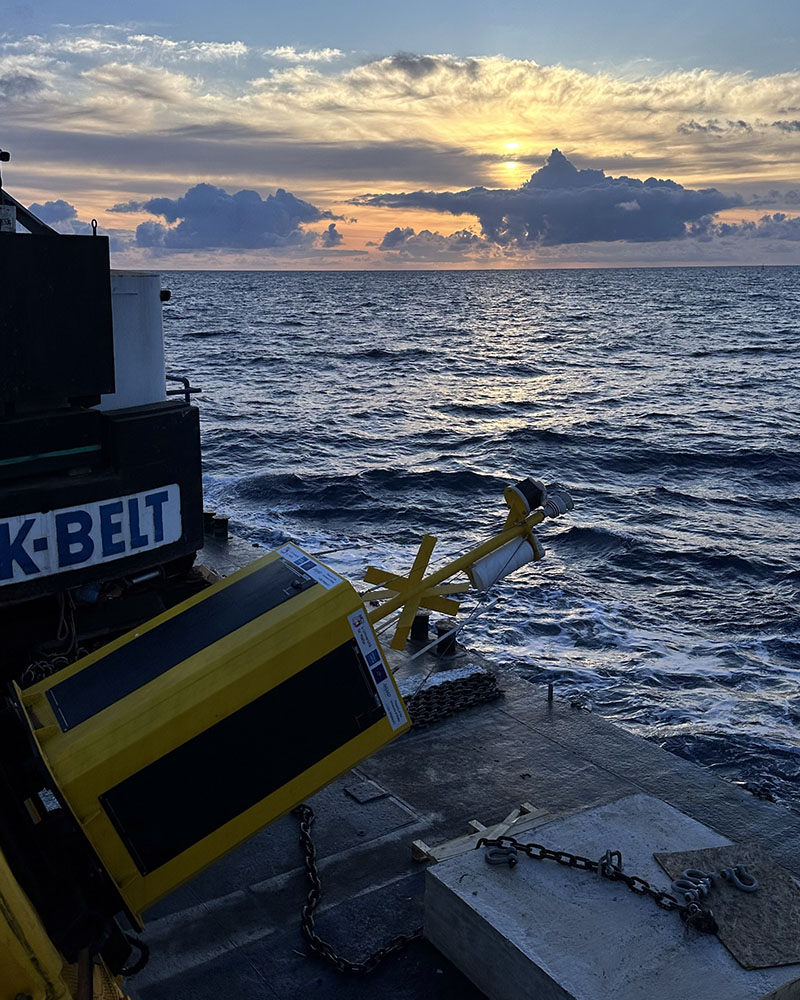
(Photo courtesy of Dr Adam Gauci)
The day finally came in April of this year. Deployment was staged from a 35m long tugboat named the Gold Dredger. The operation involved winching BLUE into place, carrying it out to sea, and releasing its two massive, concrete moorings in perfect synchrony, 104 meters down to the sea floor. Even that first step was no mean feat; BLUE is a massive piece of scientific equipment, weighing over 2.5 tons and measuring 4 meters in length, and 2.6 meters in diameter. Suspended from the Gold Dredger’s weathered crane, the buoy absolutely dwarfed the crew of seamen and academics that accompanied it out across the waves.
Gauci was on the tug when BLUE launched. Despite the efforts taken to perfectly time the deployment, it was still an unpleasant process. ‘People say “oh, you’re going on the buoy, have fun,” but it’s not really fun,’ he told me. ‘You’re spinning around and it gets super hot when you’re working inside the tower… we had a swell of 0.67 meters with maximum wave heights reaching 1.08m.’
Data Collection
Simple at first glance, the tightly packed and highly organised interior of the buoy belies its real complexity: solar panels on the outside feed power to a cluster of grey batteries. A winch system lowers an 85-meter-long cable replete with instruments down through a central shaft, taking readings every 5 meters in the water column. Sensors measure meteorological parameters, sea currents, as well as sea temperature, salinity, pH, dissolved oxygen, turbidity, fluorescence, sound velocity, and the partial pressure of dissolved CO2. It’s also fitted with GPS and AIS for positioning, along with motion sensors to track its movement. It is, as Gauci said, ‘basically an anchored lab at sea.’
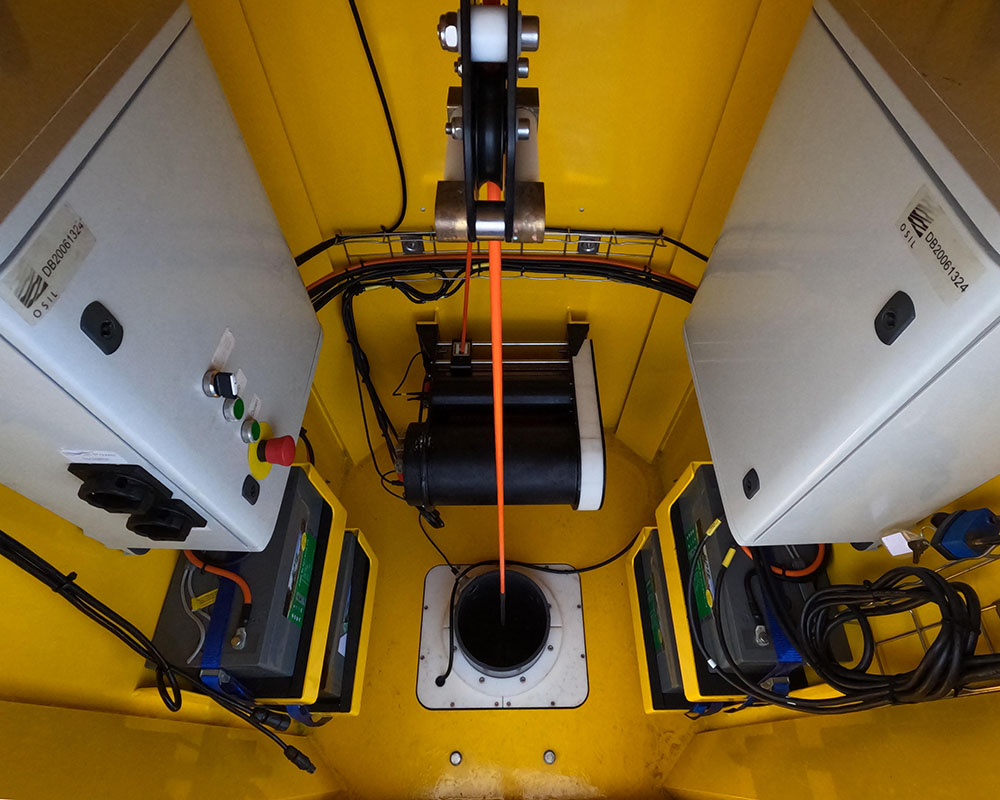
The data is recorded and sent home to UM once every ten minutes. Here, Gauci and his team babysit BLUE as it struggles through its infancy, updating software on the data loggers and troubleshooting issues if, and when, they bubble up. The data is all automatically uploaded to a public interface Gauci helped design. It is even running an experimental AI bulletin that digests the last 24 hours of readings and synthesises the complex data into a bite-sized weather report.
‘It’s like what you read or hear in the media,’ Gauci, who studied AI for his PhD, shared excitedly about this newest addition to the website. ‘Instead of someone generating it manually, it’s automatic.’
BLUE’s Role in Malta
The LIFE IP RBMP project involves multiple partners, each working towards their own diverse objectives. It was ERA’s job to direct stakeholder interests toward tackling the goals of the LIFE IP project. Started in 2017, this eight-year-old endeavour is meant to bring Malta into compliance with the EU’s Water and Marine Strategy Framework Directives. Among many other things, these directives required that EU member states bring their waters to ‘good status’, meaning that only minor deviations from what is considered a natural state (chemically, biologically, or hydro-morphologically) are allowed. LIFE IP supports the implementation of the Water Framework Directive and the sustainable management of Malta’s water resources. BLUE will provide crucial insights into how Malta’s marine ecosystems are being affected by climate change and human-induced pressures.
‘We see BLUE as a cornerstone for long-term marine environmental monitoring in Malta,’ ERA spokesperson Andrea Carolina Pérez Pardo commented. One issue she hopes BLUE will address is tracking and modelling marine pollution and litter, as well as improving the understanding of hydrographic changes that influence marine habitats. This represents a significant knowledge gap for researchers studying Maltese waters, and one that BLUE is uniquely suited to fill. The data generated by the buoy will allow ERA to predict how pollutants will disperse, identify areas at particularly high risk, and develop plans to protect those areas.
BLUE will help policy formulation by providing a scientific foundation for decision-making. The goal is to move toward continuous and consistent data collection, enabling the ongoing development of the observing system network with the addition of more tools and devices, ultimately leading to adaptive marine governance.
‘In the future, we expect BLUE to support not just assessments of existing pressures like storm water run-off and marine litter, but also emerging challenges such as climate change impacts, coastal erosion, and cumulative pressures from increasing maritime activities.’
(Photo courtesy of Dr Adam Gauci)
All of this is increasingly critical, Gauci says. ‘Unfortunately, marine heat waves are becoming much more common. In the summers, you’re experiencing a lot of these heat waves, and when the temperature goes up, oxygen goes down, which we’re seeing now with the data that’s coming in. And obviously it causes stress in the marine ecosystem… we’re also realising that the sea is not cooling down as much as we thought in winter, and the more energy the ocean stores, the more extreme the storms will be. In fact, a storm hit in July last year. Normally, it’s in August.’
Future
BLUE will officially launch on 4 July, with all the pomp and circumstance that comes with reaching a national milestone. But it’s already doing the job it was built to do. BLUE’s data is feeding into future climate models, shipping lane projects, and into the quiet bureaucracy that makes everyday life in an island nation possible. It is helping people. And it will soon help a lot more people; it is already part of the Fixed Platforms Team of the Global Ocean Observing System (EuroGOOS). Data sharing with the rest of the European community will help Malta better prepare for the future.
‘We’re a small country,’ Gauci concludes. ‘You cannot do it alone. It takes a strong team with everyone bringing their expertise and ideas – that’s what makes it possible at the end of the day.’



Comments are closed for this article!