

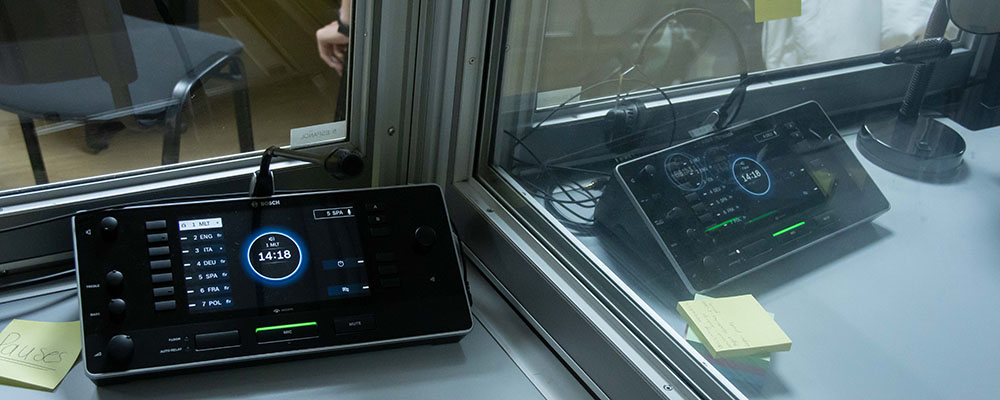
Advances in technology and study offer improvements to the practice of interpreting, as evidenced by the recent installation of new interpreting equipment at UM’s Interpreters’ Lab, overseen by Dr Amy Colman. Her mission, however, is much broader as she seeks to share the story of interpreting itself as a practice with a long history.
In her time as Coordinator of the Master in Interpreting Studies, Colman has vitalised the programme through an ongoing outreach campaign to educate the general public and students at UM and beyond about interpreting. This is a particularly valuable exercise as many still confuse interpreting and translation – the former referring to spoken speech, and the latter to written. In Malta, interpreting became an established discipline once Malta joined the European Union (EU), and a need for the profession arose with Maltese taking its place as one of the EU’s 24 official languages.
However, as Colman explained at a recent event titled ‘Interpreting through the Ages’, the practice dates back to Ancient Egypt and stretches beyond the Ottoman Empire. In fact, the Ottomans had a trained class of interpreters called dragomans who had to navigate between Turkish, Arabic, Persian, and European languages, taking on diplomatic functions as well. Multilingual empires always had a great need for such proficiency for rulers and officials to interact with their subjects or other nations.
The modern practice of simultaneous interpreting, as used in the EU and as taught at UM, has its origin in the mid-1920s at the League of Nations. Thus began the march of technological innovation that led to the equipment used today. Nonetheless, it was the language scholar Léon Dostert, whose use of the IBM system for interpreting at the Nuremberg Trial advanced the practice by gaining worldwide attention. The extent of interpretation and translation carried out earned it the nickname ‘the trial of six million words’.

Interpreting for the European Union
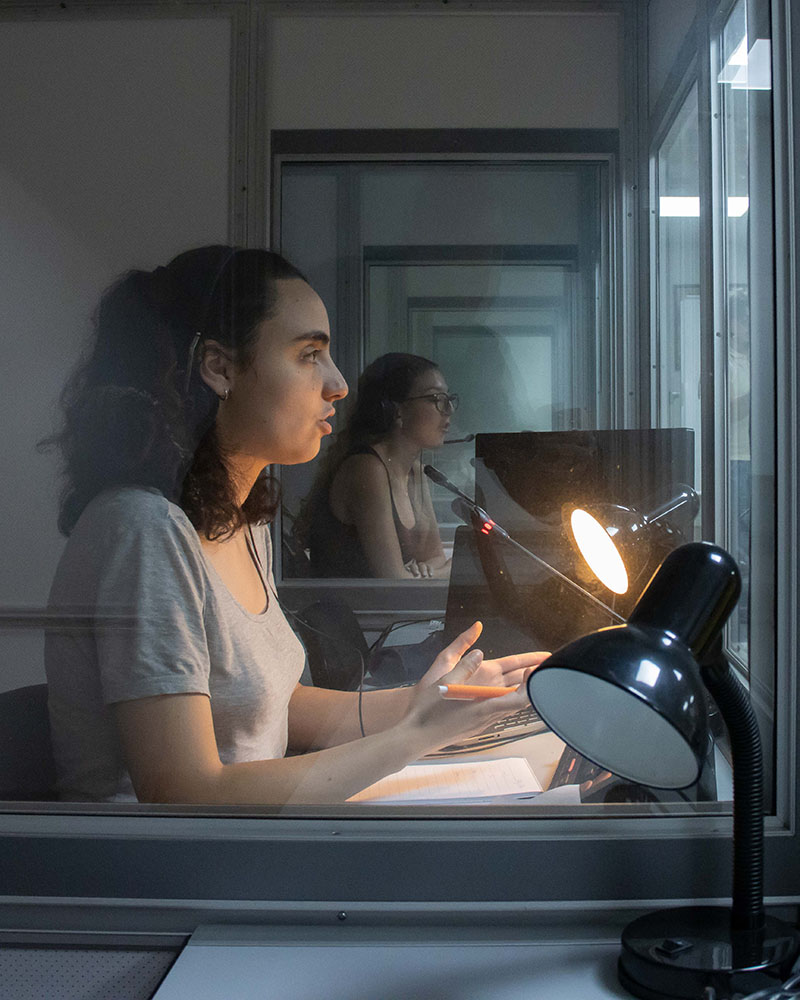
Interpretation in the EU today is generally associated with the work done in the European Parliament, where professional interpreters work with the 24 official languages of the EU. However, with multilingualism as a core value, interpretation is key to the functioning of all EU institutions. The three main units responsible for interpretation within the EU are the Directorate-General for Interpretation of the European Commission (DG SCIC), the Directorate-General for Logistics and Interpretation for Conferences of the European Parliament (DG LINC), and the Interpretation Directorate of the Court of Justice of the EU.
Colman explains how the Master in Interpreting Studies prepares students to take the annual interinstitutional accreditation test, which is put together by the aforementioned institutions and is required for interpreters to work with the European institutions. Once candidates pass the accreditation test, they become freelance interpreters. The next step in an interpreting career would then be to become a staff interpreter through internal calls or the European Personnel Selection Office (EPSO) competitions.
Interpreting the Future
As the Department of Translation, Terminology and Interpreting Studies invests in the future, Colman highlights how pursuing a Master in Interpreting Studies is a unique opportunity, preparing students for an exciting career based on versatility, teamwork and travel, with plenty of perks. However, both the course and the profession are demanding, and should be seen as a vocation rather than a job.
It is for this reason that Colman visits schools, participates in career fairs with a mobile booth, and ensures that the Department’s social media presence is well-maintained. Students are also invited to the Interpreters’ Lab to try the equipment – there is an annual Open Day, which this year is taking place on 29 April. Finally, the University offers an introductory course as part of the Degree+ programme.
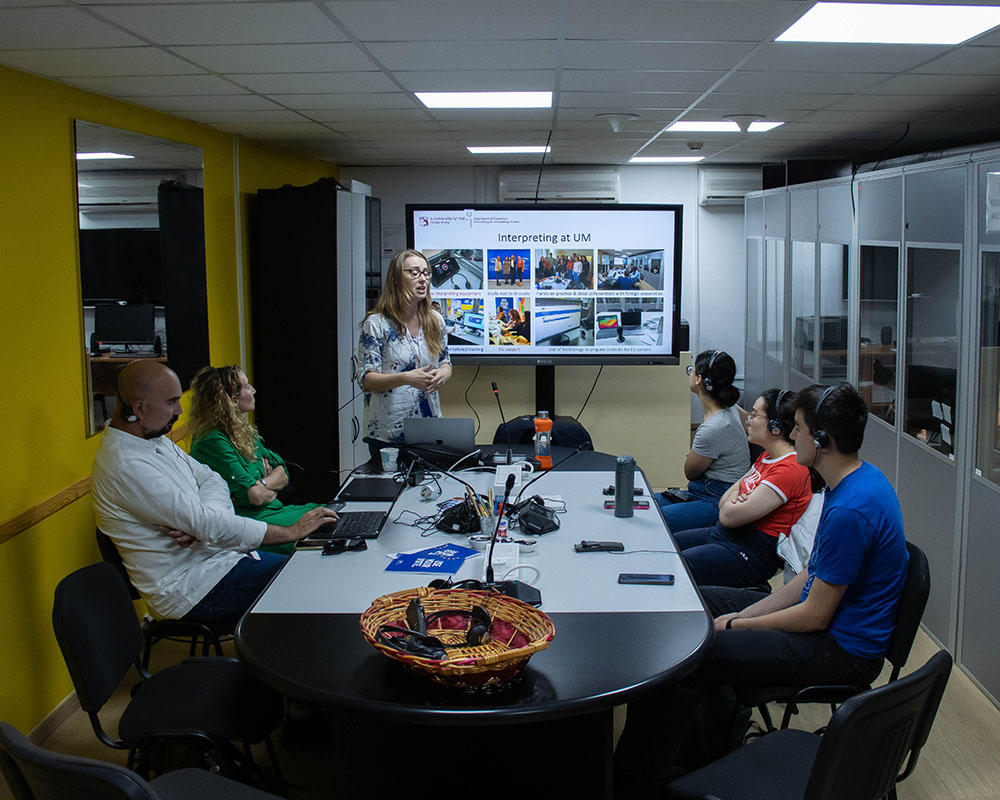
Master’s in Interpreting Studies Open Day: 29 April at 13:30, Interpreters’ Lab (Gateway -101)
With a long and varied history behind it, Colman is positive about the future of interpreting, particularly at the University of Malta and in the Maltese booth at the European institutions.
For more information about the Master in Interpreting Studies or to book a visit to the Interpreters’ Lab, do not hesitate to contact Dr Amy Colman at amy.colman@um.edu.mt.



Comments are closed for this article!